
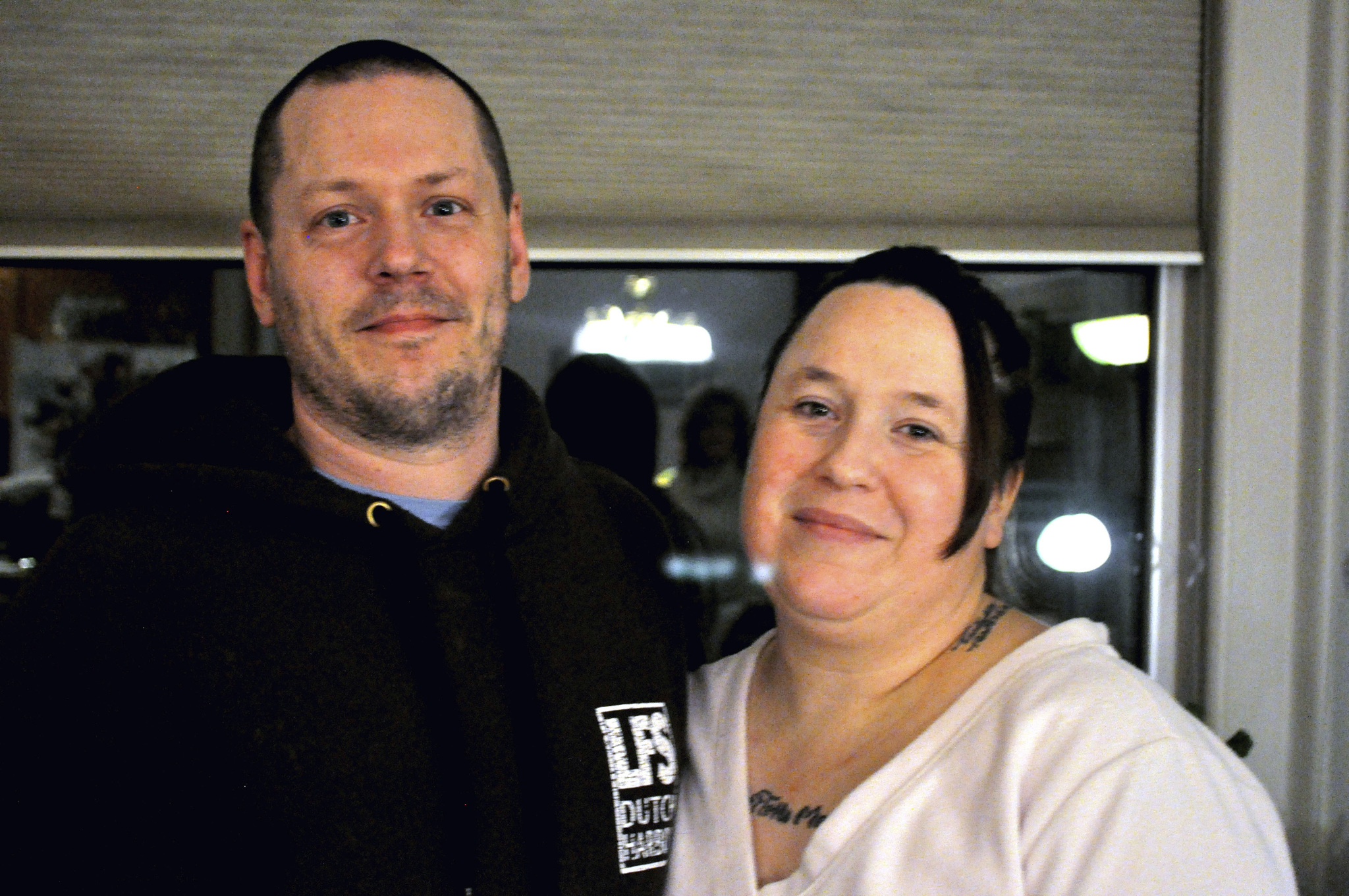
KODIAK — Jami Gibson’s emotions overwhelmed her as she peered from an airplane window at Kodiak just over a year ago, and she began to cry. Below was her family, including three children she desperately wanted to see, but also a community she did not know would accept her.
“I was so nervous when I first came back, because I had no idea how I was going to be received,” she said.
Nearly two years earlier, Gibson and her husband Phil faced multiple felony charges for kidnapping, robbery, assault and drugs crimes committed while high on methamphetamine. Both later pleaded guilty to second-degree misconduct involving a controlled substance and the remaining charges were dismissed.
They served 20 months in prison, reported the Kodiak Daily Mirror.
“Prison was hard, but prison was the best thing that could have happened to me,” Jami said.
While in Kodiak Jail, Jami began attending Kodiak Area Mentor Program meetings. KAMP is a faith-based nonprofit organization that holds weekly meetings in Kodiak Jail, writes letters to those in off-island prisons and helps prisoners re-integrate into society after their release.
The organization’s president, Teresa Slaughter, describes KAMP volunteers as “networkers, encouragers, cheerleaders and prayer warriors.”
The road to addiction
The paths that led Phil and Jami to addiction were similar. Both started with cigarettes in their mid-teens, progressed to marijuana at age 18 and eventually to methamphetamine.
While Phil did not use opioids, Jami eventually began to smoke heroin and prescription pills.
“My parents doted on me. I was loved. I was well taken care of,” Jami said. “Addiction and drugs do not discriminate.”
Jami joined the military in her mid-20s, but was medically discharged after developing neuropathy. She began using drugs more frequently to deal with it, as well as emotional pain stemming from a recent divorce. Her drug of choice was meth, which intensified the neuropathy.
“I could barely move. When I would start coming down off the meth, my neck would hurt me so bad that I wouldn’t even be able to sit up,” she said. “It was a physical pain that I can’t even begin to describe.”
Phil began using meth when a coworker brought it to work. His addiction slowly progressed.
Jami and Phil were already addicted when Jami’s brother introduced them 14 years ago. The drug use became heavy about two to three years before their arrest. They began dealing drugs about one year before the arrest, Phil said.
“Then you just get caught up in that cycle, and it was a never-ending cycle,” Jami said.
Prison
Phil and Jami wanted to stop using drugs long before, but it was the arrest that finally gave them the motivation to see it through.
“It’s so impactful when you see your children (through) that glass and you can’t touch them,” Jami said through tears. “You only have 15 minutes and in that 15-minute time you have to talk to all three of them and your dad.”
They began attending KAMP and Celebrate Recovery meetings, another faith-based outreach program with devotional meetings inside the jail for those suffering from addiction.
Slaughter used connections with Mainland prisons to help Jami get into a faith wing at Hiland Mountain Correctional Center. The chaplain in the faith wing got her to transformational living community in Hiland.
Because most prisoners serve their time off-island, making sure they have a connection after moving to another prison is an important part of KAMP’s mission.
“We are always setting somebody up to go to the next person for them to keep working on them,” Slaughter said.
It also provides someone to lean on in the new location.
“Support really goes a long way, so you’ve got to stay plugged in, definitely, to help maintain,” Phil said.
“I think that is what KAMP is there for, is to keep us plugged in, keep us accountable,” Jami said.
“I’d never, ever been incarcerated in my life, ever. KAMP was there for me the whole entire time.”
A new beginning
Phil and Jami will celebrate three years of sobriety this year. In the year since their release, they have had to develop a whole new way of life.
“We’ve never been sober together until now,” Jami said. “Our kids have never seen us sober up until now.”
The couple is learning how to deal with emotions and fears they previously masked with drugs, and to communicate those feelings without meth.
“You’ve got to face everything when you’re sober, but that’s OK. I want it that way. That’s the only way I want it,” Jami said.
Their lives are now filled with church, Bible studies and weekly KAMP meetings.
“On average, we basically do something every day to help our sobriety,” Phil said.
“You have to stay diligent. Otherwise you’re just going to lead yourself back down that road. You do have to make a big decision of what you want. There’s no gray area anymore.”
Phil and Jami also remain vigilant about who they spend time with.
“I do have some friends that are back from my day (of drug use) that do come into KAMP and it’s great to see them there, but I’m very adamant about not socializing with them outside of there just because, I want to be safe. I want to keep myself safe,” Jamie said.
The Gibsons refuse even to smoke cigarettes for fear it will lead back to drugs.
“The smallest thing will just open that door to be right back where we were,” Phil said.
They are grateful to the criminal justice system that helped lead them to their sobriety.
“These people that are doing the arresting and everything, they’re not doing it because they’re out to get us,” Jami said. “They’re doing it because they love this community and they want to see us thriving as members of it.”
KAMP
While Jami and Phil had the benefit of having family in town to help when they were released, many who exit the prison system have no safety net to come home to after their release.
These people can end up calling on friends or family they used drugs with and fall back into addiction.
“It isn’t as simple as saying, ‘You can do it,’” Slaughter said. “You can. They can, but the mountain is huge.”
For those people, programs like KAMP can be especially important.
The KAMP program has expanded in both services and geography, with a new branch in Port Lions.
KAMP mentors write letters to mentees following up lessons from group sessions at Kodiak Jail and encourage them to have a plan for when they are released.
When they return, mentors provide support in sobriety and help in finding a church or Bible study program.
Group meetings are held in prison every Saturday and outside of prison every Friday at 6 p.m. at Community Baptist Church.
The meetings are “not just about helping people with addictions to drugs and alcohol,” Jami said. “We’re there for anybody, whether it’s somebody that has an addiction or whether it’s somebody that knows somebody that has an addiction.”
A recent donation from Providence Kodiak Island Medical Center has allowed KAMP to place a person in need in a residential treatment facility, said Jonathon Strong, KAMP’s vice president.
Each person in recovery can set off a chain reaction.
“It’s not just me and Phillip that are thriving. Our kids are thriving. The change in them in just the last year is phenomenal,” Jami said.
“That’s a household of five people that got restored,” Slaughter said. “Who can’t find value in that, whether you find faith a factor or not?”
But it doesn’t stop there.
“Once you’re more secure in yourself and your sobriety, it gives you that option of being there to help somebody else to continue,” Phil said. “It doesn’t end with just yourself and fixing yourself. It continues on and then if you are able to reach just one person, the chain just keeps going.”
According to Slaughter, KAMP is in need of mentors, particularly men, who can give their time by meeting regularly with mentees or letter writing.
Consistency is important in volunteers, “because dysfunctional lives don’t know consistency,” Slaughter said.
“Being consistent with whatever participation level you would want to be in is what’s huge.”
They also need employers willing to take chances and hire employees with criminal records.
“They have to pay their bills. If you want to get past this, you have to give them a chance to get past it,” Slaughter said.
“A lot of people go back to drug dealing because, in their mind, it’s the only feasible way that they can make ends meet, as well, because they’ve been rejected,” Phil said.
There is a role in KAMP for anyone who would like to be involved, Strong said.
“The community needs to understand that you should really want to invest in people, you should really want to invest in each other. We can grumble all we want about how sad the families are, but then do something about it.”
For more information on KAMP, or to learn more about how you can help, visit them on Facebook or at the Kodiak Area Mentor Program website.
