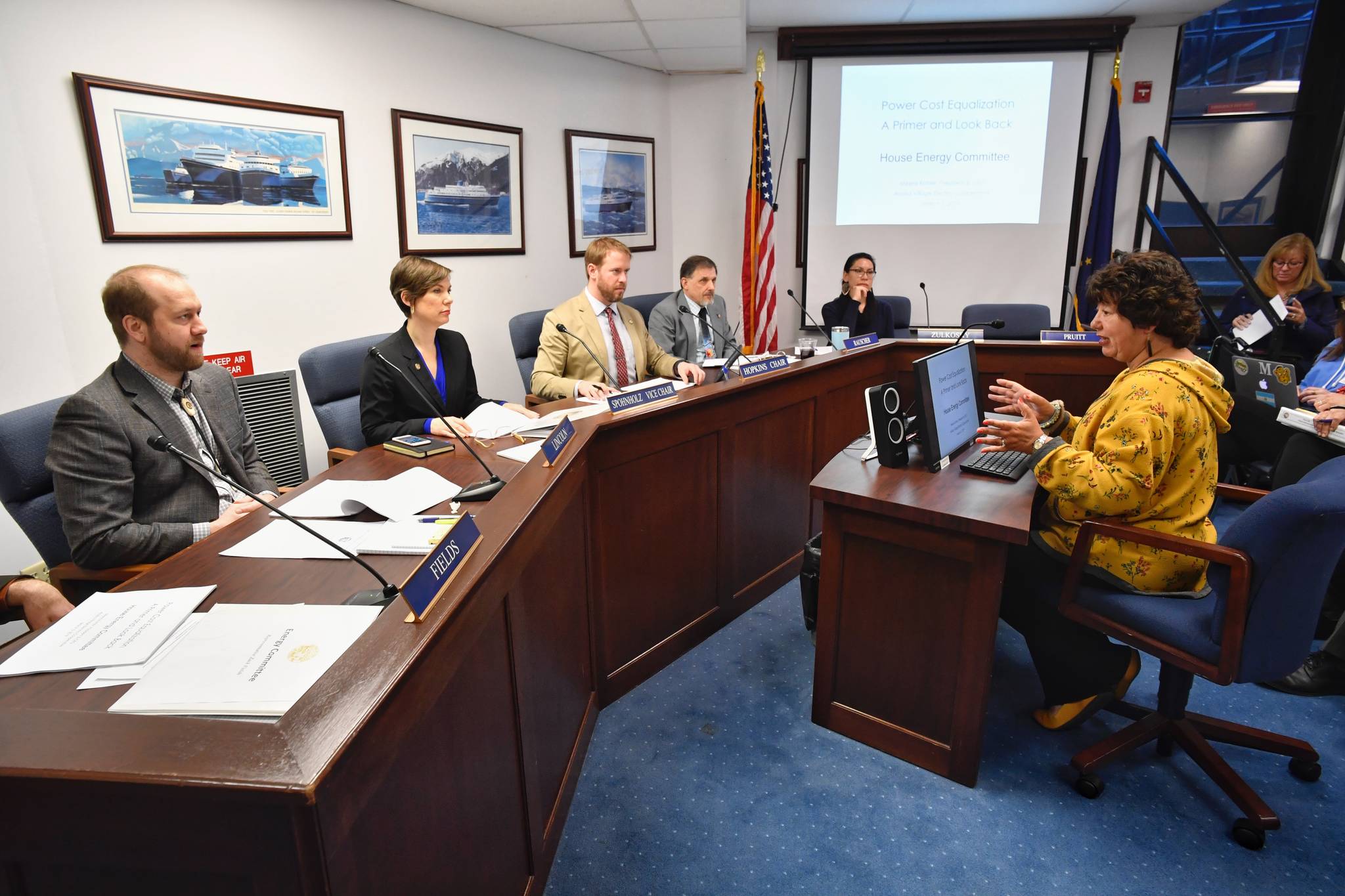
One section of Gov. Mike Dunleavy’s proposed budget for 2020 would hit rural Alaskans in an area where it hurts: energy.
The Power Cost Equalization fund helps lower the cost of energy in rural Alaska communities.
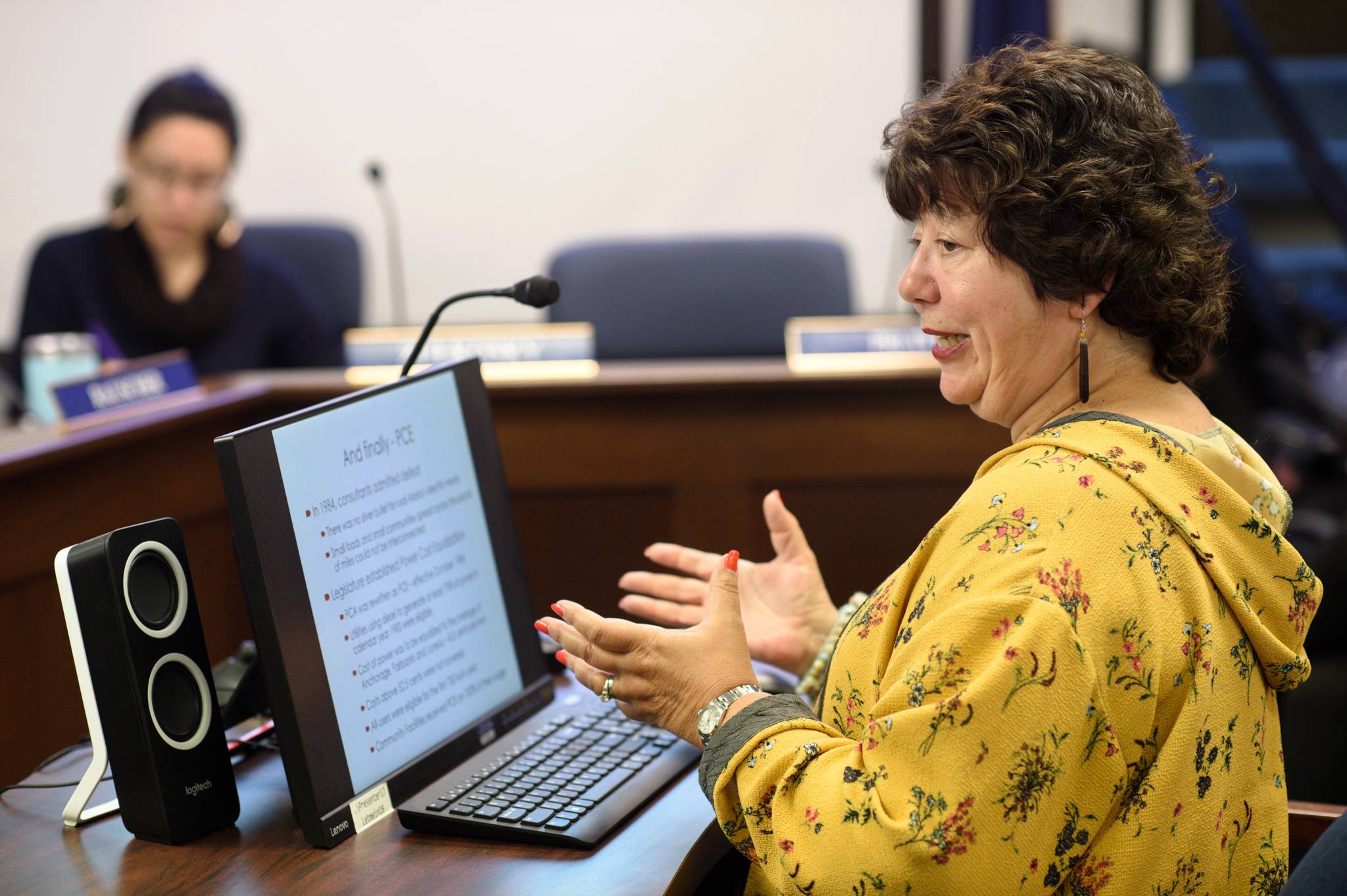
“This was a compromise reached in 1984, when the Legislature recognized that there was no answer to bring affordable power to rural Alaska,” said Meera Kohler, the president and CEO of the Alaska Village Electric Cooperative at a House Energy committee meeting on Tuesday. “We can’t afford to go back to annual battles for PCE. We need folks to understand how vital this program is.”
[House Energy committee gets overview of Power Cost Equalization]
Fuel cost since 1985 has gone up by 127 percent in 2017, but efficiency is also up 32 percent, Kohler said in her presentation.
“Things have improved dramatically,” said Kohler.
The most recent year’s funding was at $28 million. That is at 100 percent funding, Kohler said. The governor has proposed cutting this funding completely in his fiscal year 2020 budget.
But Sen. Natasha von Imhof, R-Anchorage, said she can confidently say she, and several other legislators, will fiercely protect the PCE. She said that a more systematic, statewide approach needs to be taken. There are several associations that are doing good work in the field already, she said, such as the Alaska Energy Authority, and that she thinks a portion of the funding for the PCE should be used to leverage with different organizations on finding energy solutions for rural Alaska. She pointed to Kodiak’s use of more green energy as a good example.
[Senate Democrats express disapproval over Dunleavy’s budget]
“Well, I can confidently say there are several legislators that are very protective of the PCE and will defend its continuing as is,” Von Imhof said in an interview with the Empire. “I happen to think that folding the PCE into the general fund is probably not the best choice moving forward, and I may look toward the choices that I described earlier as in being part of an effort to make a systematic and deliberative multi-year plan to address rural Alaska’s energy needs.”
In 1977, oil first flowed down the pipeline. There was virtually no transmission system in Alaska, Kohler said. Diesel fuel was the primary energy source in all of Alaska, except Fairbanks, which relied on oil and coal. There was very little hydropower.
After oil started flowing, studies were done to identify projects to reduce the cost of electricity throughout Alaska. Oil prices peaked in 1979 triggering the first power cost assistance program, which was a precursor to the PCE program as it is known today, Kohler said.
“The PCE program is a political compromise made with rural Alaska resulting from billions in state spending on energy infrastructure continuing to pay dividends, by way of affordable and reduced power, to urban communities,” said Tiffany Zulkosky, D-Bethel, in an email to the Empire. “This program works to bring equity of state investment to all Alaskans and areas throughout the state.”
Zulkosky said the PCE program has operated at reduced funding levels in previous years, recently for a 13-year period (from 1992-2005). Because the PCE credit is applied to utility rates, that are not changed as a result of the program and are established by cost actuals, any increased financial burden resulting from underfunding the program is borne by customers who may not have the resources to pay for it, she said.
“This can compound harm to Alaskans, since delinquent accounts are at risk of losing PCE eligibility,” Zulkosky said. “As we heard this morning, PCE provides approximately 20 percent relief in energy costs to rural Alaskans and only 29 percent of all electricity sold in eligible communities receive PCE. This leaves an overwhelming majority of Alaska individuals and entities without sustainable solutions or equity in state energy spending.”
But Von Imhof, who co-chairs the Senate Finance committee, said that she thinks a solution can be found that involves working together with private associations.
“Part of the money that’s being spun off each year can still go help with communities’ energy needs and a third of the money could leverage with other companies to find innovative ways to combine green energy with diesel so that there is either wind or solar or hydro to help offset the diesel cost,” Von Imhof said.
She expressed similar sentiments during the initial presentation of the governor’s budget by the Office of Budget and Management on Feb. 25.
”(Cutting the funding) seems very short-sighted,” Von Imhof said at the Feb. 25 meeting. “This does require a little more thought and planning. I think that we would be cutting our nose to spite our face to remove this fund, when the long term capability of this to help rural Alaska become more energy efficient is to me a better goal.”
• Contact reporter Mollie Barnes at mbarnes@juneauempire.com or 523-2228.