
By Vivian Faith Prescott
For the Capital City Weekly
I fold two heaping tablespoons of chopped spruce tips into the cookie batter. I’m making spruce tip holiday sugar cookies to gift to family. We’ve likely all heard the saying, “It’s the thought that counts,” meaning our attitudes, intentions and traditions. Spruce tips are my favorite treats from nature so it makes sense to gift something that’s been gifted to me. In my Sámi way of knowing, láhi is a gift worldview, meaning the land provides gifts. Láhi is a relationship between humans and the land, a way of life. It’s similar to “Haa atxaayí haa kusteeyíx sitee,” which means “Our food is our way of life” in the Tlingit culture.
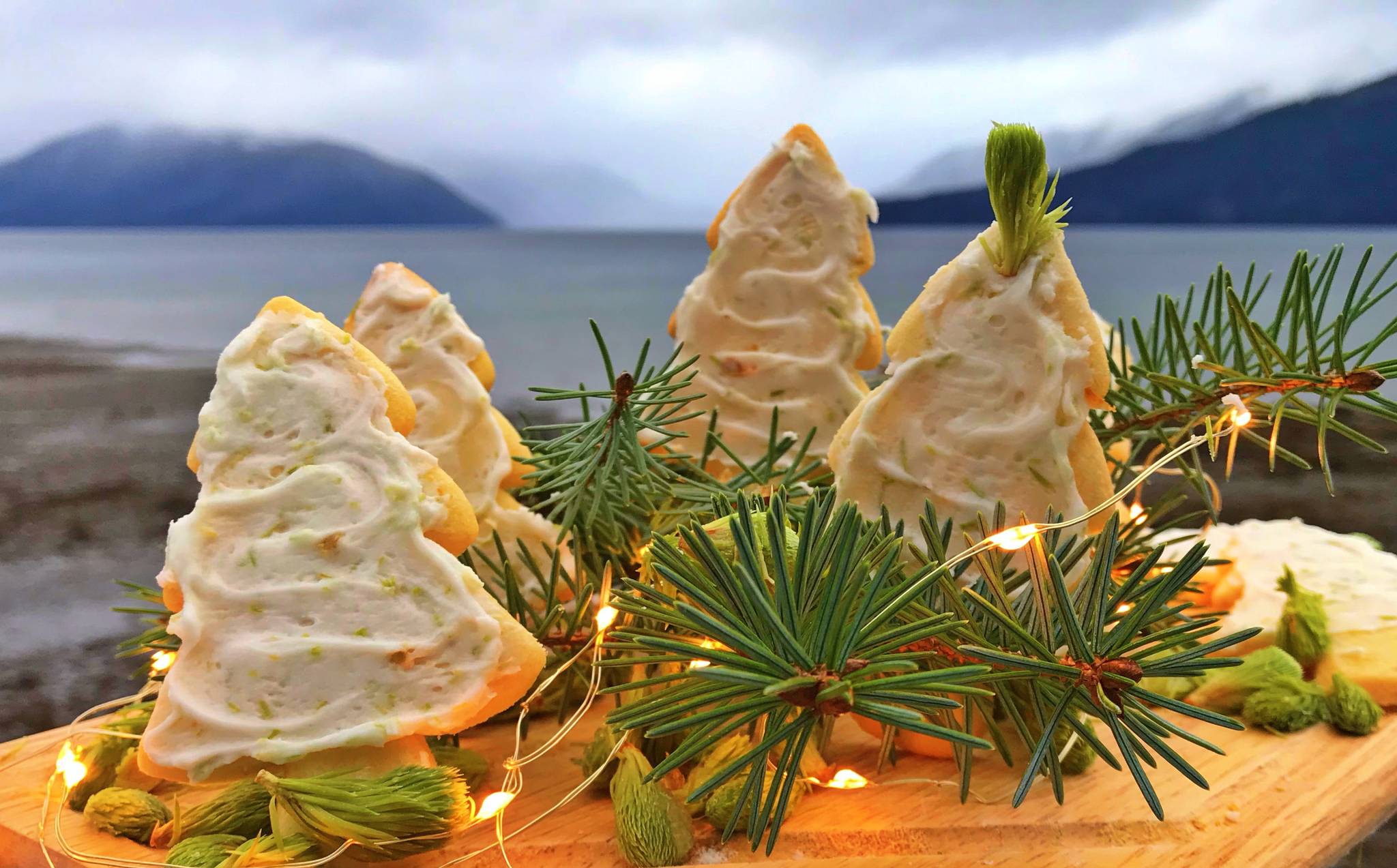
Spruce tip sugar cookies wait to be given as gifts. (Vivian Faith Prescott / For the Capital City Weekly)
My dad bags smoked hooligan and smoked salmon to share. He carves beads from wood, and he makes walking sticks and fishing gear, and deer calls, all with the intention of gifting. The practice of gifting is not only about holidays, it’s a way of walking the world, no matter your spiritual practices. We feel the spirit this time of year: Hanukkah, Kwanzaa, Yule, Los Posadas, Simbang Gabi and more. Practices and beliefs contain rituals, ways we maintain our relationships. In other words, we give because it’s who we are.
[Planet Alaska: Gifts from the porcupine]
Grandson Jonah helped pack five cases of jams and jellies to deliver to our local tribal office. Gifting is all around him. He’s been learning to gift since he was born. It’s a part of his Tlingit, Alutiiq and Potawatomi heritage too.
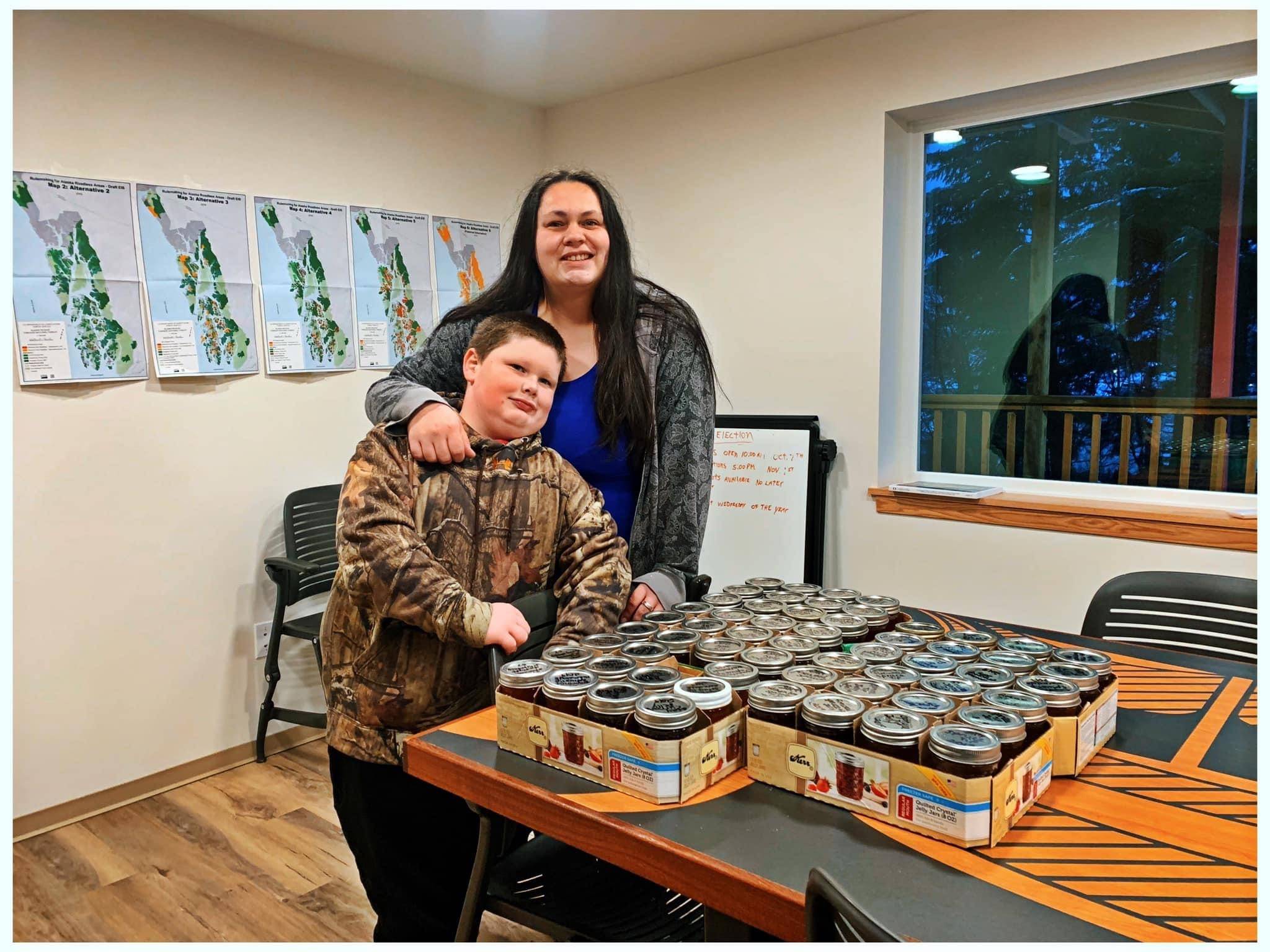
Vivian Faith Prescott / For the Capital City Weekly Nikka Mork and Jonah Hurst deliver jams and jelly to Wrangell Cooperative Association, Wrangell’s tribal agency.
Unfortunately, colonization and its inherent paternalism tried to eradicate gift economies around the world by enacting rules, including outlawing gifting ceremonies, and redefining “family” to guide subsistence and bartering laws. Just take a look at Alaska’s state and federal bartering laws and you’ll see what I mean. Many of those go against a deeply held Sámi value that society is based upon cultural pluralism and the extended family—our roots are remembered. Family is not just defined as a “household” or people related by blood. Modern regulations often ignore complex relationships, as if Indigenous peoples cannot govern their own economies.
The Sámi value that material wealth is shared and given away is inherent in understanding láhi, our gifts from the land. We catch halibut and package the fillets and share them with family. Crab is cleaned and cooked and gifted. We pack up jarred smoked salmon for daughters and sons and grandchildren. As a young adult, my grandfather gifted me a case of smoked salmon every Christmas. He’s gone now, but every time I see an old style tin of salmon, I think of him.
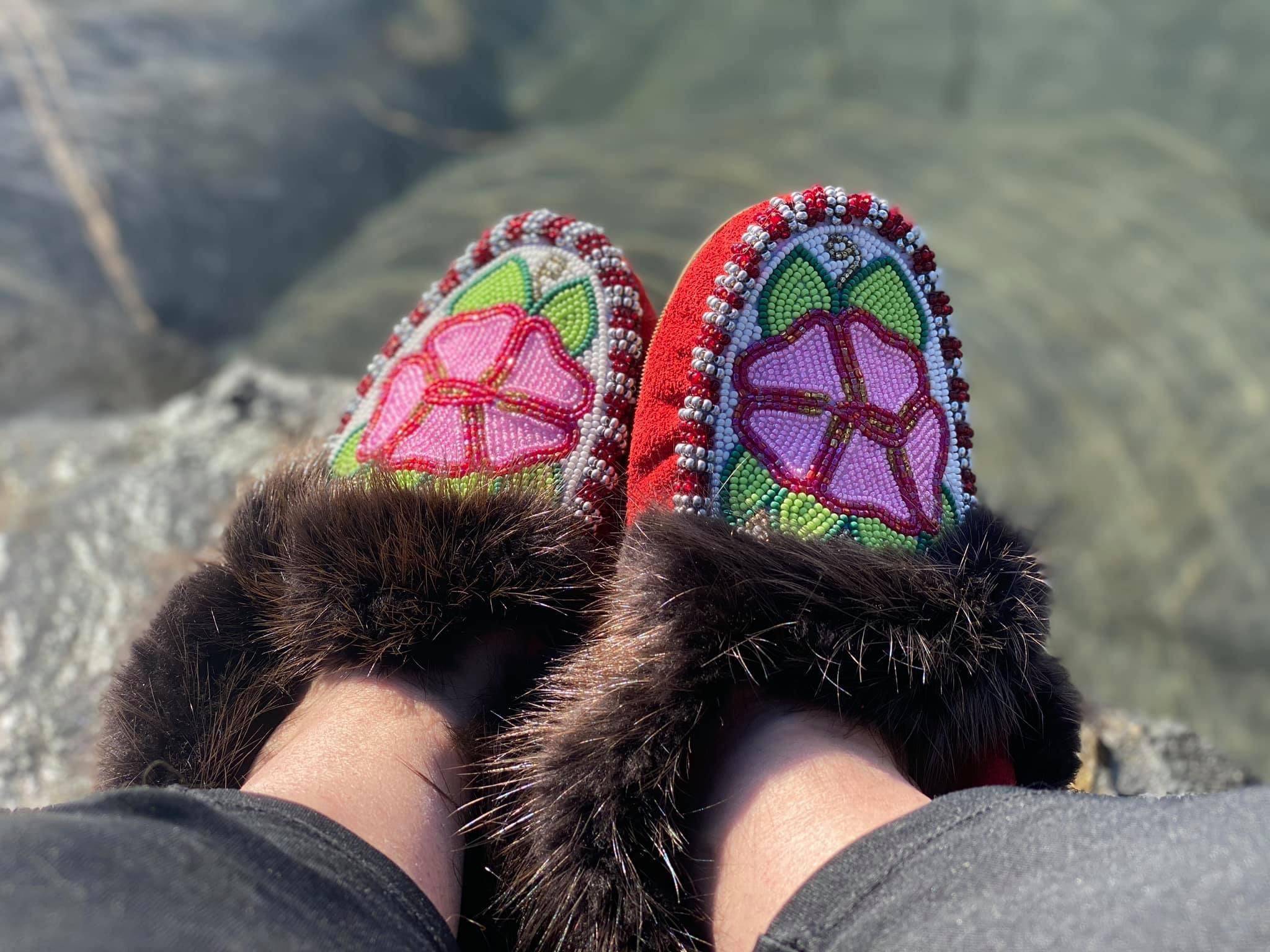
Flora Johnson from Allakaket, Alaska gifts moccasins to author Vivian Faith Prescott. (Vivian Faith Prescott / For the Capital City Weekly)
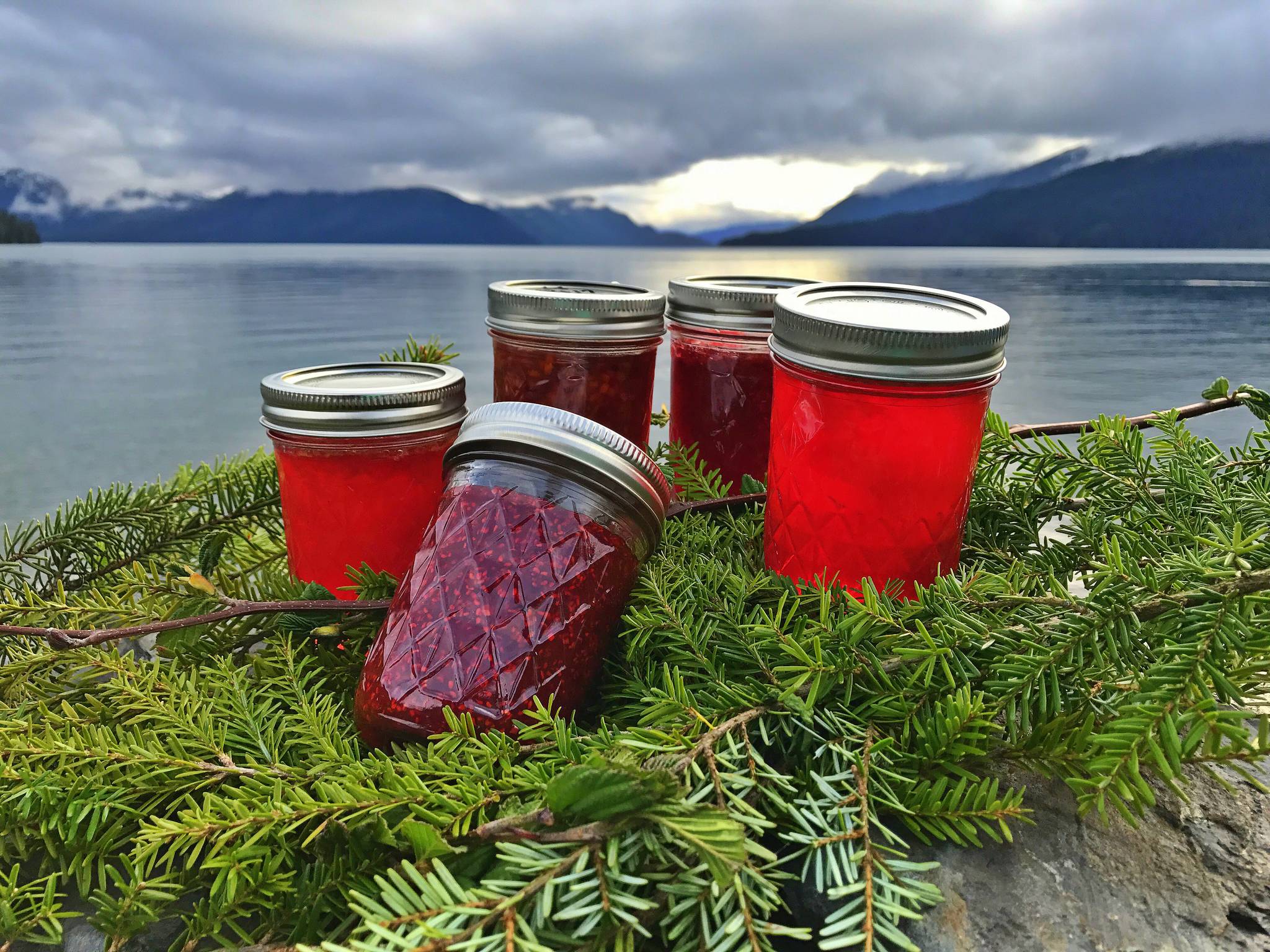
The practice of gifting is part of many indigenous origin stories. The first plant, fish, or animal are often given to humans as a “gift” to be taken care of, nurtured, respected and a relationship develops. Sámi received wild reindeer as a gift from the Sun’s daughter. Gifting asserts our identity, our relationships, that we’re still here and still sharing and thriving. Even with the rules, the practice of gifting is a decolonizing act. During the pandemic it’s been difficult. Still, we gift. We beaded, we wrote, we carved and wove and produced plays. We worked. We took care of others. We offered something. We gifted jam and jelly and fresh berries and shared halibut.
So how do you teach gifting? An important Sámi value is that our teachings come from nature and family elders. Our gifting is collective and a part of our community. It’s called attáldat, a Sámi term meaning our community as a whole, not the individual. Attáldat is giving and sharing in order to sustain the community.
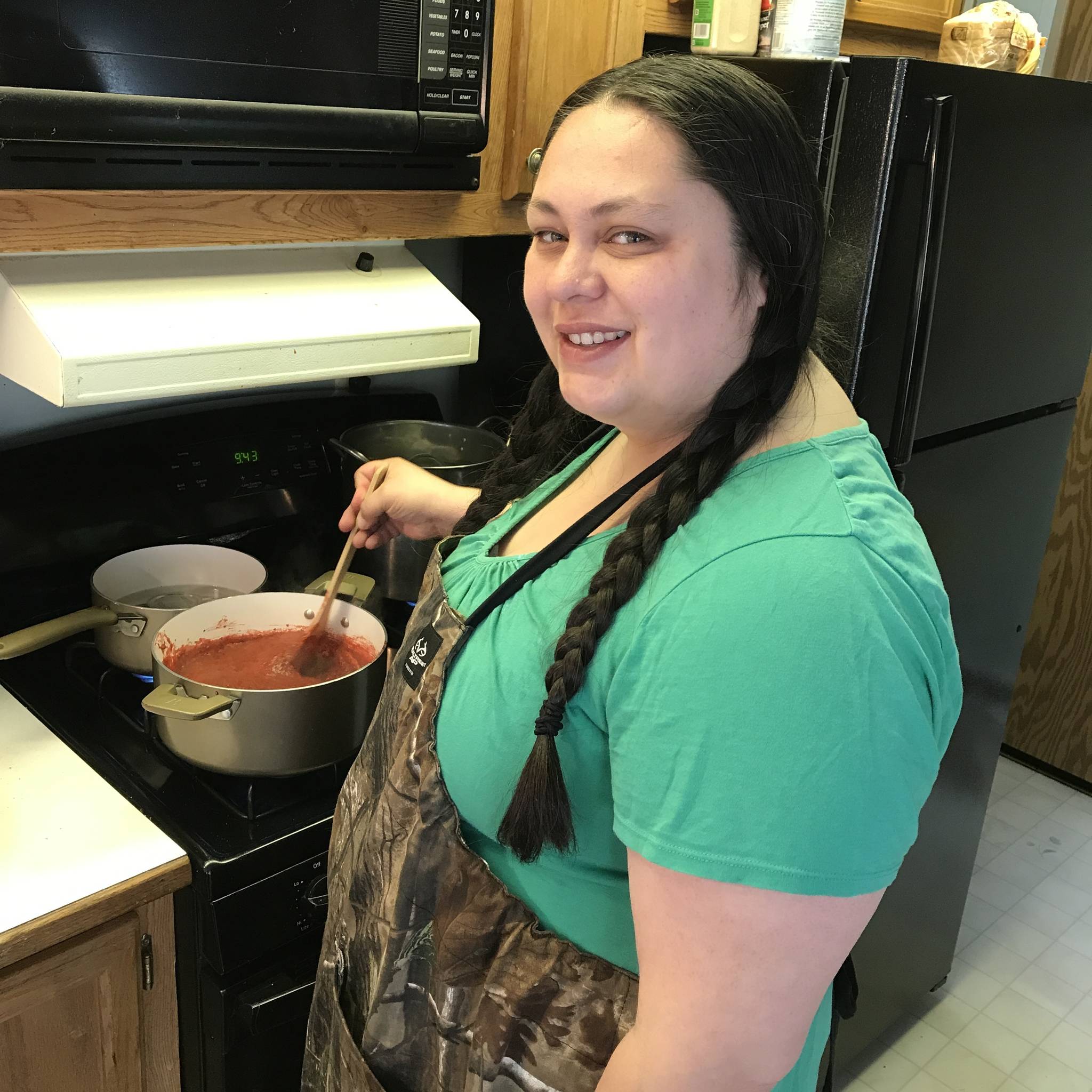
Vivian Faith Prescott / For the Capital City Weekly Nikka Mork (above) makes jams and jellies (top left) for gifting in Wrangell. Flora Johnson of Allakaket made moccasins for the author, and spruce tip sugar cookies are a treat to give as gifts.
Children watch what we do. Grandsons Timothy, Jackson and Jonah have helped bag up spruce tips for gifting. Grandson Bear, just 1 year old, is learning how to gift. They’re watching our gifting practices during this pandemic and how we respond could reverberate for generations. Did we take care of our elders, our families and friends, and strangers? What gifts did we offer up? This doesn’t mean we hide our struggles, it means we’re honest with our younger generation about what we’re going through and they can help us through these times. We might not be able to visit our grandparents but maybe the young person can help us come up with creative solutions. My grandsons get on Zoom and play games with their great-grandpa.
[Planet Alaska: Healing foods for hard times]
Much has been written about the gift economy, the gift worldview, and the gift culture. In Southeast Alaska we’re familiar with the ku.éex’, (Pay-off Party), the Tlingit memorial ceremony, and other potlatch or reciprocal traditions. In our multi-cultural family, teaching gifting is important: It’s what we do at our fishcamp.
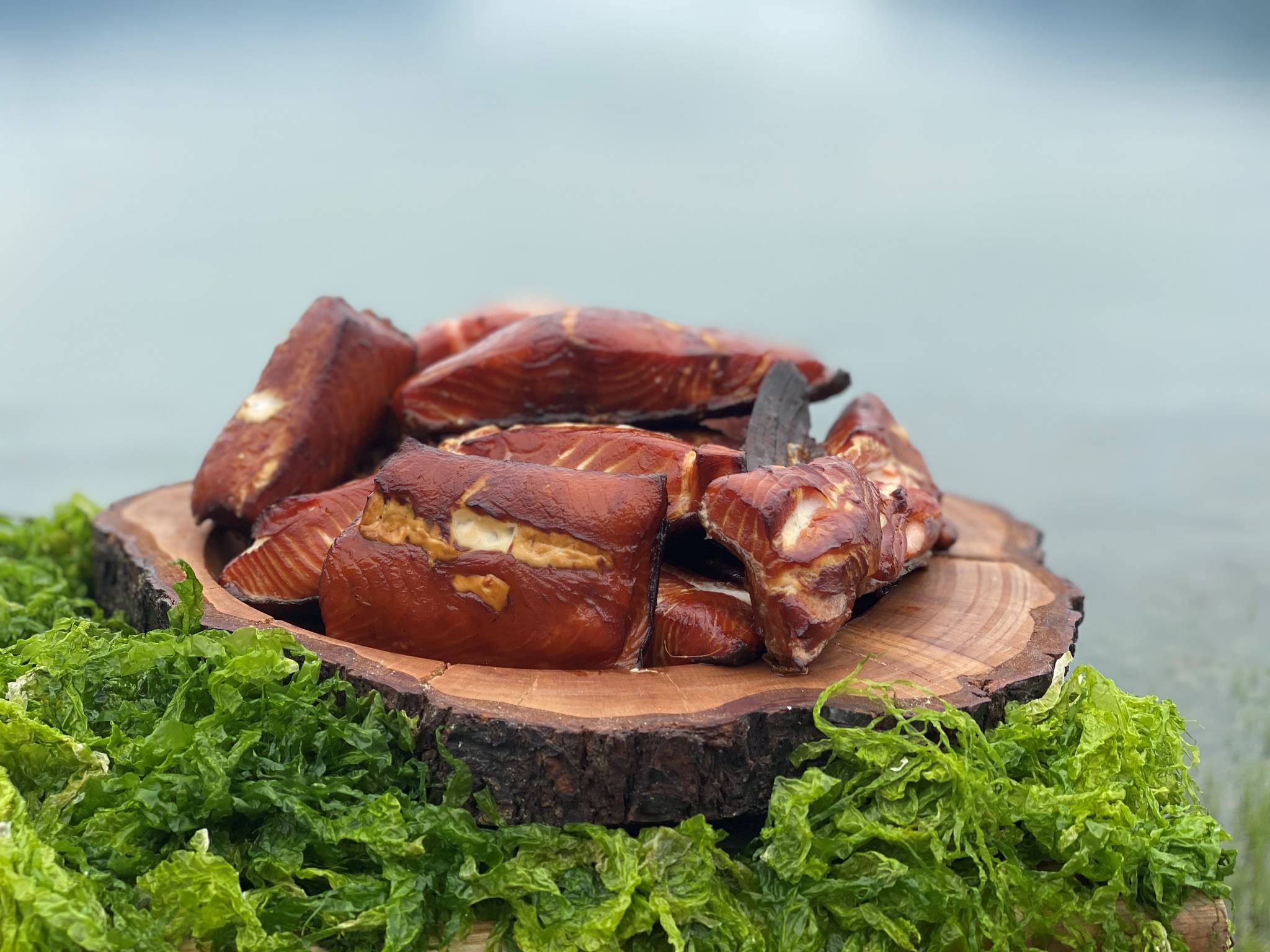
This photo shows Mickey Prescott’s smoked salmon in Wrangell. (Vivian Faith Prescott / For the Capital City Weekly)
We pay our respect. Sámi pay respect by leaving gifts, or offerings at sacred sites. Some might be surprised to know that thousands of miles from Sapmi, those of us who are a part of the Sámi diaspora in North America, still practice our traditions. We gift to the land.
In these hard times, our Southeast Alaskan gifting culture is more apparent. A Wrangellite started a burial assistance program, another started a Covid-19 quarantine support group, and there’s a local Facebook food share. The Wrangell Mariners’ Memorial is a gift to our community. And a local LGBTQIA group, Community Roots, gifted books on diversity for teens and younger children. Wrangell Cooperative Association (our local tribal agency) in partnership with Sealaska, Orca Bay and the Alaska Longline Fisherman’s Association, gifted Coho and rockfish. We also gift in ways we can even when we don’t have much. My dad, with his 4-wheeler, the Huckleberry, snow plows neighbor’s driveways and our walking path and sidewalks. It’s his gift to the community. Often our gifting goes unnoticed. We don’t know who gifted sheetrock after a trailer fire or who sent supplies to Haines after a devastating landslide.
This year, we’ve turned to family and friends, our clans, our social networks and relationships to help get us through. Sheltering-in-place for months is hard. Just when I needed it a gift came in the mail from my friend Flora Johnson: a pair of exquisitely beaded moccasins. Flora and I have never met in person, but we took distance classes with each other in college and we’ve talked back and forth since the invention of Facebook. Together we brainstormed ideas for her PhD research and offered advice and encouragement to each other. When I saw the moccasins I cried. I put them on and I felt as though I could dance through the pandemic all the way into next year.
[Planet Alaska: The Bunchberry yoik]
I chop spruce tips and fold them into the spruce tip cookie frosting. Lahti: The land provided the spruce tips. Gift giving is a way of life and nature is our best teacher. We look to the bunch berries, the gray currants, and old mossy log rotting in the forest with seedings sprouting from its bark. We look to the muskegs and streams, the strait out in front of town. Attaldát is the community. It’s a gifting life that sustains us. As we harvest, as we bake, as we open our freezer for berries or fish we’ve put up, and as we load plates of goodies or package up a pair of beaded moccasins to send to a friend, we participate in our biological need to connect, to form relationships, to gift. The practice of gifting is alive and well in Southeast Alaska.
• Wrangell writer and artist Vivian Faith Prescott writes “Planet Alaska: Sharing our Stories” with her daughter, Vivian Mork Yéilk’. It appears twice per month in the Capital City Weekly.
