
September sunlight glints on the lily pads dotting the surface of Pats Lake. I stand along the lake shore with my daughters, grandchildren and my border collie, Kéet. We are out scouting for highbush cranberries. Berry picking for us is a family event with several generations harvesting together. In the Sámi worldview, many teachings come from nature and family elders, and education is experiential.
Pats Lake is my children’s traditional subsistence area, so it’s important to pass on harvesting and gathering knowledge. I’m still learning about Viburnum edule, the scientific name for highbush cranberry, and in Lingít, kaxwéix. They’re not a true cranberry but we Southeast Alaskans call them that. Highbush ripen in late summer and early fall, but after the first frost they start to get a strong musky scent and fall off the branches. They’re easiest to pick right before the frost.
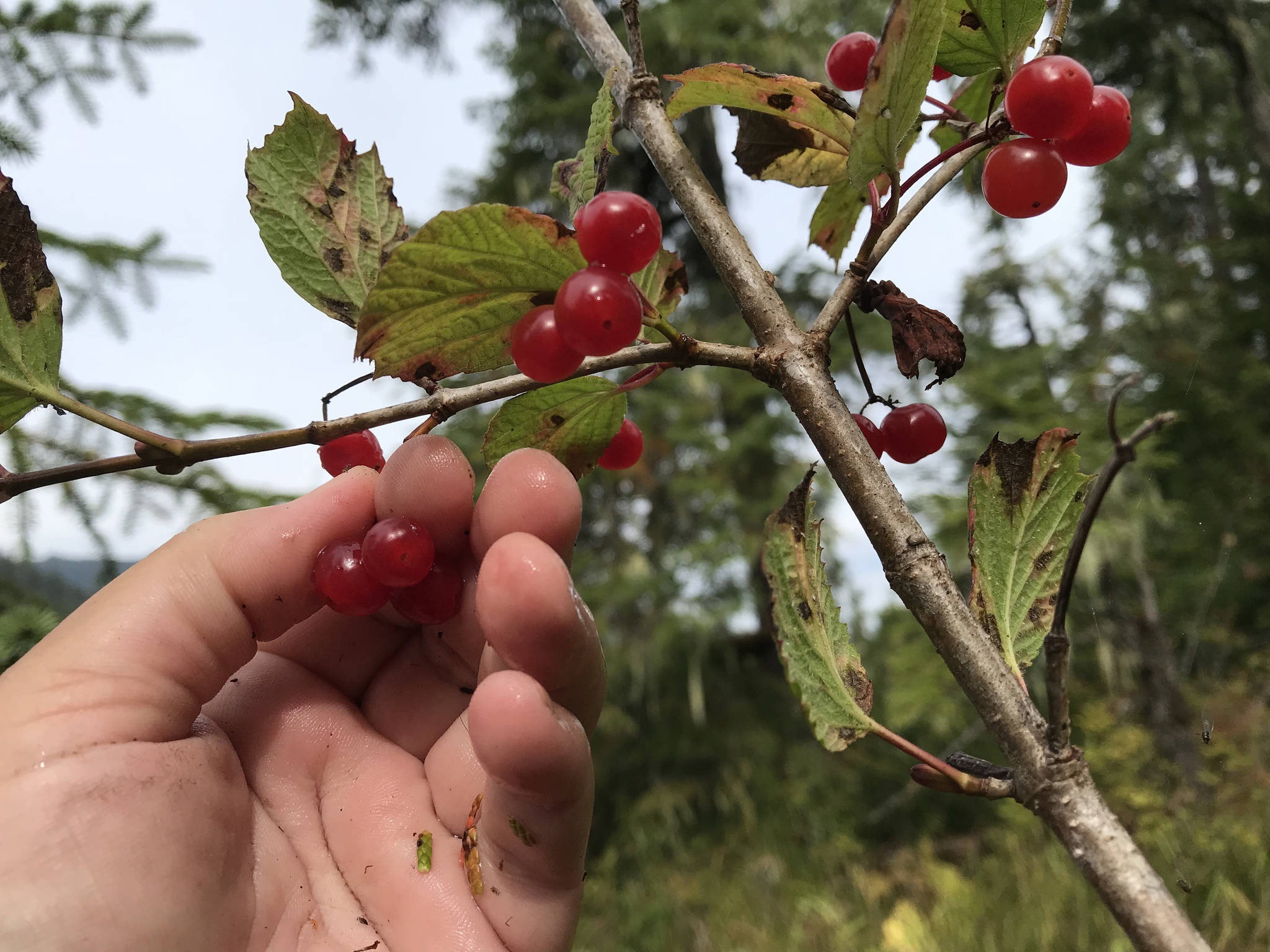
The plant blooms in May through July and the new berry turns yellow and finally turns bright red in late August or early September. Highbush cranberries are firm at first and then they soften and eventually fall off the bush. Some stragglers, though, will stay on all winter, food for birds and deer. The plumper, later fruit has less pectin in it, so some gatherers harvest when the berries first turn red. They have flat seeds that are not usually eaten.
Today’s instructions: Wear boots and a raincoat, and follow directions. We gather at a grassy marsh near the picnic table. My grandkids grab berry buckets from my car. We use recycled plastic coffee cans, ones their great-grandpa fashioned with a thick string. We spot a few bushes and set out, but first we announce we’re in the area, “Grandfather, it’s just us,” paying attention to our cultural taboo. In the Sámi worldview (also Finnish and Tlingit) it’s disrespectful to say the name “Bear” out loud in the woods. I adhere to this and teach it to my grandchildren. Yelling “ho bear” or “hey bear” could call the bear to you. As we head into the marsh I say, “Watch your footing. Consider each step. Especially if there’s no game trail to follow.”
Highbush cranberry bushes don’t have many leaves but they can grow up to 12 feet high. The berries grow in small clumps. The leaves turn beautiful red/orange in the fall. When bright red, highbush cranberries resemble ornaments on a Christmas tree. Now, cranberries hang high above my grandchildren’s heads. I show my grandchildren how to gently pull the branches down. If you’re too rough the berries will fall and you don’t want to break the branches, either. As we’re picking we say, “Gunalchéesh, thank you.”
I help my grandchildren climb up on a stump, making sure their footing is secure to reach a tall bush. I let them each try a cranberry but warn about the tartness. They make faces. Yes, they’re tart, but they’re high in antioxidants. A score above 40 is high and highbush cranberries score 174 (fresh). They’re also high in vitamin A, Vitamin C and fiber. We’re going to make ketchup out of them, some jelly and maybe fruit roll-ups.
“These berries are an important fall and winter food for birds like grouse,” I say, “so make sure you don’t pick all of them in one area. Leave some for the birds. And if you spill your bucket, leave them for the critters who scamper on the ground.”
My grandchildren and daughters are set up to pick the berries, but across the road, I spot tall branches beyond a stand of big spruce trees that might be highbush cranberries. The waist to head-high grass and the marshy lakeshore will make it difficult to get there. Highbush grow well within the tall grass along the perimeter of marshy areas. They also like the rocky slope along the edges of logging roads. From a distance, highbush resemble alder and crabapple so you can get really excited only to learn it’s a young alder. I decide I’m going to check it out.
I carefully step on the rocky embankment leading down into the grass. I trudge over rotting skunk cabbage and pass by a few game trails. My dog, Kéet follows me and within minutes she’s soaked. I make my way beyond the stand of trees. With each step I listen for the sound of sucking water. I expect to see a deer pop its head up out of the tall grass. I make noise, talking to the dog, “Grandfather, Grandmother I’m just picking cranberries. Thank you Gunalchéesh Giitu.”
The knoll turns out to be mossy fallen logs with waist-high grass surrounding them. The area is dense with highbush cranberry bushes. I make my way toward it, using my body to push through the grass. I climb up on the logs as Kéet effortlessly jumps up behind me. From the top of the log I look across the road and see my grandchildren and my daughters picking berries. The lake is a deep blue and the sun is warm on my face. I reflect on our values: harmony with nature, to live in balance with nature. I’m surrounded by hanging bejeweled cranberries. I fill my bucket.
We meet up at the picnic table for a simple lunch. As we eat, I talk about another Sámi value: wealth is shared. My grandchildren know whatever we make with the cranberries we’re going to share or give away. They know they’ve picked these berries for others. Back at the Fishcamp, I clean the berries of stems and leaves and freeze them in plastic baggies where they’ll stay good up to two years. I’ll get to jelly making and experimenting later in the fall and winter. In addition to jelly, ketchup and fruit leather, I might add the pulp and juice to muffins and breads. The University of Alaska Fairbanks, cooperative Extension Service (online) has a great handout with nutritional information, how to process, and recipes. For a highbush baked bean recipe, see Eating Wild by Erin Anais Heist (Juneau Empire, September 26, 2018). You can even make traditional medicines from highbush cranberry leaves and bark. Medicinal uses include treatments for infections, sore throats and constipation.
By harvesting from Pats Lake we celebrate this land, our family and traditions, and the recent successful effort by our community and our tribe to protect Pats Creek valley from the storage and disposal of lead-contaminated soil from a local junkyard. In my children’s and grandchildren’s Tlingit language they say, “A káx yan aydél wé tl’átgi: We are stewards of the air land and sea,” and in my Sámi culture, we say “nature reflects the Creator.” From nature we get many of our teachings. Picking highbush cranberries at Pats Lake with my daughter and grandkids provides the opportunity to pass down these cultural values to the next generation.
* Sámi Values: Harmony with Nature from Sámi tradition bearer Faith Feld
• Wrangell writer and artist Vivian Faith Prescott writes “Planet Alaska: Sharing our Stories” with her daughter, Vivian Mork Yéilk’.
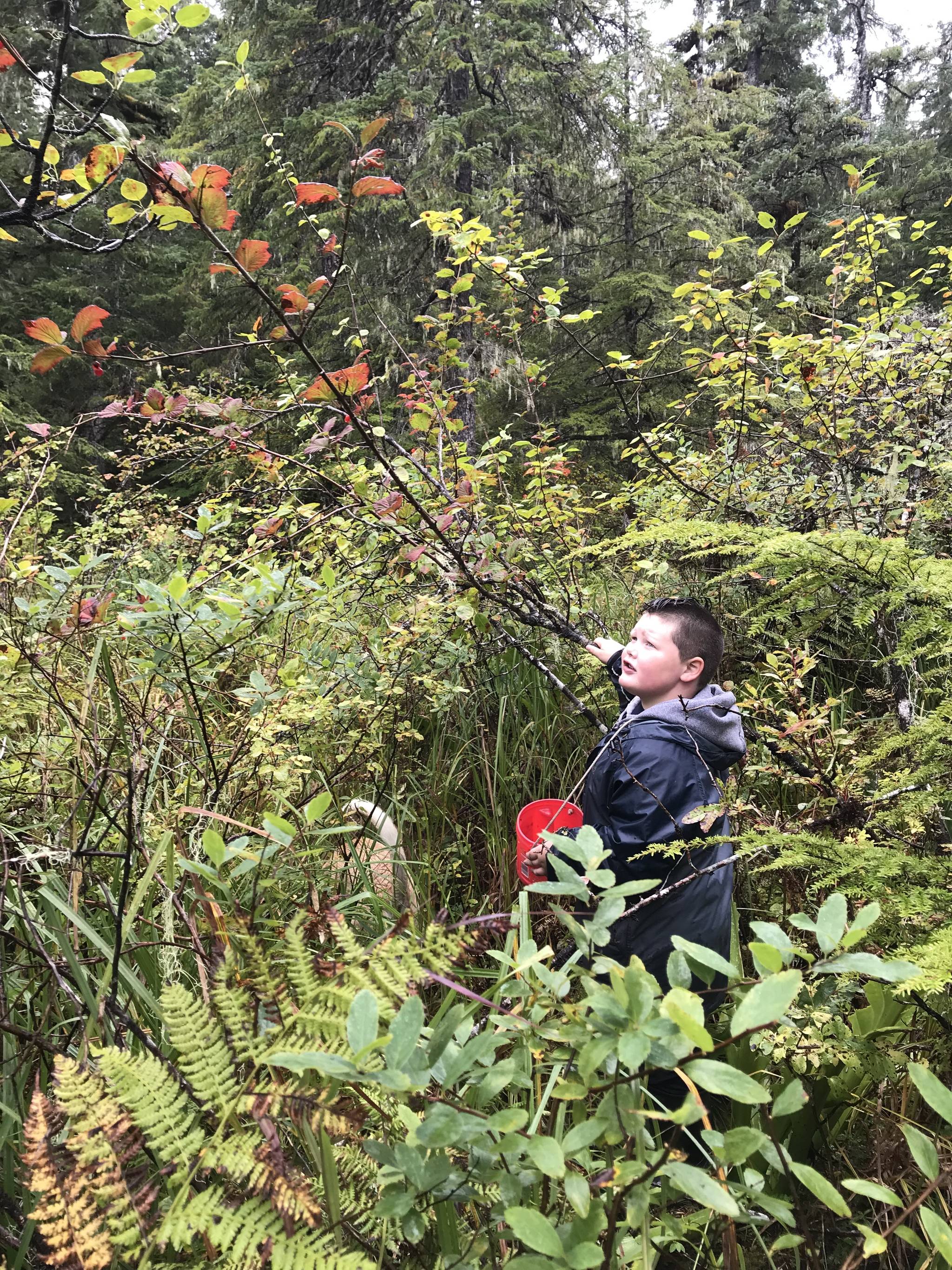
Prescott’s grandson, Jonah, picks from a highbush. (Vivian Faith Prescott | For the Capital City Weekly)
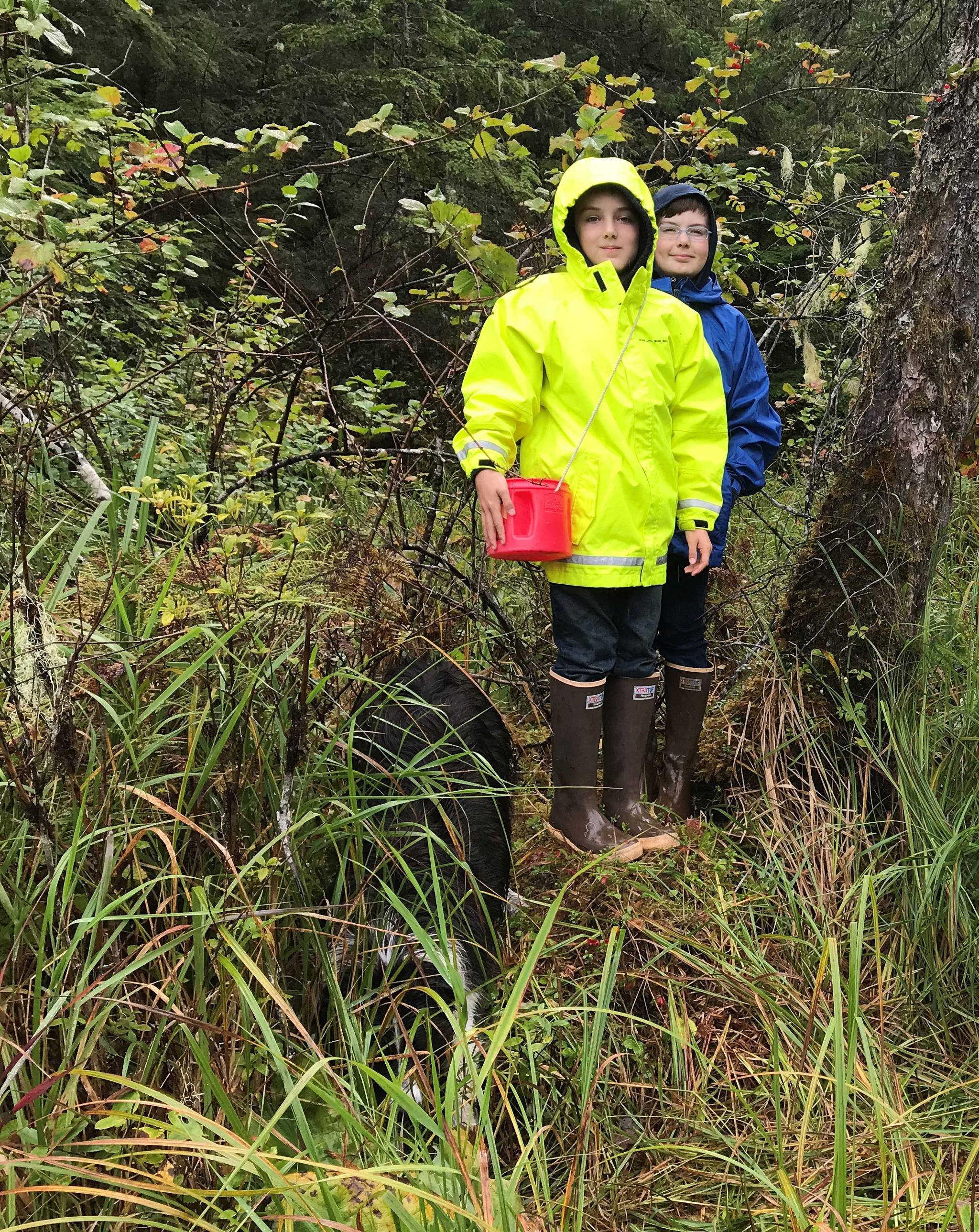
Prescott’s grandsons don rain gear and hold a berry bucket during a day of picking. (Vivian Faith Prescott | For the Capital City Weekly)
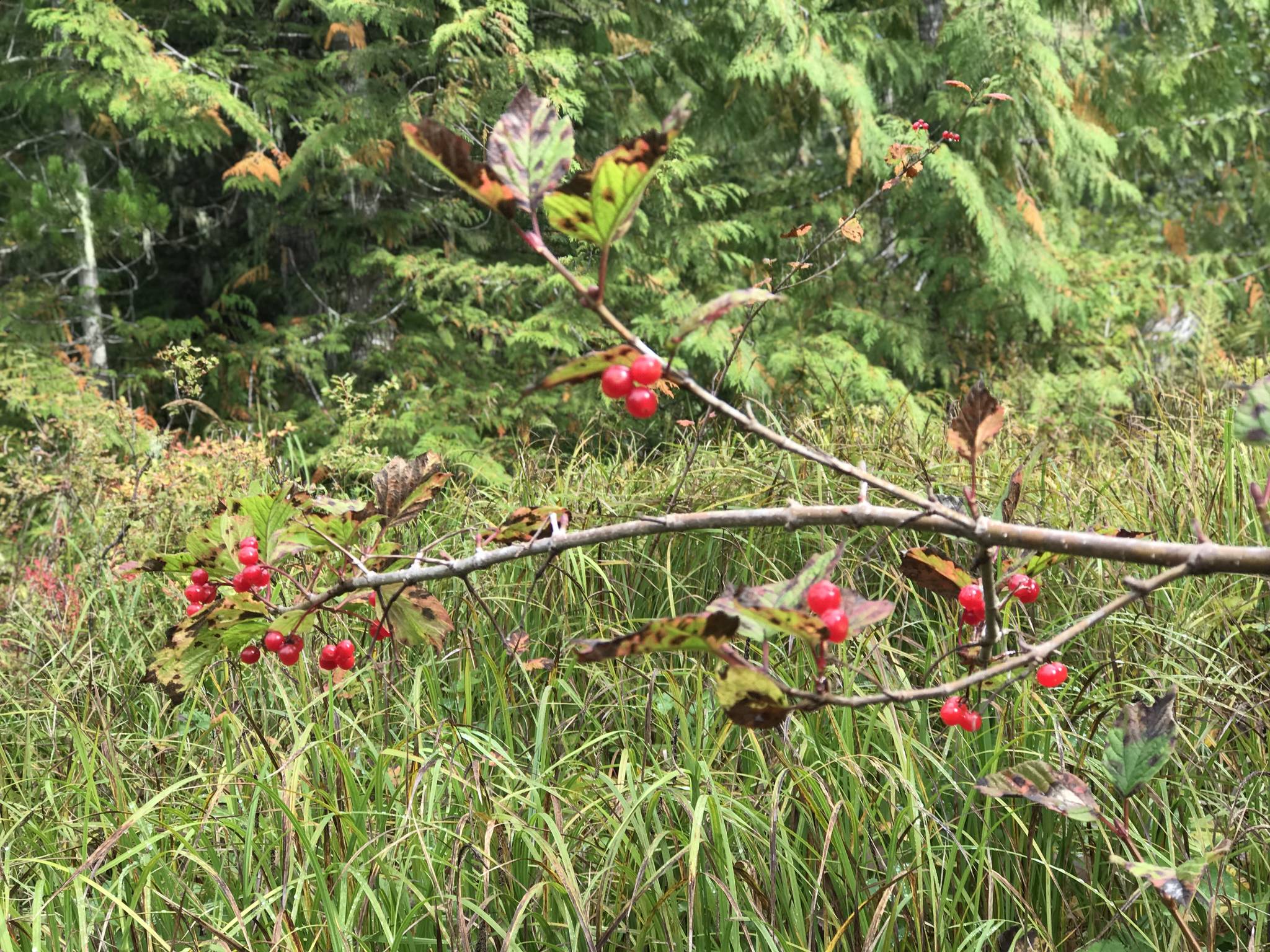
Highbush cranberries seen by Vivian Faith Prescott while out picking. The plant blooms in May through July and the new berry turns yellow and finally turns bright red in late August or early September. (Vivian Faith Prescott | For the Capital City Weekly)
