
Grandfather is fishing for king salmon on the Mercedes, his 40-foot wood troller.
The boat rocks, and he turns toward the jerking lines. He reels the girdies, and as the lines comes up, he sees it: a giant Pacific octopus. It’s monstrous with human-like skin tinged pink and purple. He unhooks it and it flops onto the deck-hatch and reaches its arms outward. Grandfather backs up against the pilothouse. A tentacle moves toward him as if it can sense him there; he readies his knife. The arm reaches Grandfather’s feet, moves up his pant leg, feeling along. It feels his bicep, his shoulder, and he resists the urge to slice it as the arm moves toward his face. He holds his breath. The octopus taps Grandfather’s cheek, then moves downward again, tracing his hip, down his leg, finally tapping its arm back across the deck. Grandfather exhales — he can breathe again.
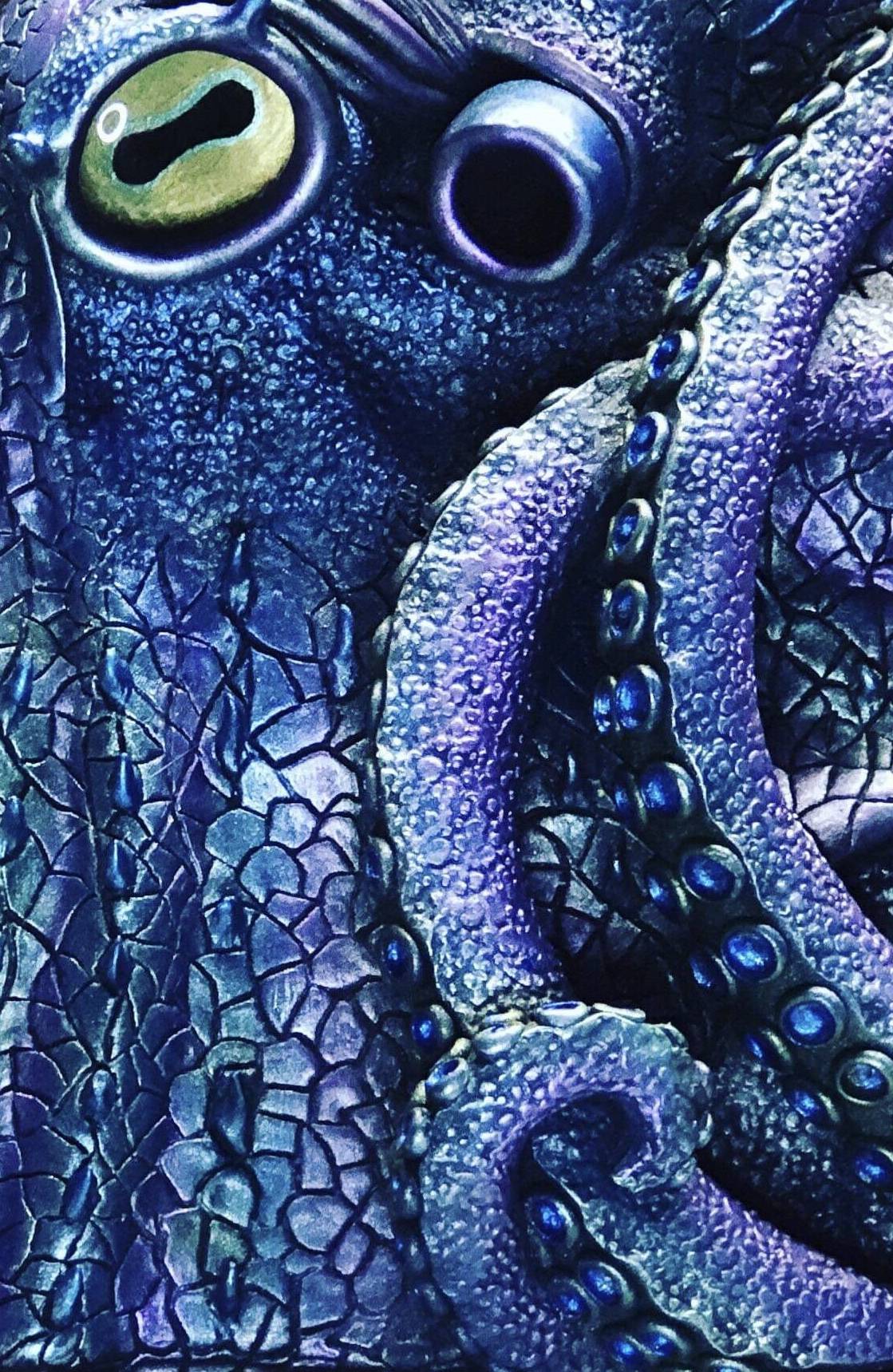
This is a giant Pacific octopus sculpture by Nicole Taylor giant at Nicci Knacks studio in Wrangell. (Courtesy Photo | Nicole Taylor)
Grandfather stays pressed against the pilothouse, watching. The octopus reaches out, spreading one arm to the starboard side; another arm reaches to the port side: a 12-foot beam. The creature touches the water on both sides, feeling its lifeline then pulls its eight arms together, stiffening them, then pushes off, heaving its body overboard. And with hardly a splash, the octopus descends beneath the surface of the green water.
Grandfather told this story to his wide-eyed son, my father, and my father told it to me.
The creature my grandfather hooked on his trolling gear was a giant Pacific octopus, the Enteroctopus dofleini, the largest octopus in the world. The giant Pacific octopus can grow up to 30-feet long and on average weigh one hundred pounds up to a couple hundred pounds. Not surprisingly the Tlingits called the large octopus a devilfish, and in the Lingít language is náakw (knockw). Giant octopuses occupy my worldview, they’re a part of my heritage. In my Finnish culture, in the Kalevala epic, there’s a creature referred to as Iku-Turso, a giant octopus or a combination of walrus and octopus. And then there’s the Kraken which is sometimes depicted as an octopus or giant squid.
My children’s people, the Tlingit, and my ancestors, the Sámi and Suomalaiset, have relied on the ocean’s bounty for thousands of years, so it’s no wonder many of our stories dwell in the sea. We think of the octopus as strictly being an ocean dweller but what if they do come ashore occasionally? My daughter, Vivian Mork Yéilk’, says her paternal Grandpa Elmer (Mork), has been telling her all of her life that octopuses walk on land. He said no one believed him. He told her a story about a time when he and his brother, Ray, were young and out exploring the beach near Hoonah’s cannery when they saw an octopus walk up the beach to the treeline and eat blueberries. They caught the octopus and killed it so they could eat it. When they told the story to their mother, Eliza Mork, she was mad at them. She said, “It was a special octopus and when you see animals doing human things, you leave them alone.”
When I think of this admonition I’m certain there’s more to this creature than we understand.
First close encounter and vivid dreams
My first encounter with an octopus occurred when I was around 4 years old. As children, my sister and I would go shrimping with my maternal grandfather, and on one occasion, the trawl pulled up a small octopus along with thousands of wiggling shrimp. My grandfather put it in a five-gallon bucket. We touched it and giggled, but the creature needed to return so we let it go. I still recall how my fingertips touched the octopus’s tentacles and how I sensed it was also touching me.
An octopus has an extremely sensitive touch; the rim of the suckers being the most sensitive. It’s likely my grandfather’s intimate encounter with a giant octopus was as terrifyingly wonderful for the octopus. A new study about how octopuses process information reveals they have similar intelligence to ravens and primates, but their neurons are in their arms and suckers in addition to the brain. They “feel” the world in order to know it, which is what the octopus was doing — learning about the fisherman who’d just accidentally plopped it on the back deck of his troller.
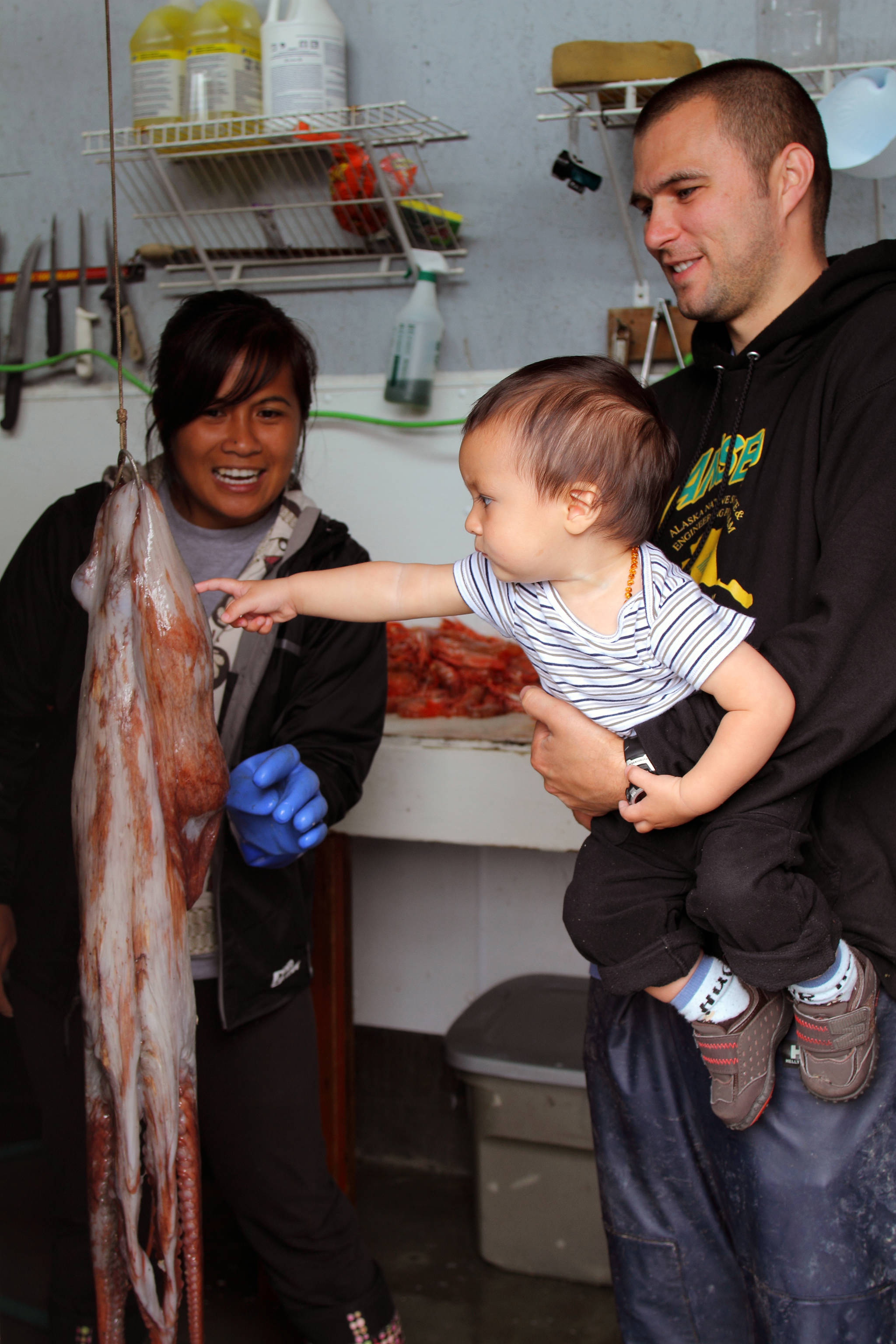
[‘Devilfish’ features a less pleasant octopus encounter]
It’s that time of the morning for vivid dreams, and I’m dreaming I’m walking the dock in Sitka’s harbor. I see my daughter, Vivian, on the stern of her liveaboard boat, leaning over the ocean speaking to a giant Pacific octopus. She has her iPhone out narrating the encounter on a live feed. The octopus is one of her clan crests so it really doesn’t surprise me, but I’m apprehensive, even a little scared. I don’t want her to fall in and I’m not sure of the octopus’ intentions. It is huge and an orange/pinkish color. It moves its giant tentacles about as it communicates with her. The octopus is holding something bright green in its tentacles. I look harder and realize it’s a book: my poetry collection “The Hide of My Tongue,” poems about Tlingit language loss and revitalization. Evidently, my daughter is teaching the octopus Lingít words and gifted the octopus my poetry book. The book is getting wet as the octopus holds it. Then as if to say thank you, the octopus reaches up and gently pats my daughters face. I wake up and lie there as if floating on the sea.
Later, I have my morning coffee and I check my Facebook newsfeed to discover a Facebook memory from six years prior — it’s the publication anniversary of my poetry collection. But, the thing is I don’t even know the publication date so I wasn’t thinking about the book, or hadn’t talked about it either, plus I hadn’t seen anything on social media about it. But evidently the octopus in my dream knew what date it was.
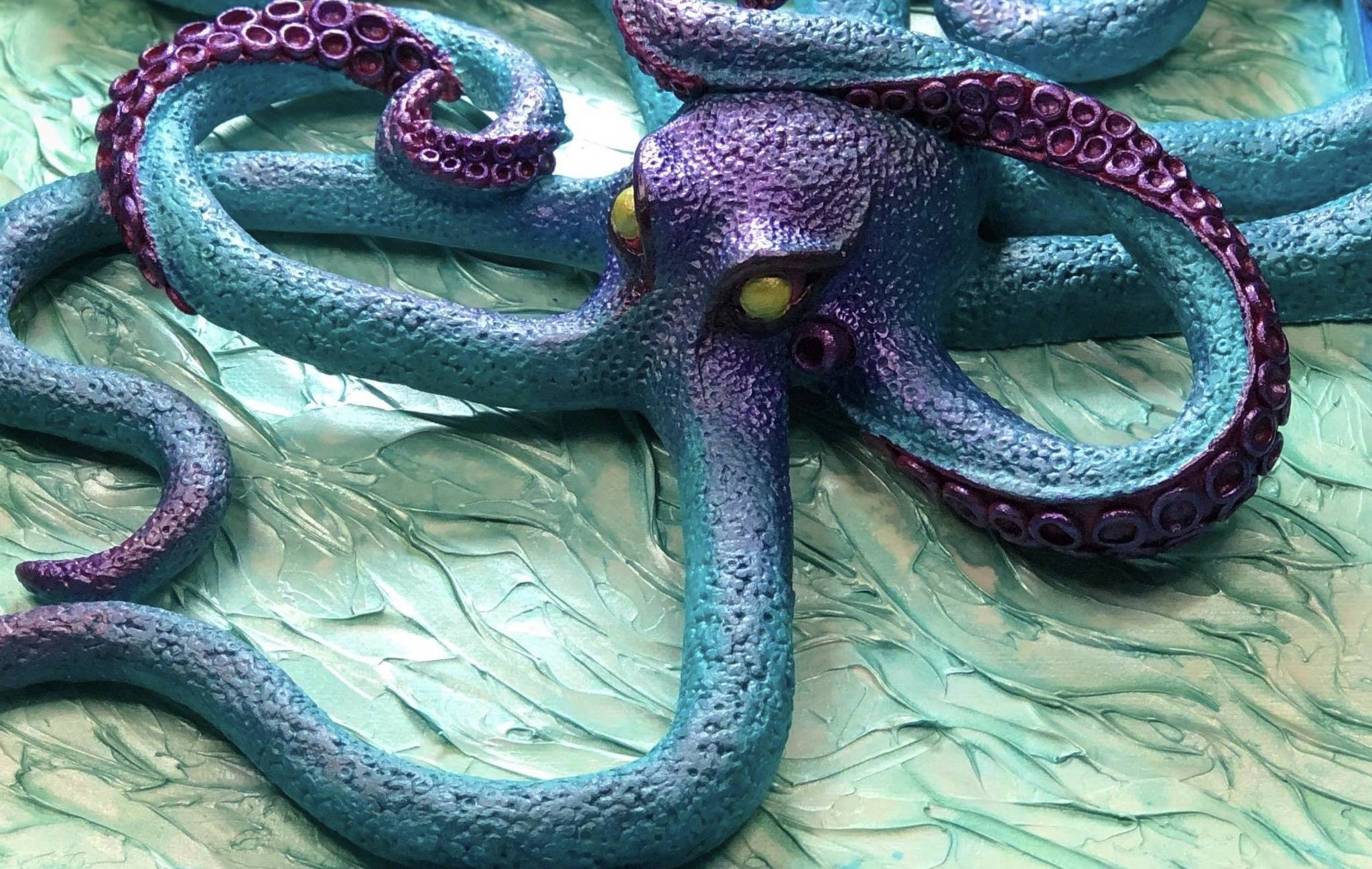
This is a giant Pacific octopus sculpture by Nicole Taylor giant at Nicci Knacks studio in Wrangell. (Courtesy Photo | Nicole Taylor)
Octopus dreams and encounters are always up to speculation.
My grandfather’s encounter with a giant octopus is certainly fascinating. Maybe, after it met my grandfather, the octopus swam home and told others of its adventure. Maybe, it told how it reached its long arm across the boat and patted up the curve of a creature’s legs, touched its bony hip, tapped up to Grandfather’s face where it rolled sucker-cups over a stubbled cheek and thumped a dimpled chin. And as the giant Pacific octopus patted Grandfather’s chest, it’s neurons fired as it felt Grandfather’s beating heart. The octopus likely considered this strange creature, my grandfather, and knew he was alive and that Grandfather was afraid, as afraid and anxious as the octopus was. And maybe, at that moment, the curious octopus decided to leap back into the sea.
• Wrangell writer and artist Vivian Faith Prescott writes the column “Planet Alaska” with her daughter, Vivian Mork Yéilk’.
