
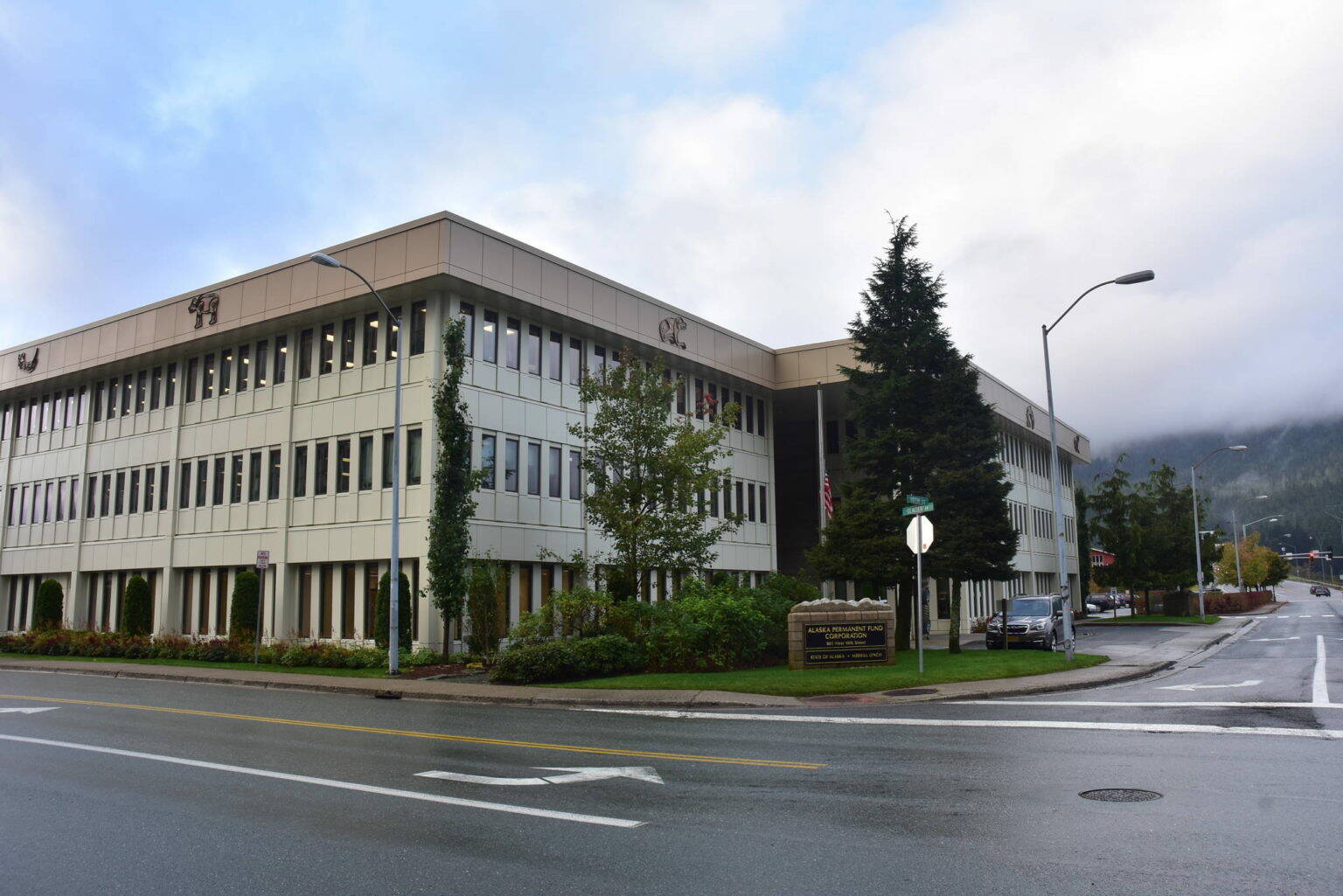
The Alaska Permanent Fund rose substantially in the past year, but it’s going to take a few years for that record-breaking performance to show up in the state’s annual draw from earnings on the fund, according to Legislative Finance Director Alexei Painter.
Under a 2018 law, the Alaska State Legislature limits itself to an annual draw from the earnings of the fund which is 5% of the average earnings over the first five of the past six fiscal years. Last year, that draw was $3.1 billion, according to the Sept. 30, APFC report, and the draw for the fiscal year 2023 will be $3.4 billion.
Because the draw amount is calculated by an average over five years, it’s going to take a few years to see 2021’s growth really impact the POMV draw, Painter said Friday in a phone interview. Forecasts show the earnings on the fund growing faster than inflation, Painter said, and show a rising POMV amount. That law was introduced by former Gov. Bill Walker, who said in his sponsor statement in 2017, the limit was intended to create a sustainable funding source for state services.
APFC has projections through the 2031 fiscal year, and currently show the state’s annual draw raising to $3.6 billion in fiscal year 2024 and $4 billion by FY2026, which begins July 1, 2025.
However, Gov. Mike Dunleavy and some legislative Republicans have advocated using the Alaska Permanent Fund’s record-breaking performance this year to pay a supplemental dividend, which would require breaking the POMV limit. Several Senate Republicans sent a letter on Oct. 25, to the chairs of the Senate Finance Committee requesting expeditious action be taken on a bill paying a supplemental dividend, but no meetings were held.
Dunleavy has submitted a plan to split the POMV draw in half, using half for the Permanent Fund dividend and the other to fund the state. However, if the state were to follow that formula, it would not have enough to fund its current obligations for state services, Painter said, and would still need roughly $500 million even if oil prices remained high.
Some lawmakers have said they’d support a one-time overdraw from the fund but not without a comprehensive fiscal plan in place.
[Alaska joins lawsuit over federal vaccine mandate]
However, breaking the POMV has strong bipartisan resistance from lawmakers who argue the move would be too costly to the state’s future earnings potential. Lawmakers have effectively finished legislative business for the year —the fourth special session officially ends Nov. 2 —and Dunleavy said he won’t call another. The next regular session begins Jan. 18, 2022.
The fund grew substantially in the past year, standing at just below $80 billion as of Sept. 30, according to the Alaska Permanent Fund Corporation.
“There is no doubt 2021 was an exceptional year for the Fund as it topped $80 billion, exceeding numerous benchmark forecasts and expectations along the way,” APFC CEO Angela Rodell said in the corporation’s 2021 annual report.
The annual draw from the fund has come to represent the largest source of state revenues but the state also takes in royalties from resource development. According to the Alaska Department of Revenue Alaska’s oil was trading at $85.25 per barrel as of Oct. 27. If oil prices remain high, Painter said the state could see up to $500 million in additional revenue.
• Contact reporter Peter Segall at psegall@juneauempire.com. Follow him on Twitter at @SegallJnuEmpire.
