
If you didn’t know how important the Alaska House’s vote on Senate Bill 23 was, you only had to look at Michele Morgan.
The founder of Juneau Stop Heroin, Start Talking, Morgan was visibly crying after lawmakers voted 36-0, with four members absent, to advance the bill.
“I feel like I’ve just watched my child graduate or be born,” she said. “I didn’t know I’d be this emotional.”
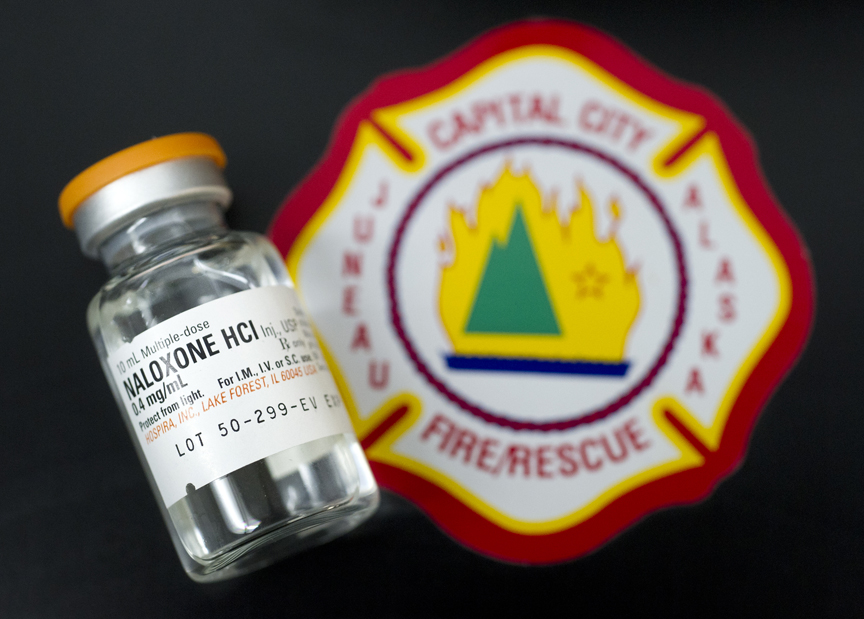
SB23 was begun by Sen. Johnny Ellis, D-Anchorage, last year. Formally, it gives legal protection to those who administer an overdose-prevention medication called Naloxone or Narcan to someone who is suffering from an overdose of heroin or opiate painkillers. That drug, called a “fire extinguisher” for overdoses, rapidly neutralizes the chemicals causing the overdose. If someone isn’t overdosing, Naloxone does nothing.
Put simply, the bill makes it easier for people to get Naloxone.
“Senate Bill 23 gives people a chance,” said Rep. Lynn Gattis, R-Wasilla and the lead House sponsor. “That’s what makes the bill literally a lifesaver.”
Rep. Cathy Muñoz, R-Juneau, spoke on the floor in favor of the bill. “Heroin is a scourge on my community,” she said. “Dealing with the devastation of heroin abuse will take many approaches; SB23 is a step in the right direction.”
This isn’t Ellis’ first attempt to promote a similar bill, but he said it garnered widespread support this time around because people are seeing the effects of heroin and opioid addiction in their own communities.
“For years, I was trying to get money for treatment … and for the doctors prescribing Narcan and Naloxone,” Ellis said, “but when it was just people of color in my urban neighborhood going to the methadone clinic, there was not a lot of empathy or sympathy.”
Heroin use has increased across the country, a trend that is a direct result of the overprescription of OxyContin, an opioid painkiller. When drug companies reformulated Oxy pills to make them harder to abuse in 2010, addicts turned to heroin, and to crime to fund their heroin addiction.
The heroin death toll in the Last Frontier has quintupled since 2008, according to Alaska Bureau of Vital Statistics provided to the Empire in December 2015. In 2015, 31 people died from heroin (either as an underlying or contributing cause) in Alaska, seven of them in Juneau.
So far in 2016, there’s been one drug-related death, and 24 drug overdose calls that the Juneau Police Department and Capital City Fire/Rescue have responded to, according to JPD.
“We started to get the Juneau folks with their bumper stickers and their magnets and lobbying the Legislature and making this an issue,” Ellis said.
He credited the three members of Juneau’s Legislative delegation – Sen. Dennis Egan, D-Juneau, Rep. Sam Kito III, D-Juneau, and Muñoz – for getting behind the legislation early.
He also credited House Rules Committee chairman Craig Johnson, R-Anchorage, for scheduling the bill for a floor vote even as the House has vowed to not consider any bills not pertaining to the budget.
Ellis, Morgan and others said SB23 isn’t a final step but a first one. More work will be needed to address the state’s lack of detox and treatment centers.
For the time being, the House vote keeps SB23 on the fast track for approval. It now heads back to the Senate for a concurrence vote, something that is likely to be a formality. Assuming the Senate approves it later this week, the bill will head to the desk of Gov. Bill Walker, who is expected to sign it into law.
The Department of Health and Social Services is then expected to issue emergency regulations that short-circuit the normal timeline for implementation. That would make the drug available from pharmacies almost immediately.
There will be a charge to buy the drug, and anyone who buys it must be able to demonstrate that they know how to administer it correctly.
Morgan said the biggest benefit of the bill may not be within its language at all. The Legislature’s attention shows there is a problem, and it’s OK to talk about it.
“Families aren’t going to be pushed in the closet or ashamed that their loved ones are stricken with this (addiction),” she said. “If we save one person, we win.”
• Contact reporter James Brooks at james.k.brooks@juneauempire.com.
