
By Mary F. Willson
For the Juneau Empire
A human day-hiker usually carries a lunch in a backpack and may require a canine companion to do likewise. However, other animals carry lunch internally, in special storage compartments. Here are some examples.
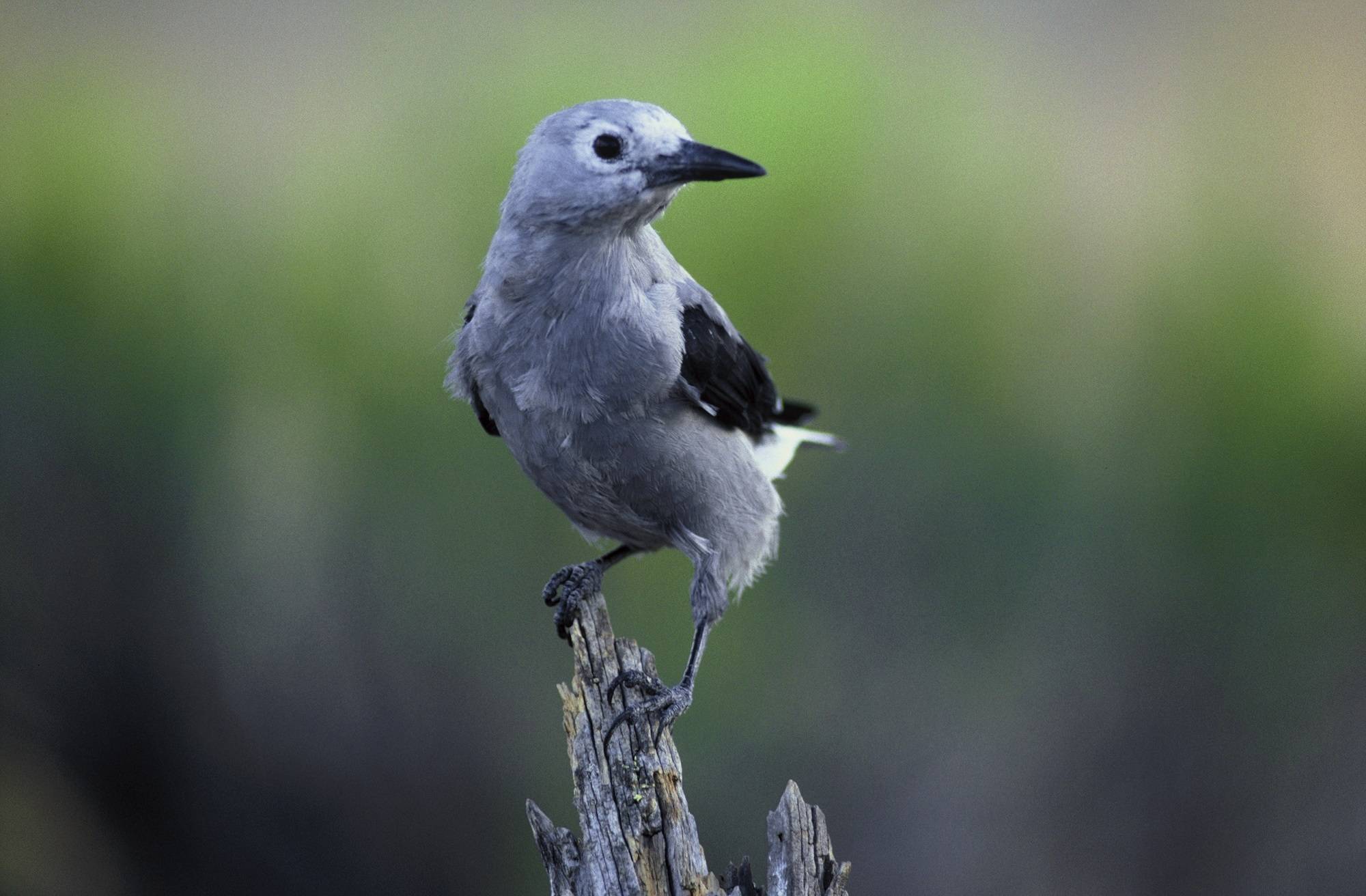
Some birds have gular pouches that start under the tongue and extend down the throat. Clark’s nutcracker reportedly can carry a hundred or more pine seeds in their gular pouches, to be cached for future lunches. Blue jays can carry several acorns in the pouch, and Steller’s jays can pack many sunflower seeds into theirs. Townsend’s solitaires, both male and female, have pouches just during the breeding season, presumably to carry bigger loads to the chicks; several caterpillars can be stored there for delivery to the nest. Pinyon jays have, not exactly a pouch, but a distensible esophagus that can carry several dozen pine seeds for the jays to cache. A bird with a full gular pouch shows a noticeable bulge on the throat. Gular pouches have other functions too, but those are not part of this story.
Many birds have crops (or craws) — an enlarged, thin-walled, distensible part of the lower esophagus that can accumulate considerable amounts of food. The size and shape of bird crops varies greatly among species, from just a stretchy portion of the esophagus (e.g., in fish-eaters such as cormorants) to a bag-like expansion. Most omnivorous and seed-eating birds have storage crops. For example, parrots, as well as canaries and other finches, store food in their crops to regurgitate for their chicks. Chickens and turkeys have crops, but not geese. Even many raptors are said to have crops, but not owls. Scavengers such as turkey vultures can store a lot of carrion in a bulging crop. A foraging hummingbird may fill up its crop with nectar and then sit quietly for several minutes. It’s not doing ‘nothing’; it takes a few minutes for the nectar to move on to the stomach and make room for more. Hummers can store nectar, and perhaps insects, in their crops, to deliver to chicks in the nest.
Bohemian waxwings eat a lot of fruit of many species; mountain ash is reported to be a favorite. They can pack several mountain ash berries into their crops at a time. A little flock of these waxwings was perched in an alder tree outside a window, where an observant friend watched them. A waxwing with nothing in its bill suddenly held a fruit that was quickly swallowed. Up came another fruit; it was dropped, probably accidentally. Then another one was regurgitated and swallowed. As one fruit after another emerged, the size of the lump in the throat area got smaller and smaller.
One day on my pond this fall, I saw two mallards that looked most peculiar. Viewed from the front, the lower neck and upper chest were totally lopsided, bagging way out to the right. Both birds had clearly been foraging very successfully, storing lots of goodies in their crops. And they were back to get more.
The strange hoatzin of South America eats mostly leaves; its crop has been modified to do double-duty, becoming used for digestion as well as storage.
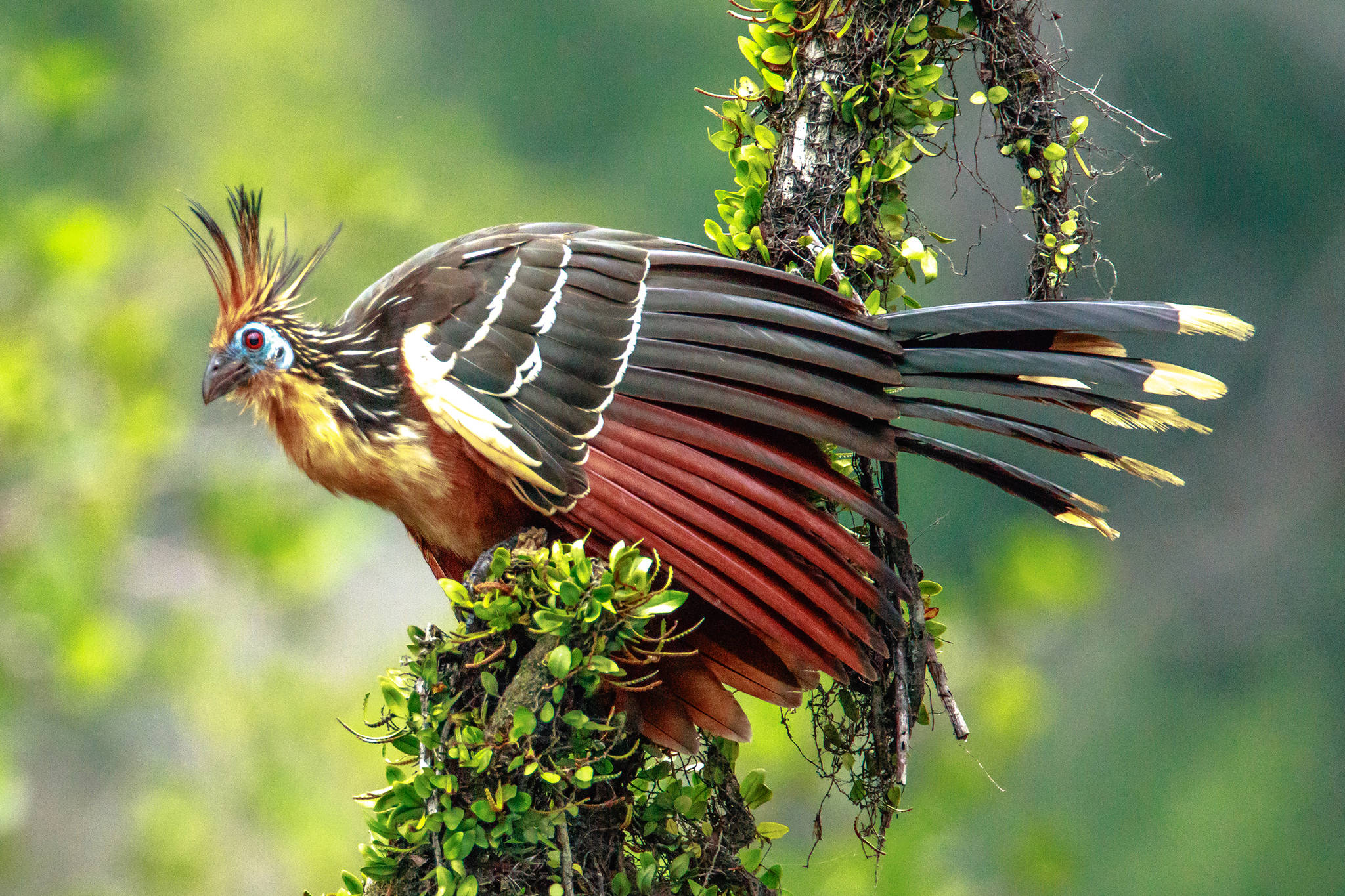
The strange hoatzin of South America eats mostly leaves; its crop has been modified to do double-duty, becoming used for digestion as well as storage. (Courtesy Photo / Murray Foubister, Wikimedia)
Hoatzins are the only birds known to have foregut fermentation (as cows do): The modified crop houses special bacteria, which ferment the ingested leaves. When they load up this crop with big meals to be processed, hoatzins would bulge so much they’d tip over but, conveniently, they have a big callus on the breastbone that braces them upright.
Lots of insects have crops too, near the beginning of the digestive tract, just after the junction of thorax and abdomen. As is the case for birds, in some insects, the crop is like a bag, but in others it’s just a wide place in the esophagus.
It may be used only for storage, but in some insects digestion may begin there, before the food passes on the stomach. In honeybees, the crop is sometimes called the honey stomach. A foraging honeybee gathers nectar from flowers, stores it in the crop, and the loaded bee flies to the hive, perhaps digesting a bit of the nectar to fuel its own activity. In the crop, an enzyme breaks down some of the sugar into simpler sugars and compounds that resist invasion by microbes. (Sucrose breaks down to glucose and fructose, and glucose is further broken down to make protective compounds). In the hive, the load of nectar is passed from the forager to worker bees, who move the liquid around in their mouths, making bubbles that allow water to evaporate. They may also place water droplets on the honeycomb and fan them with their wings, evaporating more water. So, at each step, water is removed from the nectar, leaving thicker liquid with a high concentration of sugars and some protective compounds, to be stored in the cells of the honeycomb.
That’s how they make honey to feed the larvae.
• Mary F. Willson is a retired professor of ecology.“On The Trails” is a weekly column that appears in the Juneau Empire every Wednesday.
