
By Mary F. Willson
At the very end of June, a visiting friend and I went out there, to see what we could see. Our usual rule is that we must find at least three things of notable interest before we can go home. No problem on this day!
As we emerged from the woods into the first meadow, Lincoln’s sparrows were singing all along the forest edges. A female robin was foraging on the ground, searching among the various low-growing meadow plants and coming up with fat, green caterpillars, one after another. Three, four, then five, and her bill looked fully loaded, but she put them down to reorganize them, and then picked up number six. Finally she flew off into the woods, several hundred yards away. Maybe the long flight made the big payload especially profitable.
Although we couldn’t see her actually grabbing her prey, we though she was paying special attention to beach pea. So after she left, we moved in to take a look, and quickly found more green caterpillars clinging closely to beach pea stems. With her chicks so far away, how had she learned that those tasty morsels were out there?
We strolled along, noticing numerous bumblebees on the milkwort and lupines—a good sign, as they had seemed scarce earlier in the season. White bog orchids sent their delicate scent over the trail.
At the far-distant end of the big meadow, something moved out of the tall grass and showed itself to be a deer. She moved in and out of the grass, only occasionally visible, for a while. Then she came out fully, remarkable for the bright rufous crown of fur on her head. And at her heels were two small, spotted fawns. They were now coming in our direction, so we promptly sat down at the edge of the trail and became immobile lumps, not daring to get out cameras for fear of startling them. The whole family came on; she was clearly alert but calm, and the young’uns skittered along at her feet. They all walked by us, not ten feet away and casually went on down the trail. A treat to be stored in memory.
Out on the beaches, my friend heard Caspian terns, and then we saw them coming in to land on a sand bar with other birds. Three juvenile ravens were making a racket in a grove above the beach, and presently they came down to the sand, still hollering. No food was forth-coming, although an adult was with them, just marching to and fro with its crown and flank feathers erected—sending them some message? A fourth young raven flew in from out on the intertidal area and joined the gang. The adult poked at something on the sand, but the kids showed little interest.
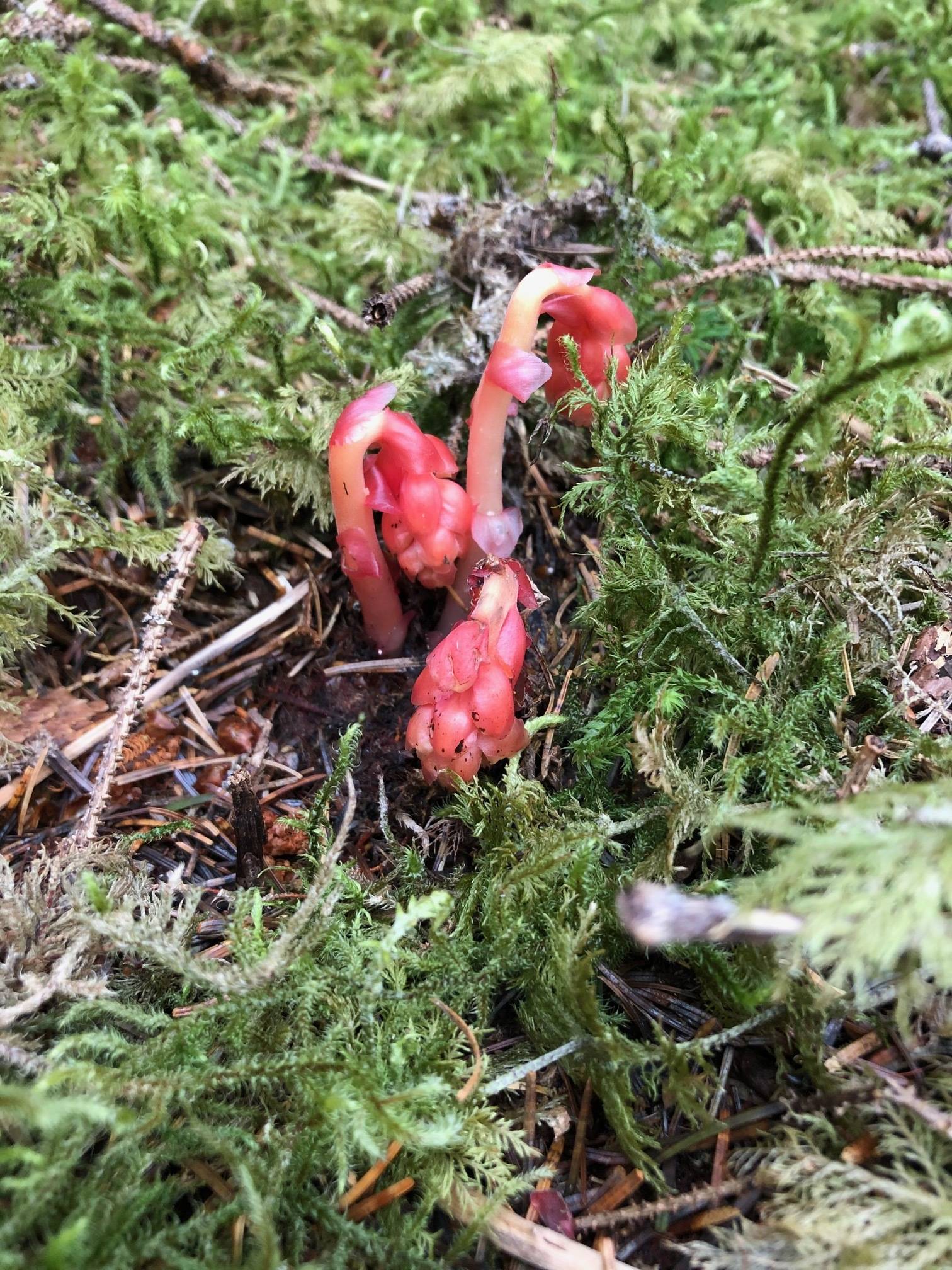
In one of the groves, we spotted a weird plant with many tall, dark spikes of old seed capsules and several bright orange stems just bulging out of the ground. There would be flowers when the stems were fully emerged; the flowers are pendant when they come out of the ground, but by the time the capsule is mature, it is held upright. Bees may be the principal pollinator. This plant lacks chlorophyll and has no green parts, so it gets its carbohydrates another way: its roots tap into mycorrhizal fungi that form underground connections among trees or other plants, and thus it is parasitic on those fungi or indirectly parasitic on the plants that the fungi connect. Called pinesap, it typically grows under conifers, but I’d not seen one here before. A good find!
The last treasure was in the sandy slough running through the big meadow, inundated on a good high tide but now dry. We spotted a small, sandy mound with a hole in the middle (like an anthill in a sidewalk crack). Whatever was in the hole quickly pulled back into the burrow, showing little of itself. In the same area, there were the remains of old mounds now abandoned, indicating that this beastie had been here for a while. But who is it?A helpful, knowledgeable source suggested that it is a type of square-headed digger wasp, a group distributed around the northern hemisphere. The adults feed on nectar of plants such as angelica and cow parsnip.
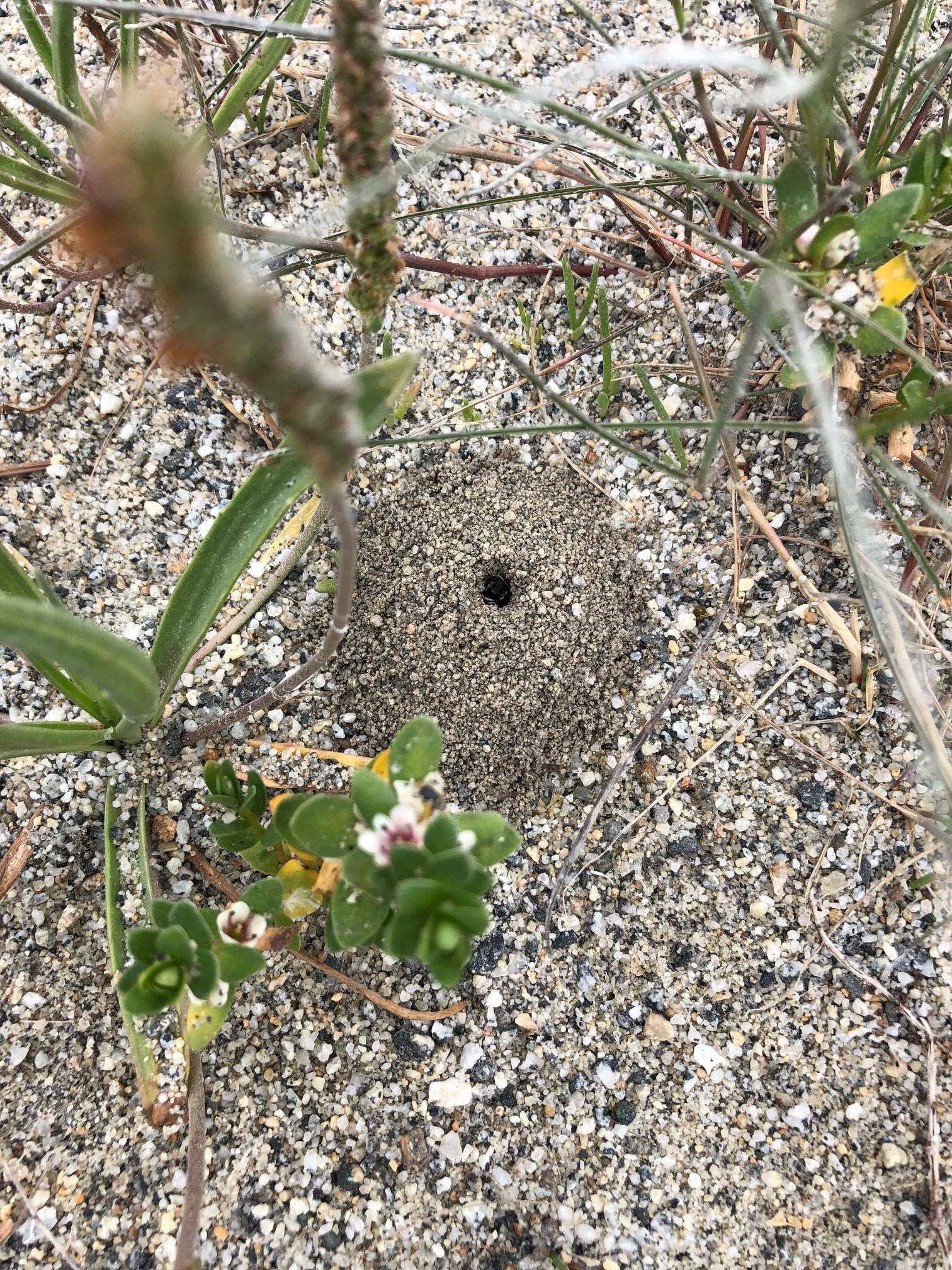
The burrow of a square-headed digger wasp, which has pulled down below the entrance. (Courtesy Photo / Kathy Hocker)
Males of most species have an expanded flange on their forelegs, which are apparently used during mating to cover a female’s eyes—not to blind her but to filter the light in particular ways that let her identify the male as belonging to the proper species. Females make burrows, usually in sandy places; at the end of a burrow that may be several inches long, she lays eggs and provisions the larvae with paralyzed insect prey.
• Mary F. Willson is a retired professor of ecology. “On the Trails” appears every Wednesday in the Juneau Empire.
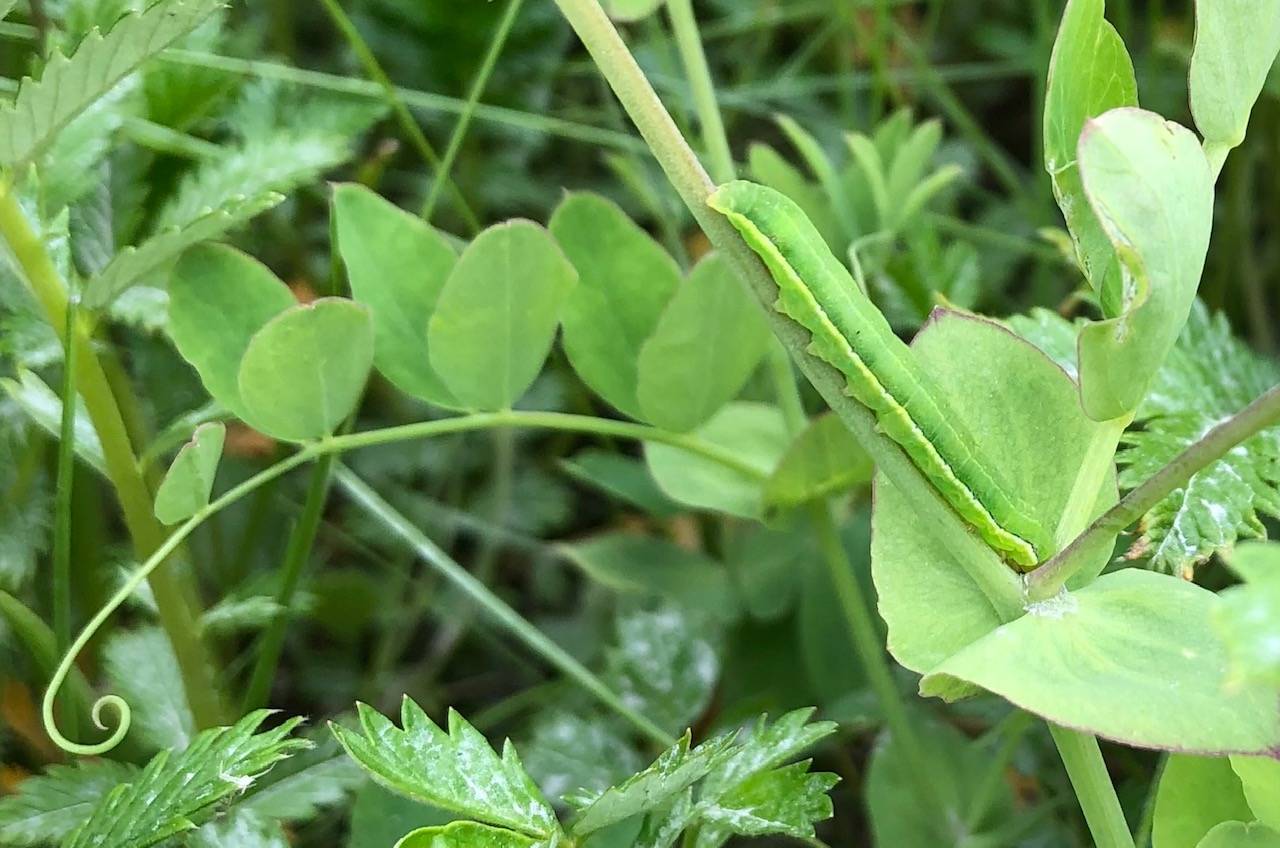
juicy green caterpillar lies along a beach pea stem, having escaped a foraging robin. (Courtesy Photo / Kathy Hocker)
