
From time to time, I venture out on the wetlands. I have to prepare myself to endure the racket from aircraft. In addition to the occasional roar of the big planes, there’s the somewhat lesser roar and buzz of small planes, and worst of all — the nearly continuous rumble of seemingly endless lines of helicopters, the sure signal of Cruise Season.
However, the flower display in the first part of the big meadow was worth a visit. On a sunny morning in mid-June, the main show was lupines and buttercups. Lots of chocolate lilies (a.k.a. riceroot) were blooming; they are pollinated by flies attracted to the odor (of dead meat). Shooting stars added pink touches as they ended their flowering season, and irises were just starting to bloom. This is Iris setosa, which has three showy sepals but lacks the upright, colorful petals of many other irises. Instead, the three petals are small funnel-shaped structures down between the sepals. It is usually pollinated by bees, but I haven’t seen any bumblebees on irises so far this summer. Farther out on the flats, silverweed and milkwort were going strong, with sizeable patches of beach pea.
Lupine has flowers that typically require a bee to pry them open, exposing the “keel”, which houses the sex organs. Apparently there is no nectar in the flowers, and bees go for the pollen. Many lupine species are reported to be self-compatible, setting seed from pollen on the same plant and not requiring pollen from a different individual plant. The uppermost petals of lupine flowers are distinguished by colored spots (in some species) or by a color different from the lower petals. Our common local species (Lupinus nootkatensis) displays whitish upper petals. Several studies have shown that lupine’s upper petals turn purple after a bee has visited, giving the bees a signal about which flowers have been visited and thus would be less rewarding. On another day, a friend and I opened the keel of some purple flowers and found no anthers full of pollen, but the keel of whitish flowers usually held fat anthers with pollen.
One sunny, hot afternoon, I went out to look at some bee behavior. I watched about forty or fifty bees (the most I’ve seen all summer!) attending to lupine flowers. I found that if a lupine plant had mature whitish flowers in the upper inflorescence, most bees did spend their time there, often pausing to investigate, usually letting their weight open the flower while scrobbling rapidly with their legs. They seldom visited the lower, more-purple flowers. However, if the upper flowers were still tight buds or dead, bees commonly checked out the lower flowers, usually just touching them ever so briefly. Those flowers may set seed, but they may have the additional function of increasing the total attractiveness of the floral display, to draw in more pollinators.
Questions remain! Do our local lupines cross-pollinate or self-pollinate or both? If the bees are really pollinating, how do they transfer pollen to the stigma? One suggestion is that by rubbing on the keel, they move the stamens around and transfer self-pollen to the stigma inside the keel. But if cross-pollination occurs, exactly how do the bees extract the pollen from the keel and transfer it to another stigma? When the keel is depressed by the bee (or my forceps), the tip of the keel often sticks out, and sometimes the pistil and stamens stick out too, maybe making them accessible to a bee. The keel often held tiny brown thrips too; could they be interested in pollen and might they account for what looked like aborted, withered stamens? Ach, there’s always more to be learned.
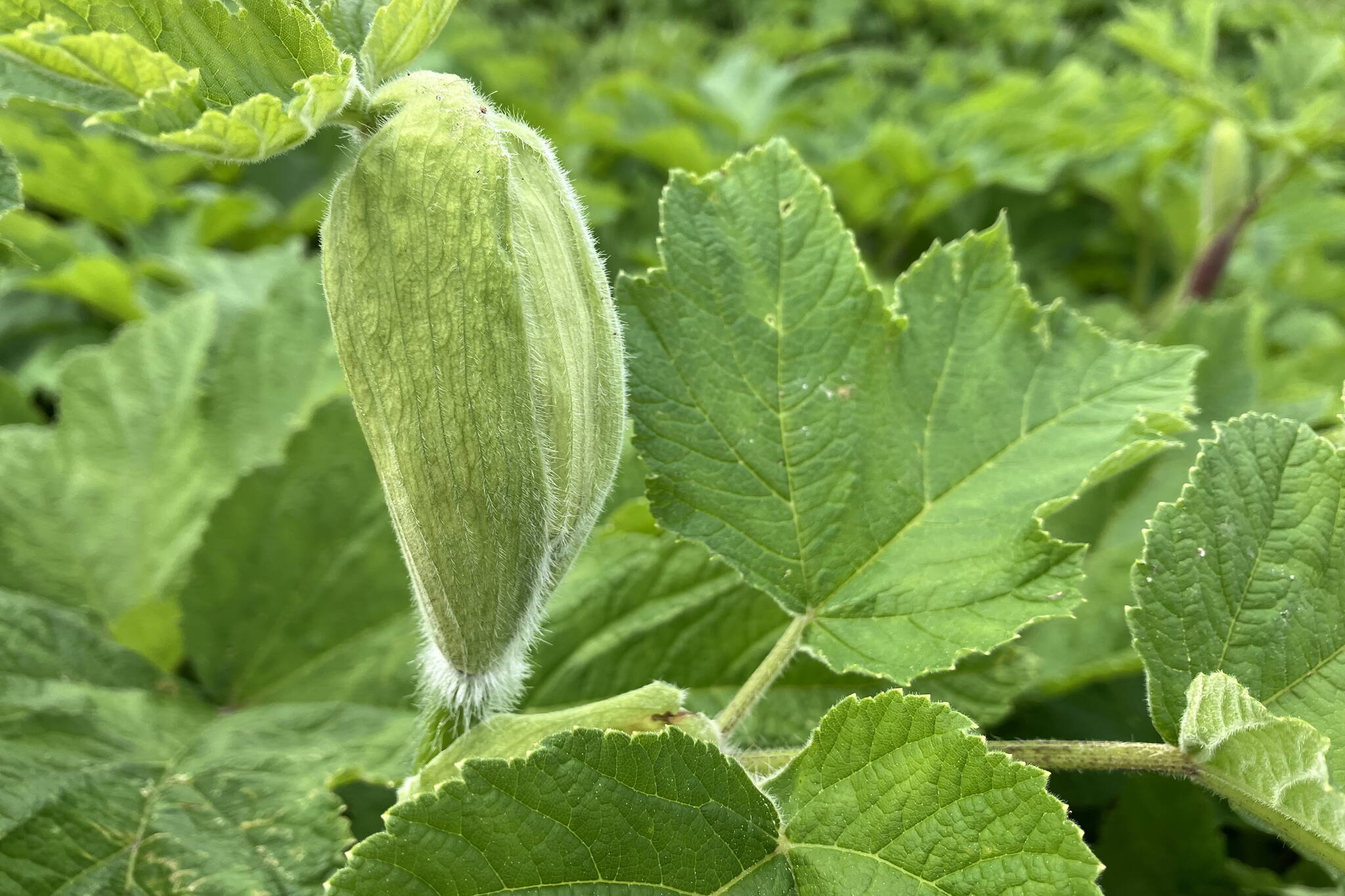
Cow parsnip inflorescences were emerging from their huge sheaths and starting to flower. Those sheaths are interesting and unusual, and I’ve wondered about them for a long time. They have the superficial texture of flannel, but they are quite sturdy with strong rib-like supports. Each one houses an inflorescence, often with an attendant leaf; that leaf may emerge from the housing before or after the inflorescence. That seems like a big investment in housing the flower buds (and often a young leaf). Are there some special dangers for this species that necessitate such protection? The small flowers are typically visited by flies of various sizes.
Savanna sparrows were everywhere, popping up out of the tall grass and disappearing just as quickly. Their nests were well hidden down in the vegetation; I’m glad I don’t have to try to find them! Somehow, many of them probably survive the incursions of wandering humans and dogs.
The tide was out, so the sloughs were relatively dry. I was surprised to find the tracks of a doe and fawn in one sandy slough way out on the wetland. They had ambled along in the slough for some distance before moving up into the thick grasses. I have to wonder what they were doing way out there.
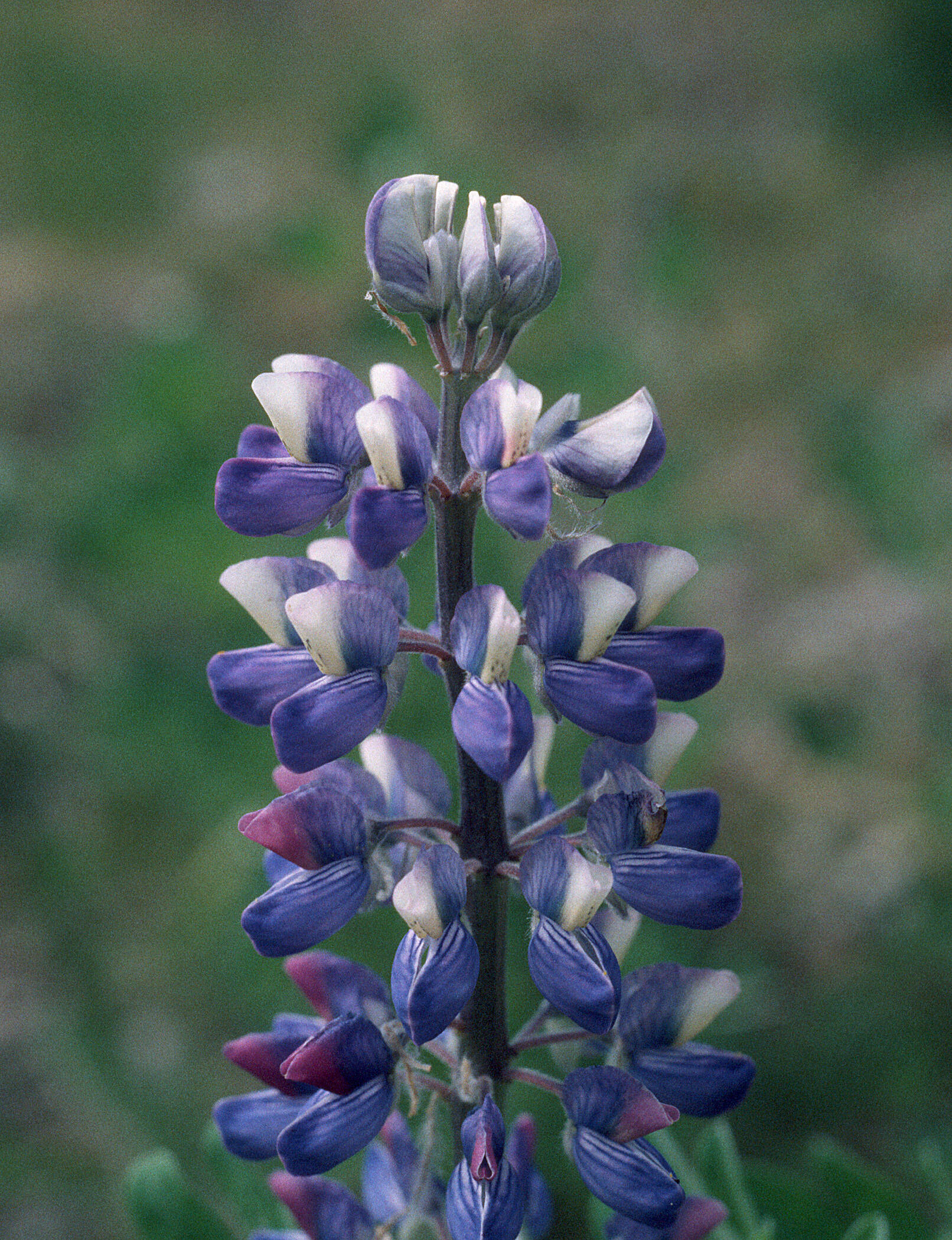
The upper petals of lupine flowers are whitish before they have been visited by bees, as a signal that pollen is still available; they turn dark after visitation. (Photo by Bob Armstrong)
