
By Mary F. Willson
Here in a rainforest, we don’t get the flamboyant displays of golden-leaved aspens or the flame-colored maples, although there may be some isolated cases of such brilliance dotted about our city streets. Our alpine zones are sometimes full of glorious color, but not all of us can get there. But we do love color. However, think not that we are deprived of these season visions; we have plenty of fall colors. They’re usually somewhat more subtle and on a smaller scale, but quite wonderful in their own way, when we bother to look. Attentiveness, as Robin Wall Kimmerer noted, is the key to seeing.
Here are a few examples of enjoyable displays of fall colors we’ve seen recently:
■ on a hummock in a muskeg, a mat of sphagnum moss had turned partly red, still spangled with spots of gold and green. The mat was decorated with crimson leaves of cloudberry, a cluster of scarlet bunchberries, and bunchberry leaves in scarlet and green.
■ the last stands of fireweed can be pink or red, or sometimes both of those colors grading into oranges and yellows and remnants of green.
■ subalpine slopes are clothed in deer cabbage, offering a mosaic of yellow, golds, russets, and rich browns.
■ high-bush cranberry shrubs often sport many colors—the whole bush may bear gorgeous red leaves. On others, each leaf can display every shade of red, orange, and yellow. Sometimes the whole show is high-lighted by those lovely red berries.
■ the understory of the dark conifer forest is brightened by the broad, yellow leaves of devils club, even as they become dilapidated.
■ cottonwood leaves often turn bronze or gold and flutter nicely in a breeze. How sad that the whole row of shapely young cottonwoods along Vanderbilt Hill Road has been destroyed.
■ along one trail, I found a single salmonberry cane with every leaf a color-treat. An occasional leafy stem of goats-beard may be very red in the midst of others that are still green.
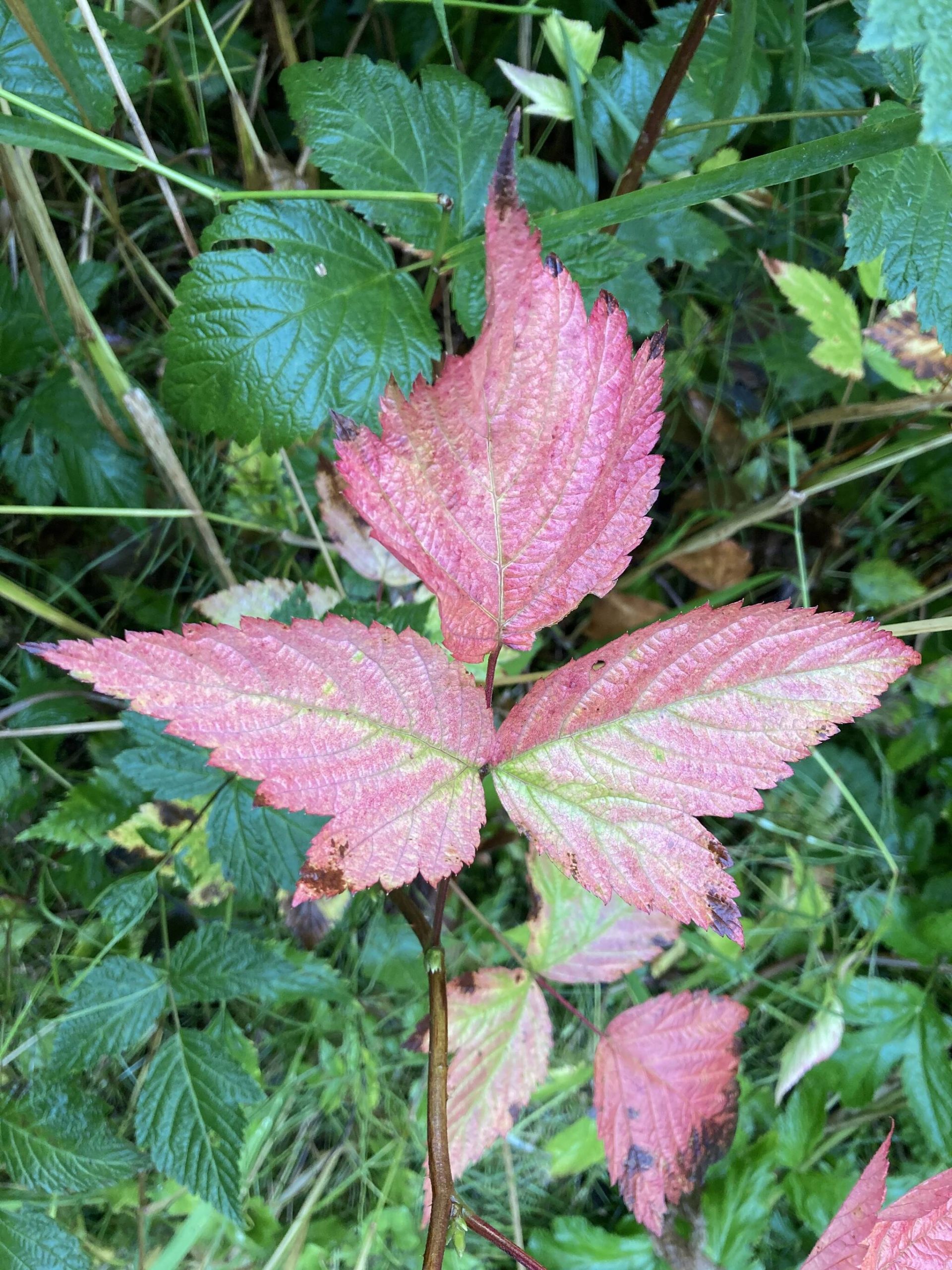
Salmonberry leaves of unusual color on one cane; nearby canes bore green leaves.(Courtesy Photo / Mary F. Willson)
■ in the forest edges, the heart-shaped leaves of mayflower turn yellow—or sometimes an unusual pattern of white with black lines.
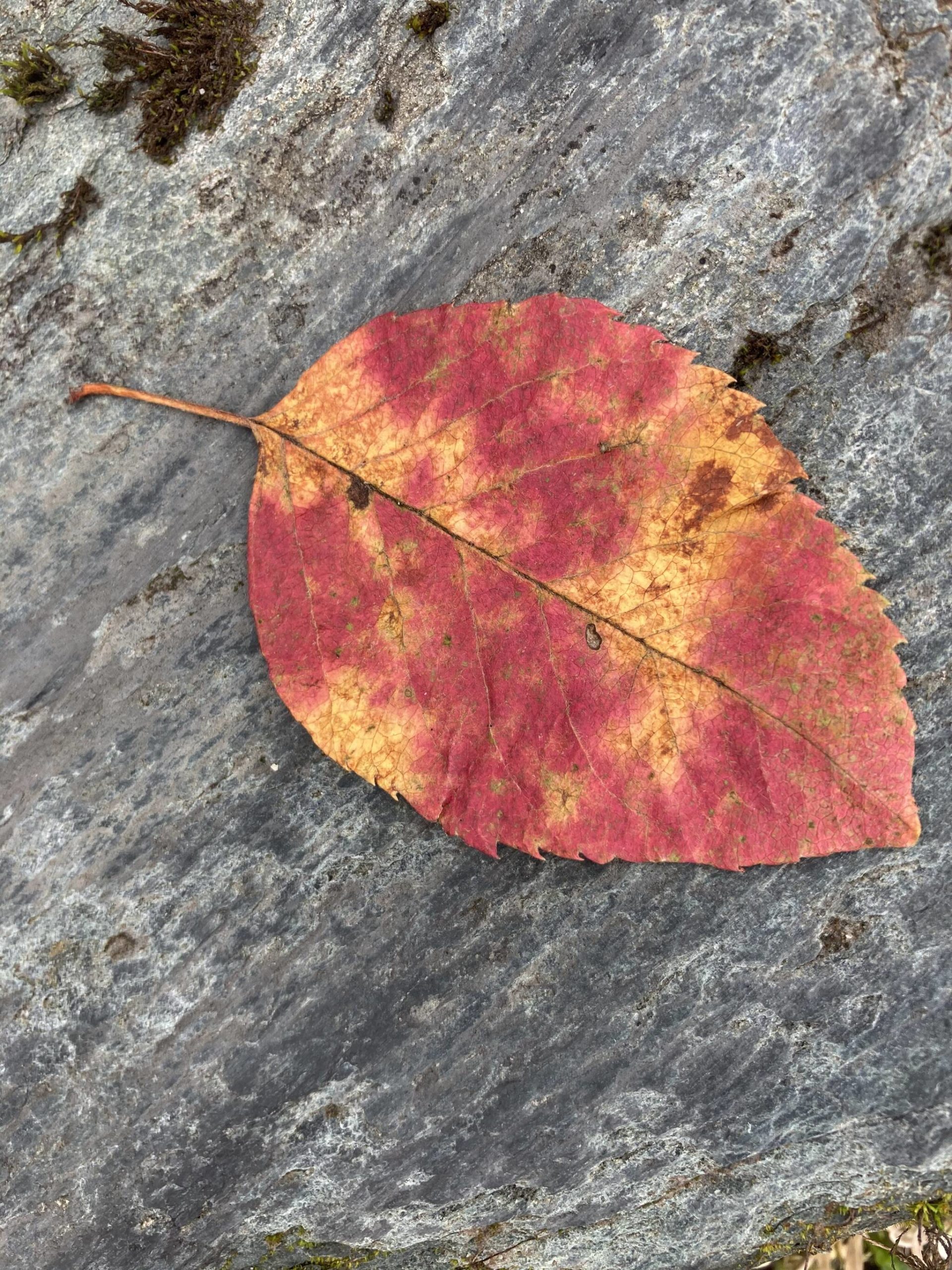
■ sometimes a single leaf displays a variety of color
■ and have you ever noticed that the upper sides of silverweed leaves can grade nicely from orange to yellows to tawny browns?
Summer leaves are green, because the cells contain lots of green chlorophyll that does the work of photosynthesis (making sugars). As days shorten and nights grow longer and cooler, chlorophyll gradually breaks down, exposing the yellow carotenoids that have been there all summer (absorbing light energy and transferring it to chlorophyll), concealed by the green. During those shortening days, some photosynthesis continues, but each leaf is gradually disconnected from the rest of the plant, so sugars are poorly transported to the rest of the plant and build up in the leaves. In bright light, they are built into colorful red-to-purple anthocyanins. A single leaf may sometimes be red on one half and yellow on the other, if one half was exposed to sunlight and the other was shaded.
That simplified explanation leaves many questions. Why build anthocyanins in a dying leaf? Why do some species often produce lots of red leaves in fall, while other usually bear yellow leaves? Why do some of the typically yellow-leaved plants occasionally make red or orange leaves? Why do alder leaves just turn brown, with no bright colors? Readers can probably think of still more questions!
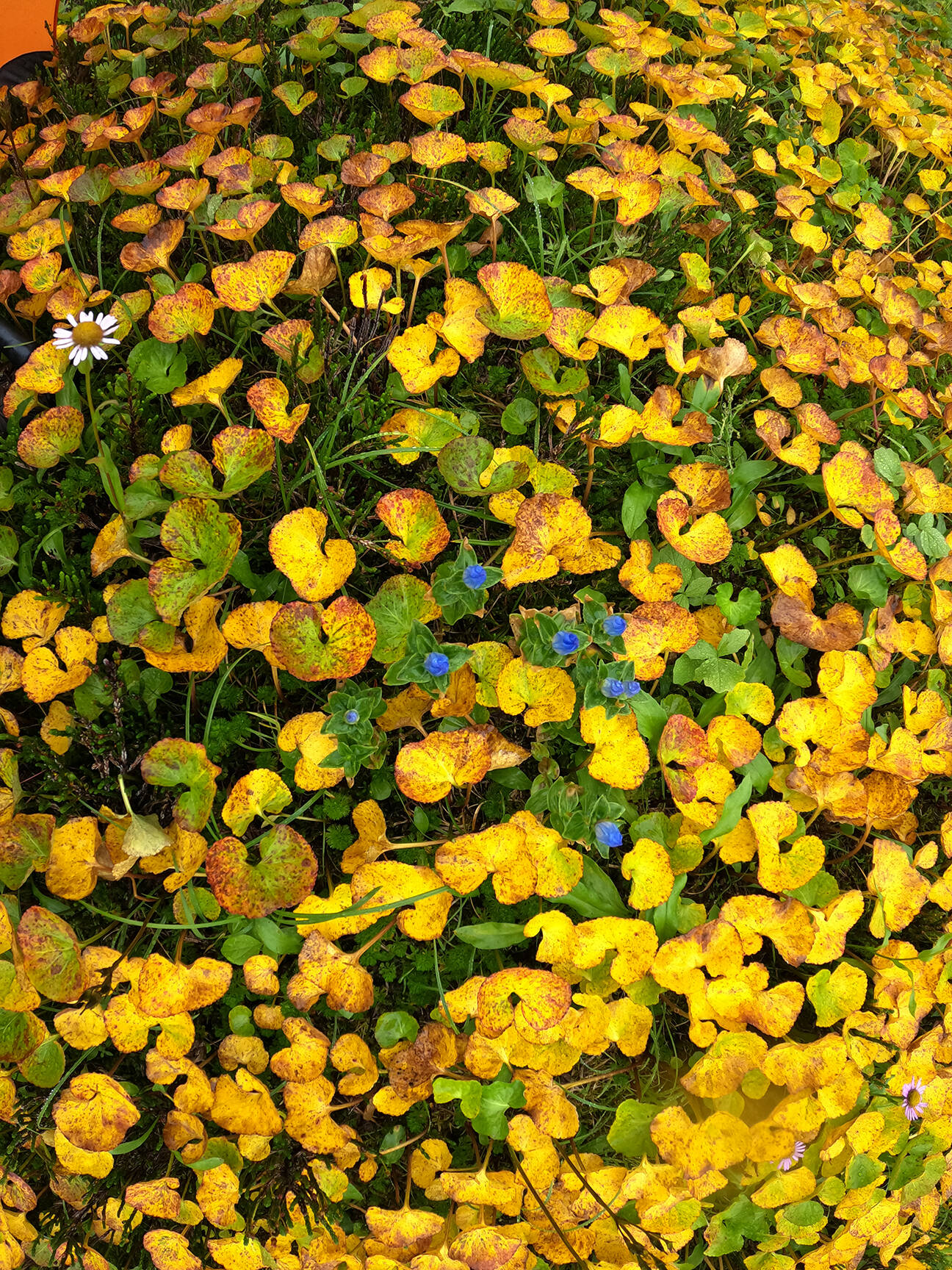
Courtesy Photo / David Bergeson A subalpine meadow offers yellows, golds, and russets and, as a bonus, the last gentians.
In any case, there is lots of color to enjoy, even in the rain.
• Mary F. Willson is a retired professor of ecology. “On the Trails” appears in the Empire every Wednesday.
