
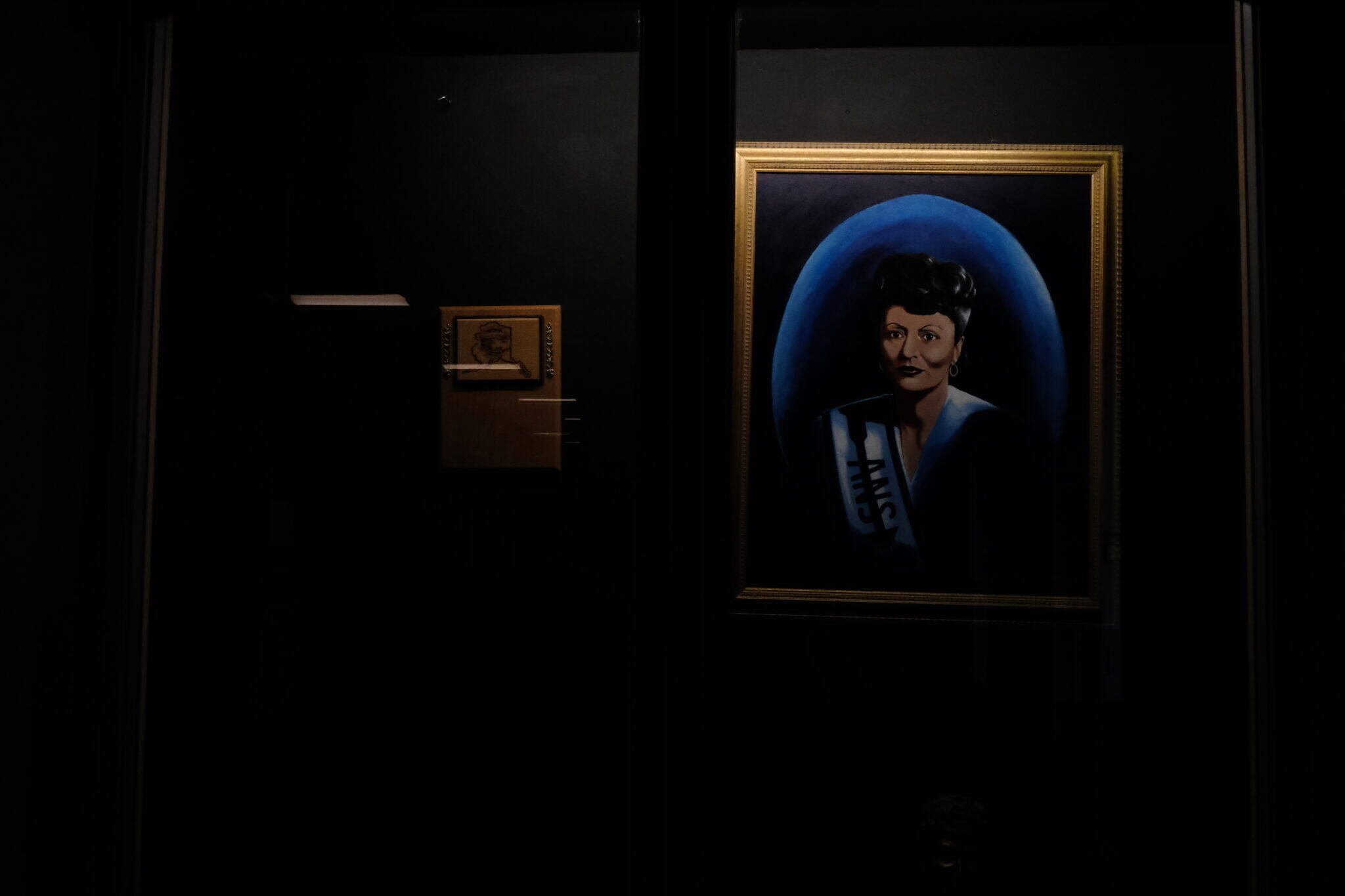
On Feb. 16, 1945, Alaska legislators signed the nation’s first anti-discrimination law. Historical records show that the words of an Alaska Native woman named Elizabeth Peratrovich were part of the public testimony that propelled them to take historic action.
Nearly 80 years later, and in that spirit, Alaska Native women led a Native Issues Forum in the Elizabeth Peratrovich Hall in Juneau on the subject of successful advocacy. The event was sponsored by the Central Council of Tlingit and Haida Indian Tribes of Alaska.
Ku.seen Jackie Pata, formerly the director of the National Congress of American Indians, said that throughout history, major legislation like the Violence Against Women Act and the Alaska Native Claims Settlement Act came from advocacy by Alaska Native people. She said the need for equal justice for Alaska Native people persists.
“Native voices are being ignored,” she said. Later she added, “Seventy-nine years ago, Elizabeth proclaimed in the Alaska State Senate, ‘I must demand that you stop trying to deny me the rights all people deserve.’ And that’s what we have to do. As one voice.”
She advised the crowd to research issues that are important to them, to know their audience, and to advocate with respect while keeping solutions in mind.
‘Wáahlaal Gíidaak Barbara Blake, director of the Alaska Native Policy Center for the First Alaskans Institute, echoed Peratrovich when she said: “We need to be asking for what we know our people deserve and what we know our community deserves.”
She also underlined the importance of unifying the Alaska Native voice on certain issues. She quoted Vernita Herdman from Unalakleet who said that “when Natives fight Natives, someone else is winning,” which drew murmurs of appreciation from the crowd. “Can you imagine what we can achieve as a unified front using all of our organizations to fight for the things that we know we need?” she asked.
Blake stressed the importance of Native unity and advocacy, but also called on non-Native allies to stand up for equity. She said that after a career in policy, she has observed that policy is most effective when a movement changes the way the public thinks about an issue.
“You can shift people’s minds all you want in policy, but then another governor can come in and just turn that around and shift it right back. But if you’re shifting people’s hearts, then that wave of that passion…outlasts our period of time in this place, our period of leadership in this place, and the movement will carry on and ripple down and we will feel that wave of that,” she said.
Blake gave an example of successful public testimony that included her stance on a policy issue and a personal story. She delivered the testimony in less than three minutes, the time usually allotted in the Alaska Legislature.
Yakdushí Daphnye Albee, grand president of the Alaska Native Sisterhood, also gave a sample testimony that cited a problem she saw and included possible solutions. She said it is worth meeting with others and practicing testimony beforehand. “It’s helpful to take the time and gather from your mentors and learn from each other, so we can spread that information and have a better way of just communicating our needs,” she said.
Afterwards, people from the crowd were invited to discuss issues that matter to them, from diminishing salmon to over representation of Alaska Native people in the state’s prisons.
Subsequent forums will be held at Elizabeth Peratrovich Hall from noon to 1 p.m. on Feb. 23, Mar. 22 and April 5, 2024.
• Claire Stremple is a reporter based in Juneau who got her start in public radio at KHNS in Haines, and then on the health and environment beat at KTOO in Juneau. This article originally appeared online at alaskabeacon.com. Alaska Beacon, an affiliate of States Newsroom, is an independent, nonpartisan news organization focused on connecting Alaskans to their state government.
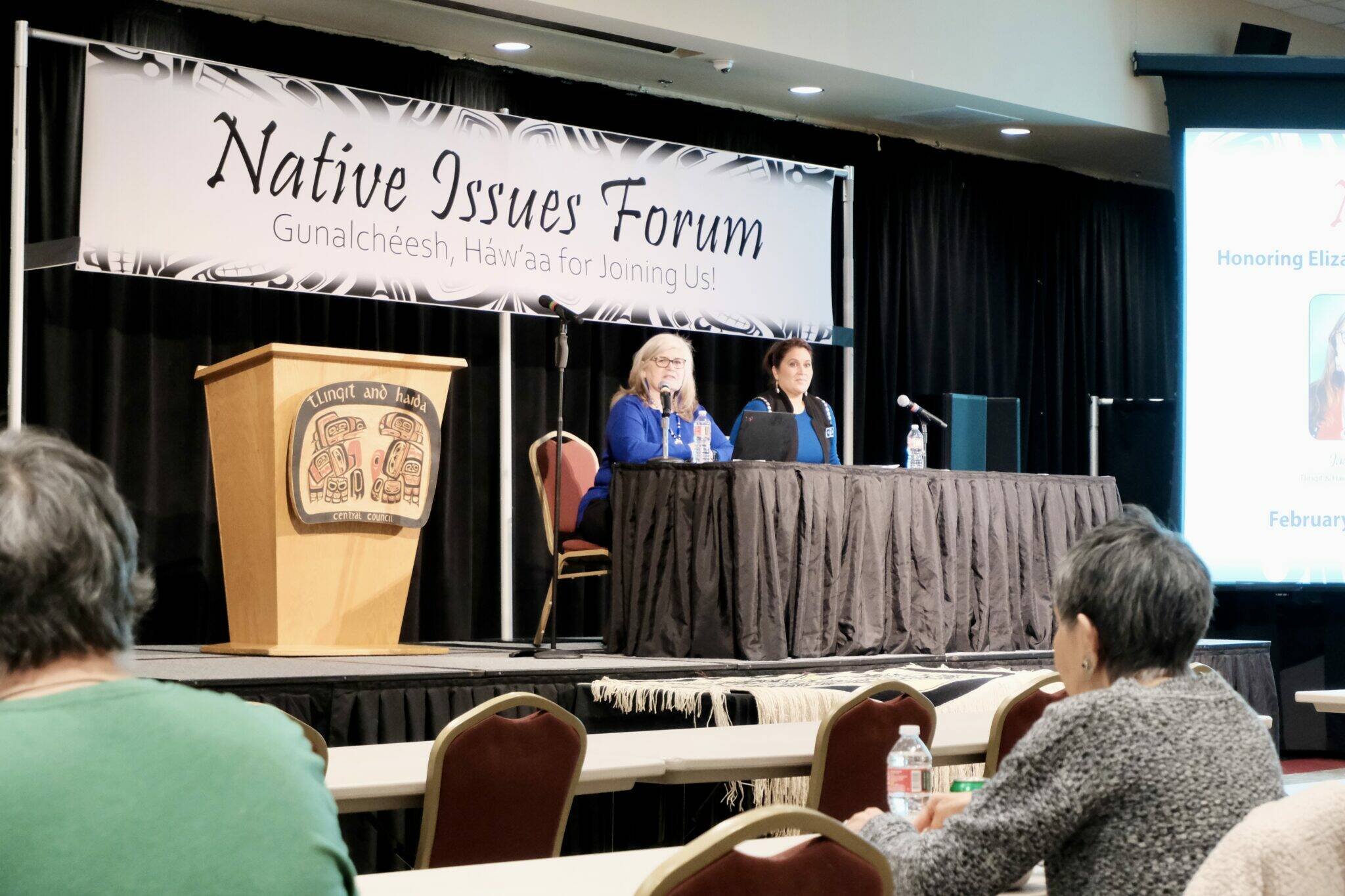
Ku.seen Jackie Pata and ‘Wáahlaal Gíidaak Barbara Blake present their ideas about successful advocacy for Alaska Native rights on Friday at Elizabeth Peratrovich Hall. (Photo by Claire Stremple/Alaska Beacon)
