
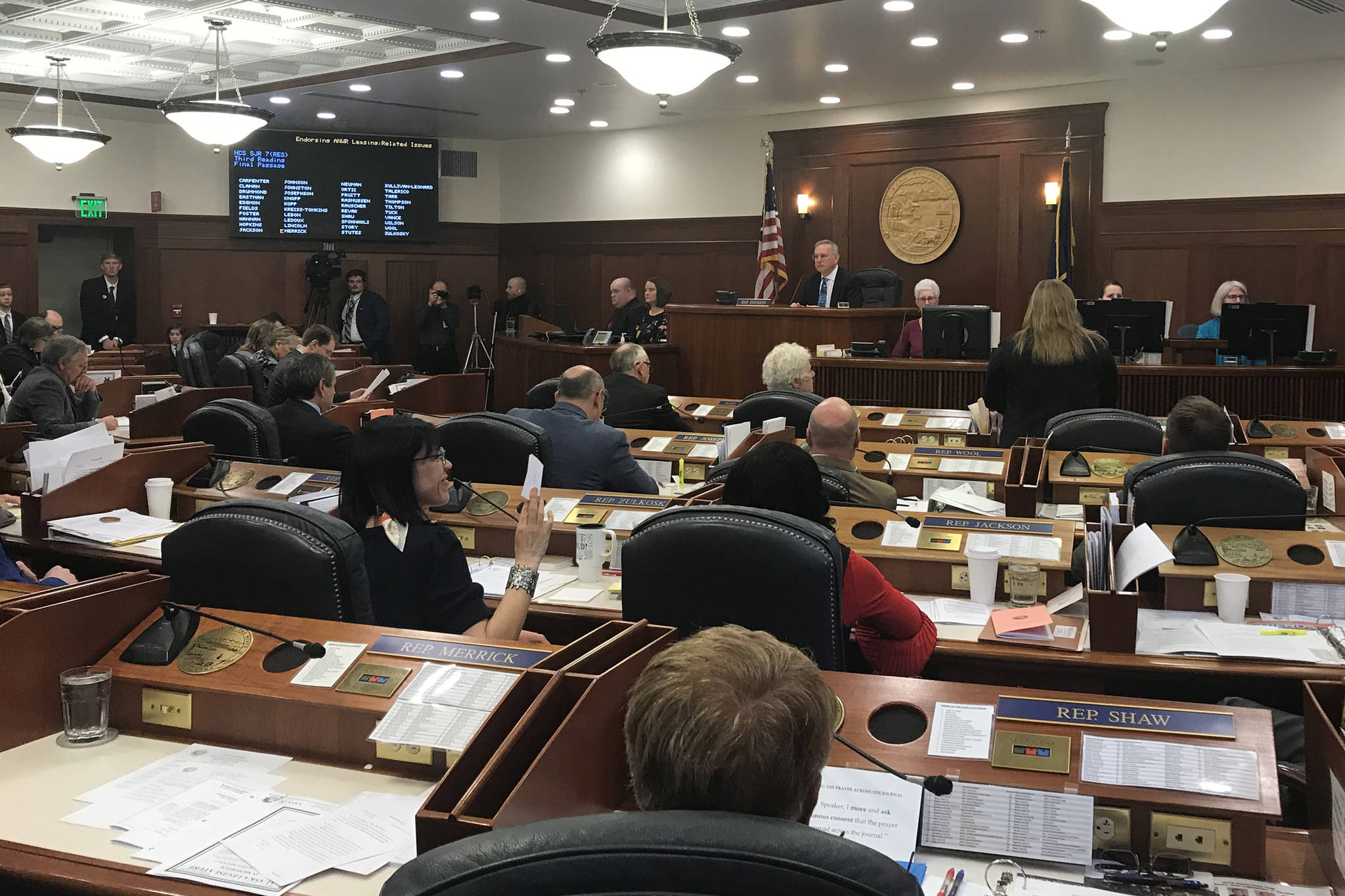
It’s more than half way through the session and the Legislature finally passed the first resolution.
The Alaska Legislature hoped to make its position on oil and gas development in the Arctic National Wildlife Refuge clear, with Senate Joint Resolution 7, which passed Monday, the 56th day of session, in both the House and Senate.
“The opportunity to generate over $100 billion of state, federal and local government revenues… this will enhance life for all Alaskans,” said Rep. Sara Rasmussen, R-Anchorage. “At a time when we currently face drastic cuts to Medicaid expansion, education, including Pre-K, K-12 and the university system, we need to find other options to bring fiscal stability back to Alaska.”
[Capitol Live: On day 56, the Alaska Legislature passes first resolution of session]
It passed 36-3 in the House, with Reps. Sara Hannan, D-Juneau, Adam Wool, D-Fairbanks, and Geran Tarr, D-Anchorage, holding the dissenting votes. The resolution then passed 18-1 in the Senate, with Anchorage Democratic Sen. Elvi Gray-Jackson carrying the dissenting vote.
Tarr said she opposed the resolution due to the environmental risks oil drilling poses.
“Because of the thawing permafrost, the wells are literally popping out of the ground and spewing oil and gas across the surface of the North Slope,” Tarr said. “This is not a comprehensive energy strategy. This is not doing the right thing, in my opinion, for the next generation. … Unfortunately both at our state and federal government, our highest leaders have abandoned the work on climate change.”
The joint resolution says, “the Alaska State Legislature requests that the United States Department of the Interior, Bureau of Land Management, implement an oil and gas leasing program in the coastal plain of the Arctic National Wildlife Refuge as outlined in the December 2018 Coastal Plain Oil and Gas Leasing Program Draft Environmental Impact Statement.”
Alaska’s congressional delegation had worked to open the 1002-area of the coastal plain to oil and gas development for decades. When the Tax Cuts and Jobs Act was passed in December 2017, U.S. Sen. Lisa Murkowski, R-Alaska, worked to insert a provision in the act to open ANWR to development. Alaska and the federal government agreed upon a 50-50 split on revenues.
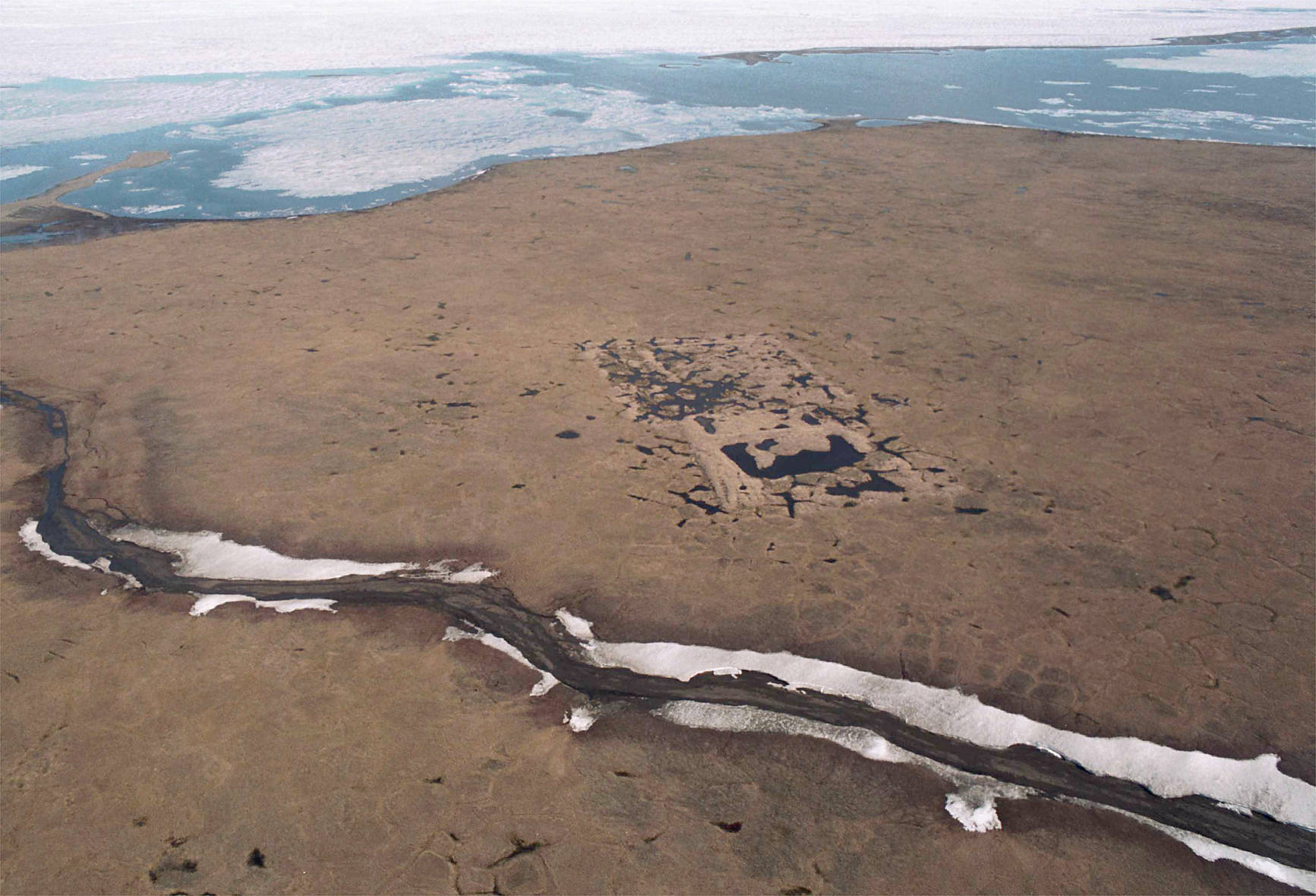
An aerial shows the footprint of the test well drilled in the mid-1980s on land owned by the Kaktovik Native village corporation within the 1002 area of the Arctic National Wildlife Refuge. The well is 14 miles east of Kaktovik and the melting the Beaufort Sea is at the top of the picture. (Michael Penn | Juneau Empire File)
The original resolution passed last week in the Senate, but was sent back for a vote in the Senate on Monday after representatives amended it to include language encouraging the oil and gas industry to use “the state’s workforce to the maximum extent possible.”
Rep. David Eastman, R-Wasilla, attempted to amend the resolution further, but the vote for his amendment failed.
His amendment urged “the United States Congress to amend the Tax Cuts and Jobs Act to honor the Alaska Statehood Act with respect to the state’s share of bonuses, royalties and rentals from exploration and development in the Arctic National Wildlife Refuge.”
Rep. Chuck Kopp, R-Anchorage, said the resolution shouldn’t be about relooking at the 50-50 share of revenues with the federal government.
[Empire Exclusive: Read our full conversation with U.S. Senator Lisa Murkowski]
“We are not trying to reintroduce an argument to Congress about what our share should be,” Kopp said. He said the Alaska congressional delegates already went through this discussion on the federal level.
GOP lawmakers project at least $1 billion in revenue from drilling leases over 10 years. But environmental groups and other critics call those projections wildly optimistic, saying low global oil prices and high exploration costs are likely to limit drilling revenue.
Protests have marked recent public hearings on the plan in Fairbanks and Anchorage.
The administration plan calls for at least two major lease sales, each on a minimum of 625 square miles in the refuge’s coastal plain. Surface development would be limited to 3 square miles.
The plan has drawn criticism from environmental groups that say the environment impact study was done too fast, and no public hearings were set anywhere outside of Alaska.
“There’s no precedent for anything done this quickly for an environmental review of this scale,” said Adam Kolton, executive director of the Alaska Wilderness League in an interview with the Washington Post. He said that “this is really a rubber-stamp exercise rather than an effort to mitigate the impact to wildlife on the coastal plain.”
He said that the location of the public hearings — all but one in Alaska — was unfair to people living in the Lower 48 states. “These are public lands that belong to all Americans,” he said, adding that polls show widespread opposition to drilling in the refuge.
You can read the 392-page draft of the Coastal Plain Environmental Impact Statement and make comments through March 13.
• Contact reporter Mollie Barnes at mbarnes@juneauempire.com or 523-2228. The Associated Press contributed to this report.
