
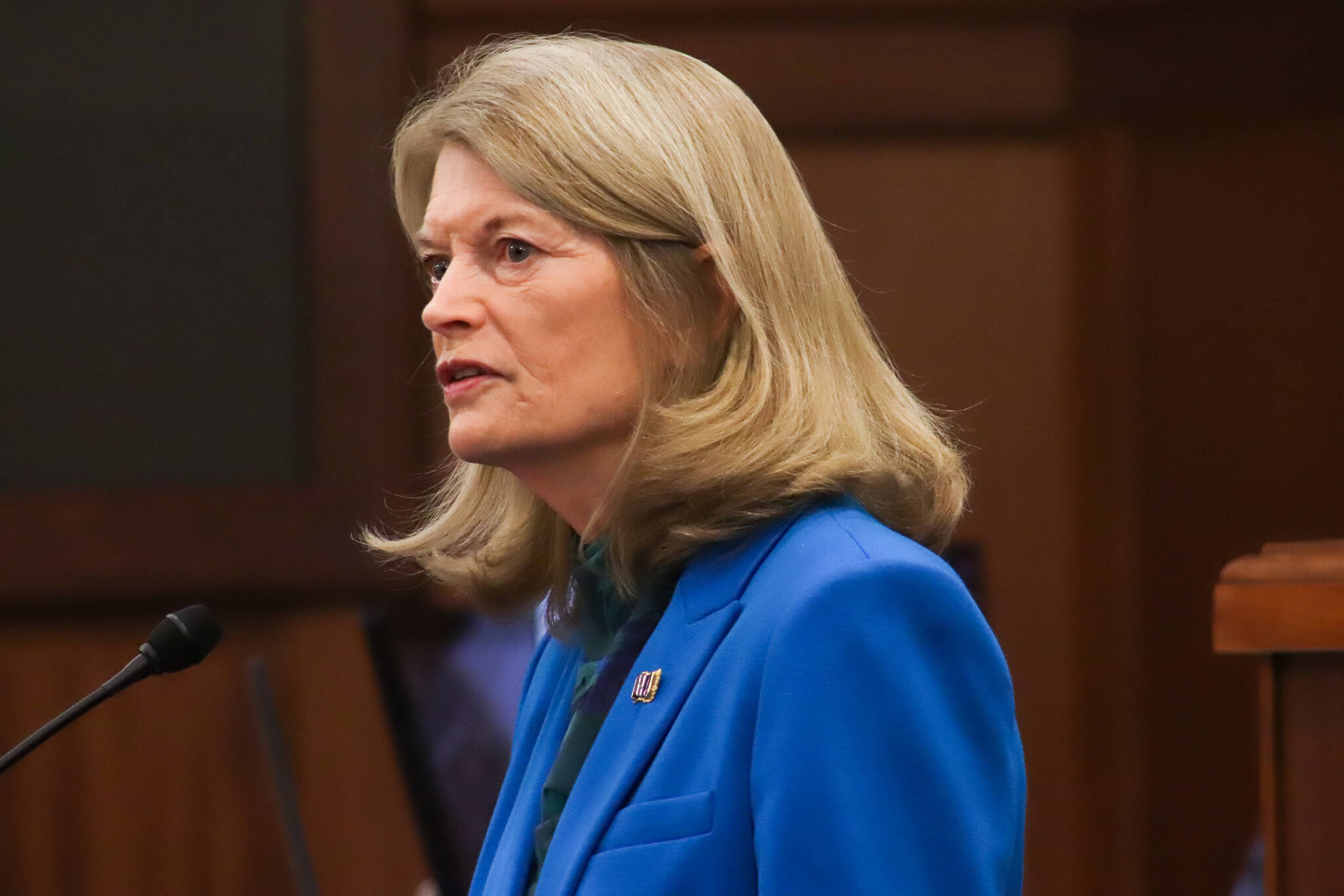
Speaking in an interview on Friday, Alaska Sen. Lisa Murkowski said President Donald Trump’s health care-cutting budget plan was destined to pass Congress, and her decisive vote on the package last month represented the best of a bad pair of options.
In a new analysis published Monday by the nonpartisan Congressional Budget Office, Republicans’ “big, beautiful” law is estimated to add almost $3.4 trillion to the federal debt over the next decade and cause 10 million Americans to lose access to health insurance.
Murkowski said she believes that had she opposed the law, Republican senators would instead have sought a 50th vote from Kentucky Republican Sen. Rand Paul, and the result would have been deeper cuts to the federal budget, including to health care.
“What he was looking for was dramatically more cuts to Medicaid, dramatically greater reductions in spending,” Murkowski said. “And so it was no secret that the bill was going to pass. It was just a question of whether or not it was going to pass with Senator Paul’s vote, or with Senator Murkowski’s vote.”
In a column published July 3 by the Louisville Courier-Journal, Paul wrote, “They could have had my vote and saved money but instead chose more spending and tax and welfare changes targeted at Alaska at the cost of the fiscal sanity of our country.”
Murkowski, echoing comments made previously by Alaska Sen. Dan Sullivan, who also voted for the proposal, said she was disappointed that several provisions benefiting Alaska were stricken by the Senate parliamentarian after objections from Senate Democrats.
Those included large subsidies for the state’s Medicaid program and a new split of oil revenue from federal land on the North Slope, with 90% going to the state and 10% to the federal government.
Voting on the budget package began before the parliamentarian ruled on all aspects of it.
“And so we didn’t know what was in and we didn’t know what was not in,” Murkowski said.
During the process, the 90-10 split dropped to 70-30, and state-specific benefits for Alaska disappeared.
Afterward, one provision that survived — a concession for wind and solar projects — was quashed by executive orders issued by President Trump.
Speaking to the Anchorage Daily News on Friday, Murkowski said she feels “cheated” by the maneuver.
Speaking to the Alaska Beacon, she said, “I have been criticized. I have been hung out to dry. But you know what? At the end of the day, I fought for my constituents as best I knew how, and I should never, and I will never, apologize for doing the best that I can by them.”
In her last three Alaska U.S. Senate elections, Murkowski defeated more socially conservative candidates with the support of Democrats and independents.
On social media, after her vote in favor of the Republican budget plan, many of those voters voiced their disapproval.
Asked about that disappointment, Murkowski said she understands and hears that criticism.
“I get the fact that they want me to be principled on this. But if it costs Alaskans — which it would have — then how is that doing my job for them? … At the end of the day, I couldn’t kill it, and I understand that people might not believe that, but again, what I set out to do was try to make improvements to a measure that started out in a place that would have … made it very challenging for too many Alaskans.”
Murkowski said she expects the Trump administration to propose more retroactive budget cuts akin to the one that passed last week involving foreign aid and the Corporation for Public Broadcasting.
Sullivan voted in favor of the cut; Murkowski opposed it.
Afterward, Trump budget director Russ Vought said he wants congressional Republicans to get more partisan in the budget process and that lawmakers should expect more “rescission” votes like last week’s.
Murkowski said she hopes other Republicans will join her in rejecting that call.
“I would like to think that it’s comments like that, that would galvanize us as appropriators, galvanize us as Republicans and Democrats in the United States Senate,” she said. “Our oath is to the Constitution. We would say we’ve got our job to do here, and we know that in order to do it and have it be enduring, it takes 60 votes, and so we need to be more bipartisan and not more partisan. To me, it was absolutely offensive, his statement, and so arrogant.”
James Brooks is a longtime Alaska reporter, having previously worked at the Anchorage Daily News, Juneau Empire, Kodiak Mirror and Fairbanks Daily News-Miner. A graduate of Virginia Tech, he is married and has a daughter, owns a house in Juneau and has a small sled dog named Barley. This article originally appeared online at alaskabeacon.com. Alaska Beacon, an affiliate of States Newsroom, is an independent, nonpartisan news organization focused on connecting Alaskans to their state government.
