New wolf totem pole is memorial and healing symbol
Published 11:47 pm Wednesday, June 6, 2018

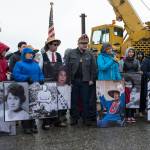
John Morris remembers the day the city of Douglas came to burn down the Douglas Indian Village.
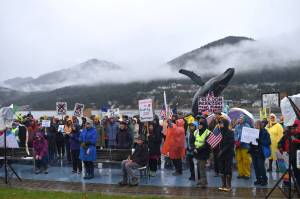
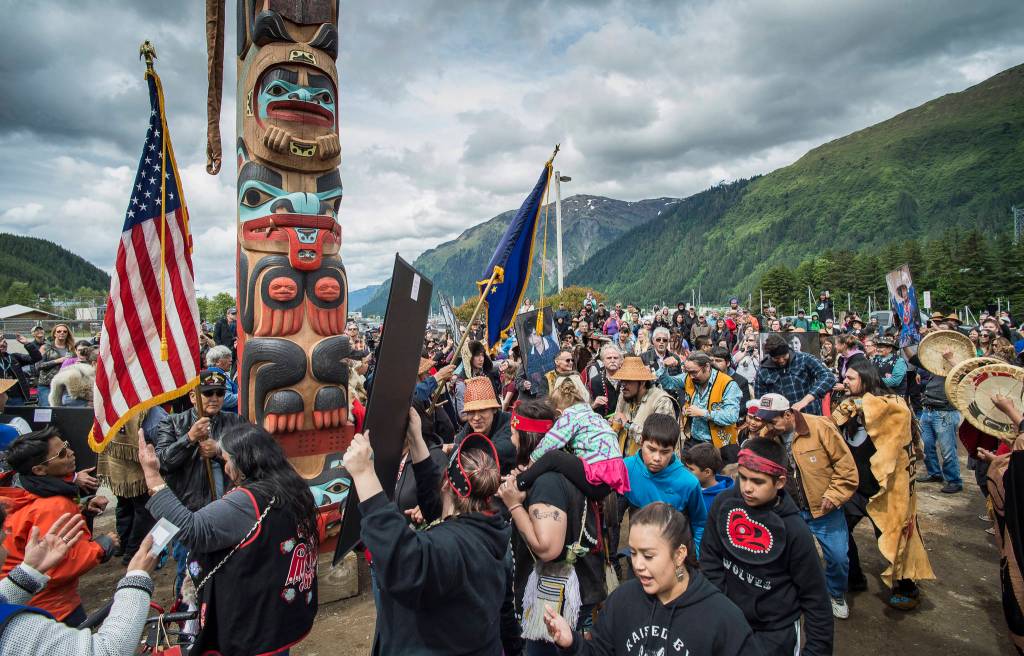
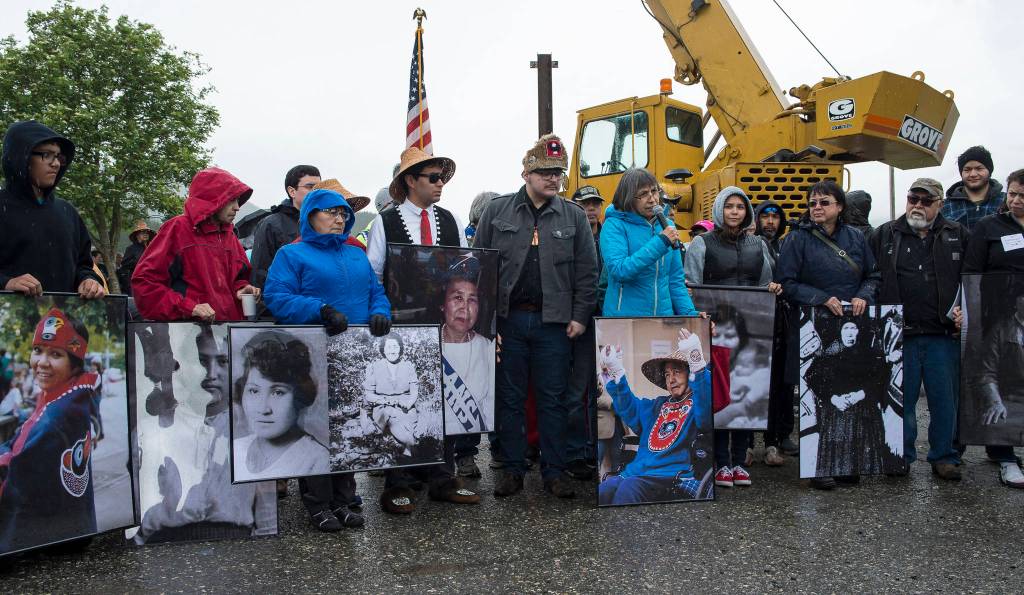
On Wednesday morning, he was among more than 500 people who gathered at Savikko Park to ensure that everyone in Juneau remembers that day, too.
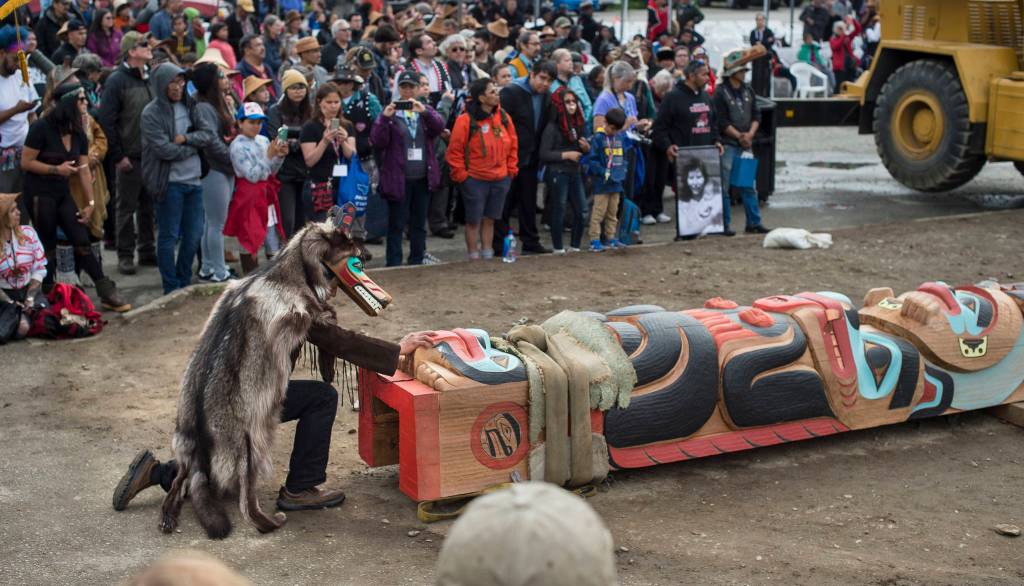
To cheers, dancing and song, Morris and Yanyeidí culture bearer Ben Coronell inserted the first two bolts erecting a new totem pole at the park. The totem pole, billed as an icon of remembrance and healing, stands on the site of the traditional Douglas Indian Village, which was destroyed in 1962 by a white government that wanted the land for a new boat harbor.
“This was the place I called home until 1962 and the burning of the village,” Morris told the hundreds of people who gathered at the site despite rain and wind.
[PHOTOS: Wolf Totem Pole Raising]
The 20 or so families who lost their homes that year also lost their traditional clan objects and the gillnets they used to make their livelihood fishing on the Taku River. Pledges that they would be repaid and the village rebuilt elsewhere were not fulfilled, Morris told the group.
There were “hard feelings” for years afterward, but “raising of the totem pole is the beginning of the healing,” he said.
The ceremony took place hours before the grand opening of Celebration, the biennial celebration that brings Tlingit, Haida and Tsimshian people together in Juneau.
Wednesday’s totem pole raising lasted for four hours as attendees took time to recognize and thank their ancestors, offer prayers and thanks to the people who made the totem pole possible. Before the pole was raised and set onto a steel I-beam that will support it, there was a ceremony called Shooda’x Gaxdutook’, or “releasing the grief.”
About that time, the weather seemed to offer its approval: a steady rain that drenched the ceremony from the start began to slacken, and the sun began to shine.
Fred White, (Gunaak’w, Shangukeidí, Xéitl Hít) was the manager of the project that built both the Savikko Park pole and a second one in front of Gastineau Elementary School. The project, known as Ganeix Gaawu Koodzidi (A Time for Healing), was a grant-funded effort by Goldbelt Heritage, the Douglas Indian Association and others to recognize past tragedies. The pole in front of Gastineau Elementary School, erected last year, marks the site of a Native cemetery that was demolished to build the school in the 1950s.
“I feel like 100 pounds have been lifted off my shoulders,” he said after Wednesday’s ceremony.
The Savikko Park pole, which stands in blue at the edge of the parking lot near the softball fields, was designed by a committee of Elders from Goldbelt Heritage Foundation and the Douglas Indian Association. It’s formally named the Yanyeidí Kootéeyaa, or wolf pole, after the wolf (Yanyeidí) clan.
In a December interview with the Empire, lead carver Nicholas Galanin described the symbology behind its design: A Yanyeidi clansman sits atop the pole, holding a spear as both a defender of his lands and a hunter. Below that are the giant brothers of legend who are represented by the two high mountain peaks visible as one enters the Taku River basin.
Between the brothers’ figures is a section signifying the Taku River itself. It will have salmon carved into it and a heart in the middle, representing an island in the river between the two mountains. The next figure below the brothers is a bear holding a copper shield, which represents truth, strength, endurance, longevity and spiritual vision.
Below the bear is the sun, representing the burned village. The village was located in the part of Douglas where the sun shone first as it rose. At the bottom of the pole is a wolf, supporting the structure.
“I think it’s a beautiful day,” Galanin said, referring to more than the wet weather.
He said the pole is significant because it is a landmark for Native place and history. “We’re still here, and this is 10,000 years in the making, the whole project,” he said.
Apprentice carver Raymond Gregory (Took) offered similar thoughts. Growing up in Southeast Alaska and attending school, he said he remembers learning about the Pilgrims and Thanksgiving, but he didn’t learn about the “heartbreaking” local history behind the pole until much later.
Asked what visitors should think when they see the pole, Gregory said, “I hope they feel inspired to learn more. … I just want everyone to know that indigenous histories are valued.”
• Contact reporter James Brooks at jbrooks@juneauempire.com or 523-2258.