
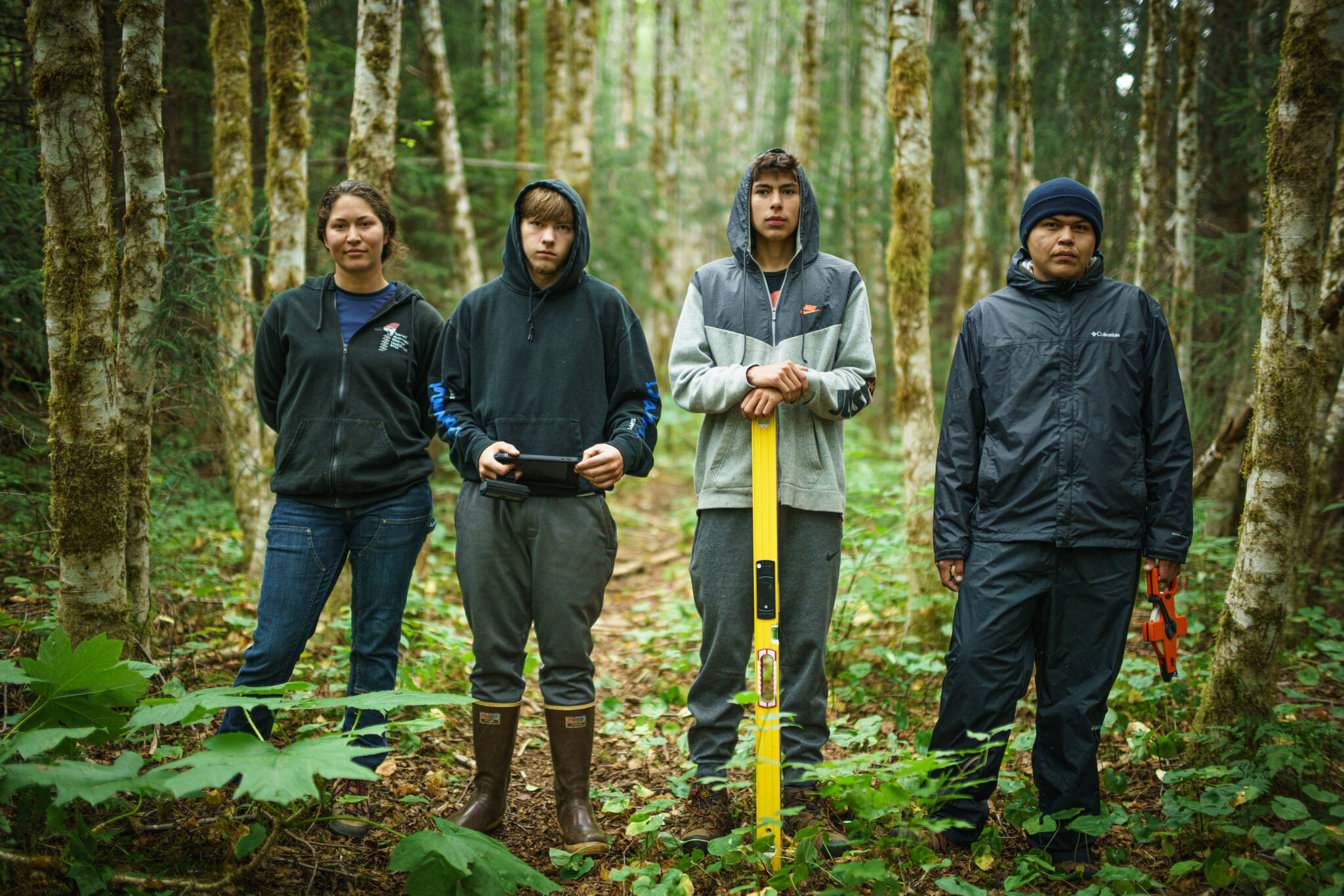
Sealaska Corp. and The Nature Conservancy announced Thursday the intention to jointly contribute $17 million in seed funding to establish and support programs aimed at building Indigenous-led land management and community economic development.
A newly created Seacoast Trust will be established and will initially support the efforts of the existing Sustainable Southeast Partnership, a coalition of organizations including tribal governments and federal agencies that is focused on environmentally sustainable economic development.
“This is the realization of a lifelong professional goal of mine,” said Richard Chalyee Éesh Peterson, president of the Central Council of the Tlingit and Haida Indian Tribes of Alaska. “This is about 15-20 years of dreams come to reality. I could go on all day.”
The fund was announced Thursday in a video conference with representatives from various communities, tribal governments and private organizations. Speakers repeatedly emphasized the goal of the fund was to empower local communities to determine their own methods of development.
Funds from the trust will be used for “projects that are locally identified as high priority, not identified as a high priority for us,” said Marina Anderson, executive director of the Organized Village of Kassan.
Once the fund grows, a percentage of its annual earnings will be used to fund community programs — similar to how the state uses earnings from the Alaska Permanent Fund to fund state services. Sealaska CEO Anthony Gunnuk’ Mallott said it hadn’t yet been decided how much would be drawn annually, but 5% was being used as a rough estimation. The fund is seeking additional donations with a goal of $20 million by the end of 2022.
[Dividend payments expected in 30 days]
Mallott said future use of the funds would be determined by the communities identifying their own needs. The endowment from Sealaska indicated how committed the corporation is to SSP, Mallott said. The partnership was built through relationships and trust-building, he said, which was what made the program successful.
Sealaska will contribute $10 million while the Nature Conservancy will give $7 million from the Bezos Earth Fund, an endowment fund created by Amazon founder Jeff Bezos.
In the first three to five years of the fund, revenues will go toward expanding on regional programs the SSP has already established, according to the trust’s website, seacoasttrust.org.
Oversight for the trust will be housed within Juneau-based nonprofit Spruce Root, according to a joint news release. According to the release, the existing SSP steering committee will establish program strategy and set priorities for the trust, make funding recommendations and review program budgets. The Spruce Root board of directors will hold fiduciary responsibility for the trust, establish investment and financial return objectives and review funding recommendations made by the SSP steering committee.
“Indigenous-led stewardship, that’s a little bit redundant,” said Sealaska President Joe Nelson. “Indigenous people were always stewards of the land. It doesn’t matter which administration comes and goes.”
Nelson and others noted the historically fraught relationship between the federal and state governments and Indigenous people but said they hoped that relationship was changing. There was a shift in the relationship, he said, from transactions to relationships, “and that’s what healing’s all about.”
Existing programs created by the SSP that will immediately be impacted include Tlingit and Haida’s Indigenous Guardian program, the Hoonah Indian Association’s Hoonah Native Forest Partnership and the Organized Village of Kake’s Keex’ Kwaan Community Forest Partnership.
“Our people watched the Tongass (National Forest) grow,” Peterson said. “Who better than us to take care of our forest and our resources? I think that’s the narrative that we’re changing.”
• Contact reporter Peter Segall at psegall@juneauempire.com. Follow him on Twitter at @SegallJnuEmpire.
