
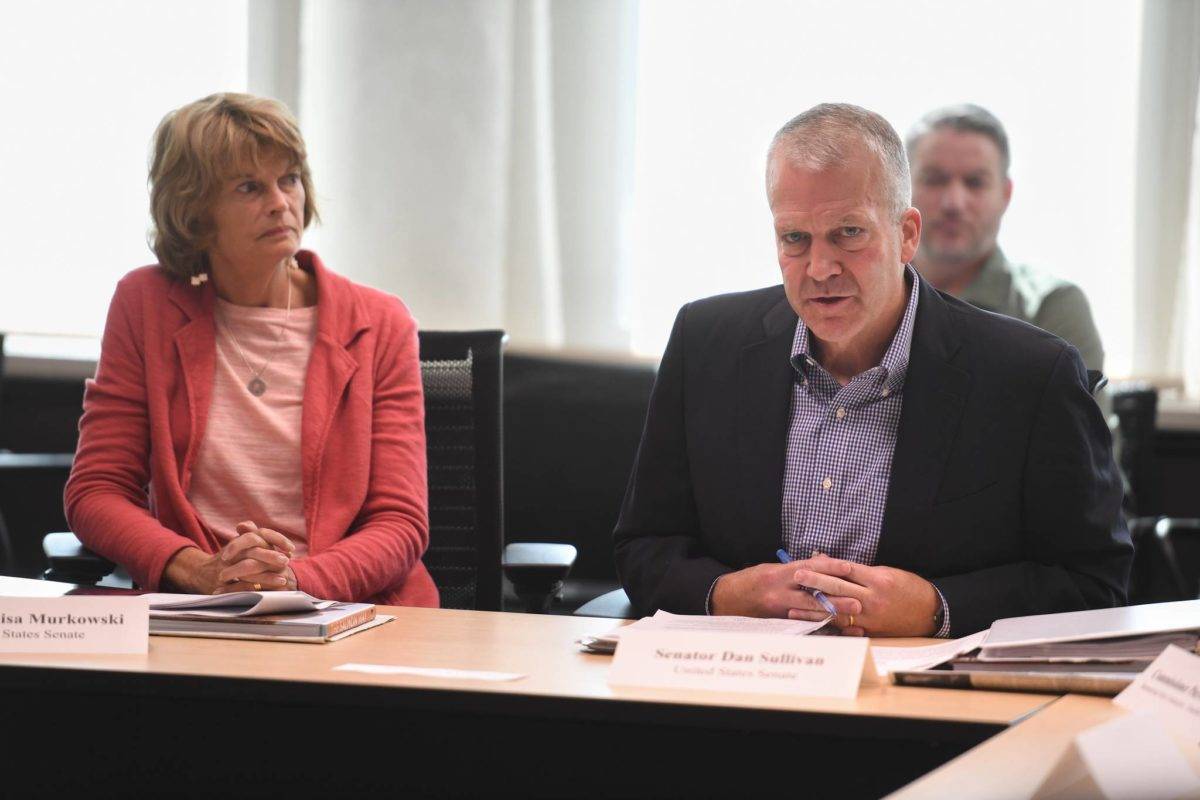
Alaska’s Senators Lisa Murkowski and Dan Sullivan, both Republicans, on Monday hosted a number of state and federal agencies, local organizations and commissioners of the U.S.-Canada International Joint Commission for a round-table discussion of transboundary mining.
Among the organizations present were the Central Council of Tlingit and Haida Indian Tribes of Alaska, Salmon Beyond Borders, Council of Alaska Producers, Alaska Miners Association and United Fishermen of Alaska.
Government organizations present were the U.S. Environmental Protection Agency, U.S. Geological Survey, U.S. Forest Service, Alaska Department of Natural Resources, Alaska Department of Fish and Game and Alaska Department of Environmental Conservation and the National Oceanic and Atmospheric Administration.
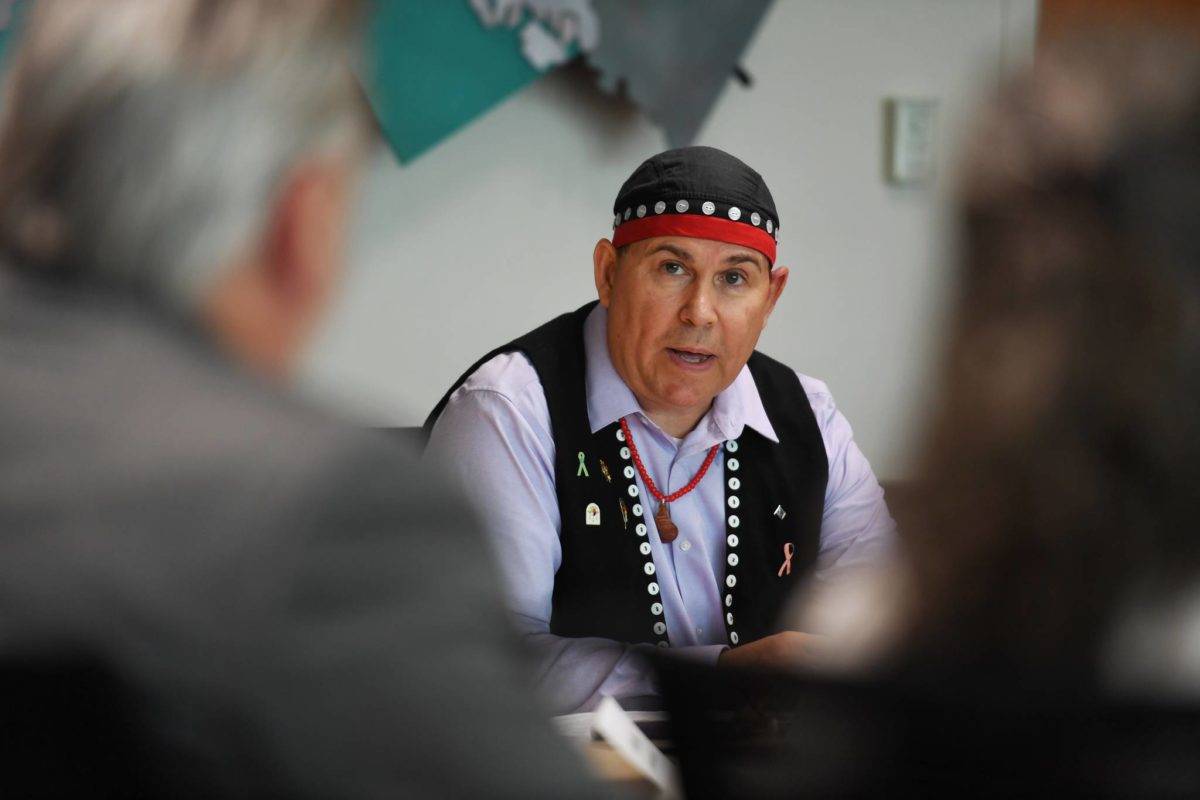
Rob A. Sanderson Jr., the 4th Vice President on Tlingit & Haida’s Executive Council, speaks during a roundtable meeting on the Alaska-British Columbia Transboundary mining at the Federal Building in Juneau on Monday, Aug. 5, 2019. (Michael Penn | Juneau Empire)
Additionally there were representatives from the office of the governor as well as state legislators from Juneau.
The round-table was held in an effort to strengthen international efforts to resolve the many issues created by mining operations close to the border. Mining operations produce toxic waste which is often discharged into lakes or rivers whose waters flow across international borders and in some cases into the ocean.
Of primary concern was the now-abandoned Tulsequah Chief Mine in British Columbia which has been leaking toxic waste since 1957. Waters polluted by the mine’s runoff find their way into the waters of Southeast Alaska with adverse environmental impacts.
[Toxic water leaches into prime Alaska, Canada salmon habitat]
U.S. authorities have been troubled by the Canadian government’s lack of response to the environmental damage and have been urging both federal and provincial authorities to take action. During the meeting, Sullivan called it “ridiculous” that the Tulsequah Chief Mine had not been cleaned up yet.
Rob Sanderson, vice president of the Central Countil Tlingit and Haida Indian Tribes of Alaska, said “the Unuk River is dying,” and that the size of the fish found in the area had been decreasing over the years. He criticized Canada’s track record on transboundary mining saying that “we really need to exercise our government-to-government interactions,” to resolve the issue.
While there was a lot of criticism lobbed at the Canadian government, Sullivan assured the lone Canadian representative, IJC Commissioner Pierre Beland, that Alaska is pro-mining and pro-resource.
“There isn’t some kind of anti-mining crusade,” he said.
What the Americans, and Alaskans in particular, wanted was more transparency and cooperation when it came to environmental monitoring and water quality issues.
Beland agreed that “collaboration is the way to go,” and that there had been better international efforts to resolve issues. After the meeting Beland told the Empire that he found the meeting incredibly productive because this was the first meeting he had attended where so many stakeholders were present.
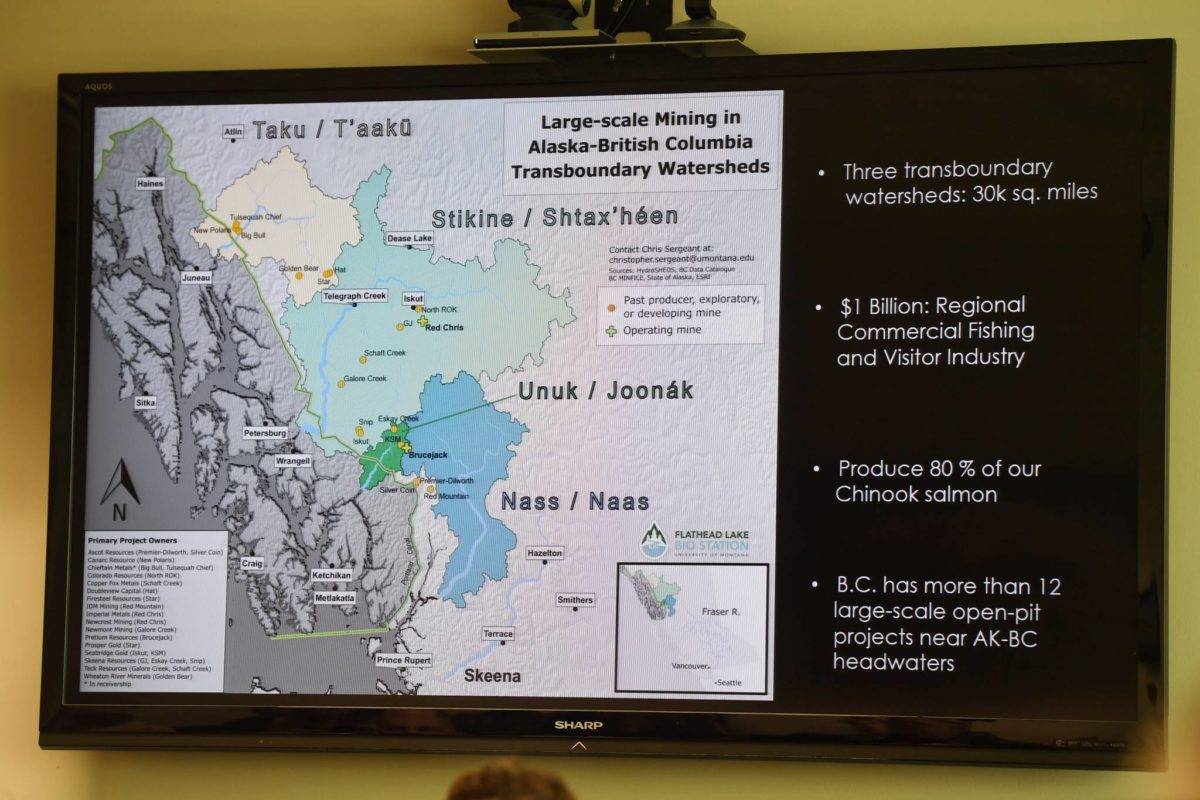
Map shown during a roundtable meeting on the Alaska-British Columbia Transboundary mining at the Federal Building in Juneau on Monday, Aug. 5, 2019. (Michael Penn | Juneau Empire)
Beland said that while the IJC was working on resolving the issues, it was important that they not interfere with local efforts that were already achieving productive results.
The meeting was largely conversational, but because of the larger number of agencies and bureaucracies involved the representatives present expressed pleasure with being able to express their concerns directly and optimism for the future. Beland said that a similar meeting would be held in British Columbia in the coming months with mostly Canadian agencies.
In closing Sen. Murkowski said that “the more we can do in working together,” is better than reacting to emergencies when they happen.
Coincidentally, the meeting took place one day after the five year anniversary of the Mount Polley mine disaster in 2014 when a dam burst on a wastewater pond sending millions of gallons of toxic water into forests, lakes and rivers.
• Contact reporter Peter Segall at 523-2228 or psegall@juneauempire.com.
