
One of Southeast Alaska’s most prolific pink salmon rivers, known for attracting copious numbers of bears, wildlife photographers and tourists, may soon add a new category of visitor to its ranks: citizen scientists from across the globe.
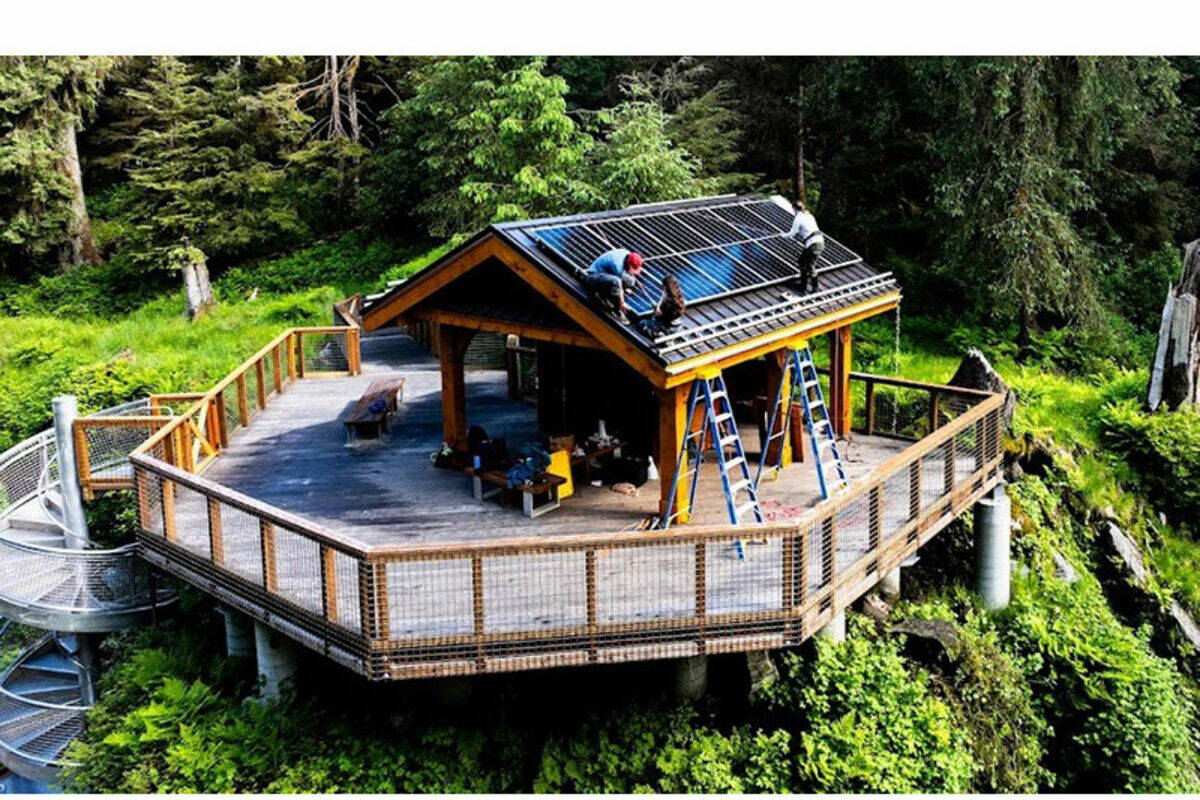
This summer, Anan Creek and the surrounding Anan Wildlife Observatory will be outfitted with a new and expanded array of web cameras installed by Wrangell High School students in partnership with the U.S. Forest Service and a multimedia producer of real-time nature videos.
The cameras – four mounted on land and focused on bears and one underwater to track salmon – will allow anyone with internet access to watch these creatures feast, cavort, fight and spawn at one of Alaska’s prime wildlife-viewing spots.
Scientists expect tens of thousands of people to watch the live feed on explore.org and to post comments. Those informal observations could help unlock new knowledge about bear populations and behaviors, as well as that of other species that frequent the Anan Observatory including otters, seals and eagles, said Jennifer Kardiak, a seasonal Forest Service employee who manages the site.
“The types of things that the citizen science could produce is new information on the times that bears are feeding on salmon or what other species show up,” Kardiak said. “We know there’re wolves out there. We’re kind of hoping for other wildlife sightings as well.”
By expanding the number of eyes watching Anan, the crowd-sourced information could help managers make better-informed decisions about the animals, the waterways and surrounding forest lands, she said.
This year, the process will be informal, simply asking viewers to share screenshots. But eventually, Kardiak hopes to expand the citizen science project so that viewers can click a button and add actual data to supplement existing knowledge.
Last year marked the first year that explore.org ran the Anan live video feed. The two web cameras installed last summer attracted some 170,000 views during peak season, early July to late August. It’s part of a $200,000, four-year grant from the U.S. Department of Agriculture, the parent agency of the Forest Service.
This summer, another group of Wrangell High School students who participate in the T3 Alaska program and their faculty adviser will install the new set of cameras over the course of two, four-day trips scheduled to start June 1. Once the feed goes live by mid- to late-June, Kardiak expects viewers to start identifying bears they recognize from last year and spot new ones as summer progresses.
In the not-too-distant future, artificial intelligence and machine learning will likely play a role at Anan as they already do at Katmai National Park and Preserve, another top Alaska bear-viewing hotspot located about 290 miles southwest of Anchorage.
At Katmai’s Brooks Falls, a conservation software company called BearID Project employs AI to identify individual bears using facial and body recognition technology. The goal is to better understand bear population numbers, feeding patterns, social dynamics and more.
An algorithm is trained to identify bears by examining features such as noses, ears and eyes and comparing them to existing photographs.
An AI product called Fishial may also be used at Anan to collect data about types and numbers of salmon, other fish and marine mammals returning to or present at the creek and lagoon complex.
With climate change altering aspects of the natural environment including ocean temperatures and water levels, AI will augment existing ways of measuring what’s going on in Alaska’s fresh and saltwater systems and on land.
“It’s good for us to get a baseline to see if there are changes” in fish returns that could impact bear populations at Anan, as well as changes in what salmon consume for food, Kardiak said.
Anan is considered a success story as far as wildlife management in Alaska. The Forest Service strictly limits the number of people who can visit the area daily, capping it at 60 permits during the prime viewing season July 5 through Aug. 25.
Artist and commercial tour boat operator Brenda Schwartz-Yaeger makes her living in large part from taking visitors to Anan.
Located on the mainland about an hour’s boat journey from Wrangell or a 45-minute floatplane ride from Ketchikan or Wrangell, visitors still need to walk in to the viewing area. Once there, visitors must negotiate a half-mile hike amid old-growth rainforest to access the bear-viewing platform and photo blind.
Because of Anan’s topography and the daily attendance limits, Schwartz-Yaeger said she’s advocated for years to have webcams installed at the site.
“It’s kind of in the middle of nowhere,” she said. “It’s a challenging environment.”
The video feed provides a virtual, up-close experience for people who may never get to experience the place in person.
The area’s remoteness is what makes Anan truly magical, Schwartz-Yaeger said.
“It was engineered by nature. But I always say, if you got a bunch of wildlife habitat people, and landscape architects, and like fisheries people together and you tried to engineer” a place like Anan, they could never replicate it, she said.
Unlike most places, brown and black bear are both present at Anan. Large boulders in the creek allow bears to have their own individual fishing holes and space from each other.
With the addition of more cameras this year, online viewers can expect to see more bears than usual, and they can volunteer to operate the cameras remotely by applying at explore.org.
If their application is accepted, volunteer camera operators “will be able to go into the back end and be able to move the camera and follow a certain bear or zoom in,” Kardiak said.
With extra sets of eyes on the bears, it will give the Forest Service and partner agencies new data to work with.
The hope is that if the Forest Service maintains its current staffing level – a big if given the uncertainties surrounding the future size of the federal workforce – that the citizen science effort at Anan will expand in years ahead.
• This story originally appeared in the Wrangell Sentinel.
