
Every 10 years, Alaskans leave millions if not billions of dollars on the table.
U.S. Census Bureau specialists said Alaska is historically the least responsive state to the decennial — 10-year — census with only 64 percent of percent of its estimated population responding in the most recent census year 2010. The national response rate was 72 percent, according to U.S. Census Bureau data.
While the national response rate climbed by 5 percent points between 2000 and 2010, Alaska’s response rate fell by 3 percent points during that time.
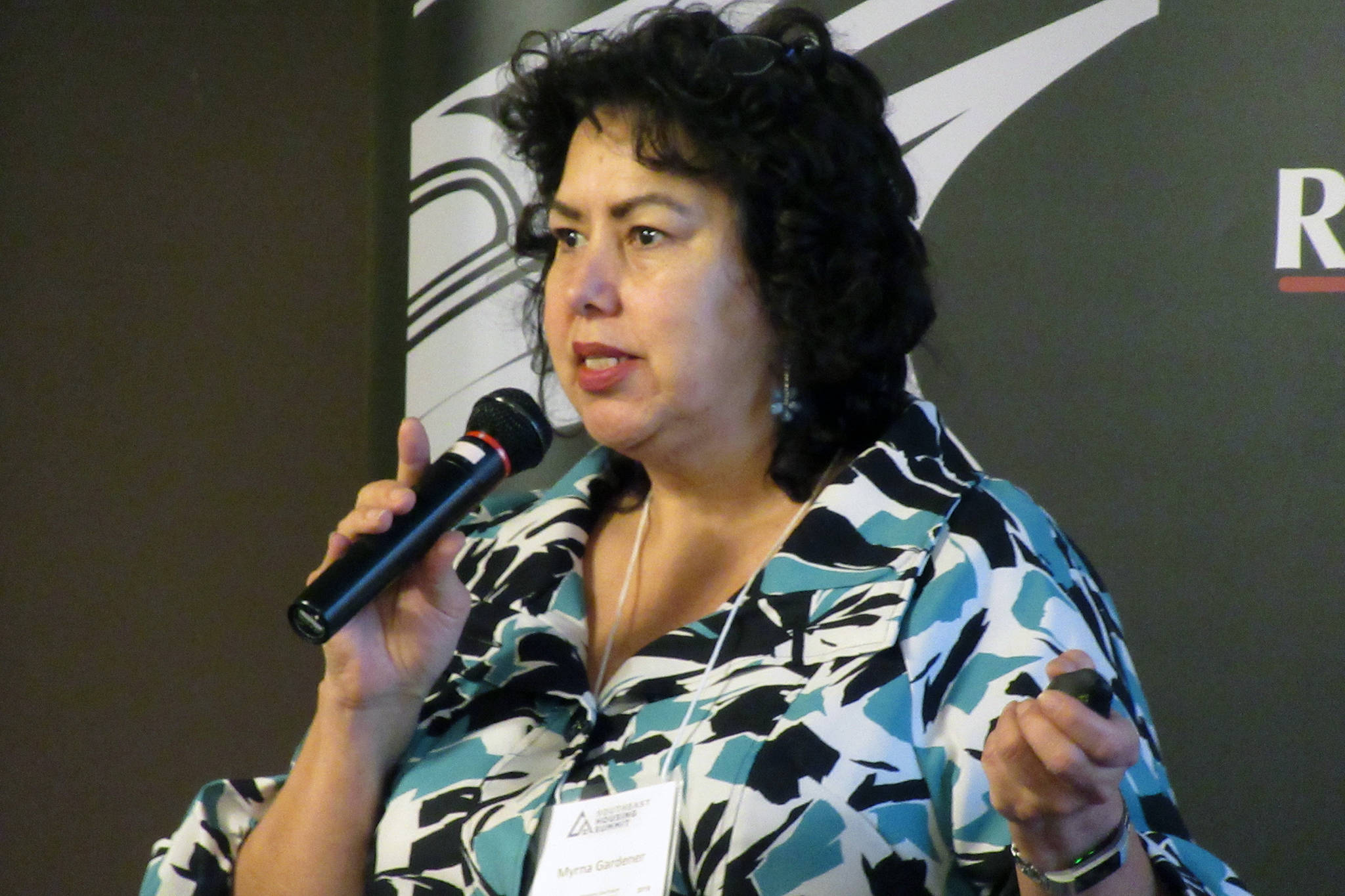
Myrna Gardner, tribal partnership specialist for the Census Bureau, said because the census is used to determine distribution for federal funds, every 1 percent of Alaskans (about 7,500 people) who don’t respond to the census equates to $22,192,500 less per year for the state.
“That is astounding,” Gardner said during a Thursday presentation at the Southeast Housing Summit. “Look at what we’re doing by not responding to this.”
Using that number, 2010’s 36 percent non-response rate translated to a loss of $798.93 million per year. That’s nearly $8 billion lost over 10 years. The next 10-year census will be conducted next year.
Specialists said that’s federal money that could go toward Medicaid, Supplemental Nutrition Assistance Program, Medicare Part B, highway planning and construction, Pell Grants, school lunch programs, temporary assistance for needy families, Section 8 Housing choice vouchers, Title I grants and special education grants.
[First-time housing summit talks housing problems and what’s being done to address them]
Gardner said it’s particularly notable that so much funding is being left on the table amid concerns about proposed cuts to the state’s budget.
“It’s mind-boggling,” Gardner said after her presentation. “We all know what it takes to live here. We’re the masters of our own fate.”
Census data also affects things such as the number of seats a state holds in the U.S. House of Representatives and redistricting, specialists said.
Barbara Miranda, partnership specialist for the Census Bureau, said small, predominantly Alaska Native villages in Southeast Alaska tend to be even less responsive than the rest of the state with response rates in places like Klawock and Hydaburg near or even below 50 percent.
Cities and boroughs didn’t do that much better, according to the data.
While Juneau had the best response rate in the state at 75 percent, Haines had a 46 percent response rate and Kenai Peninsula 52 percent.
Gardner said she understood some of that comes from a mistrust of the government or concerns that information shared could land respondents in trouble with landlords or housing authorities.
She emphasized that those who collect data for the census are not allowed to share personal identifying information under penalties including prison and/or a $250,000 fine.
Gardner said the Census Bureau also attempts to recruit trusted locals to collect data and visit homes to help reduce concern.She said wages start at $28 per hour and applications are now open at census.gov/jobs.
Alaska’s geography and low population density also make the state tough to count, Miranda and Gardner said.
There are some plans in place to combat that.
[Proposed budget cuts could cost Juneau millions]
In remote parts of the state, census forms will be left at residence’s doors beginning in January 2020. Those will be among the first census materials distributed in the nation, the specialists said. In more populated parts of Southeast, including Juneau, Sitka and Ketchikan, census forms will be delivered by mail.
For the first time ever, this year people will have the option to respond to those mailed forms early and online beginning March 23, 2020, Miranda said.
Instructions for how to do that will be included in the mailed materials.
How people fill out their responses also matters for demogrpahics, such as getting an accurate count of Alaska Native households.
Gardner offered insight into how to ensure a household is counted as Alaska Native.
“If you live in a mixed household, if the first person you put there is non-Native, then you’re counted as non-Native,” Gardner said.“Keep that in mind when you’re doing your survey if you want your household to be counted as Native.”
• Contact reporter Ben Hohenstatt at (907)523-2243 or bhohenstatt@juneauempire.com. Follow him on Twitter at @BenHohenstatt.
