
I grew up in a family of seven people — my mom, my three cousins, my two sisters and me. Six of them, having been born in Cambodia and immigrated to the United States in 1980, all went through naturalization ceremonies.
Yet, it took until I was 35 and reporting for the Empire for me to go to my first one on Friday. And it took being on the ninth floor of the Federal building, seeing all these people dressed up and taking photos, for me to realize how strange that is.
Where was I during these monumental days for my family? Why didn’t I attend? Undoubtedly it was because I was a kid when all the ceremonies happened and was probably at school. I wouldn’t have understood anyway what was going on and I probably wouldn’t have cried like I did at Juneau’s naturalization ceremony at the federal courthouse when 41 people took an Oath of Allegiance and became citizens of the United States.
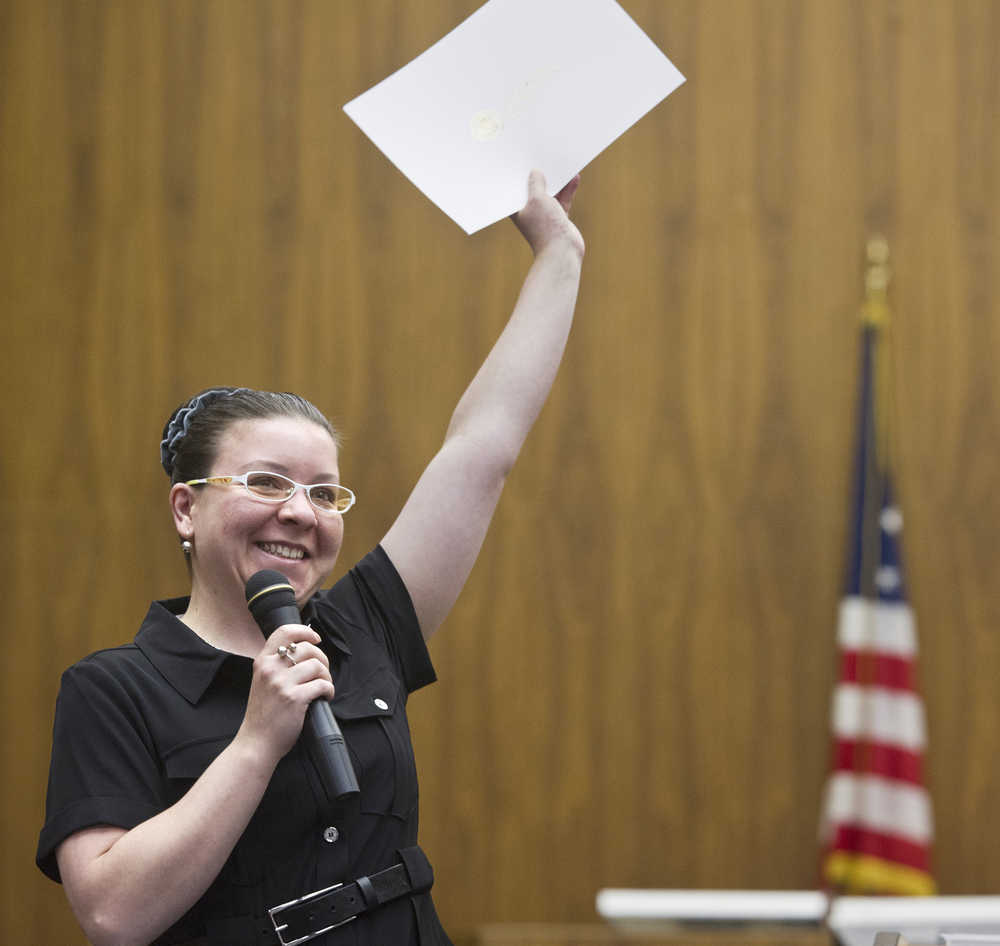
When Rose Fernandez from Mexico accepted her certificate and, wiping away tears, said, “I just wait for this for so many years, so this is a big privilege for me,” how could I not cry with her?
The group that become citizens that day live in different Southeast Alaska communities and are originally from 10 different countries, including Hungary, Russia, Belarus, India, Canada and China.
The people supporting them on their big day, those filling the courtroom audience, were taking photos (U.S. Magistrate Judge Leslie Longenbaugh had relaxed the normal “no photography” rule), some held a baby in their lap (one man referenced his wife and triplets when he accepted his certificate), a few had congratulatory flowers, and everyone was excited and happy; I could feel it in the air.
Sitka resident Ron Davis was there for his wife, Kristine Davis, who’s originally from the Philippines. The two were introduced in 2008, when Ron’s Filipino coworker, Kristine’s grandmother, played matchmaker. Ron and Kristine ended up talking on the phone for three months before Ron traveled to the Philippines to meet her.
“When we first met, we were at the airport. Everything snapped right in place. It was like we knew each other for a long time,” Ron said.
Kristine moved to Sitka in 2009. Ron was looking for someone who’d go fishing and hunting with him, and Kristine does.
“So she’s everything that I want,” he said. “We’re happy.”
When it was Kristine’s turn to accept her citizenship certificate, Ron stood up from one of the back rows to take photos.
As she introduced herself to the audience, Kristine said, “I am very happy to be an American.” Then, breaking down in tears, she continued, “I would like to say thank you to my husband. I really, really love him.”
After the ceremony, she said she doesn’t miss anything about the Philippines, except her brothers. She has six, and five of them still live there.
“Sitka is home now,” Kristine said. “Becoming a citizen was my dream since I was a kid. It’s the land of opportunity, and I love America.”
Cho Youn, 62, is originally from South Korea but has lived elsewhere for more than half his life. He first came to the U.S. as a student in 1981, returned to South Korea as a translator during the 1988 Olympics and then moved to Argentina a year later, where he spent 20 years. He moved back to the U.S. in 2009 to be closer to his daughter who was born here, and chose Petersburg as his home.
“I’ve wanted to be an American citizen since 50 years ago,” Youn said during the ceremony. “Finally my dream has come true. During Korean War, without help from U.S. government, we would not have survived. We all Korean thank America. So I want to be on the American side now.”
Other things said on Friday included variations of “Thank you,” “I’m proud to be an American,” and “God bless America.”
Damian Olivato, originally from South Africa and a six-year resident of Skagway, said it well — “I’m super stoked to be a citizen. This is pretty rad.”
And sometimes words aren’t even necessary. Maria Feliciano from the Philippines, throwing her arm in the air, simply exclaimed, “Wahoo!”
I wish I knew what my family members said to the audience during their naturalization ceremonies if they had been granted that opportunity. I can walk up to total strangers to ask them questions like, “What does this day mean to you? Why did you want to become a citizen?” But when it comes to be my family, I’ve so far been incapable of being a reporter.
So I called my mom, Lan Phu. She lives in New York and became a citizen on Jan. 18, 1995. When I asked her why it took her almost 15 years, she said, “I don’t know. Time just flew by. I was busy raising children.”
She doesn’t remember details of her citizenship ceremony, like how many people she became naturalized with, but she’s pretty certain she went alone and she didn’t get to talk to the audience when she got her certificate.
Despite the fuzzy memory, worn with time, she said it was an important day for her. For one reason, becoming a citizen meant she could get a 10-year U.S. passport instead of constantly applying for re-entry permits on her green card every time she left the country, which can get costly.
“And also I could vote,” my mom said. “It’s a privilege to vote. In Cambodia, I could never vote. I never had a voice. So now I have a voice.”
When she said that, I remembered that my mom and my oldest sister volunteer at a local polling place during every election.
The naturalization ceremony is a big part of so many Americans’, so many Alaskans’ stories. It’s a big part of my family’s story, and therefore a huge part of my own.
I was born in the U.S. less than three months after my family arrived. I admit I take my citizenship for granted. But the ceremony and my mom reminded me that I shouldn’t.
• Contact reporter Lisa Phu at 523-2246 or lisa.phu@juneauempire.com.
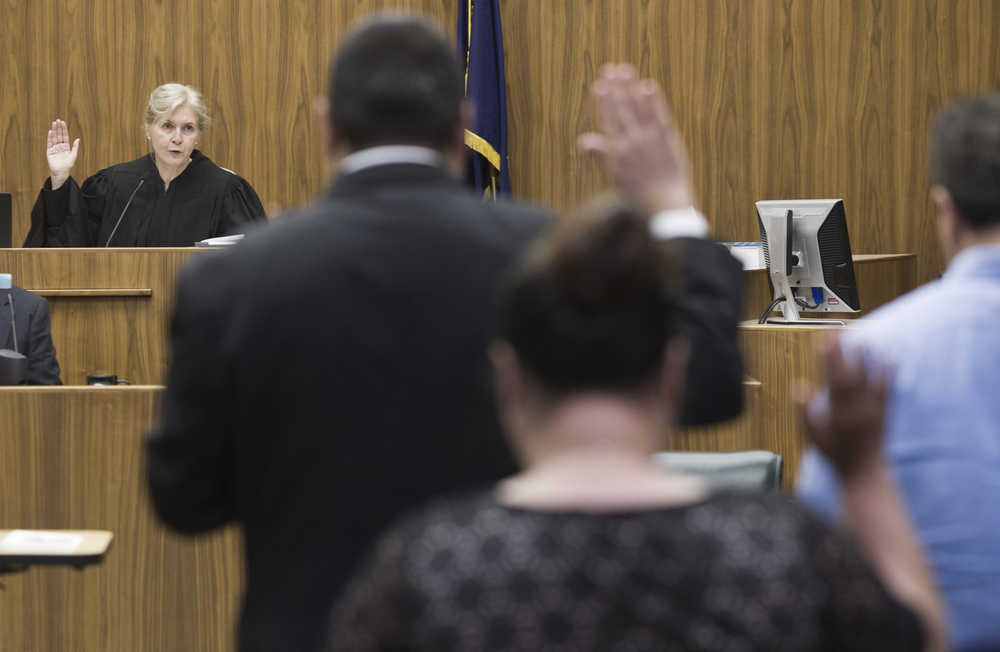
U.S. Magistrate Judge Leslie Longenbaugh swears in new citizens during a U.S. Naturalization Ceremony at the Robert Boochever U.S. Courthouse in the Federal Building on Friday. Forty-one people from 10 countries became U.S. citizens.
