
This story has been corrected to state an executive order by the governor allows him to appoint all six public members of the Alaska Marine Highway Operations Board, a change from the previous policy of the House speaker and Senate president each appointing two.
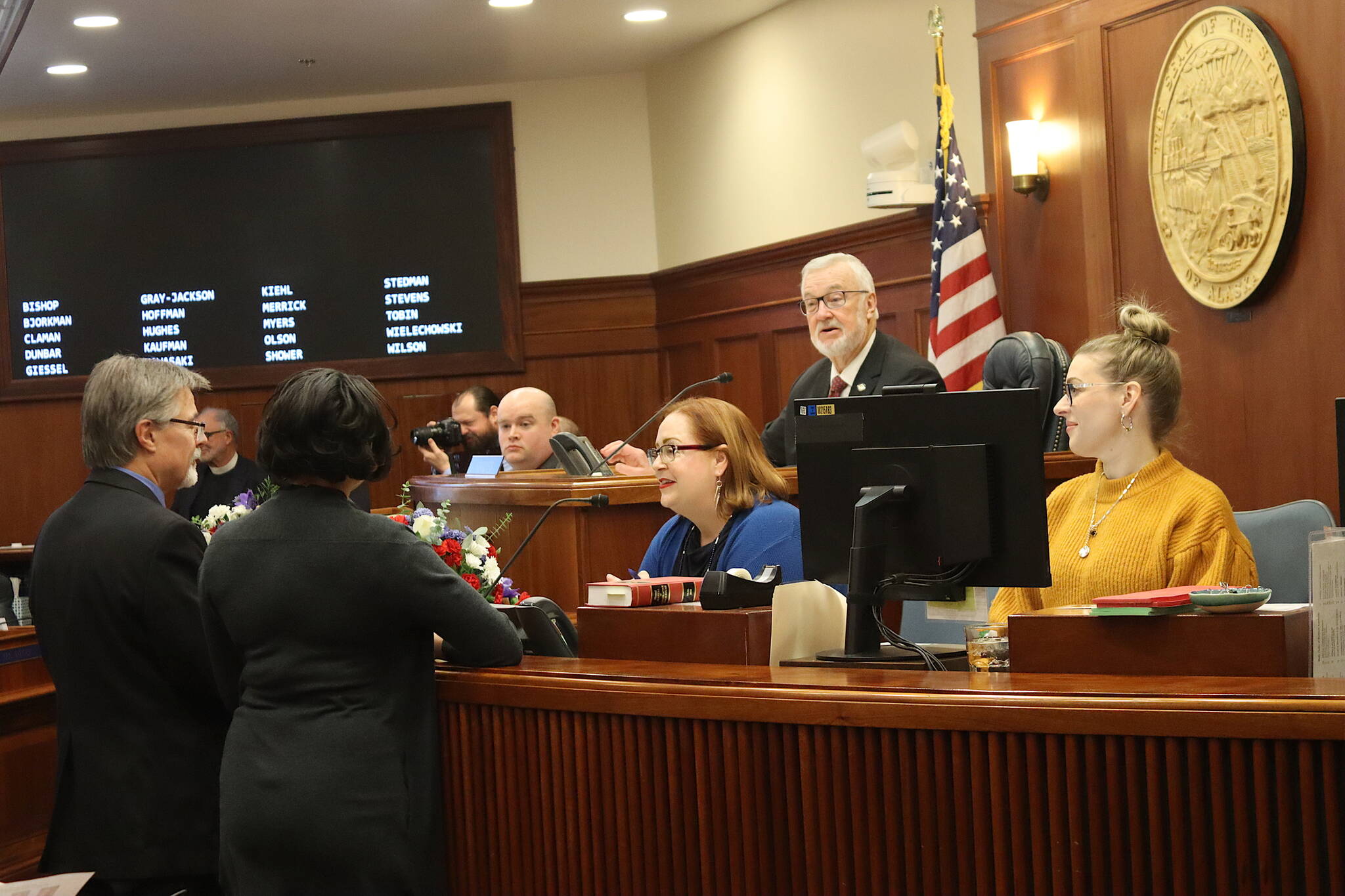
The Alaska Legislature gaveled into this year’s session with the usual ceremonial happenings and some substantial first-day action Tuesday, including a 20-20 vote by the Republican-led House rejecting a joint session with the Senate to consider an override of Gov. Mike Dunleavy’s veto of half of an increase in per-student education funding this year.
The vote was one indicator during the day of vast gaps between the Senate, House and Dunleavy in key issues likely to be a dominant topic of discussion at the Alaska State Capitol for the next four months. The majority, consisting of 17 of the Senate’s 20 members, largely prevailed in last year’s budget battle over key issues such as education funding and the amount of the Permanent Fund dividend, resulting in some harsh feelings between various sides.
“Hopefully we can repair any bad feelings that may have occurred at the end of session,” Senate President Gary Stevens, a Kodiak Republican, said when asked to respond to a member of the Senate minority who said the majority treated the House “like a 40-member advisory committee.” “Our leadership met with the House leadership a few weeks ago and we want to make sure that — well, we know obviously that it takes two to tango.”
Stevens, speaking during a press briefing after the Senate gaveled in for its first floor session at 11 a.m., said two of the bipartisan Senate majority’s top goals remain the same as last session — boosting per-student education spending and retirement benefits for state employees — but added a third initial goal of “energy issues” largely related to ongoing problems in the state’s Railbelt.
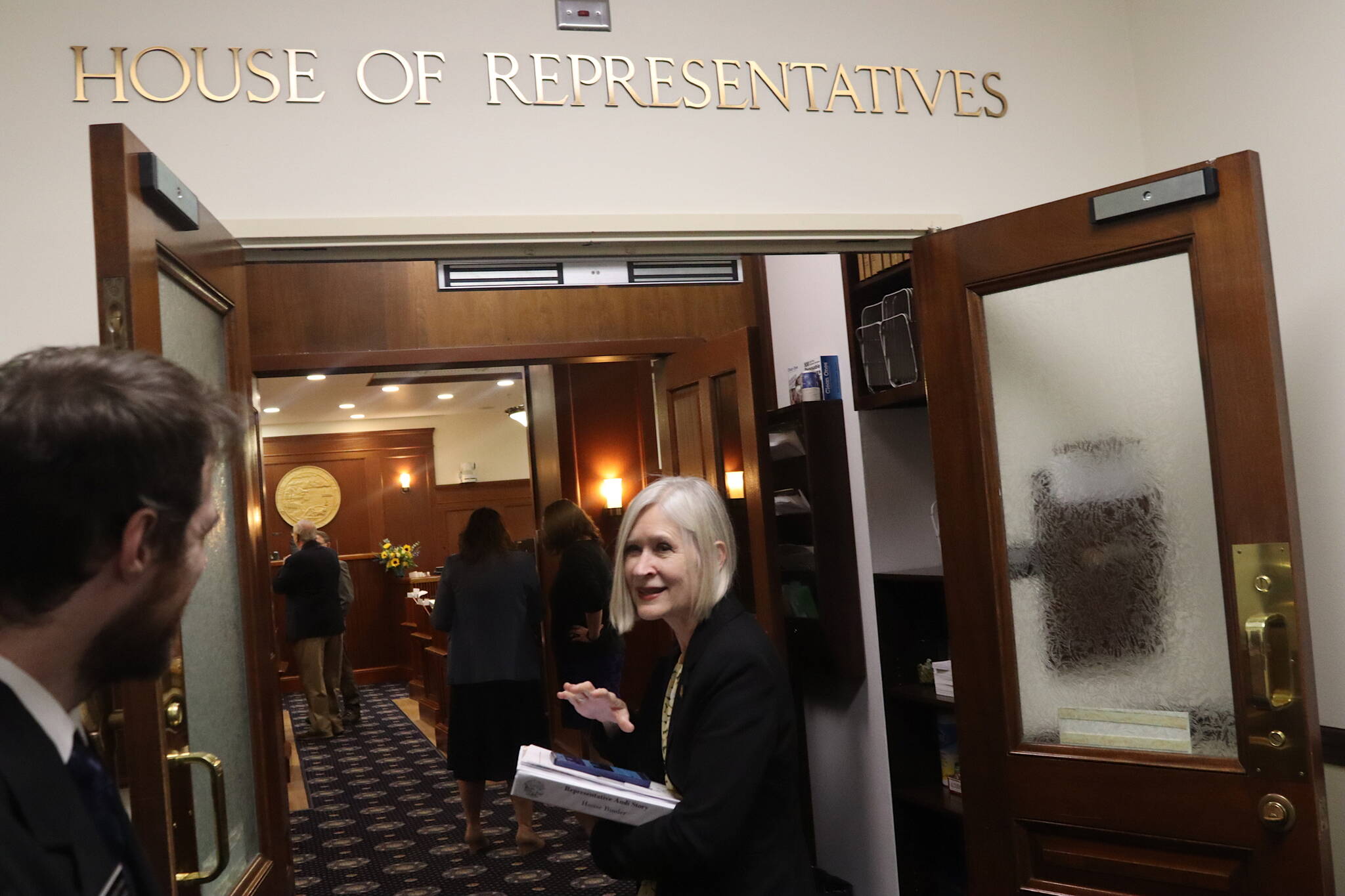
State Rep. Andi Story, a Juneau Democrat, greets a legislative page on her way into the House chambers for the start of Tuesday afternoon’s floor session. (Mark Sabbatini / Juneau Empire)
Energy issues in the form of figuring out “how we reduce the cost of energy all across Alaska” was cited as the top goal of the House majority by Speaker Cathy Tilton, a Wasilla Republican. Tilton also said she’s learned lessons from last year’s session — when several members of her 23-member majority defected in the final budget deal, some of them receiving funds for capital projects in their districts — and plans to engage in more balanced negotiations between the two chambers this year.
“We have had conversations with the Senate leadership about not having that same kind of a situation occur,” she said. “We can only work on our relationships there, and trust but verify. It’s important to us to have a transparent process that allows the public to weigh in on that on both parts of the budget as well as having both bodies weigh in on that.”
Education funding battle again looms large with large differences
The per-student formula known as the Base Student Allocation, currently permanently set at $5,960, got a one-time increase of $680 in the budget passed by the Legislature last year. That was roughly half of what educators and some lawmakers sought to help offset inflation since the formula has gone nearly unchanged since 2017, but Dunleavy reduced the one-time increase even further with his veto.
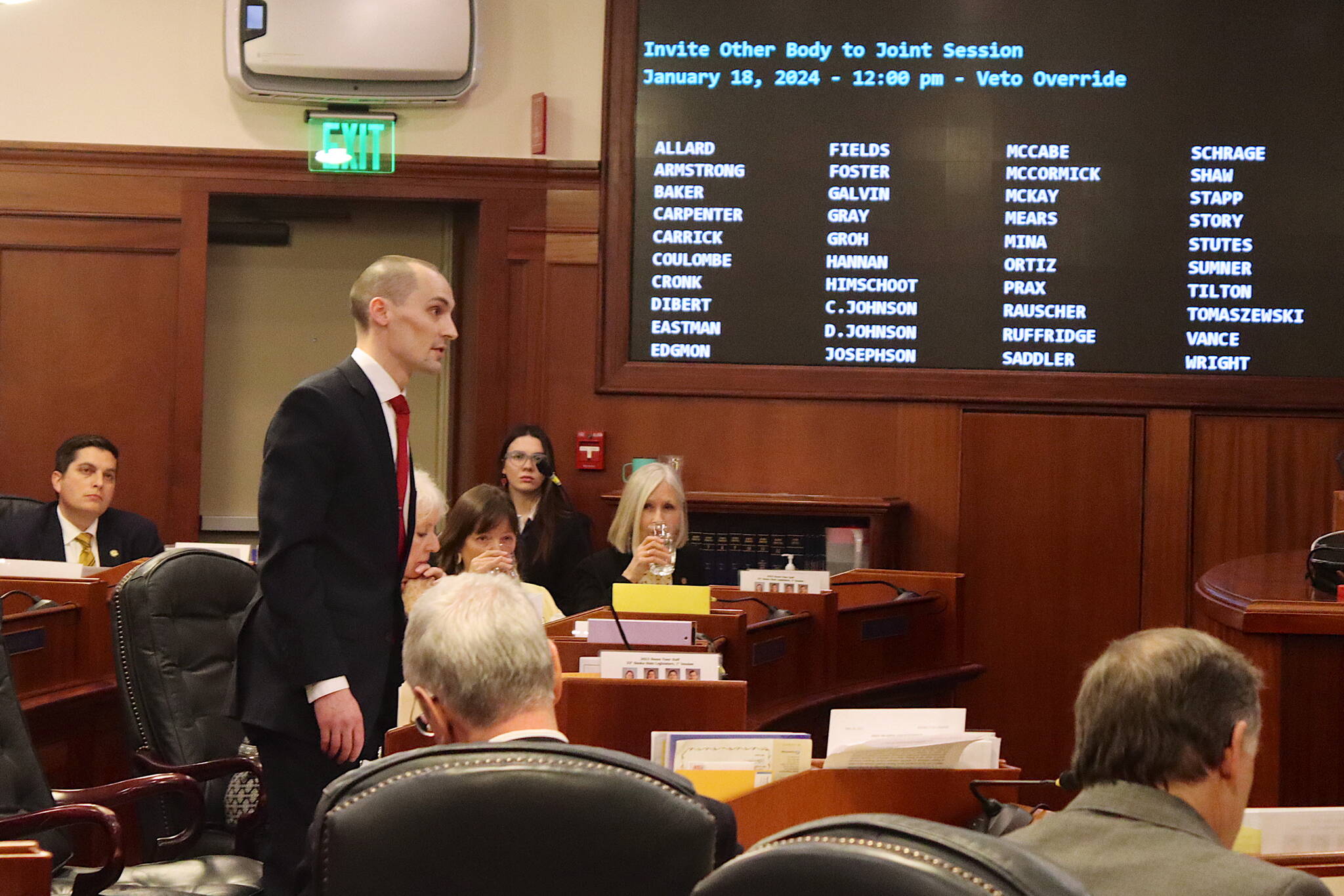
House Minority Leader Calvin Schrage, an Anchorage independent, urges fellow lawmakers to agree to a joint session with the Senate to override a veto by Gov. Mike Dunleavy to part of an education funding increase. The Republican-led House failed to approve the session on a 20-20 vote Tuesday. (Mark Sabbatini / Juneau Empire)
Tuesday’s vote on a joint veto override session occurred after the House gaveled in at about 1:15 p.m., with House Minority Leader Calvin Schrage, an Anchorage independent, proposing the session for Thursday and citing the current financial plight of many of the state’s school districts.
“It’s not for lack of effort by our dedicated teachers, support staff, administrators, superintendents,” he said. “It’s not for a lack of effort from our parents to make sure their students have great outcomes. It’s a lack of financial support.”
While the motion failed on a tie vote, members can revisit the issue. However, since a three-fourths vote in both chambers would be necessary to override the veto during a joint session, the House appears well short the votes it needs.
The education funding proposals discussed so far entering this year’s session focus on both the amount and types of spending favored. Increases to the $5,960 permanent per-student formula, for instance, range from no increase by Dunleavy to more than $1,400 supported by some groups of legislators including the 16-member House minority.
Another key aspect of the education debate is a bill presented by House majority leaders that — similar to some of Dunleavy’s proposals — seeks a mix of policy proposals including support for charter schools, homeschooling and lump sum year-end bonuses for teachers. Among the bill’s differences from the governor’s proposals is a $300 increase in the school funding formula known as the Base Student Allocation, less than the $340 increase left over this year after Dunleavy’s veto.
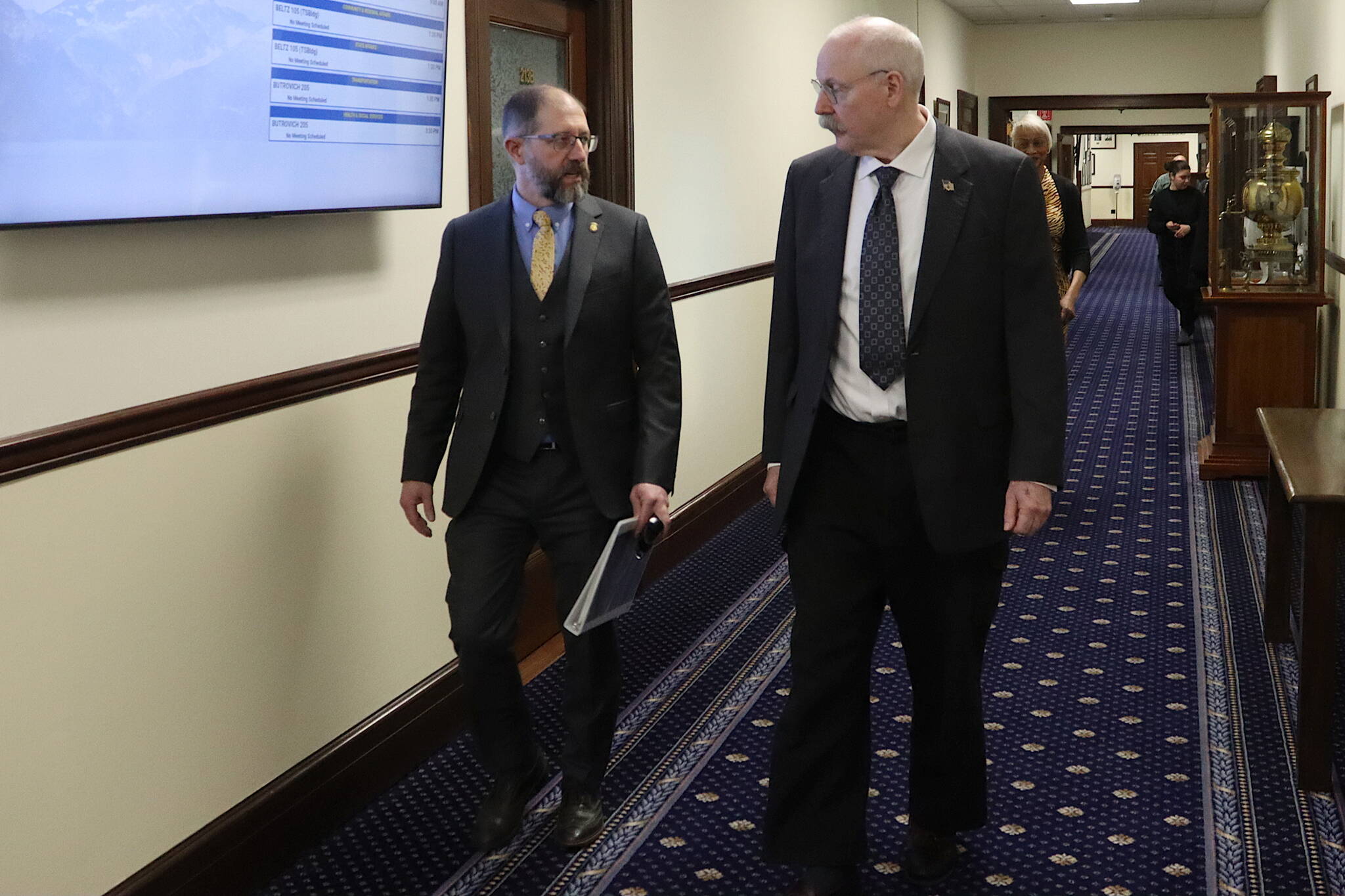
State Sens. Jesse Kiehl, a Juneau Democrat, and Bert Stedman, a Sitka Republican, walk to the Senate chambers just before the start of Tuesday’s floor session. (Mark Sabbatini / Juneau Empire)
The bill — a significantly rewritten version of Senate Bill 140, which passed the Senate last year — is scheduled to be heard by the House Rules Committee at 4 p.m. Wednesday.
“We hope it’s something that can allow the schools to plan a little further out,” said Rep. Craig Johnson, an Anchorage Republican and chair of the House Rules Committee. “One thing I’ve learned about education is we don’t have enough money to fund everything everybody wants.”
Executive orders include replacing entire AMHS operations board
Also notable was a dozen executive orders issued by Dunleavy formally introduced on Tuesday, largely eliminating and/or restructuring various governing boards. Among those relevant to Southeast Alaska is restructuring the Alaska Marine Highway Operations Board, with the governor appointing all six public members, rather than having the governor, House speaker and Senate president each appoint two. The order also ends the terms of all current members on July 1, but the governor has the authority to reappoint those members.
Most of the other executive orders are similar to one eliminating the Alaska Safety Advisory Council.
“As governor, I find that it is in the best interests of efficient administration to eliminate the Alaska Safety Advisory Council and transfer its duties to the Department of Labor and Workforce Development,” the executive order states. “This action will encourage the development of expertise, eliminate duplication of function, and provide a single point of responsibility for state policy relating to health, safety, and accident prevention.”
Other similar orders apply to entities such as the Board of Massage Therapists, Recreation Rivers Advisory Board and Criminal Justice Information Advisory Board. Legislative leaders in the House and Senate said they had just received the executive orders this week and were not familiar enough with them to comment on the potential impacts.
The Legislature can disapprove executive orders within 60 days via a majority vote in a joint session.
• Contact Mark Sabbatini at mark.sabbatini@juneauempire.com or (907) 957-2306.
