
Just across the border in Canada, multiple mines pose threats to Alaska’s Native peoples and their way of life, but political systems in two countries, one state, one province and multiple sovereign tribal governments are poorly equipped to protect Southeast residents from foreign companies short-term profit needs.
Two Southeast legislators and other speakers said at Thursday’s Native Issues Forum that more needed to be done to ensure fishing, both commercial and subsistence, isn’t damaged by mines, some already in existence and some that may be developed soon.
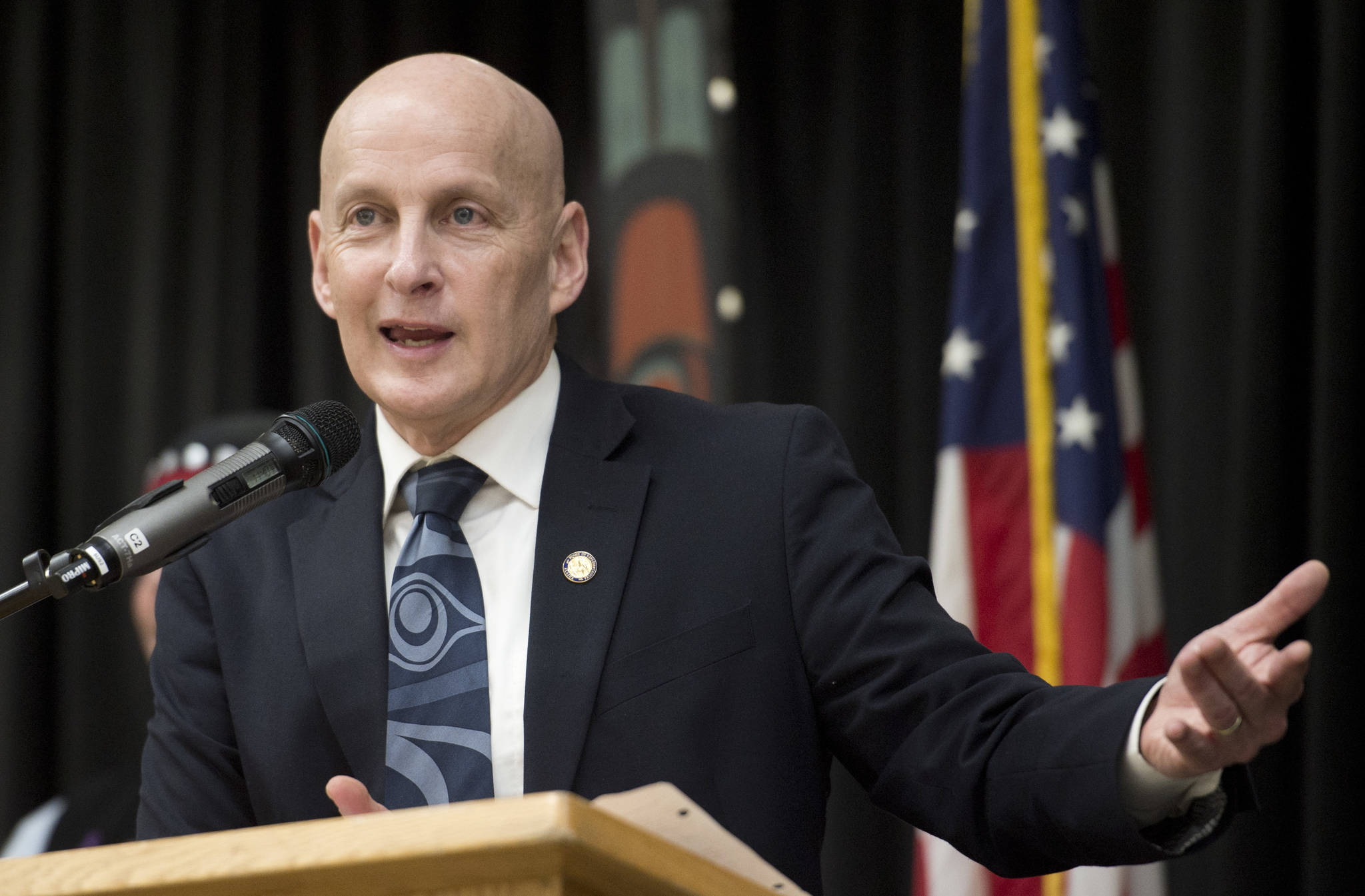
“I’m not an anti-mining person, I’ll put that out there right now,” said Rep. Dan Ortiz, an Independent legislator from Ketchikan who is a member of the Democratic-led Majority coalition that controls the legislature and a member of the powerful House Finance Committee.
“But in this case we can’t do down the road of resource development without first protecting the already very valuable part of our rural economy that is an established economic driver,” he said.
Alaska’s salmon and other fisheries will continue to support people even after mines are exhausted, he said.
“That part of our economy will last forever,” Ortiz said.
Joining Ortiz at the weekly forum was Rep. Jonathan Kreiss-Tomkins, D-Sitka. Southeast’s other two representatives, Democrats Sam Kito and Justin Parish of Juneau, spoke to the forum earlier in the year.
Forum host Rob Sanderson Jr., first vice president of the Central Council of Tlingit and Haida Indian Tribes of Alaska, said fisheries are already being hurt, including on the local Taku River, which has a long history of mining pollution of an important salmon spawning river, but even more are at risk.
“We’re at the crossroad of a very, very difficult situation on the transboundary” region, Sanderson said.
Recent extremely low runs of king salmon, which this year have forced the cancellation of the annual Tlingit-Haida salmon derby, have raised questions about mining and other impacts on the environment, he said. And in addition to numbers, fish size is also declining.
Derby winners in past decades topped 60 and 70 pounds, he said. Now, winners have been in the 30-pound range.
“Something is happening,” Sanderson said.
Ortiz said the British Columbia government wasn’t doing enough to ensure those downstream are protected from its mines, and it is tough to put much pressure on them to do more.
“The reality is, these mines are on Canadian land and they are a sovereign nation,” Ortiz said, “but there are international treaties, treaties around river water, that speak to the need to make sure the interests of the downriver folks are protected,” he said.
One way to put pressure is to work with other governments, and he specifically praised the work of U.S. Sen. Lisa Murkowski and the administration of Gov. Bill Walker in advocating for Alaska on the issue. Walker’s point person in the issue has been Lt. Gov. Byron Mallott, who has now been joined by former Sen. Albert Kookesh, D-Angoon, working on the issue in the Governor’s Office. Both Mallott and Kookesh are Tlingit.
Rep. Kreiss-Tomkins said that Alaska Native community has a friend in the bi-partisan coalition now leading the House of Representatives, and headed by Speaker Bryce Edgmon, D-Dillingham, an Alaska Native as well as a coastal resident.
And Kreiss-Tomkins praised an earlier bi-partisan Senate coalition that helped the state save billions of dollars in oil tax revenues.
“Those savings are the only thing that is keeping Alaska afloat right now,” he said.
Members of the forum audience urged the two legislators to do more to protect Southeast from the effects of Canadian mines.
“We are running out of opportunities and resources to train our young people in what their tradition was actually made up of for hundreds, if not thousands of years,” said Andrea Cadiente-Laiti, tribal administrator of the Douglas Indian Association.
Kevin Allen praised the two legislators, saying “you guys make a bombastic team,” but questioned what kind of long-term protection could be done if British Columbia goes ahead and permits additional mines which wind up polluting Alaskan waters.
“Maybe the system will be perfect and it will never happen, but if it does, what can be done?” he asked.
Ortiz said there are two types of risks, either the massive failure such as the Mount Polley tailing dam failure which inundated downstream areas with mud. There is also ongoing incremental pollution releases, which he called “death by a thousand cuts.”
That may be like the Tulsequah Chief Mine in the Taku Watershed, which has been closed for more than half a century but which still discharges pollution into a Taku River tributary. British Columbia officials have said then intend to see it is cleaned up, but have provided few additional details.
One option, Ortiz said, is to require mine developers to post bonds ensuring closure and cleanup before they can begin operation, but that’s not a complete solution.
“There again you are only talking dollars,” he said, while at risk is livelihoods for hundreds of years,” he said.
• Pat Forgey is a freelance reporter based in Juneau.
