
As lawmakers consider using proceeds from the Alaska Permanent Fund to patch Alaska’s $2.5 billion budget deficit, they are pushing back against a stress test concluding that their strategy has a 50/50 chance of failure.
“This seems unrealistically or unnecessarily pessimistic,” said Sen. Peter Micciche, R-Soldotna, after the results of the test were presented.
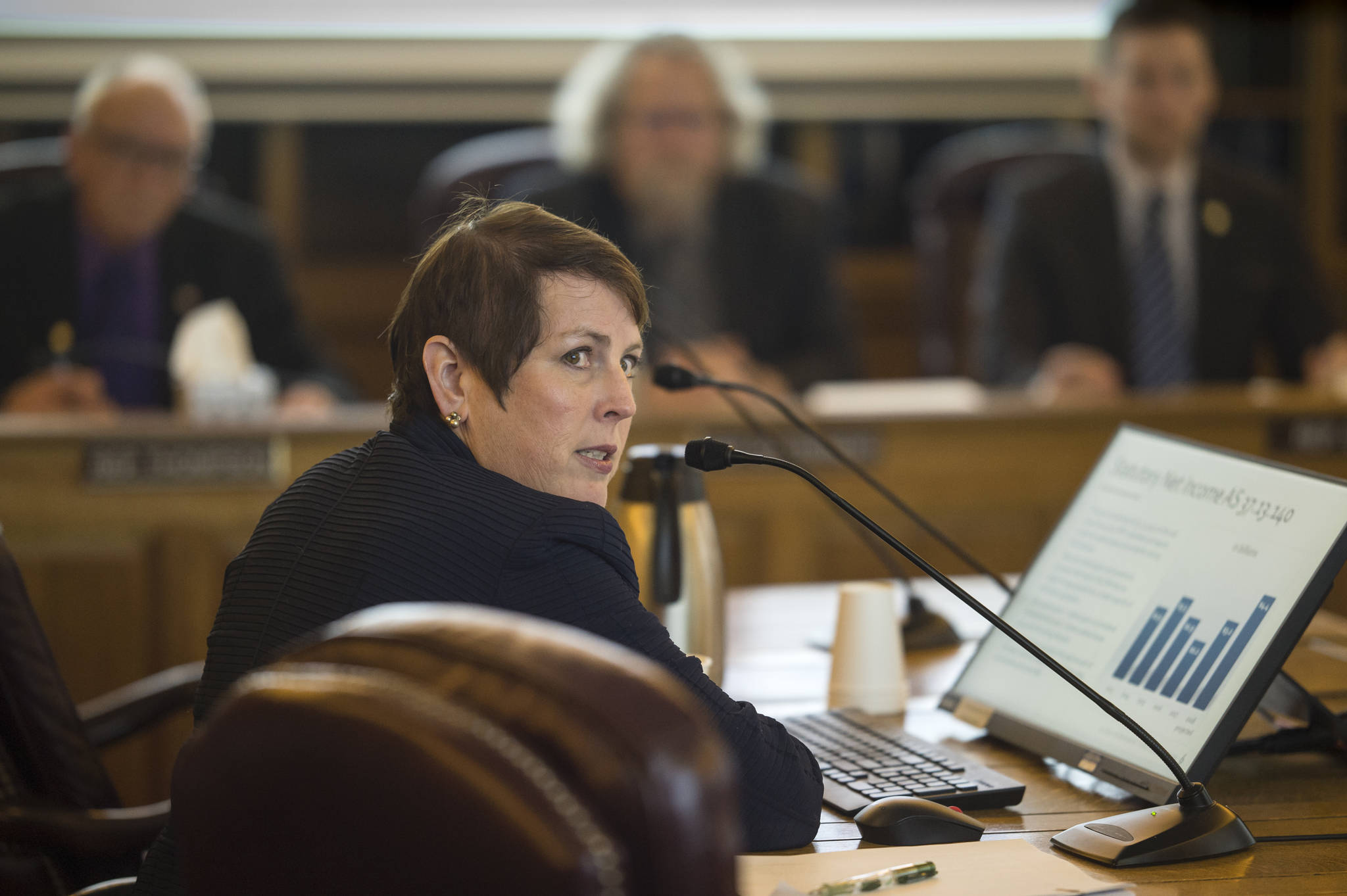
In a pair of hearings Monday and Tuesday in the Capitol, Alaska Permanent Fund Corp. CEO Angela Rodell stood by the results of the stress test and told lawmakers that the odds of failure could be reduced if the fund changes its investment strategy — a strategy that has driven the fund to record-high levels. As of Jan. 1, the fund was worth $64 billion.
“This analysis is simply designed to give you information about what could happen if we have a really wretched set of market circumstances,” sending the fund’s value downward, Rodell explained.
On Tuesday, in front of the Senate Finance Committee, Rodell and lawmakers occasionally appeared frustrated.
“This is healthy tension,” said Micciche. “Why it’s healthy is because we have two different objectives.”
The stated vision of the Alaska Permanent Fund Corporation is to manage the fund for the benefit of “all current and future generations of Alaskans.”
Lawmakers are considering using some of the corporation’s investment earnings to cover a portion of the deficit. Spending some of those earnings, instead of reinvesting them, will stress the fund. A stress test conducted by outside experts last year found that lawmakers’ preferred approaches to spending from the Permanent Fund (the House and Senate have different ideas) have a high chance of failing at least once in the next decade.
Failure, in this case, means the fund losing money. There is also a 20 percent chance that an extended market downturn could exhaust the money available to lawmakers, leaving nothing to fund state government.
That’s not just a big problem, it’s the biggest problem.
“A dramatic shift could still put us back into this situation that we’re in right now, where we don’t have money,” said Rep. Lance Pruitt, R-Anchorage.
The state’s principal savings account, the Constitutional Budget Reserve, does not have enough money to cover the deficit in the next fiscal year. The Alaska Senate’s governing majority is opposed to new taxes. Neither House nor Senate are considering budget cuts of a size needed to balance the budget without new revenue.
Spending from the Permanent Fund is the only serious deficit-cutting approach currently being considered by the Legislature this year, and if lawmakers reduce how much money they take from the fund (to reduce long-term risk), they increase the amount of the deficit that will be left at the end of the year.
“The lower the draw … then the less we’re going to have for services and the less we’re going to have for the dividend?” asked Rep. Les Gara, D-Anchorage.
“It is what it is,” Rodell said.
In front of both House and Senate lawmakers, Rodell said the Permanent Fund’s board of trustees could switch their investment strategy to something more conservative. That would reduce the long-term risk of failure, but it would also reduce the chance that the Permanent Fund would continue to earn money at the same rate. The Permanent Fund earned 12.89 percent interest in the most recent fiscal year, and if the fund’s directors change that strategy, its earnings could drop.
“We have to be as careful as possible to make sure we don’t stress the growth of the Alaska Permanent Fund,” Micciche said.
Correction: The initial version of this story stated that there was a 48 percent chance of the Alaska Permanent Fund running out of money in the account available for appropriations. There is a 48 percent chance of that account shrinking, and a 20 percent chance it will run out of money at least once in the next decade.
• Contact reporter James Brooks at james.k.brooks@juneauempire.com or call 523-2258.
