
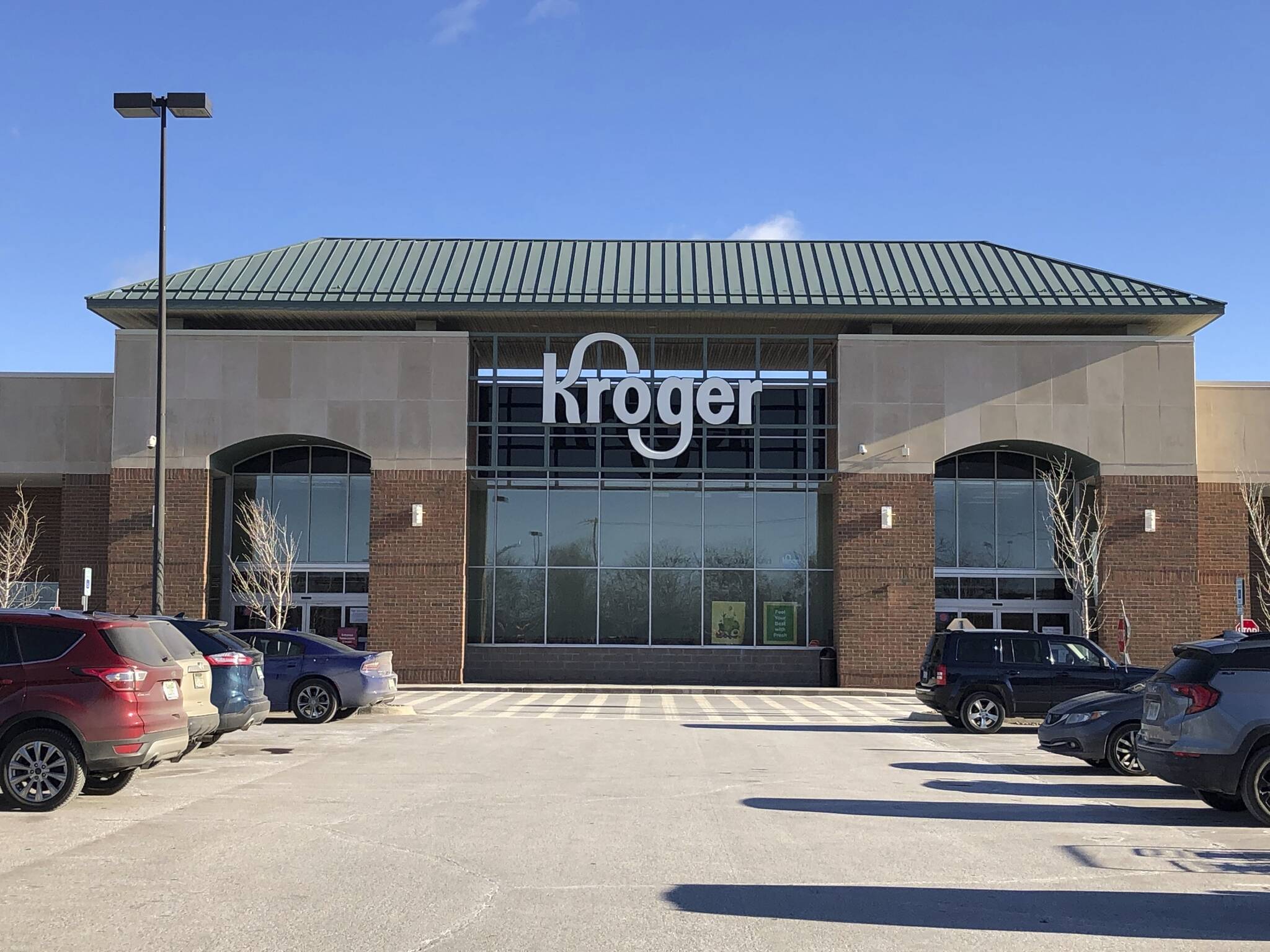
Two of the nation’s largest grocers have agreed to merge in a deal they say would help them better compete with Walmart, Amazon and other major companies that have stepped into the grocery business.
Kroger on Friday bid $20 billion for Albertsons Companies Inc., or $34.10 per share. Kroger will also assume $4.7 billion of Albertsons’ debt.
Kroger Chairman and CEO Rodney McMullen, who would retain those titles at the combined company, said a merger could save $1 billion annually in lower administrative costs, more efficient manufacturing and distribution and shared investments in technology. McMullen said the company would plow those savings back into lower prices, higher wages and improved stores.
“We will take the learnings from each company to bring greater value and a better experience to more customers, more associates, and more communities,” McMullen said Friday in a conference call with investors.
Shares in both companies fell in morning trading Friday.
[Analysis: Where can you get the most bread for your bread?]
Kroger, based in Cincinnati, Ohio, operates 2,800 stores in 35 states, including brands like Ralphs, Smith’s and Harris Teeter. Alberstons, based in Boise, Idaho, operates 2,273 stores in 34 states, including brands like Safeway, Jewel Osco and Shaw’s. Together the companies employ around 710,000 people.
The deal will likely get heavy scrutiny from U.S. antitrust regulators, especially at a time of high food price inflation. The Justice Department and the Federal Trade Commission were already in the process of updating merger guidelines to better detect and prevent anticompetitive deals. In July, President Joe Biden signed an executive order promoting competition in business and calling for tougher scrutiny of mergers.
If approved by regulators, the deal is expected to close in early 2024.
To ease the regulatory process, Kroger and Albertsons said would divest stores in markets where they overlap. The companies said they would spin off up to 375 Albertsons stores in a standalone public company.
“We are confident, from the extensive work that we’ve done, that we have a clear path to achieve regulatory approval with divestitures,” Kroger Chief Financial Officer Gary Millerchip said.
McMullen said the company would decide market-by-market whether stores would change their names.
“We’ll want to evaluate each market individually, who has the stronger market share,” he said.
Together, the stores would control around 13% of the U.S. grocery market, assuming the sale or closure of around 400 stores for antitrust reasons, according to J.P. Morgan analyst Ken Goldman.
Still, that is a distant second to Walmart’s 22% share. Amazon, which bought Whole Foods in 2017, is also a growing player in the space, with 3% share. Warehouse store Costco controls 6%.
Value chains like Aldi and Dollar General — which have a combined 4% market share — have also been squeezing traditional grocers like Kroger and Albertsons, particularly as red-hot inflation pushes people to cut costs.
Goldman said a stronger combined company could possibly help tame food price inflation, since it would have more power to reject food producers’ price increases. The two chains combined have 34,000 private label products at various price points that compete directly with food manufacturers.
Kroger said would reinvest approximately $500 million into price reductions. It would also spend $1.3 billion updating Albertsons stores and $1 billion on higher employee wages and improved benefits.
The majority of Kroger’s hourly workers are unionized with the United Food and Commercial Workers union, which also represents workers at Albertsons-owned Safeway. The union didn’t immediately respond to a request for comment Friday from The Associated Press.
Kroger also said the combined stores would provide greater and faster access to fresh food, with a combined 66 distribution centers and 52 manufacturing plants. Together, the stores operate in 48 states and the District of Columbia.
But critics questioned a merger at a time of high food price inflation. Food prices rose 13% in September compared with last year, according to U.S. data released Thursday.
“A Kroger-Albertsons deal would squeeze consumers already struggling to afford food, crush workers fighting for fair wages and destroy independent, community stores,” said Sarah Miller, executive director of the American Economic Liberties Project, a nonprofit that supports stronger corporate accountability and antitrust measures.
It was no secret that Albertsons was thinking about selling the company. The chain announced in February that its board was reviewing options to enhance shareholder value, including developing new businesses or a sale.
And both Albertsons and Kroger themselves have grown into huge operations partially through acquisitions.
Albertsons was bought by a consortium of investors including Cerberus Capital Management, a private equity firm, in 2006. Cerberus helped finance Albertsons’ 2015 purchase of the Safeway grocery chain and attempted a failed merger with Rite Aid in 2018. Albertsons became a publicly traded company in 2020.
Cerberus currently holds nearly 30% of Albertsons shares. The merger deal includes a $4 billion dividend to Albertsons shareholders.
In 2015 alone, Kroger purchased four chains: Roundy’s, Pick ‘N Save, Metro Markets and Mariano’s. It bought the meal kit company Home Chef in 2018.
Kroger has long outperformed Albertsons in key areas, including the development of store brands and advanced technology, said Neil Saunders, managing director of Global Retail Data, a market research company. Last year, for example, Kroger opened the first of 20 planned warehouses where robots help fulfill delivery orders.
But Saunders said Albertsons allows Kroger to expand into markets where it has less presence, like Nevada, Oregon and Washington.
