
Note: This story has been updated from its original version to include a statement from the district about the context of health insurance costs.
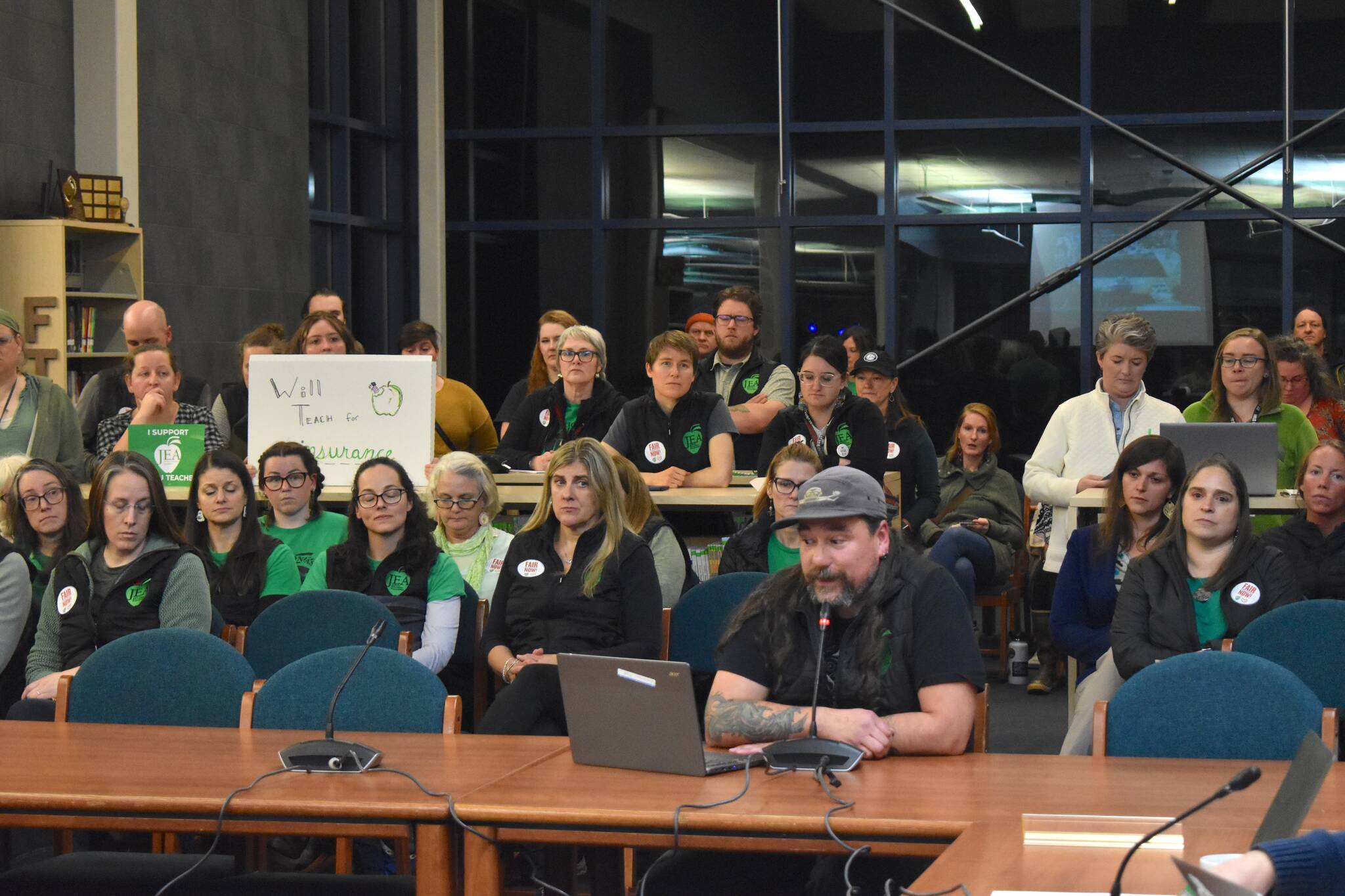
The Juneau School District has moved to enter arbitration with the Juneau Education Association amid an impasse in contract negotiations. JEA says the decision was made unilaterally, and undermines the collaborative relationship between the two parties.
The move follows months of bargaining over salaries and benefits for JEA’s 275 teachers and certified staff.
In a Nov. 6 statement, JSD announced its intent to initiate arbitration, which involves a neutral third party hearing arguments from both sides and issuing a nonbinding recommendation.
The district said the two sides have “negotiated exhaustively,” holding 17 meetings and three mediation sessions totaling over 94 hours, without overcoming the impasse.
JEA said in a Nov. 10 statement that it was “appalled” at not having been consulted and does not agree with the decision. Kelley Harvey, co-chair of the JEA bargaining support committee, called the district’s announcement a failure to bargain in good faith.
“In my 27 years of teaching in the district I have seen 27 contracts negotiated and I have never experienced such a lack of respect from our district,” Harvey wrote in an email.
Representatives from JSD and JEA first met in February 2025 to negotiate a new contract ahead of the agreement’s June expiration. Teachers are currently working under a signed contract with “dynamic status quo,” meaning the terms of the old contract remain in place except for step increases in pay tied to experience or education.
Health insurance is one of the major unresolved issues in the negotiations. Harvey said the district’s proposed $10 monthly increase in its insurance contribution does not keep pace with steep premium hikes. These rates have left some teachers earning less take home pay than last year — in some cases up to $800 less per month, according to Harvey.
The district said that JEA chooses their own health care provider and options, which determines costs for its members.
“A union-selected health provider may have increased premiums; that does not mean that the District contribution has diminished,” Superintendent Frank Hauser told the Empire via text.
Hauser said that the current district budget projects $4.5 million for teacher health insurance contributions.
Teachers are also concerned about proposed changes to contract language that protects paid time for meetings and lesson preparation. Harvey said these issues, combined with Juneau’s high cost of living, have contributed to 27 unfilled teaching positions in the district.
JSD said its decision to pursue arbitration was partly due to delays in the mediation process caused by the federal government shutdown, which has limited access to the Federal Mediation and Conciliation Service.
In its Nov. 10 letter, JEA suggested alternatives to arbitration, including waiting for the federal government to reopen or using a different mediator. JEA also suggested returning to negotiations without a mediator to present their counteroffer on Nov. 14.
State law says when a public school district and its employees reach an impasse in collective bargaining, they must go through advisory arbitration before teachers can legally vote to strike.
Harvey said JEA is not considering a strike at this time because they do not believe that arbitration is an appropriate step.
“We are very much open to continuing with the mediation process and we had thought that the district was as well,” she wrote.
