
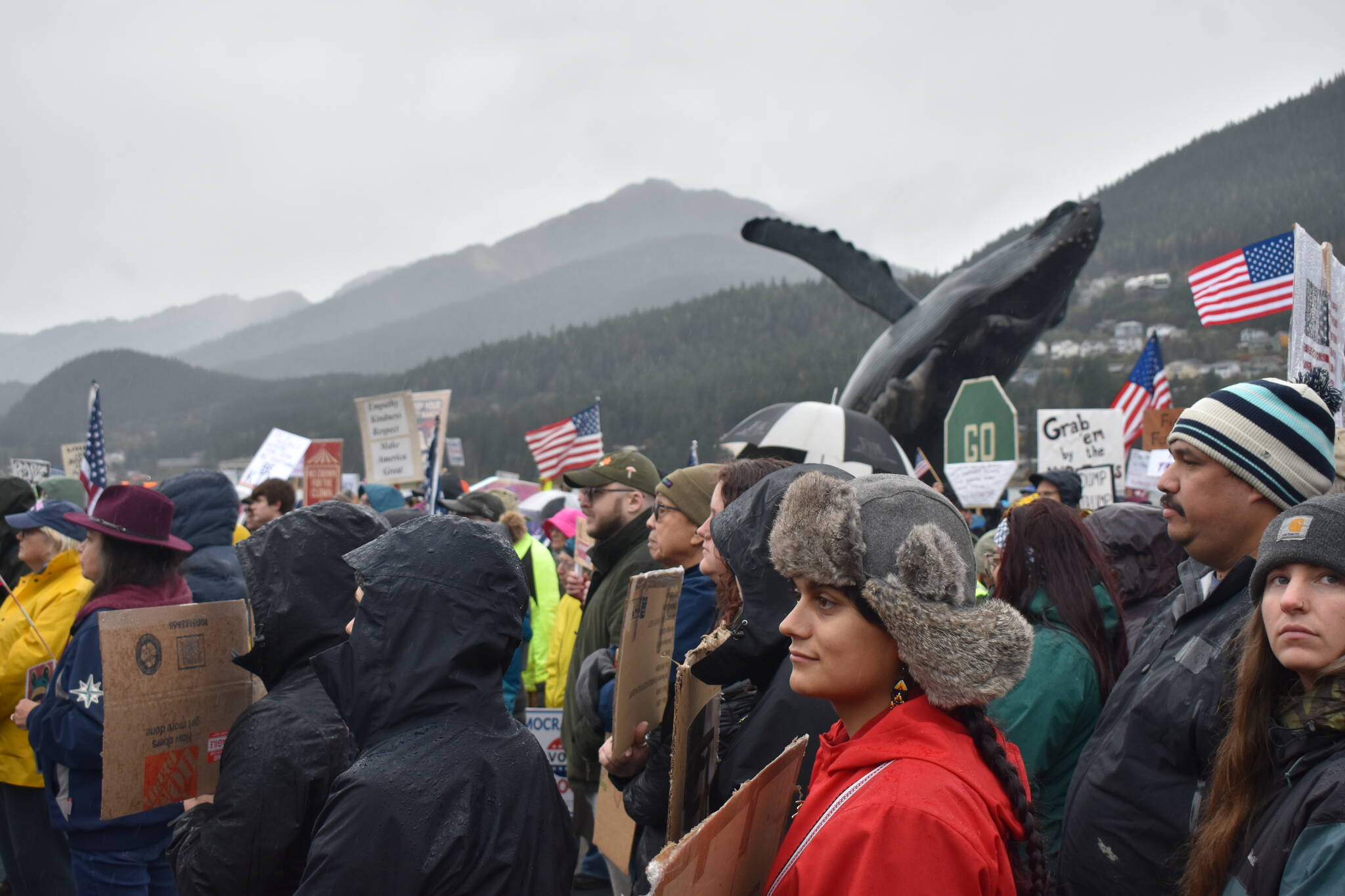
More than 1,000 people gathered Saturday, Oct. 18, at Overstreet Park for the “No Tsars, No Kings” protest. Protesters gathered to oppose President Donald Trump’s “authoritarian vision for America,” as retired Alaska Superior Court Judge Phil Pallenberg put it.
The protest was part of a nationwide effort that included more than 2,700 events and drew an estimated 7 million participants, according to the No Kings website.
Local organizers Juneau Indivisible, Juneau for Democracy, and ReSisters estimated as many as 2,000 people attended, drawing similar crowds to the Juneau “No Kings” protest in June.
Organizers tied the protest’s message to Alaska Day, which marks the transfer of Alaska territory from the Russian Empire to the United States in 1867.
“Today being Alaska Day, the recent visit by Vladimir Putin was a stark reminder that this land was once controlled by Russia,” said event moderator Gina Chalcroft, member of Juneau Indivisible. “In celebration of Alaska no longer being under control by either tsars or kings, we have dubbed our event, ‘No Tsars, No Kings.’”
The reference to Russian President Vladimir Putin followed his Aug. 15 visit to the Last Frontier. Trump hosted a summit meeting with Putin in Anchorage over the war in Ukraine. It was the first time Putin had stepped foot in the U.S. in over ten years.
Aaron Brakel, a member of Juneau for Democracy, acknowledged that the protest took place on Áak’w Kwáan and T’aaku Kwáan lands. He emphasized that Alaska has always been Indigenous land, long before the presence of Russia or the United States.
One protestor, who opted only to give his first name, held a sign that read, “No Czars Under These Stars.”
“When Trump met with Putin in Alaska a few months ago, I was wondering, how is he going to capitulate?” Josh said. “It was a real feeling of, oh, maybe he’s going to give Alaska back to Russia.”
Josh said that he also came to protest Trump’s deployment of the National Guard in major cities across the Lower 48.
“Even if it’s not affecting us as directly as it is in many cities down south, if we only stand up when it comes to us, then it’s too late.” Josh said. “It’s amazing to see who among us is willing to come out in the rain and get wet and make signs and spend their Saturday supporting what the country is founded on.”
The protest also featured up a voter registration booth and organizers encouraged attendees to donate to Western Alaska communities displaced by Typhoon Halong.
Pallenberg, in his speech, warned of the erosion of democratic institutions. Under authoritarian rule, he said, the government does not have to listen to the will of the people.
“No one is going to care how you feel about climate change, or healthcare or Palestine or anything else if we don’t get to freely elect our leaders,” Pallenberg. “If that happens, nobody here will have a voice on any of those issues. Unless there happens to be any billionaires here.”
After the scheduled speakers, about 15 attendees took turns at the microphone to share songs and remarks. Among them was Xeetli.éesh Lyle James, who spoke before leading his family in a drumming and song performance.
“Gunalchéesh means ‘without you, this is not possible.’” James said. “If we do not stand united, we cannot call this the United States of America. Without our voices, our children and our grandchildren will continue to fight this battle, which is why we are all here to say, ‘Enough is enough.’”
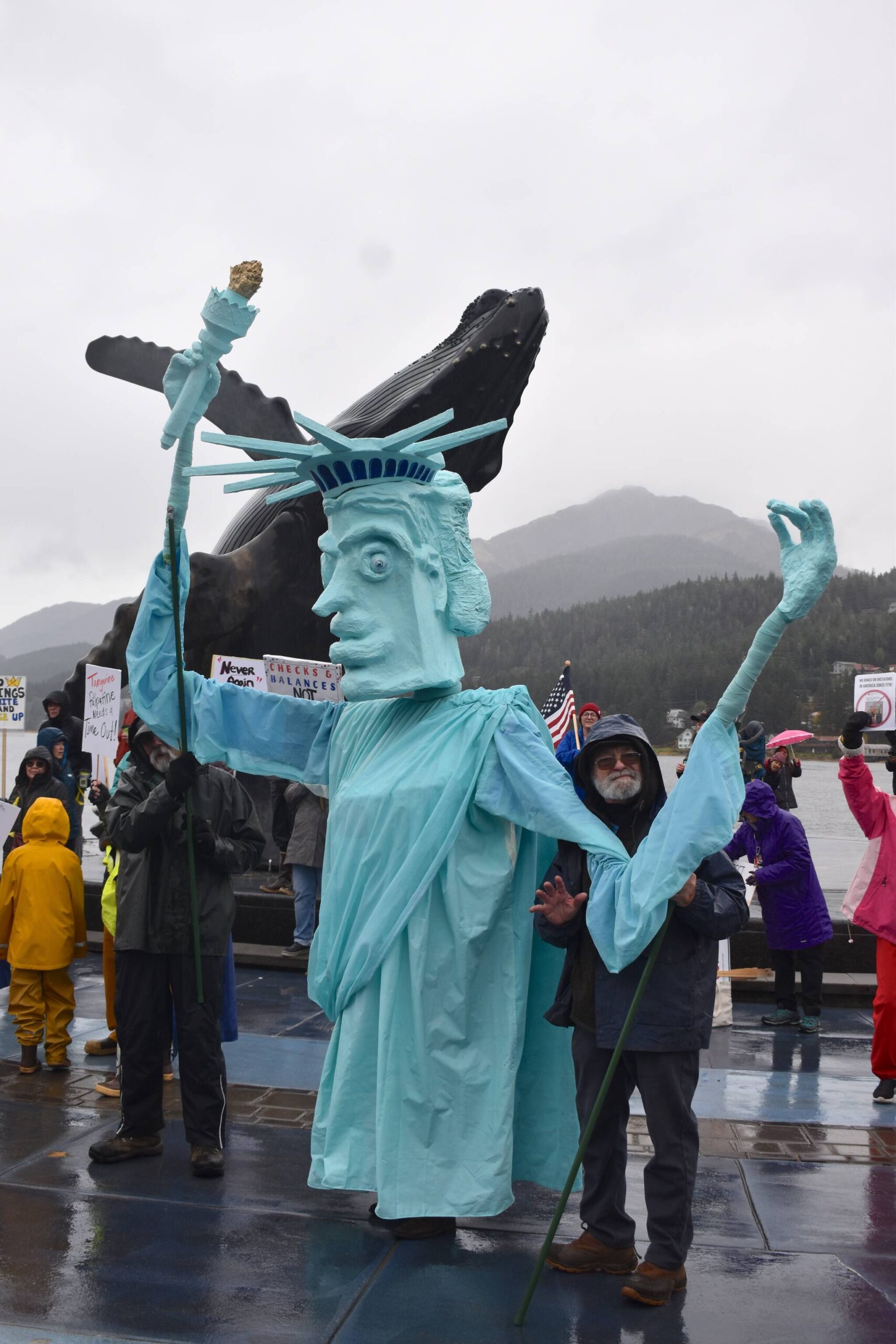
Three protesters operate a Statue of Liberty puppet at the “No Tsars, No Kings” on Saturday, Oct. 18. (Mari Kanagy/Juneau Empire)
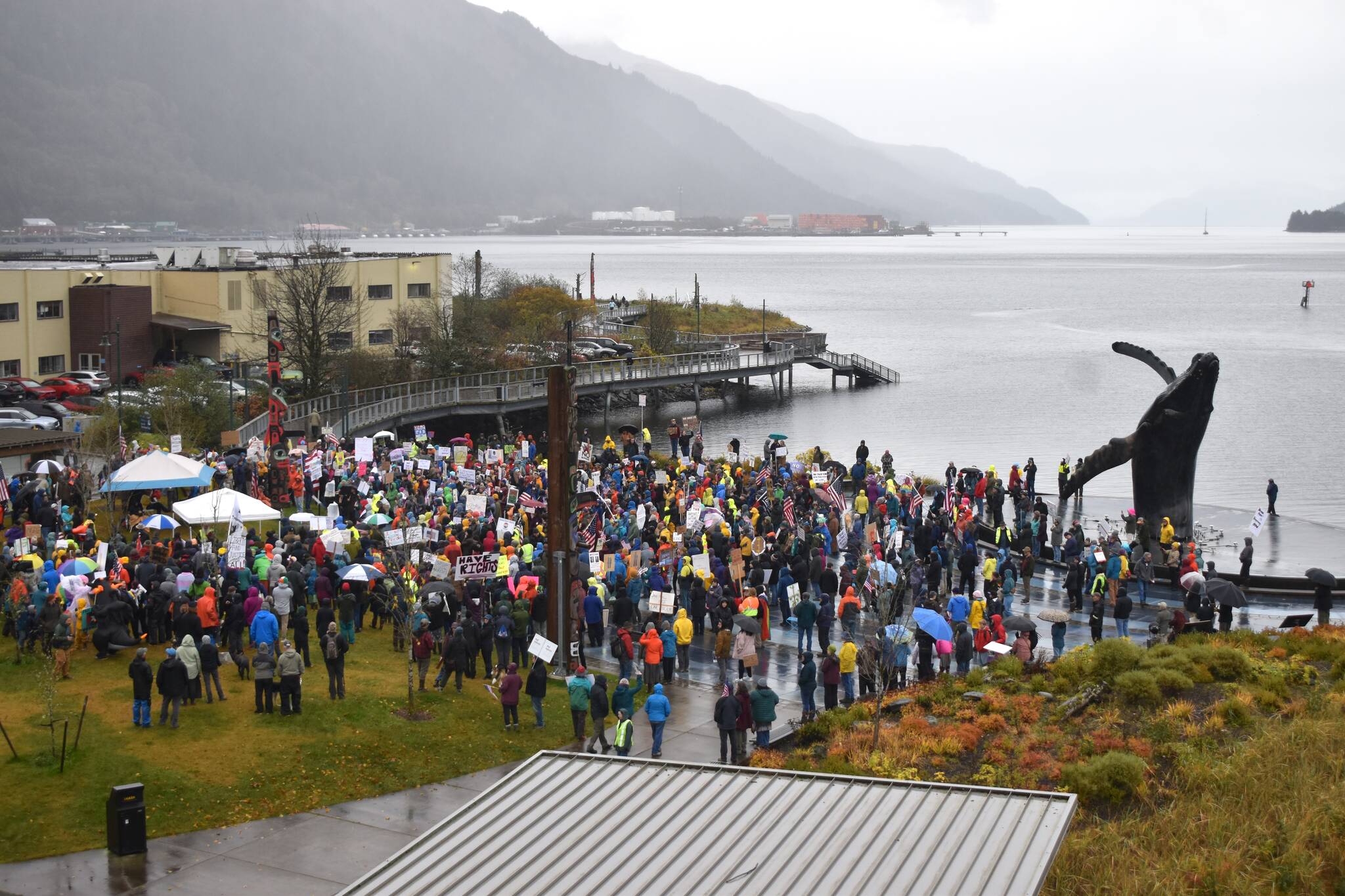
Protesters trickled in and out of the Saturday, Oct. 18, at “No Tsars, No Kings” protest at Overstreet Park, though event organizers estimated up to 2,000 people attended the event. (Mari Kanagy/Juneau Empire)
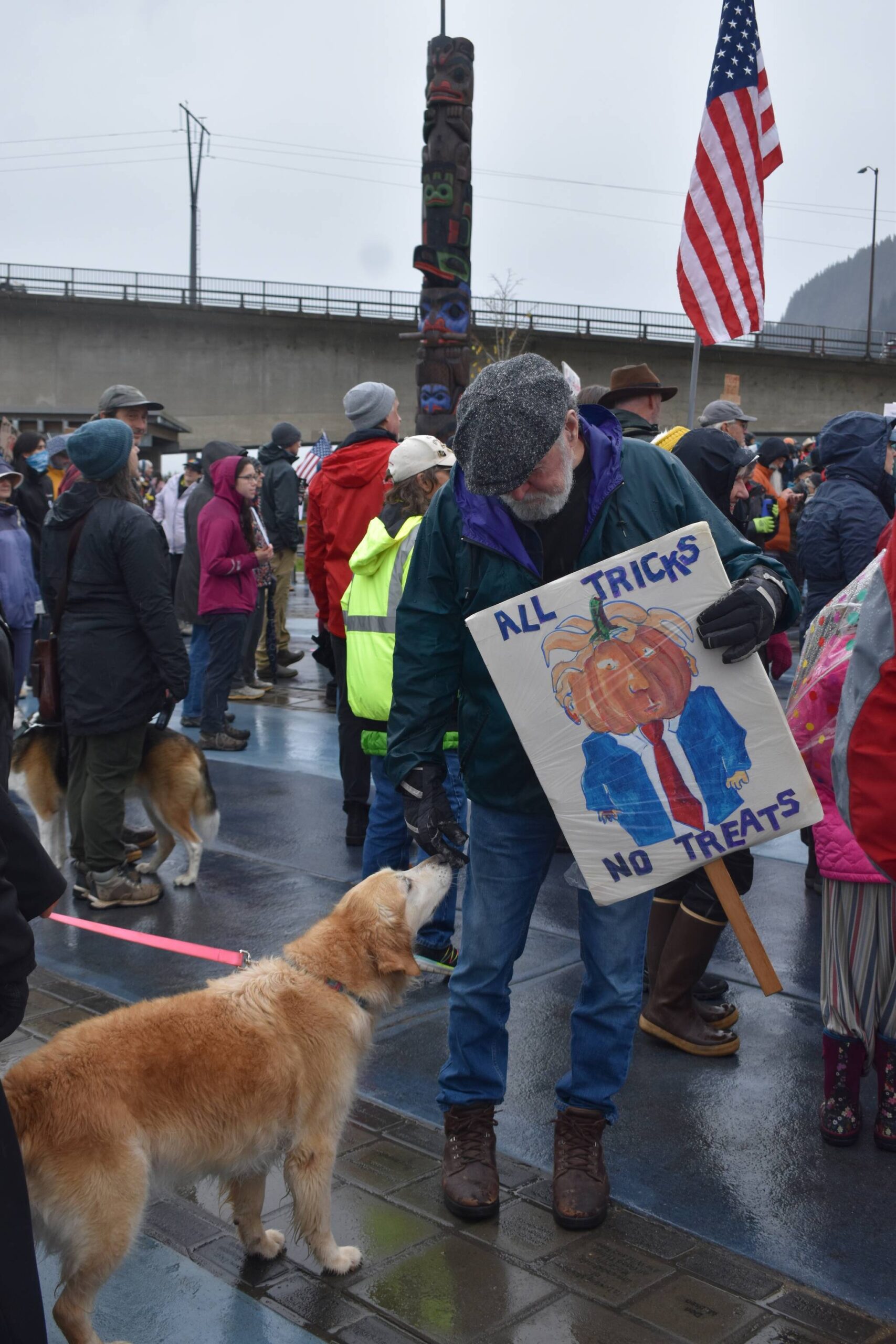
A dog sniffs the hand of a protester holding a sign that reads, “All Tricks, No Treats,” depicting President Donald Trump as a pumpkin. (Mari Kanagy/Juneau Empire)
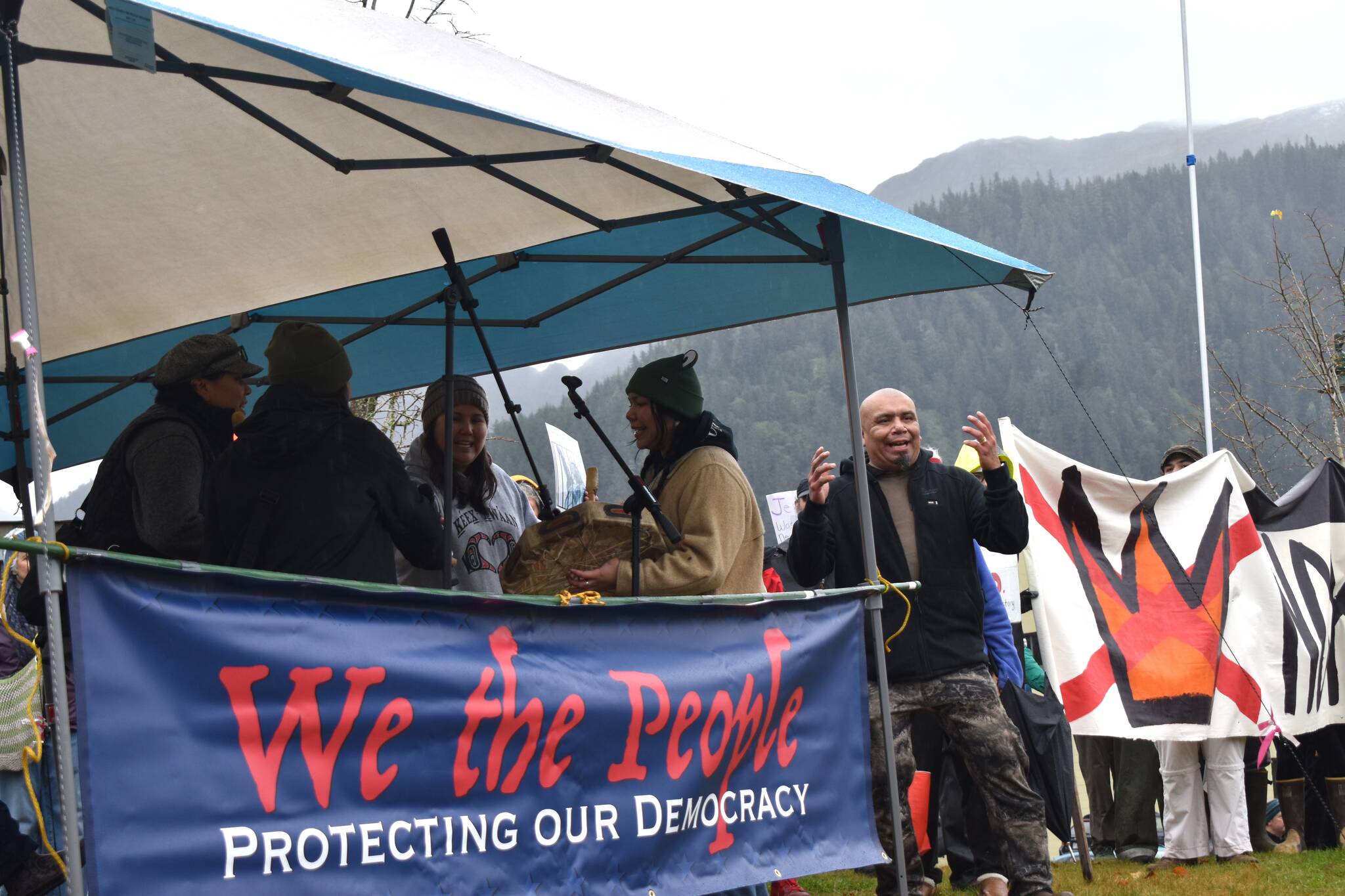
Xeetli.éesh Lyle James leads his family in a drumming and song performance at the “No Tsars, No Kings” protest on Saturday, Oct. 18. (Mari Kanagy/Juneau Empire)
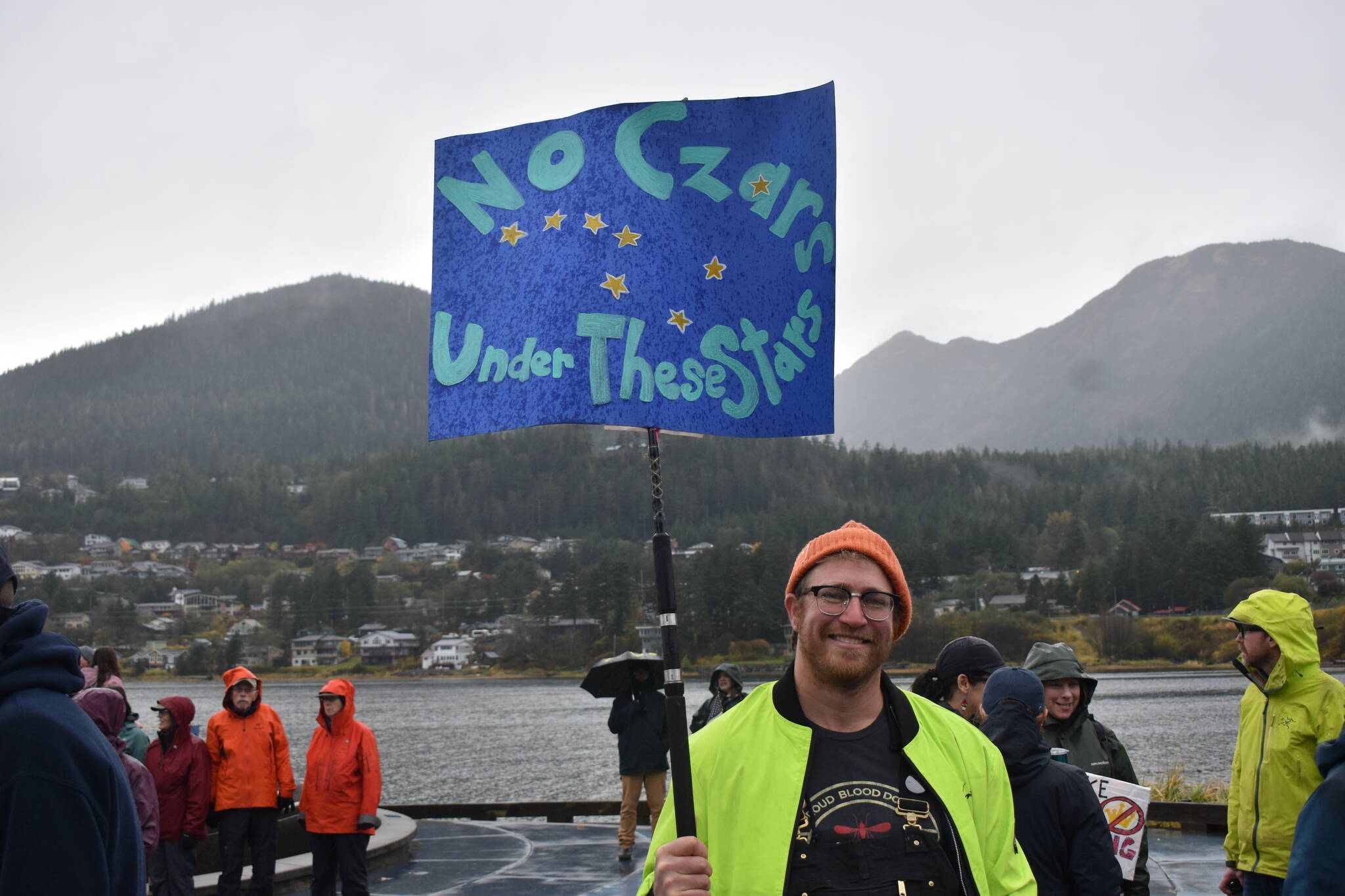
One attendee of the “No Tsars, No Kings” protest holds a sign that says, “No Czars Under These Stars.” (Mari Kanagy/Juneau Empire)
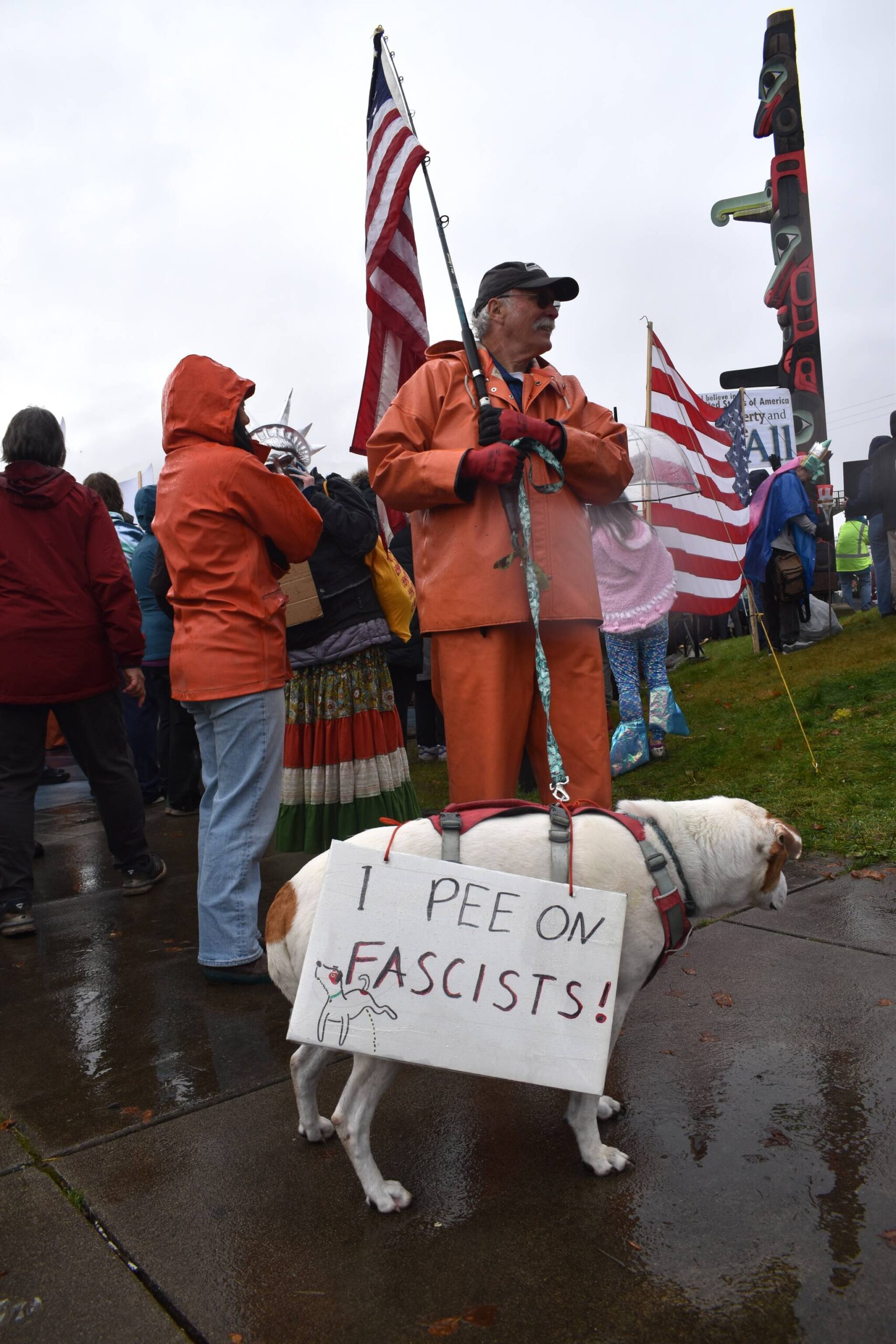
One dog at the “No Tsars, No Kings” wears a sign that says, “I Pee on Fascists!” (Mari Kanagy/Juneau Empire)
