
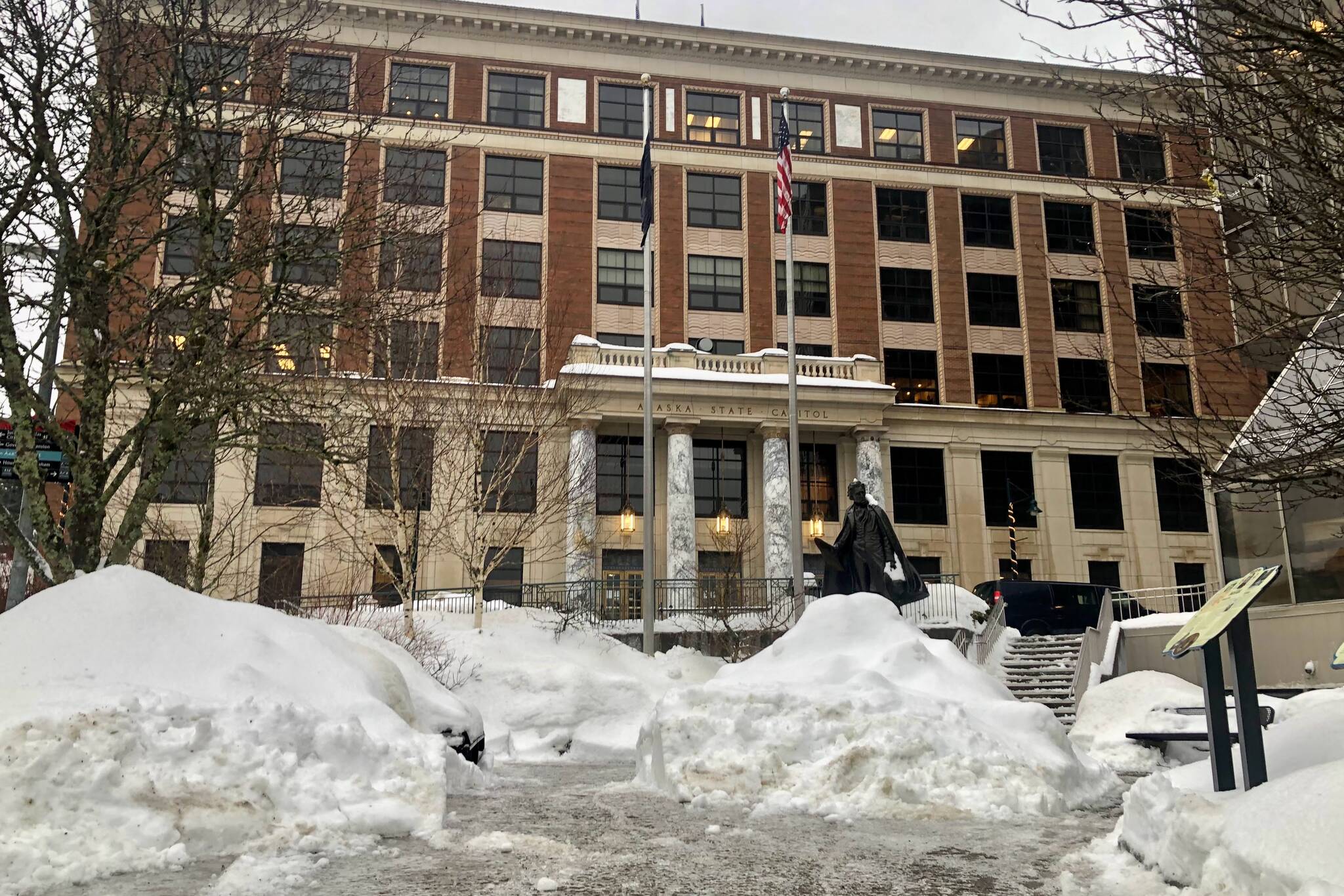
The Alaska State Legislature is set to back at work Tuesday and lawmakers have already prefiled dozens of bills, many of which are aimed at familiar issues like the budget, the Permanent Fund Dividend and schools.
Two of Juneau’s lawmakers were among those to prefile bills with the Legislature this year; state Sen. Jesse Kiehl and state Rep. Andi Story, both Democrats, have bills already filed.
Story has two bills related to how much the state spends on kindergarten through 12th grade students, known as the base student allocation. The amount of the BSA hasn’t been raised since 2017 which many education leaders have noted effectively constitutes a budget reduction when coupled with inflation and rising costs.
The state currently spends $5,930 per student, which Story’s bill would raise to $6,153 in calendar year 2022 and then to $6,208 in 2023. Another bill from Story would have the state automatically raise the BSA by a percentage equal to the increase of the Alaska Consumer Price index over three years.
“I think right now more than ever we’re aware of how important our schools are to families,” Story said in an interview with the Empire. “We know that fixed costs have gone up, that’s a very real thing.”
Because of the high cost of oil, the state is looking at additional revenues in the range of $800 million in unrestricted general funds, Story said, based on the Department of Revenue’s Fall 2021 projections. The first-year increase in the BSA proposed by Story’s bill would cost the state roughly $51 million, she said, constituting less than 10% of that money.
“We want to have a really quality school system and if we keep cutting it I don’t see how that’s going to help,” Story said.
[Riverbend Elementary to remain closed due to water damage]
There are several bills offering set amounts for the PFD, one of which comes from Kiehl, and would gradually step up the amount of the dividend until it reaches a so-called “50-50” split between dividends and state services.
Most of the state’s budget comes from 5% of market value draw on the earnings of the Alaska Permanent Fund each year. Lawmakers have been deeply divided for the past several years over how much of that money should be spent on dividends and how much on state services like police, transportation and education. Many lawmakers and Gov. Mike Dunleavy have coalesced around splitting the POMV in half, but there’s disagreement about how quickly that should happen.
“This approach works toward a goal that most folks share, continuing the services Alaskans need,” Kiehl said in an interview.
Kiehl’s bill offers a step-up formula where the dividend would increase each year until it reaches the 50-50 split in Fiscal Year 2025. Other lawmakers have similar bills for a 50-50 split, such as Rep. Liz Snyder, D-Anchorage, and a bill from Rep. Ivy Spohnholz, D-Anchorage, would spend 25% of the POMV on dividends.
Another of Kiehl’s bills would enact an income tax, something that faces considerable resistance in the state. Kiehl’s bill would enact a flat tax on Alaska residents but would also tax the income of nonresidents earned in Alaska. The bill would start with a tax of 2.75% in the first year before gradually rising to 3.75% over four years.
But Alaska residents who get a PFD would get a credit against the income tax, Kiehl said, as reductions to the dividend are already a contribution to state services.
“I think the fiscal reality is that we’re going to need multiple pieces of a fiscal plan,” Kiehl said.
Enacting a statewide income tax would require a department to manage it, but Kiehl said research done during the administration of former Gov. Bill Walker projected that would cost roughly 1-1.25% of what the tax brings in.
The Permanent Fund recorded record earnings this year and the price of oil has risen, giving the state of Alaska a boost to its finances. As of Nov. 30, the Permanent Fund was valued at $80.9 billion. But in a Jan. 10, meeting with City and Borough of Juneau officials, Kiehl said the state’s revenues were “not a budget-balancing number.”
Legislation from last year’s session can still be passed, but as 2022 is an election year, if bills don’t pass this session they must be re-submitted and work their way through the legislative process once again.
The Legislature is scheduled to convene at 1 p.m. on Tuesday, Jan. 18.
• Contact reporter Peter Segall at psegall@juneauempire.com. Follow him on Twitter at @SegallJnuEmpire.
