
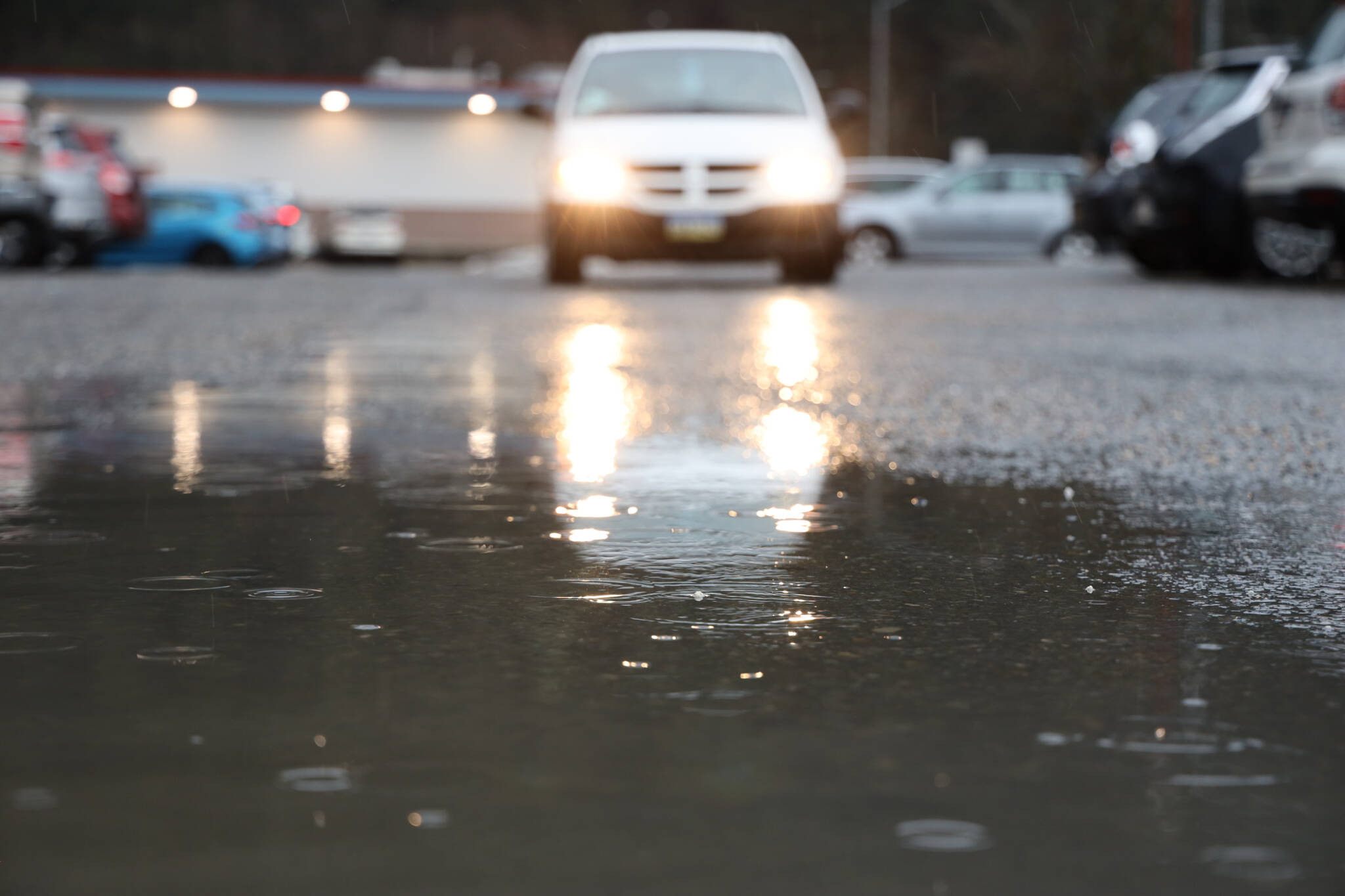
Its been a wet year in Juneau — the wettest on record in fact.
The National Weather Service Juneau recorded that between 1a.m. and 2 a.m. Wednesday Juneau broke its record for the most rainfall recorded in a single year — a record that had previously reigned for more than three decades.
“We’ve been so wet for so long but now we can say, ‘Hey this year will go down as a year we will remember,’” said Grant Smith, meteorologist at the NWS Juneau.
[Juneau on track to break rainfall record]
NWS began recording precipitation in Juneau in 1936, and the record, which was previously set at 85.15 inches in 1991 measured at the Juneau International Airport, is now in the rearview mirror and then some, according to Smith because as of 9 a.m. the precipitationad continued to surpass the record by .21 inches in just seven hours sitting at 85. 36 inches.
The Juneau airport annual precipitation record has been broken! As of 8AM, December 7th, the airport has recorded 85.31” for the year but the record was officially broken by 2AM. #akwx pic.twitter.com/jk3xXEtwZs
— NWS Juneau (@NWSJuneau) December 7, 2022
“To have it broken today was expected, but to have it break just two hours into it was a bit of a surprise,” he said.
With 24 days left in the year, it’s a record expected to grow, according to forecasts. Smith said NWS predicts continued rainfall throughout Wednesday before slowing down Thursday heading into a drier weekend before the next round of precipitation is expected to pick back up again on Monday.
[Officials warn residents about the dangers of thin ice on Mendenhall Lake]
Smith said Juneau got out to an early jump with a record-setting amount of rain in January and February which saw more than twice as much rain than on average for those months, and played a big part in why the capital city eclipsed a typical year’s rainfall total by over 2 feet.
“Previously in Juneau, we have been getting wetter and wetter over the years, but this year we really had a spike in January,” he said.
According to NWS data, of the top 10 rainfall records in Juneau, more than half have been since the turn of the century. Since the mid-1970s there has been an upward trend in precipitation in the capital city.
According to Rick Thoman, Alaska climate specialist for the Alaska Center for Climate Assessment and Policy at the University of Alaska Fairbanks, warming of the ocean waters due to climate is a major contributing factor to this year’s record and the overall increase seen in the past few years.
The record itself is a gee-wiz thing,” he said. “It’s amazing and demands an explanation.”
Thoman said Juneau was set up for record-breaking precipitation this year as it fell in the right place for frequent prevailing storm tracks, which meant it was also in the right spot for maximum rainfall potential.
He explained that as ocean waters rise in temperature, more water goes into the atmosphere which in turn means when storms come along they can tap into that moisture to cause more rainfall. He said as the atmosphere begins to take in more warm water, it also warms itself, and because of that, it can take in more and more water.
“It’s a constant cycle,” he said.
Smith said rainfall for 2022 overall has been for the most part coming in as expected and noted this year’s precipitation in December has actually come in below the typical average of 1.59 inches and instead clocks in at just .28 inches as of Wednesday morning.
Going into the last few weeks of the year, Smith said according to Climate Prediction Center’s monthly outlook data, Juneau is expected to see a drier-than-normal month with precipitation predicted to come in below the month’s typical average of 6.5 inches.
“It just means another exceptionally wet year here in Juneau and going forward we’ll have to see how this impacts us from a data perspective — it’s been fun to follow,” he said.
• Contact reporter Clarise Larson at clarise.larson@juneauempire.com or (651)-528-1807. Follow her on Twitter at @clariselarson.
