
This is a developing story.
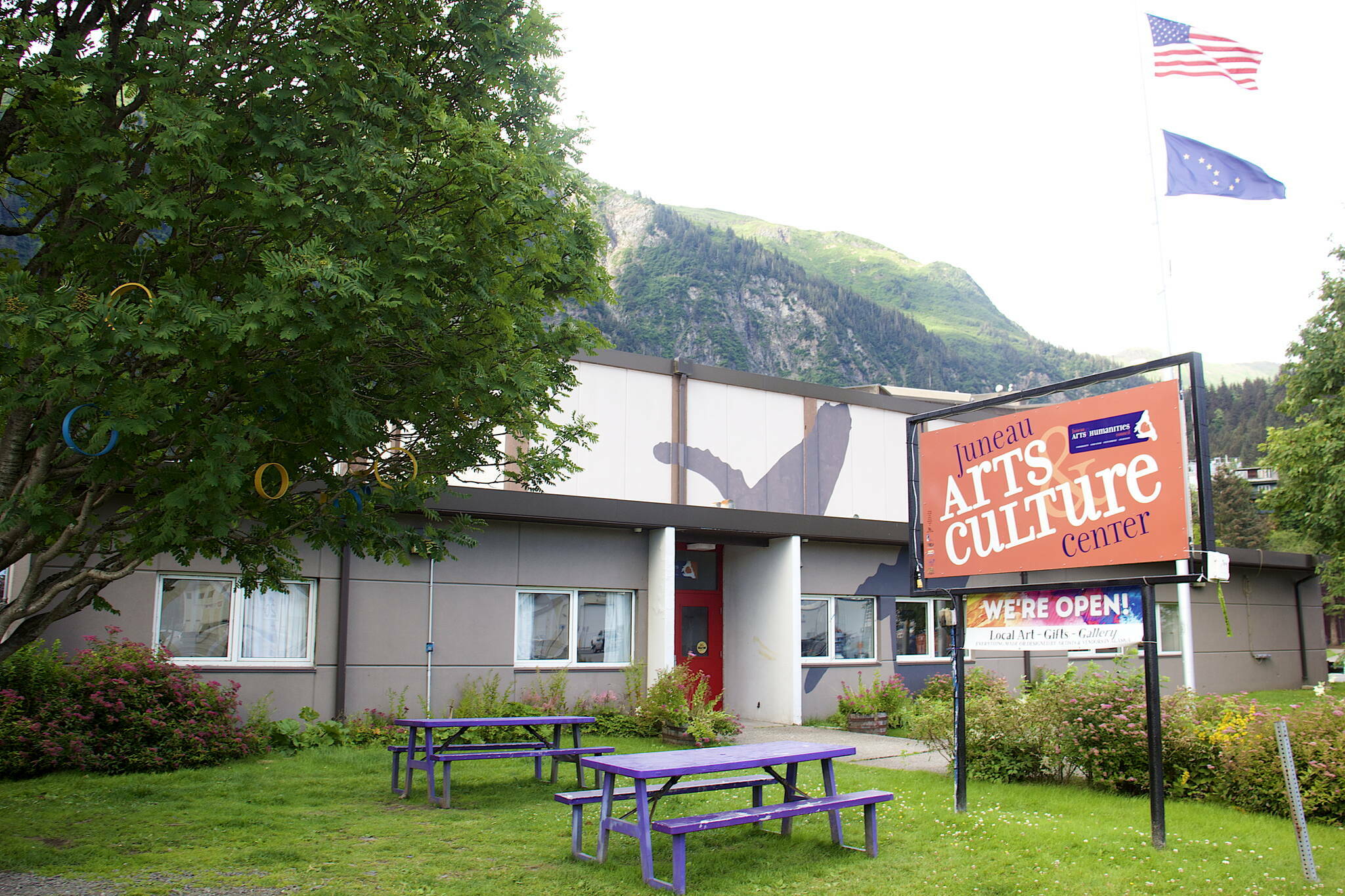
The Juneau Arts and Humanities Council is among the growing number of organizations nationwide banning diversity, equity and inclusion content due to threats to funding by the Trump administration, with the board approving the policy by a near-unanimous vote.
The JAHC board voted in late February “to remove existing DEI material from our public facing documents” at the recommendation of Americans For The Arts, according to JAHC Executive Director Phil Huebschen in an email to the Empire on Wednesday evening. He stated that recommendation was based on a directive from the National Endowment on the Arts (NEA), which was ordered by the Trump administration to remove such language from its policies.
“The JAHC Board determined that it is more important to safeguard this funding we receive to maintain critical arts programs in Juneau rather than jeopardize our ability to provide these programs to our broad constituency,” Huebschen wrote. “A part of the Board vote included rearticulating these policies. The Board is currently working within committees to redefine these policies under new language, and repost them publicly.”
Huebschen noted that “no events are being cancelled, limited, or otherwise not allowed to present as a result of this decision. There has been no discussion towards doing any of these things.”
Deleted from JAHC’s website as of Wednesday evening were “JAHC Statement on Racial Equity” and “Mission & Strategy” pages, both of which returned “404” errors. Also missing were three paragraphs from JAHC’s homepage that included a Lingít land acknowledgment and statement about collaborating with Indigenous communities.
“As an arts and humanities organization, we commit to meaningful collaboration through listening, learning, and holding space with Indigenous communities,” the deleted homepage text states. “We recognize the series of unjust actions that attempted to remove these communities from their land, which includes forced relocations and burning of their villages. We aspire to work toward healing and liberation, recognizing our paths are intertwined in the complex histories of colonization in Alaska.”
“To foster a strong, healthy, and purposeful arts community, we commit to celebrating diverse expression, listening to lessons from the past, and creating access and opportunities which carry us into the future.”
When asked about the deleted content, Huebschen reiterated “the JAHC will always be supportive of all of these things — we simply need time to rearticulate policy and statements in a way that doesn’t endanger our programs’ ability to functionally exist and serve our community.”
The lone dissenting vote was cast by Sue Schrader, who told the Empire on Wednesday night she hoped community support would make up for any lost federal funds.
“What I was thinking is that if people saw that the JAHC stood up to the Trump administration and said, ‘No, DEI is critical to our mission and to our values,’ that hopefully the local community would step forward and make up any gaps in the funding,” she said. “That’s what I was hoping.”
Huebschen, in response, stated “while Juneau’s community is very supportive of the arts, there’s a certain amount of certainty and regularity in the cadence and amount of these federal funds.”
“I don’t doubt that we would receive increased community support, it’s simply that it’s difficult to sustainably count on such levels of support during organizational budgeting.” he wrote.
Roughly 15% of JAHC’s funds — “depending on the year” — comes from federal sources, according to Huebschen.
“This money primarily goes towards funding our arts education programs,” he wrote.
Many of JAHC’s board members are Alaska Natives and “a lot of them made what I consider to be a very difficult decision,” said Carin Silkaitis, who was the board’s president at the February meeting.
“(We) agree to eliminate those words, but we replace it with powerful words like ‘welcoming’ and ‘belonging’ and ‘cultural safety’ and ‘work,’ and the kinds of things that we do for our community because we are still here,” Silkaitis said Wednesday evening. “Those are the things that we care deeply about, about unity. And we really let the Alaska Native members of our board talk and dictate what happens. And they said ‘It’s just three words. We have other words. We have powerful words.’”
Silkaitis stepped down as president of the JAHC board at its meeting on Wednesday, but declined to specify the reason. The provost also has had to cope with a recent DEI ban as the interim provost of the University of Alaska Southeast when the Board of Regents on Feb. 21 voted to impose similar restrictions on content.
Mass deletions of DEI content and policies have been occurring at organizations, businesses, educational institutions and government agencies nationwide since shortly after President Donald Trump began his second term in January. He has issued numerous executive orders and other mandates targeting policies he labels “woke” — such as racial preferences for hiring/admissions, transgender sports participation, and fitness standards for women in the military — although court and other legal actions have halted some threats to revoke federal funds for non-compliant entities.
JAHC, which celebrated its 50th anniversary in 2023, is involved with cultural events, arts education, facility management and other programs. Examples of its affiliated events are First Friday, the Aak’w Rock Festival, Alaska Folk Festival, Juneau Public Market, and student programs in collaboration with the Juneau School District.
Huebschen stated that moving forward “I would hope that artists and community members involved with the JAHC understand how we are trying to safeguard community programs and the associated work that is being done, rather than inherently change it.”
“We are not interested in letting these federal language mandates change who we serve and how we serve them,” he wrote. “We aim to stick around and do the good work.”
• Contact Mark Sabbatini at mark.sabbatini@juneauempire.com or (907) 957-2306.
