Juneau Access Road is on the map again, as DOT seeks bids for Lynn Canal transportation study
Published 9:30 pm Monday, March 3, 2025
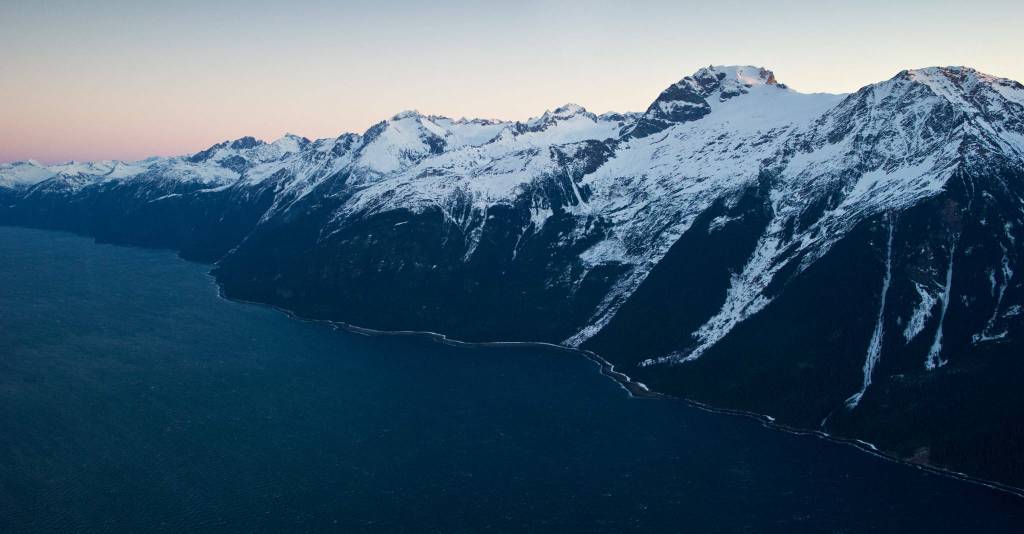
The Juneau Access Road, at one point declared dead in 2017, is alive and back on the map.
Proposals “to conduct a feasibility study on improving transportation access along the west side of Lynn Canal” are being sought, the Alaska Department of Transportation and Public Facilities announced Tuesday afternoon. Such a study would revive a decades-long debate about what combination of road and ferry access is best suited to the population and geography between Juneau and the road-accessible communities of Skagway and Haines.
“Currently, Juneau remains the only state capital in the U.S. without road access, relying solely on air and marine transportation,” a DOT press release reiterates. “This isolation increases costs, limits economic opportunities, and constrains travel flexibility for residents and businesses. The feasibility study will assess the engineering, economic, and environmental viability of a road and ferry link, helping determine the best path forward for improving regional connectivity.”
The release states the intent is to select a consultant this spring to complete a study by the end of the calendar year.
“The study will evaluate potential routes along the west side of Lynn Canal, including ferry terminal locations, construction feasibility, environmental constraints, and long-term cost considerations,” the release states. “It will also examine how a road connection could reduce dependence on marine transportation, enhance economic development, and improve mobility for residents and businesses.”
The request for proposals was published only days after the Alaska Marine Highway System released its proposed long-range operating plan for the next 20 years, which among other things calls for significant increases in sailings and substantial government funding to ensure a reliable fleet. The state also last week received an Infrastructure Report Card from the American Society of Civil Engineers that gave the aging and short-staffed ferry system a D grade, tied for lowest along with wastewater among state facilities.
State Sen. Jesse Kiehl, a Juneau Democrat, said he’s “more than a little skeptical” about the feasibility of a road and the new long-range plan for the ferry system is “a phenomenal thing to have.”
“We’ve needed it since the very system was created and with some investments now we can have a ferry system that works well for generations to come,” he said.
One problem with projects such as the proposed road — with plans floated in the past for the mountain ranges along both the east and west sides of Lynn Canal — “is these megaprojects are very easy to start, and and then you start to see the colossal price tags, and they tend to get put on the shelf after you’ve spent some money,” Kiehl said.
Other road projects that are further along and of a higher priority such as a second Juneau-Douglas crossing and improving safety at the Fred Meyer intersection on Egan Drive should be where DOT is focusing its time and money, he said.
A road linking Juneau and Skagway has been studied by various agencies and policymakers since at least the early 1970s. One proposed 48-mile road between the north end of Juneau’s road system and Skagway was projected in 2014 to cost about $575 million. Supporters said it could boost tourism and fend off a possible capital move due to easier accessibility, while skeptics raised concerns about safety from avalanches and landslides, environmental impacts, and maintenance difficulties.
Kiehl said he doesn’t consider the capital move an sufficient reason to consider a road — and it likely wouldn’t sway people seeking such a move if the road was built.
“People who want to move the capital have every excuse in the book and if you build a road they’ll smile for 15 minutes and then say ‘I have to have a passport to get to my capital — move it,’” he said. “So you know that will have zero long-term effect.”
In 2017, then-Gov. Bill Walker declared the Juneau Access Road project dead due to the state’s financial struggles. State legislators have said this year the fiscal situation is at its most dire in decades and that capital improvement projects in particular are likely to be slighted in the budget as a result.
However, the renewed effort to study access in Lynn Canal is aimed at a longer-term focus and not exclusively focusing on a road as the ideal outcome, Sam Dapcevich, a DOT spokesperson, said in an interview.
“I don’t think we know what the picture is going to look like in five or 10 years, depending on when construction like something for that could start,” he said.
• Contact Mark Sabbatini at mark.sabbatini@juneauempire.com or (907) 957-2306.