
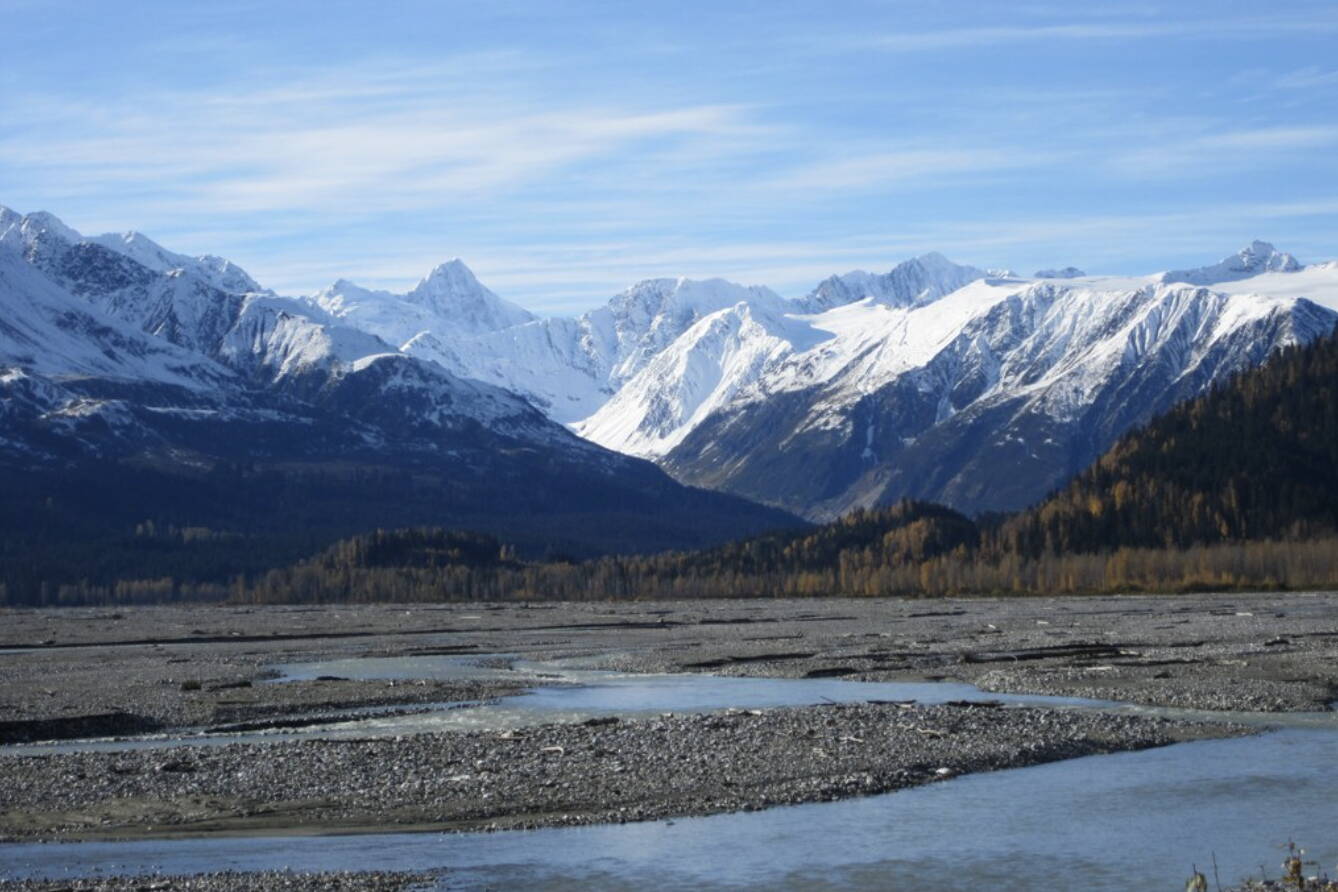
A potential copper and zinc mine has fueled intense political debate in a small Southeast Alaska town for years.
Now, the multinational metals company that’s been bankrolling the exploration project is stepping away, raising questions about the project’s future.
In a deal announced this week, Dowa Metals and Mining, a Japanese company, will give up its roughly 70% interest in the Palmer Project near the Southeast Alaska communities of Haines and Klukwan.
Taking over is American Pacific Mining Corp., a Canadian company that owns no operating mines and instead focuses on exploring deposits that could become mines later on. It’s set to take full ownership of the project by the end of the year, up from its current 30% minority stake.
The copper and zinc project, at least in the immediate future, will lose the backing of a large company with a steady revenue stream: Dowa runs Japan’s largest zinc smelter and has been searching for new sources of the mineral.
American Pacific expects to have about $12 million on hand — in the ballpark of one year’s work at Palmer. It’s touting the transaction as a good deal for its shareholders, because it will get full control of the project plus $10 million in cash.
In exchange, Dowa will have the option to acquire up to half of the zinc concentrate produced by a future Palmer mine, American Pacific’s announcement said.
A spokesperson for American Pacific declined to comment. Dowa could not be reached for comment.
The deal came about because the two companies had different objectives, American Pacific executives said in a video presentation this week.
Dowa, the executives said, was mainly focused on supplying its smelting operations in Japan and was eager to move the project past the study phase.
American Pacific, they added, wanted to spend more time doing exploratory work that could lead to a bigger, more lucrative project once it’s built.
“Dowa really wanted to push this toward production,” said Warwick Smith, American Pacific’s chief executive.
His company, he added, thought the project “could become much, much larger.”
Palmer is still years away from becoming an operating mine; the economics of commercially mining its deposits have not yet been analyzed in depth, beyond a preliminary assessment published in 2019. While mining projects are still in exploration, it’s common for them to change hands, or for major investors to pull out and new ones to replace them, according to industry experts.
The project sits near a glacier above a tributary of the Chilkat River — a major salmon-bearing waterway upstream from Haines and the Tlingit village of Klukwan. And for years, it has generated intense debate — and litigation — in the watershed.
The area, with about 2,500 people, is known for its politically engaged and polarized citizenry, as well as stunning scenery at the northern end of the Inside Passage. Some residents support natural resource extraction; others fiercely oppose the Palmer Project.
Tensions around the development have spilled into recent disputes over millions of dollars worth of municipal infrastructure projects, including work on a road that provides access to the Palmer site and a dock that some residents say could aid the project.
The Palmer claims have been studied for their mineral potential for decades.
Dowa struck its first agreement to participate in the project’s development in 2013 and took a majority stake in 2021.
Initially, Dowa’s involvement was seen by some observers as a boost for Palmer. The company appeared eager for ore concentrate to feed its zinc smelter in Japan, and it had cash reserves to support development work like helicopter-supported drilling and construction of a worker camp.
“Every year the project continues to get financed and ownership gets more consolidated, it does become more likely to happen,” Jim Kuipers, a Montana-based mining consultant who was hired by an environmental group to analyze Palmer, told the local newspaper, the Chilkat Valley News, in 2021.
Since then, Dowa has poured tens of millions of dollars into the project, including some $14 million in the past two years, according to an American Pacific filing with Canadian securities regulators.
In May 2023, an executive at Dowa Metals and Mining’s parent company said the firm was “enthusiastic” about moving ahead with exploration at Palmer, according to the transcript of a corporate strategy briefing.
Gershon Cohen, a 40-year Haines resident who’s fought Palmer for years, said the company’s exit raises more questions than it answers.
“It is shocking, to say the least, that they would be walking away from all that investment,” Cohen said. “It really begs the question: Why?”
In a prepared statement, Cohen’s advocacy group, Alaska Clean Water Advocacy, cited American Pacific’s small size and limited cash reserves and said the company has “one year to find a new major investor to replace Dowa.”
Richard Clement, a Haines Borough Assembly member, said he wasn’t especially surprised by the change in ownership.
“Resource exploration is risky business, and not all companies are willing to take a lot of risk,” said Clement, who has worked in resource development. “It’s very common for their ownership to be traded dramatically in the exploration phase. So, it’s really not a big surprise to see a change in who’s funding the project right now.”
Northern Journal contributor Max Graham can be reached at max@northernjournal.com. He’s interested in any and all mining related stories, as well as introductory meetings with people in and around the industry. This article was originally published in Northern Journal, a newsletter from Nathaniel Herz. Alaska Beacon, an affiliate of States Newsroom, is an independent, nonpartisan news organization focused on connecting Alaskans to their state government.
