‘It is a win for Alaska’ Murkowski touts bipartisan infrastructure bill
Published 10:30 pm Tuesday, November 9, 2021
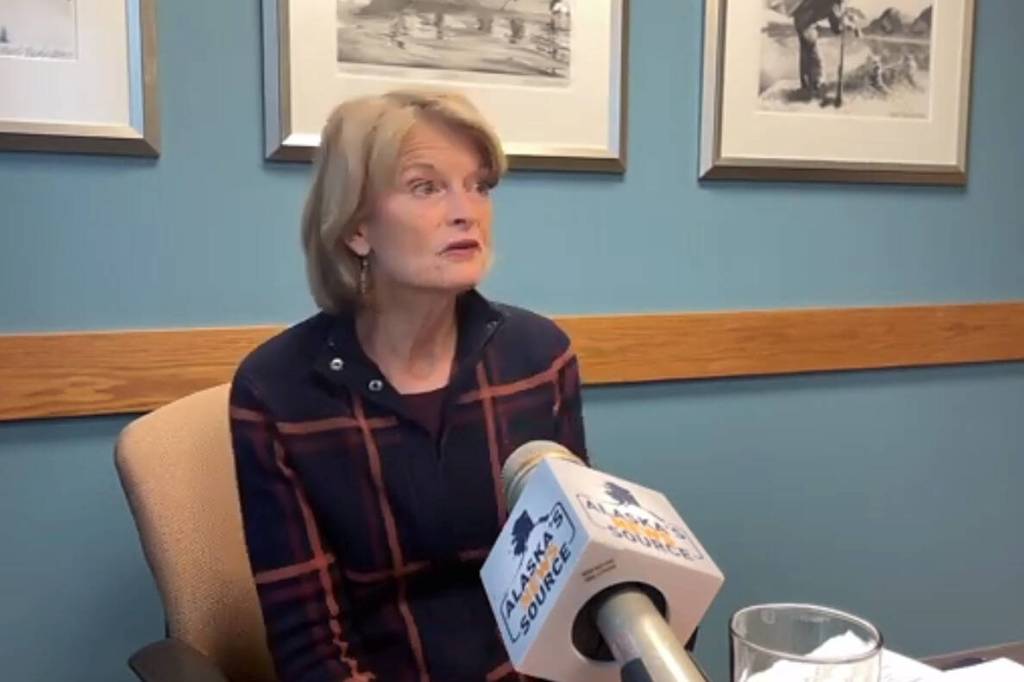


Sen. Lisa Murkowski, R-Alaska, hailed the $1.2 trillion dollar infrastructure bill recently passed by Congress, saying it was going to make the Alaska and the nation more competitive.
“There’s so much to advertise,” Murkowski said Wednesday at an Anchorage news conference. “If we can get these programs up and running, Alaskans are going to be working and we’re going to more competitive.”
President Joe Biden is expected to sign the bill on Monday, Murkowski said, and it would take some time before funds were available and programs established. Still, Murkowski said, the bill provided funding for new infrastructure projects in the state that would fundamentally change life in parts of Alaska.
The bill provides more than $180 million for water and wastewater projects, according to a release from Murkowski’s office, and $3.5 billion for Indian Health Services sanitation facilities for rural villages that lack in-home water and sewer.
“A flush toilet is not too much to ask in this day and age,” Murkowski said.
The Alaska Marine Highway System will receive several boosts from the bill, including $1 billion for a new program to create essential ferry service to support rural communities. The bill also allows federal highway funding to be used on the ferry system, allowing the state Legislature to allocate those funds to the AMHS. There is also $5.25 billion for a pilot program for a low or zero-emissions ferry.
Redistricting board draws fire for senate pairings
Highlights from the bill, according to Murkowski’s office.
• $342 million for the Construction of Ferry Boats and Ferry Terminal Facilities Program, of which Alaska should receive $73 million. Provides an authorization for recipients of funding under the program to spend on ferry “operating costs”.
• $10 billion for states to address PFAS contamination through Clean Water and Drinking Water programs, with a focus on small and disadvantaged communities.
• Provides $42 billion in grants to states for the deployment of broadband, with a minimum allocation of $100 million for each state with an additional $2 billion for tribes through the Tribal Broadband Connectivity Grant.
• $3.21 billion for Advanced Reactor Demonstration Project, which will allow more headroom for micro reactors, an extremely promising technology for deployment in Alaska.
• Provides $1 billion specifically for rural or remote areas (populations not more than 10,000 inhabitants) to improve the resiliency, safety, reliability, and the availability of energy.
All three members of Alaska’s Congressional delegation voted for the bill, which faced substanital resistance from some Republicans. But Murkowski was one of a group of 10 senators, five Democrats and five Republicans, who were able to negotiate the final passage of the bill out of the Senate.
Following the bill’s passage in the U.S. House of Representatives, Rep. Don Young, R-Alaska, released a statement explaining his affirmative vote.
“Was this bill perfect? No, but truthfully, few pieces of legislation are,” Young said. “However, I firmly believe that we cannot sacrifice the good for the perfect. Very frankly, inaction on infrastructure risks our nation’s fundamental economic independence and strength.”
Young cited the infrastructure support rural Alaska would receive and the support for the state ferry system as reasons for his support.
Murkowski said this bill was not the reconcillation bill currently being proposed by Democrats, which includes funding for social programs, and that the negotiating team had decided to include funding only for items determined to be core infrastructure. At the news conference, Murkowski stressed the bipartisan nature of the bill and said it would strengthen the country as a whole.
“There’s been some comments that this infrastructure bill is not something a Republican should support because it allows Biden a ‘win,’” Murkowski said. “It is a win for Alaska, when we can finally connect our communities by broadband, it is a win for the country when we are more competitive.”
• Contact reporter Peter Segall at psegall@juneauempire.com. Follow him on Twitter at @SegallJnuEmpire.