
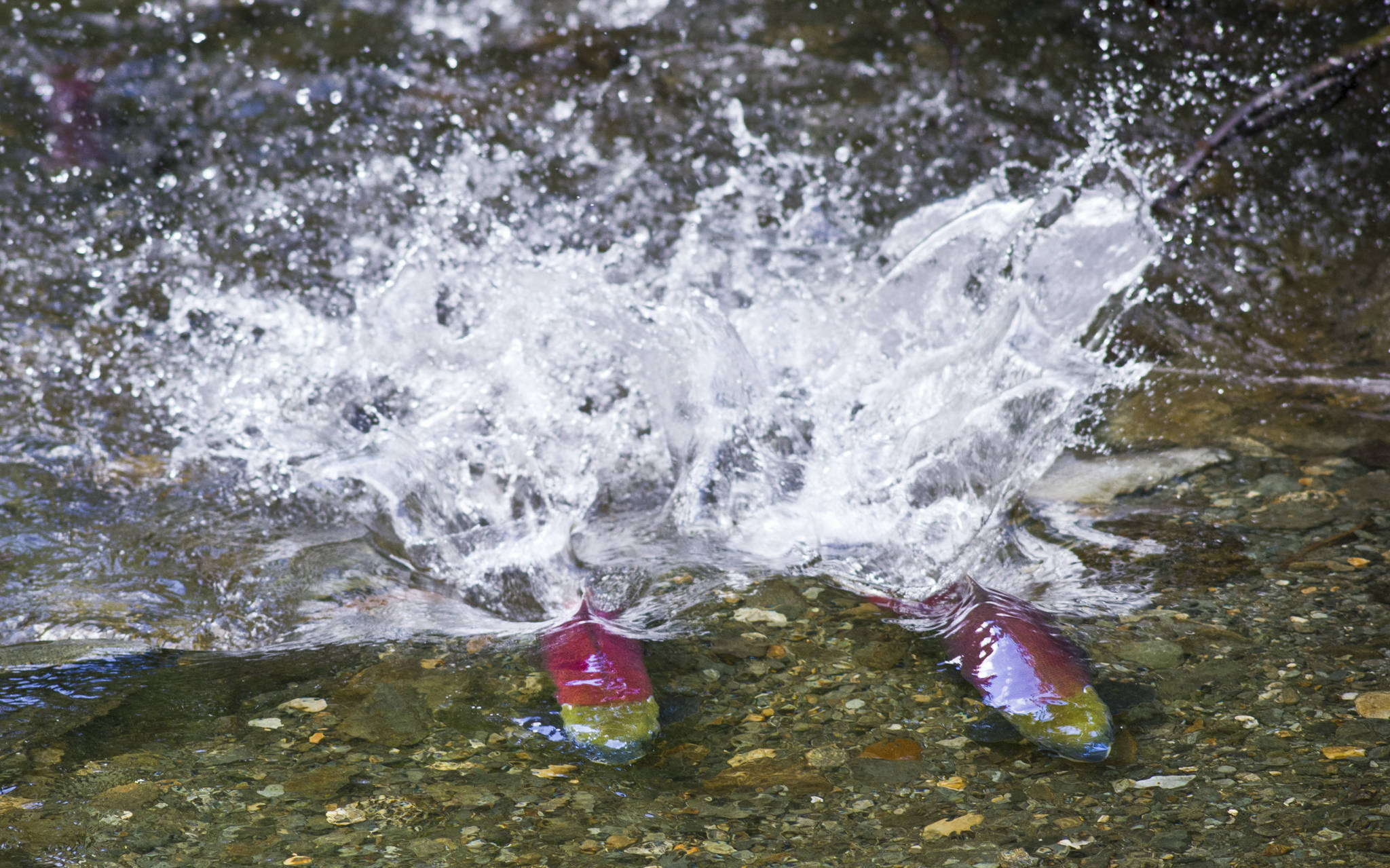
Citing declining numbers of salmon throughout the Pacific Northwest, some indigenous governments from Southeast Alaska, Washington state and British Columbia have declared a “salmon emergency.”
“In the areas around British Columbia and Southeast Alaska, we’re getting low returns,” said Rob Sanderson Jr., fourth vice president of the Central Council of Tlingit and Haida Indian Tribes of Alaska. “There are some rivers that are not even getting salmon in British Columbia.”
The declaration came out of a meeting hosted by the Southeast Alaska Indigenous Transboundary Commission (SEITC) and held at the Lummi Nation in Ferndale, Washington.
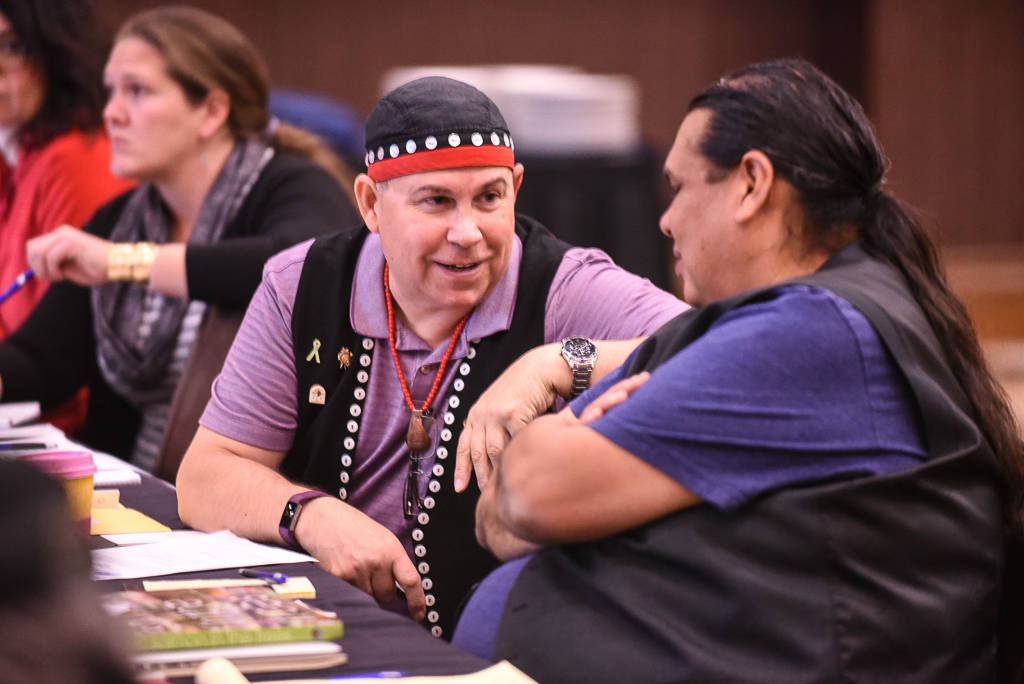
SEITC Chair Rob Sanderson Jr., center, and Reuben George, of the Sacred Trust, Tsleil-Waututh Nation at the Southeast Alaska Indigenous Transboundary Commission meeting at the Lummi Reservation in Ferndale, Wash. (Courtesy photo | Jeff Gibbs)
“Our discussions here was meant to have open dialogue,” Sanderson said. “To work together on transboundary rivers, we hope for balance, we want to be involved in the process.”
Sanderson said that pollution from mines and fish farms are hurting salmon populations. He said that lack of action on the part of regional and federal governments, in both the U.S. and Canada, prompted the attendees at the meeting to declare the emergency.
“We’re hoping it gets the attention of the powers that be,” Sanderson said. “We want to make them aware what the hell’s going on out here. Anybody that lives in Southeast Alaska should know that it was a bad year.”
A press release from SEITC blamed human activity for the decline in salmon, which they say sustains their communities.
“Neither the U.S. or Canada has addressed these issues, so the Indigenous Nations committed to come together and act on their shared concerns and use their collective ancestral knowledge,” the release said.
Declining salmon numbers have been recorded in the Pacific Northwest since the Environmental Protection Agency starting tracking the data in the 1980s.
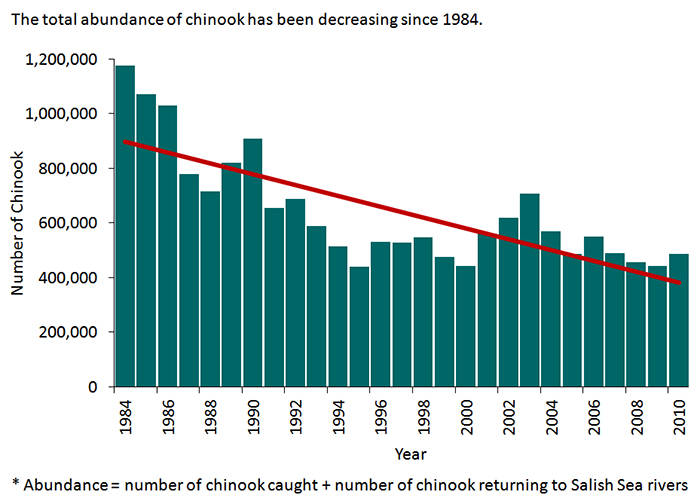
Chinook salmon numers in the Salish Sea from 1984-2010. (Courtesy photo, Environmental Protection Agency)
Earlier this summer large numbers of dead salmon were recorded across western Alaska, their deaths attributed to the record high temperature levels in the state this year.
In December 2018, the Alaska Department of Fish and Game reported its second-worst forcast for chinook salmon since 1995.
“With all the different threats that are facing salmon at this time, we didn’t feel like anybody was doing anything about it,” said Tis Peterson, Executive Director of SEITC. “It seems like time is critical and nobody is coming up with any solutions. It was decided by the group that we need to take action sooner rather than later.”
The declaration’s purpose was to bring attention to what the attendees at the meeting in Ferndale see as a crisis.
“The meeting was prompted by the rapid rate of destructive resource extraction in the waters and lands these nations have called home for thousands of years,” the SEITC release said.
One of the goals cited by Sanderson, Peterson and the release was for indigenous people to “have a seat at the table” when it comes to the decision-making process concerning mines and other issues that affect water quality.
Sanderson told the Empire in a phone interview Thursday that he couldn’t recall a time that a salmon emergency had been declared.
“This is a big deal,” he said.
• Contact reporter Peter Segall at 523-2228 or psegall@juneauempire.com.
