
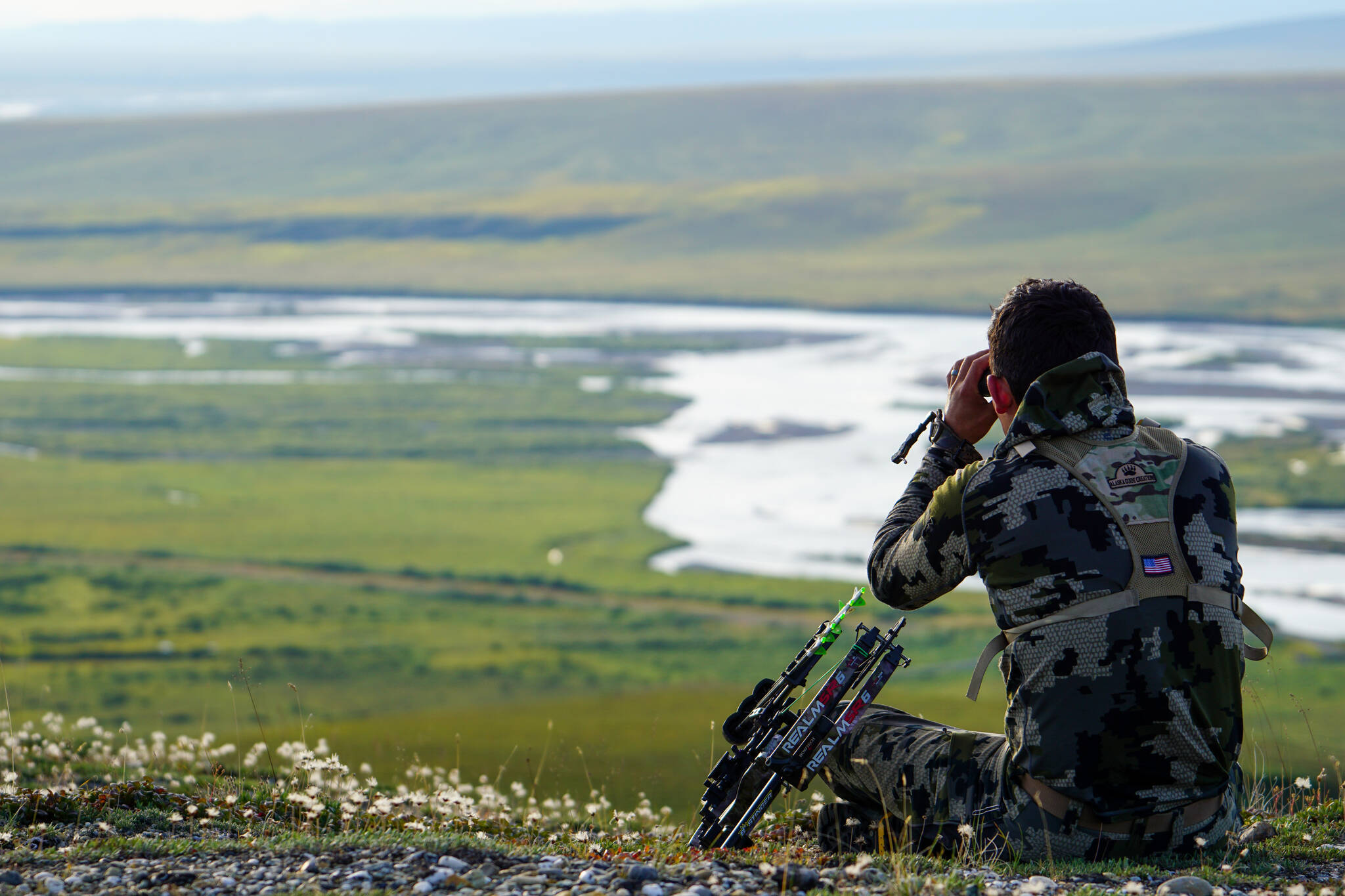
I had stopped hopping from tussock to tussock attempting to keep my feet dry. Frequent missteps and sneaky depths had put water over my gaiters half a dozen times in the first two and a half miles and we were only halfway to where we’d make camp. It was 39-degrees, but our pace kept us warm. We had a goal.
There is a five-mile buffer from the Dalton Highway to keep hunters from sending bullets at caribou, but in the direction of the pipeline. So my buddy Ryan and I had figured that we’d take our bows and be willing to hike five miles from the road across the tundra to where the rifle range started.
If we couldn’t make it happen with our bows, we’d go the distance and there’d be caribou.
There weren’t.
We had chosen this spot because a pair of calves were with a pair of cows so we figured just over the rise where they disappeared, we’d see at least a single bull. But once we stood where the caribou had spooked, we saw the rise was nothing more than a small ripple. A single cruise ship wave in an otherwise flat ocean. Flat, unforgiving tundra in every direction. There was no gentle slope or texture except for pathetic glassing knobs that could be measured using pitcher’s mounds for comparison. Big caribou ended up being small bushes. Cari-bushes.
Yet we carried on, driven by stubborn optimism and fresh legs that were starting to wear.
When we reached the imaginary line that allowed us to use the rifle Ryan had been carrying in addition to his bow, we spoke only for a few minutes before turning around. Snow and rain the previous week had made the wet tundra soggy, so even if we did want to make camp, there was no chance of finding a dry spot. We were in a giant marsh that was fundamentally not unlike the muskegs of Southeast Alaska, but tussocks really aren’t like anything else, and where small bushes usually indicate high points, in the tundra, they rise up from deep, wet sucker holes.
So we turned and made our way back to the truck, taking as direct a route as possible over the five miles. The angry march of frustrated, desperate, yet oddly exhilarated hunters.
This sucks, but wow, we’re really here.
Before our brutal march, the drive had been spectacular in the way that words and photos are pathetically inept at explaining. We had seen a blond grizzly bear, a solo musk ox and a small group of musk ox with little ones rocking the same harsh middle part as the adults, but wearing it much cuter.
We trudged 11.6 miles that first full day and returned to our camp, packed it up and headed south to the barren hills that at least provided texture.
There was a pull out on the top of the first knob heading south where a few people had made camp and we figured we would too. It was dry and several hundred feet in elevation above the tundra to the north.
Ryan left the truck running as we set up our tents, blasting hot air into our boots, a feeble attempt to dry them. We settled into the camping chairs and glassed the hills as hot water cooked our freeze-dried meals.
A story’s climax is made that much better by the misery endured leading up to it, so in closing I’ll state simply that two days later, feet nearly dry, I took a bull with my bow and the next morning Ryan did too.
• Jeff Lund is a freelance writer based in Ketchikan. His book, “A Miserable Paradise: Life in Southeast Alaska,” is available in local bookstores and at Amazon.com. “I Went to the Woods” appears twice per month in the Sports & Outdoors section of the Juneau Empire.
