
Expectations were low this year for the pink salmon runs that power Prince William Sound’s commercial fishing industry.
But no one expected them to be as bad as they’ve been.
With just a few weeks left in the season, the sound’s seine fleet has harvested just one-fourth the number of pinks that it would have caught by now in a typical year.
The small runs have forced managers to close fishing for longer periods than usual. And even during openers, fishermen are reporting abysmal harvests.
Some have quit early. Others are thinking about new jobs.
“It is incredibly slow,” said Megan Corazza, a Homer-based seine fisherman who has fished in the sound for more than two decades. “It is the worst year I have ever seen with my own operation.”
Pink salmon spawn in two-year cycles, and even years see lower returns than odd ones. But this summer’s numbers are awful by even-year standards across the whole state, with the exception of Southeast Alaska.
Statewide harvests are down 63% compared to 2022.
It’s a big blow to an industry already reeling from a global market crisis that sent dock prices plummeting last year.
Though they don’t get as much attention as other, more prized salmon species, pinks, also known as humpies, are a critical source of revenue for hundreds of Alaska fishermen and many of the state’s big processors. They’re the most abundant and least expensive species, and some years they make up well over half the salmon harvested in Alaska by sheer numbers.
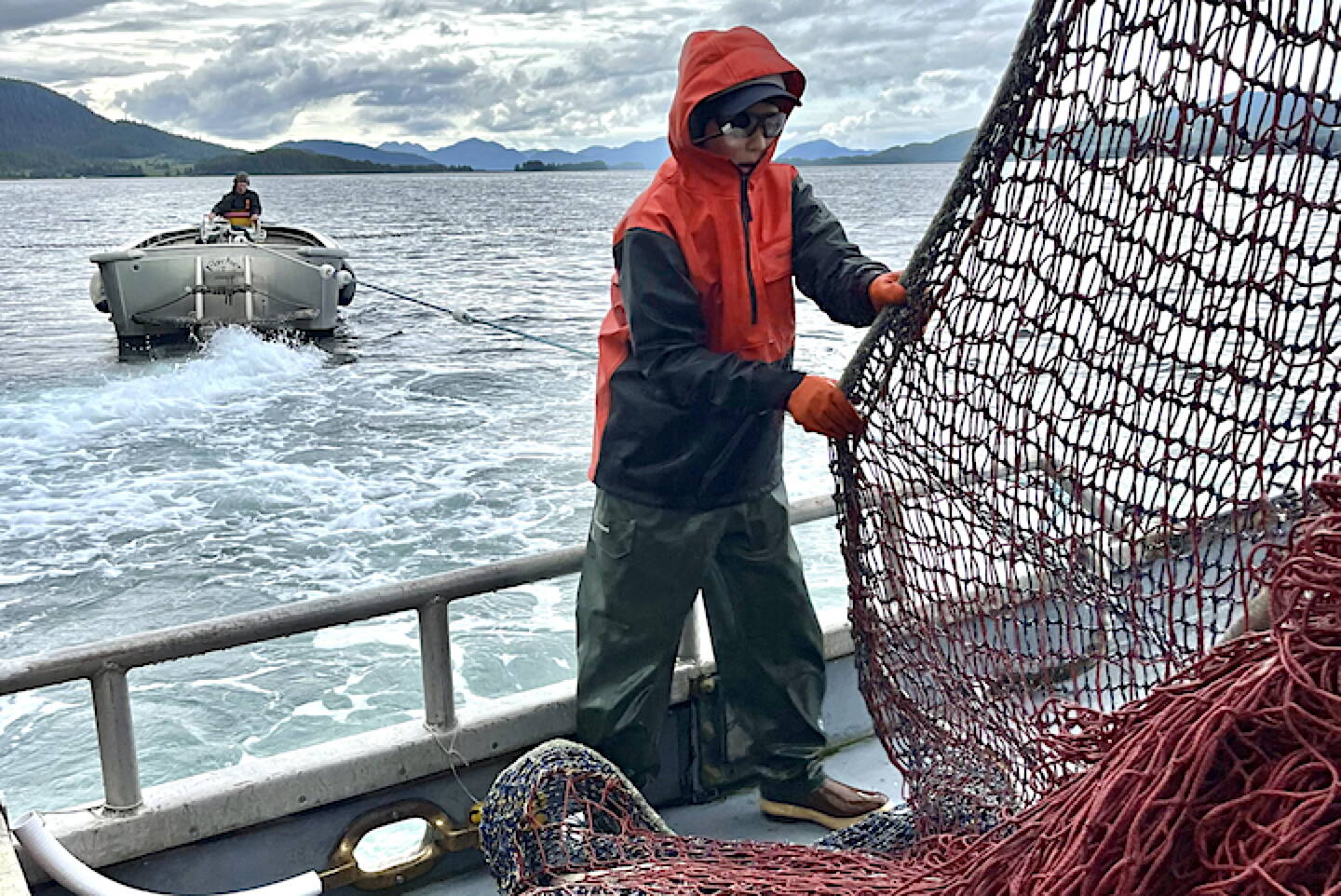
They’re mostly harvested by seine boats, which corral salmon using a long net stretched between the main vessel and a small skiff. A huge, mechanical pulley hauls each load aboard.
The state’s biggest commercial pink harvest is in Prince William Sound, where seiners last year netted some 46 million of the fish.
This year, they’ve caught just over 6 million so far. That’s compared to final harvests of more than 20 million in each of the past three even years.
The catch in Kodiak — the state’s third-biggest pink salmon fishery — has been “pretty horrible,” too, skipper Matt Alward said in an interview from his boat, the Challenger. There, the harvest was at just 769,000 fish through last week — down 72% from two years ago.
Alward has also been catching sockeye salmon, but pinks make up the largest portion of his and other seine boats’ hauls.
Some seine fishermen generate additional income by participating in other fisheries; they might stay afloat by catching salmon with different gear like gillnets, by picking up and delivering other boats’ fish, or by crabbing. Alward usually makes extra money fixing nets in the offseason, but he won’t have business this winter if other fishermen don’t have enough cash to pay for his service, he said.
“I will be all right because I have a wife with a good job,” he said. “If I didn’t have a wife with a good job, I would be pretty freaked out.”
On top of the low volume, seine fishermen said dock prices have barely inched up from last year, when a glut of salmon in global markets and a slowdown in demand caused a major downturn in price.
Corazza estimated that Prince William Sound vessels have so far netted an average of 100,000 pounds of pinks apiece, which processors reportedly are buying for some $0.25 per pound.
“All these boats out here, if they’ve only done pinks, have grossed 25 grand. And a lot of these boats pay $35,000 to $45,000 just in insurance,” Corazza said. “It is a huge disaster.”
Corazza said she’ll be able to pay her four crew members. But she’s worried about harbor fees, insurance for next year, and boat maintenance. “It’s going to be super tough,” she added. “I wake up every morning and I try to apply for a different job.”
What caused the poor returns isn’t entirely clear, but it likely has something to do with ocean conditions, according to Heather Scannell, a Cordova-based seine management biologist at the Alaska Department of Fish and Game.
The fact that wild and hatchery stocks — and populations across the whole state — are struggling suggests that “poor marine survival is ultimately the cause,” Scannell said.
Pinks spend just one year at sea before maturing and returning to freshwater to spawn, and another state fisheries scientist who focuses on ocean conditions, Katie Howard, said there was nothing about the winter of 2023 that would account for this year’s low numbers.
“There’s not really anything I can point to,” Howard said.
She added, however, that pink salmon are known for experiencing big swings in their abundance and that this year’s declines aren’t cause for immediate concern about the species.
“When we start getting concerned is when we have several years in a row where things are really worse than expected,” she said.
Scannell, the other state scientist, said some commercial fishing boats from outside Alaska “saw the writing on the wall” and left Prince William Sound early.
But Ezekiel Brown, a seiner in Cordova and the board president of a regional fishermen’s advocacy group, still plans to have his net in the water through the last couple weeks of the season.
“Everyone’s still kind of hanging on to hope, as fishermen do, that something’s going to happen,” he said.
• Max Graham is a writer based in Haines, who can be contacted at maxmugraham@gmail.com. This article was originally published in Northern Journal, a newsletter from Nathaniel Herz. Subscribe at this link.
