
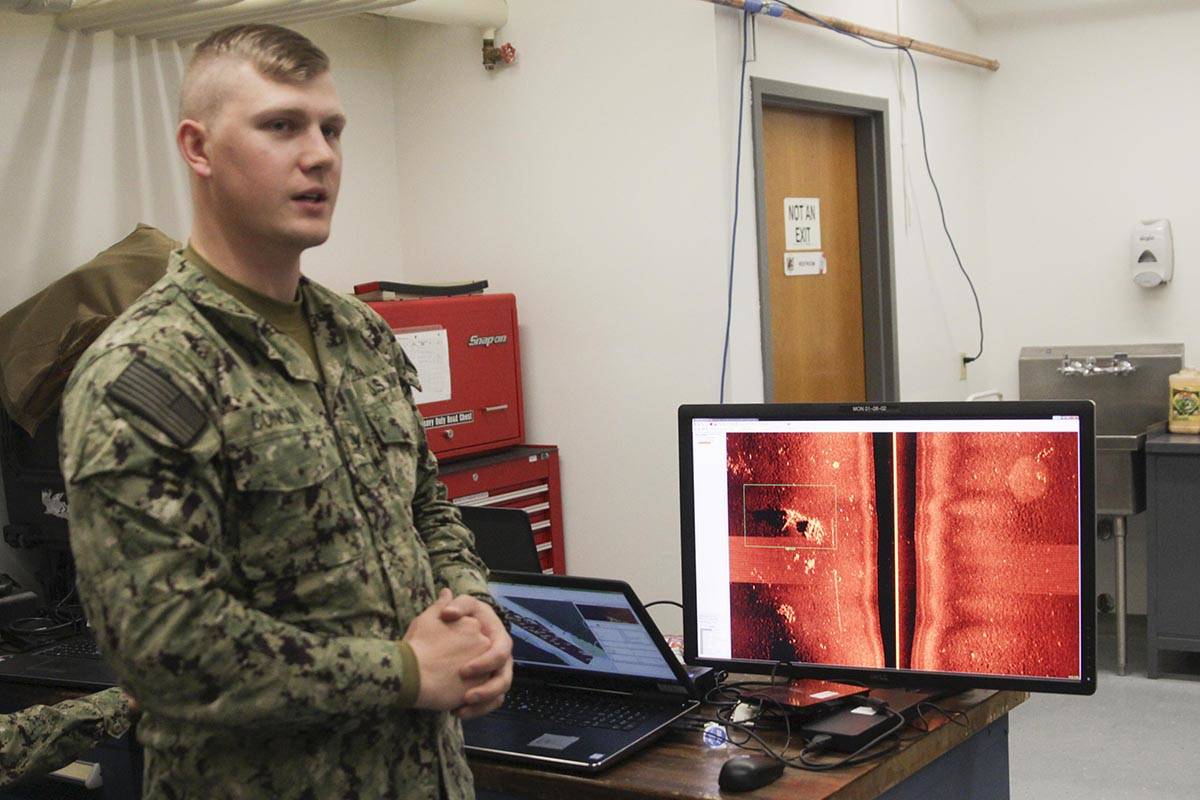
Juneau residents downtown may have noticed some unfamiliar uniforms as U.S. Navy sailors and officers visited Juneau as part of joint exercise Arctic Edge 2020.
“I went to Alaska without bringing gloves,” said Cmdr. John Laney, the detachment’s commanding officer. “That is why we do these exercises. We learn those lessons individually and corporately. Our equipment works different. Our people work different. Our process works different up here in this Alaska weather.”
Dozens of sailors and officers came to Juneau in order to practice their minesweeping techniques in a cold-water harbor far from their bases in San Diego or Mississippi, augmented by drones and remotely operated vehicles. They also came to build working relationships with commands up north as the Department of Defense refocuses its priorities for Arctic operations.
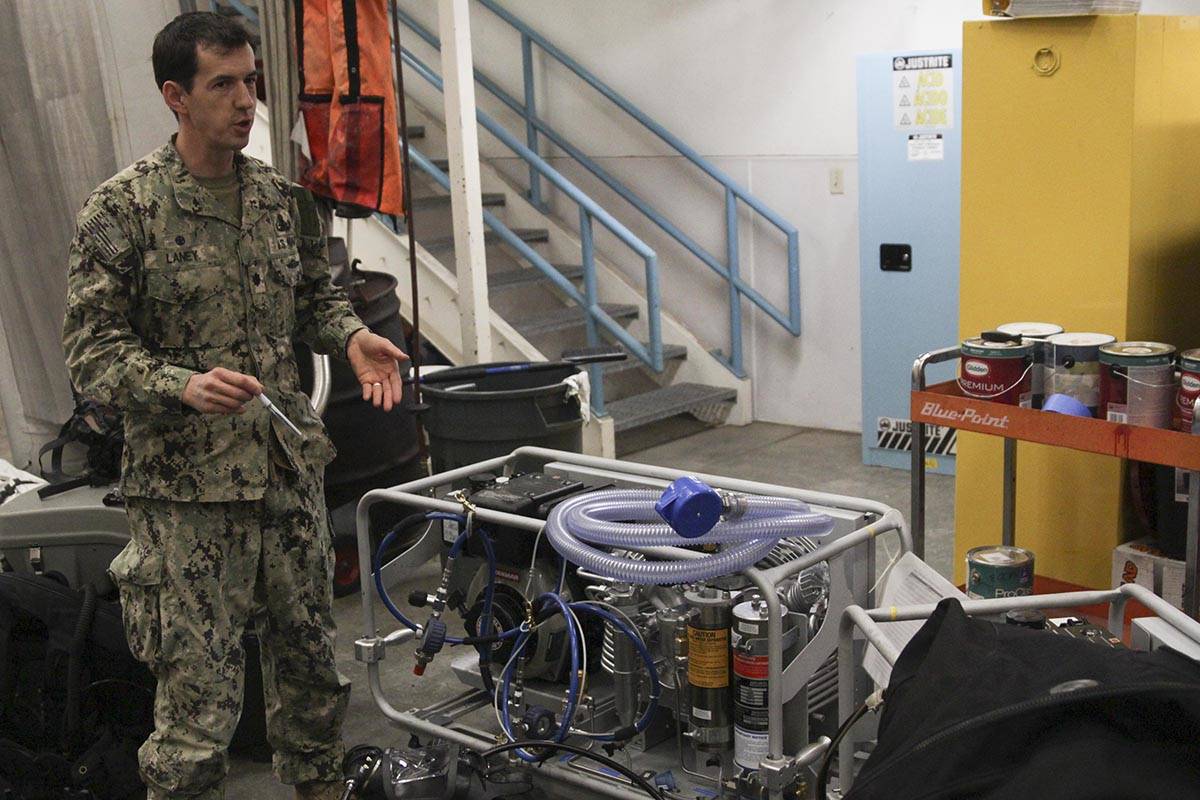
Navy Cmdr. John Laney, commanding officer of Mine Countermeasure Division 31, demonstrates the diver gear the unit uses at Coast Guard Station Juneau, Feb. 29, 2020. (Michael S. Lockett | Juneau Empire)
“There’s only so much interaction you can have District 17, with the Coast Guard Station (Juneau), and with the Alaska population from San Diego,” Laney said. “We’re building those relationships, learning that lessons, building that trust.”
Sailors and officers used unmanned underwater vehicles to map the bottom of the harbor and parts of the channel on Friday and Saturday, identifying abandoned crab traps, sunken skiffs, and so, so many tires.
“I never realized how many tires there were on the bottom of the ocean,” said Lt. j.g. Thomas Brown.
The UUV, a commercially available and widely used model known as the REMUS 100, is one of the first assets in the water when searching a harbor, said aerographer’s mate Petty Officer 2nd Class Christopher York. The UUVs have a limited capability for remote operation, York said, but it’s mostly programmed to operate independently.
“It’s more fun to see it do its mission and get back to you,” York said.
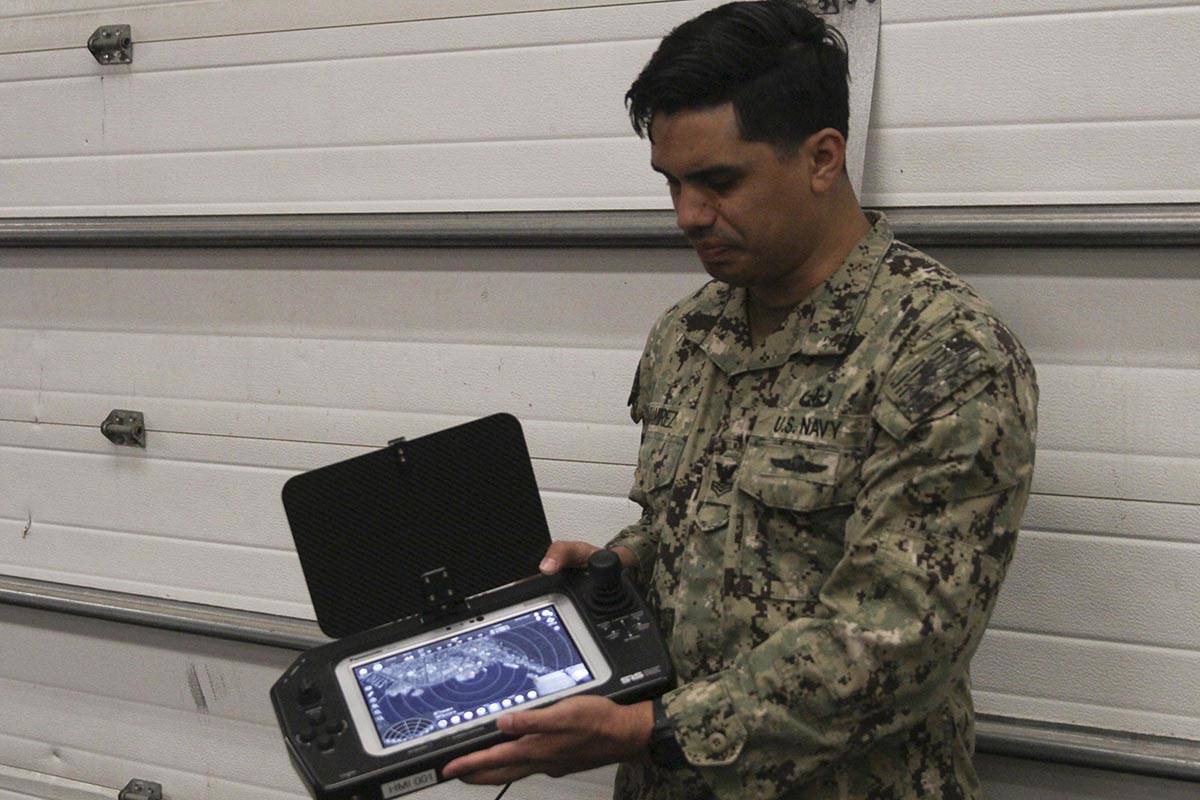
Navy Petty Officer 1st Class Juan Ramirez, an explosive ordnance disposal technician, shows the remotely operated vehicle control suite at Coast Guard Station Juneau, Feb. 29, 2020. (Michael S. Lockett | Juneau Empire)
Once the UUV uses its sonar and other instruments to map the harbor and the water conditions, other specialists interpret the data, looking at the high-resolution sonar returns for suspicious-looking or new objects in the water, said Chief Petty Officer Amy Sexton, leading chief petty officer for one of the sections.
Some of the biggest challenges in mapping Juneau’s harbors were the massive tidal shifts in the harbor, which have to be accounted for, Sexton said.
And once any suspicious objects are identified, it’s time for the detachment’s explosive ordnance disposal (EOD) specialists to deal with them.
“First we’d use one of the vehicles,” Laney said. “We always start with the safest option first and back it out from there.”
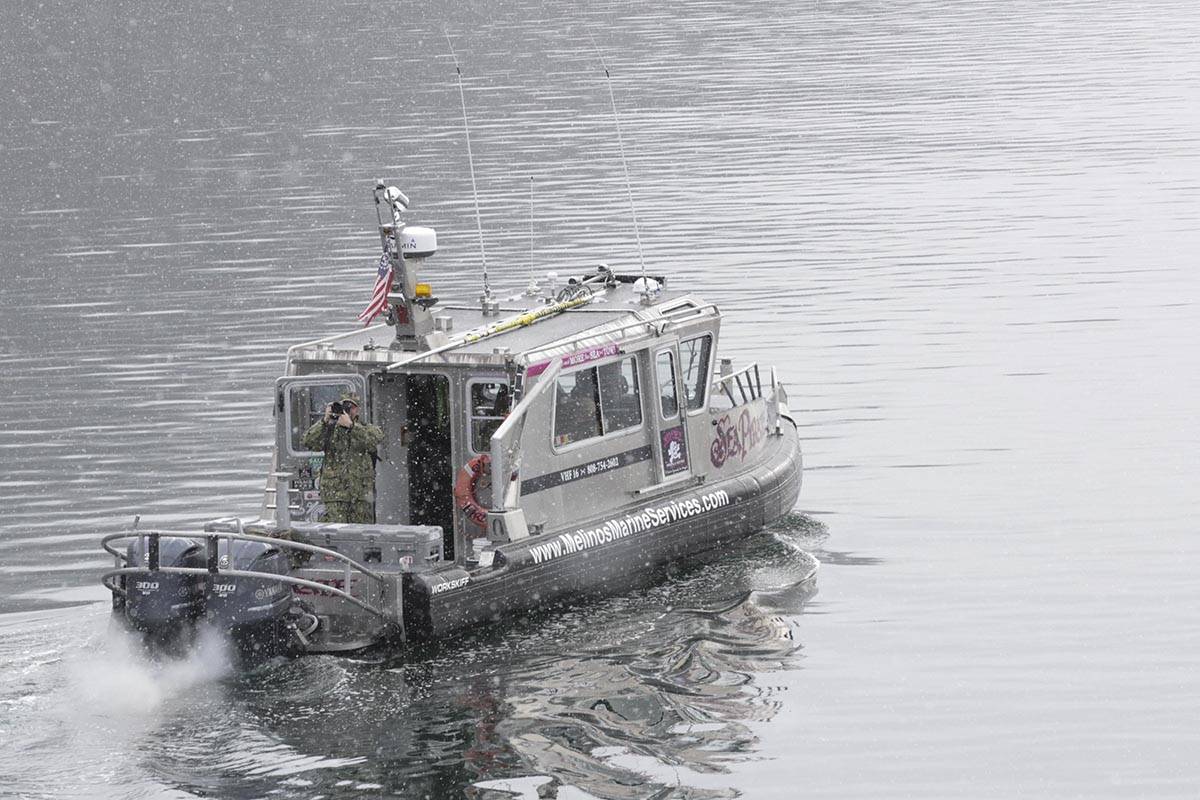
Navy sailors deploy an unmanned underwater vehicle to survey the harbor off of Coast Guard Station Juneau, Feb. 29, 2020. (Michael S. Lockett | Juneau Empire)
EOD specialists will examine the suspicious objects, first with highly maneuverable remotely operated vehicles, and then with divers if necessary, to assess the threat posed by an object. Mines can appear like anything, from a cylindrical object holding a magnetic or acoustic seeking mine or a stereotypical WWII mine, a round ball with contact horns all around it, Laney said.
“Instead of putting a diver in the water, we can put this in the water instead,” said EOD technician Petty Officer 1st Class Juan Ramirez, talking about the ROVs they use to inspect suspicious objects. “It’s much smaller and quicker to operate (then previous ROVs). We’re one of the first platoons to have this. It’s a huge game-changer.”
If a suspicious object does turn out to be a mine, the EOD techs would isolate the area, cordon it off and try to defuse or move the device. If neither of those turn out to be options, then they might detonate it in place, Ramirez said.
The EOD detachment visited Juneau as part of Arctic Edge 2020, a joint-services exercise taking place across Alaska in February and March. The detachment’s use of UUVs and ROVs allows them to cover more ground much less expensively than a traditional dedicated minesweeper vessel, Laney said.
• Contact reporter Michael S. Lockett at 757.621.1197 or mlockett@juneauempire.com.
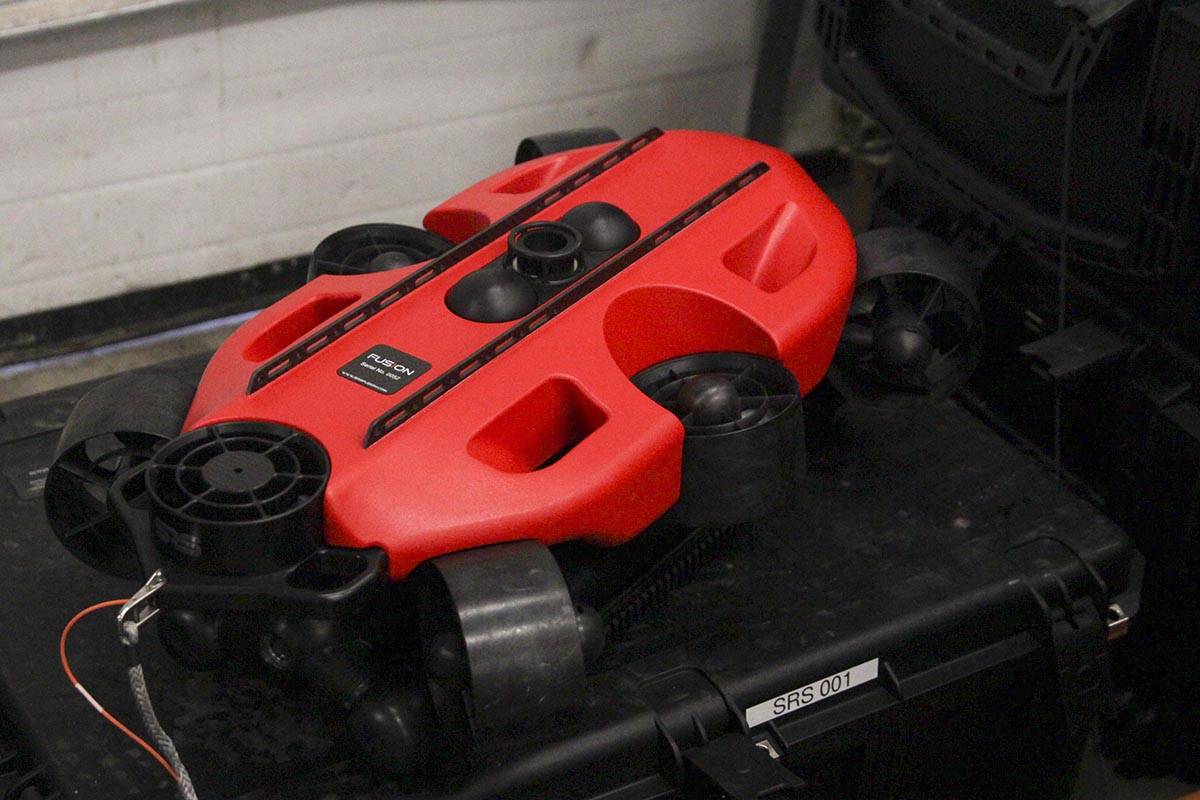
The Navy uses remotely operated vehicles like this one to inspect suspicious items and possible mines at the bottom of harbors.
