
Groups sue to declare Fairbanks air out of compliance

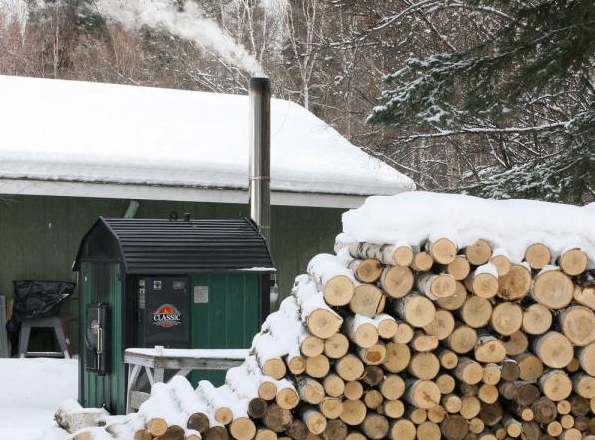
In this Mar. 27, 2009 file photo, smoke rises from the top a wood-fired boiler near a home in Fairbanks.

In this Mar. 27, 2009 file photo, smoke rises from the top a wood-fired boiler near a home in Fairbanks.

ANCHORAGE — Two Alaska groups on Tuesday sued the Environmental Protection Agency, saying officials missed a deadline for deciding whether the Fairbanks North Star Borough should be reclassified as seriously out of compliance with federal air pollution standards.

The EPA in November 2009 designated the Fairbanks North Star Borough moderately out of compliance.

The agency after six years was required to review progress, and if problems lingered, consider reclassification of Fairbanks to a serious non-attainment area, said attorney Kenta Tsuda of Earthjustice, an environmental law firm representing Citizens for Clean Air and the Sierra Club.

The reclassification, due at the end of June, did not happen, Tsuda said. Serious non-attainment would mean stricter requirements within a state plan to clean up Fairbanks air.

“The state is required to use ‘best available control’ measures,” Tsuda said.

The lawsuit was filed in Seattle, the EPA’s regional headquarters. The agency released a statement noting that, based on air quality monitoring results finalized in July, Fairbanks did not attain the fine particulate standard by the end of 2015.

“The EPA is now working on proposing reclassification of the Fairbanks nonattainment area to serious,” the agency said. “We continue to work closely with Alaska Department of Environmental Conservation and the Fairbanks North Star Borough to support their efforts to improve air quality and bring Fairbanks into attainment.”

Fairbanks’ air pollution problem in the winter is brought on by extreme cold and geography.

[Fairbanks borough air pollution levels worst in US] 

Temperatures reach 40 to 50 below zero. Fairbanks and the nearby city of North Pole are partially surrounded by hills that create a bowl effect. In a meteorological phenomenon known as an inversion, cold air along the ground can be capped by a layer of warmer air, trapping emissions.

The area regularly sees high levels of fine particulate, a mix of solid particles and liquid droplets that can be inhaled deep in the lungs.

Fine particulate is linked to heart attacks, decreased lung function and premature death. Children, the elderly and people with chronic disease are most susceptible.

Fine particulate levels around Fairbanks at times spike to the highest levels in the nation and regularly exceed federal limits.

The sources of particulate are wood- and coal-burning stoves, vehicles and coal-fired power plants, according to the lawsuit. Some Fairbanks residents burn wood as a cheaper alternative to expensive oil. They have fought attempts to ban inefficient wood-burning heating systems.

A state cleanup plan rejected measures that could help Fairbanks air, such as a ban on the sale of green wood, Tsuda said. That could change if the EPA designated Fairbanks as a serious nonattainment area.

“At the very least, the state has to look at those measures that they didn’t consider before,” he said.

Read more news:

Taking Stock: A Q&A with the independent running against Murkowski

Panamax problems: Wings Airways worries about where to land

Freakish fall weather in Juneau continues

More in News

The northern lights are seen from the North Douglas launch ramp late Monday, Jan. 19. A magnetic storm caused unusually bright northern lights Monday evening and into Tuesday morning. (Chloe Anderson/Juneau Empire)
Rare geomagnetic storm causes powerful aurora display in Juneau

The northern lights were on full display Monday evening.

teaser
Juneau activists ask Murkowski to take action against ICE

A small group of protesters attended a rally and discussion on Wednesday.

Cars pass down Egan Drive near the Fred Meyer intersection Thursday morning. (Clarise Larson / Juneau Empire file photo)
Safety changes planned for Fred Meyer intersection

DOTPF meeting set for Feb. 18 changes to Egan Drive and Yandukin intersection.

Herbert River and Herbert Glacier are pictured on Nov. 16, 2025. (Mari Kanagy / Juneau Empire)
Forest Service drops Herbert Glacier cabin plans, proposes trail reroute and scenic overlook instead

The Tongass National Forest has proposed shelving long-discussed plans to build a… Continue reading

A tsunami is not expected after a 4.4-magnitude earthquake northwest of Anchorage Wednesday, Feb. 4, 2026. (U.S. Geological Survey)
No tsunami expected after 4.4-magnitude earthquake in Alaska

U.S. Geological Survey says 179 people reported feeling the earthquake.

ORCA Adaptive Snowsports Program staff member Izzy Barnwell shows a man how to use the bi-ski. (SAIL courtesy photo)
Adaptive snow sports demo slides to Eaglecrest

Southeast Alaska Independent Living will be hosting Learn to Adapt Day on Feb. 21.

Cars drive aboard the Alaska Marine Highway System ferry Hubbard on June 25, 2023, in Haines. (Photo by James Brooks)
Alaska’s ferry system could run out of funding this summer due to ‘federal chaos problem’

A shift in state funding could help, but a big gap likely remains unless a key federal grant is issued.

Photo by James Brooks/Alaska Beacon
U.S. Sen. Dan Sullivan stands with acting Coast Guard Commandant Adm. Kevin Lunday during the after the commissioning ceremony for the Coast Guard icebreaker Storis on Sunday, Aug. 10, 2025, in Juneau, Alaska.
Coast Guard’s new Juneau base may not be complete until 2029, commandant says

Top Coast Guard officer says he is considering whether to base four new icebreakers in Alaska.

Students from the Tlingit Culture Language and Literacy program at Harborview Elementary School dance in front of elders during a program meeting in 2023. (Clarise Larson / Juneau Empire file photo)
Sealaska adds more free Tlingit language courses

The new course is one of many Tlingit language courses offered for free throughout the community.

Most Read