
This story has been updated with additional information.
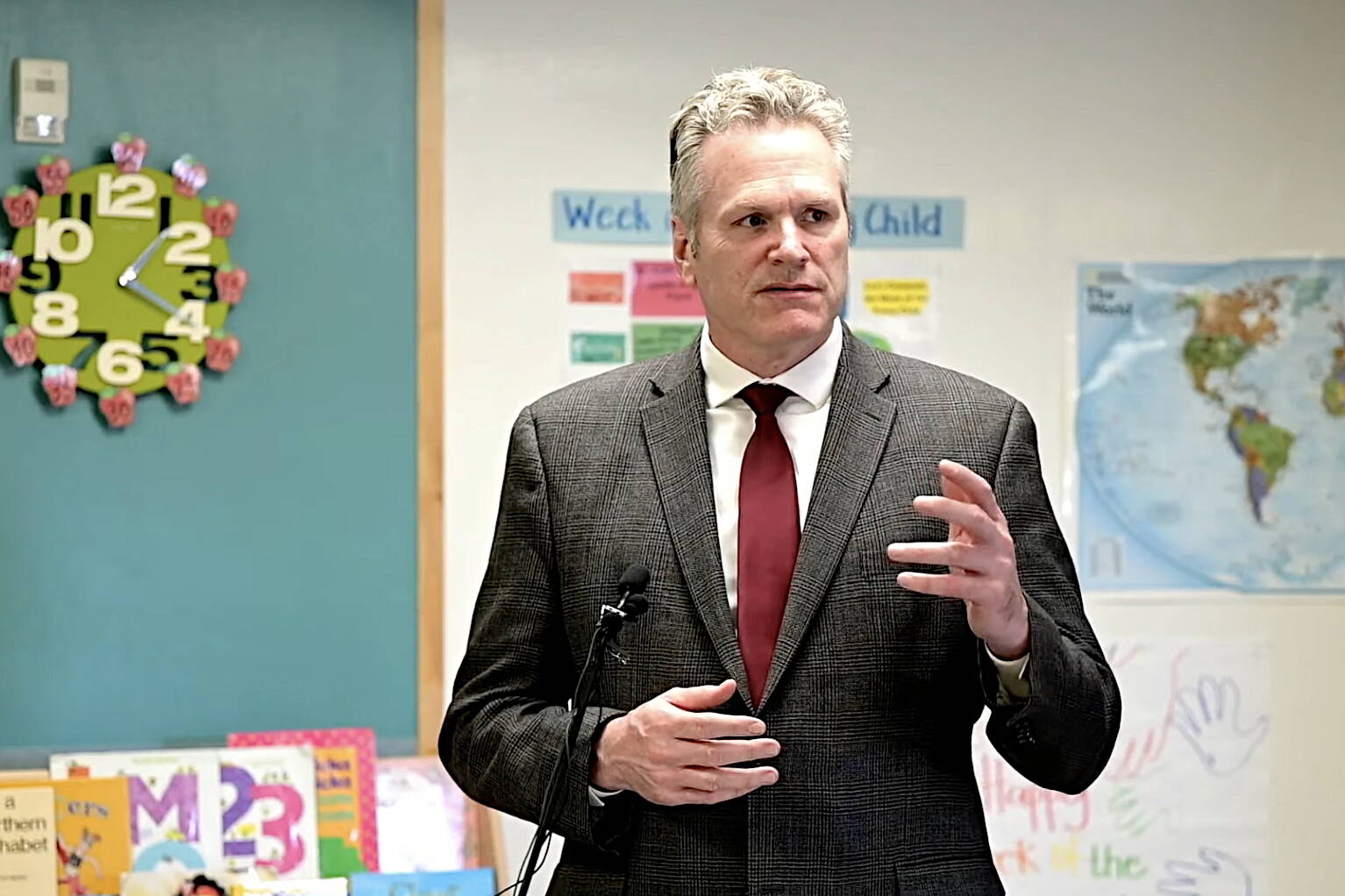
A child care task force scheduled to deliver a final report next summer about improving availability and affordability was announced Thursday by Gov. Mike Dunleavy, who said he favors the long-term study instead of “knee-jerk reactions” such as existing legislation that could boost child care workers’ wages during the coming months.
The majority of the 11-member task force will be various types of child care providers — such as licensed, unlicensed, faith-based and tribal — along with a business leader and four government officials with relevant expertise, according to Dunleavy and other officials who spoke at a news conference in Anchorage. The governor said the intent is to “take kind of a holistic approach and look at everything.”
“It’s not just an issue for a photo op, but it’s a real issue that needs to be looked at and scrutinized so we can come up with some models,” he said before signing an administrative order creating the task force, which is expected to issue its final report in July 2024.
Like many professions including health care and education, Alaska is suffering what some officials call crisis-level shortages of employees due to numerous factors such as low wages and lack of affordable housing — which in turn is causing workforce issues for people in other occupations who need such services.
Dunleavy was asked by reporters about several here-and-now proposals favored by Alaska child care associations that have been introduced during the legislative session. Among them is a $15 million increase to the state’s Child Care Grant Program, which supporters say could increase providers’ wages from an average of about $14.50 per hour to nearly $20 an hour, but Dunleavy said he wants more specificity before supporting such solutions.
“I think knee-jerk reactions without a deep dive would be a mistake,” he said, adding “We don’t even know what kind of child care we’re talking about. What does it look like? Is it focused on infants? Is it focused on toddlers? Is it focused on other age groups?”
The first part of that response is missing from the governor’s official YouTube video of the news conference, and there are other portions that skip over words. Grant Robinson, a spokesperson for the governor, stated in an email there were glitches during the livestream that caused skipping that are seen in the recorded video and “we did not make any edits to the recording.”
While the governor was non-committal on proposals lawmakers are considering this session, support for the task force was expressed by Rep. Zack Fields, an Anchorage Democrat, who said “I think it will be very complementary” to bills such as one he introduced (House Bill 46) offering tax breaks for investments in child care centers and allowing providers to unionize.
“A lot of work went into that administrative order,” he said. “It is very helpful. The governor was asked what does this mean in terms of what it will cost and he said it will cost some money, but we also have the private sector working alongside us. I think that’s a good characterization.”
Also being considered by legislators is HB 89, which would expand child care assistance to families making up to 300% of the poverty level. Fields, a member of the House minority caucus, said he has had encouraging discussions with Dunleavy administration officials at the state Department of Health as well as members of legislative majorities who are receptive to such proposals — especially since the problem has gained widespread visibility among policy makers.
“There’s orders of magnitude more awareness now than there was two-and-a-half years ago,” he said.
An initial report by the task force is scheduled to be complete by December, which will allow its findings to be considered by the Legislature during next year’s session, said Rep. Andi Story, a Juneau Democrat whose advocacy on child care issues included participation in a conference for Southeast Alaska providers a few weeks ago. She said that’s an encouraging aspect of the task force, as is the plan for it to conduct the state’s first new cost of care study, which will assess things such as the expenses of opening and operating facilities in various parts of the state.
In the meantime, Story said she is hoping action separate from the task force happens quicker.
“I really hope we’re going to make an investment in child care this session,” she said. “The time is now.”
• Contact Mark Sabbatini at mark.sabbatini@juneauempire.com
