
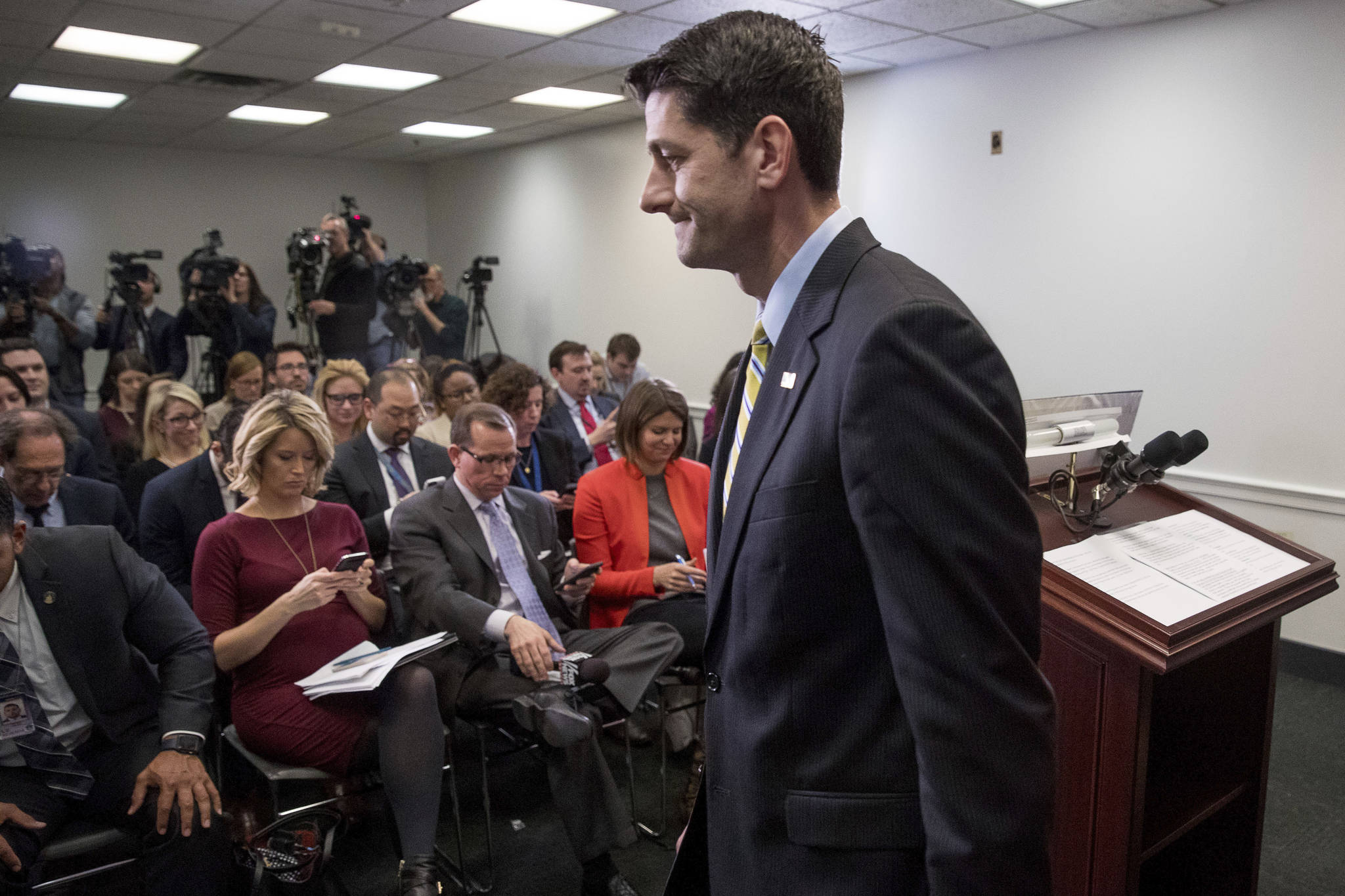
WASHINGTON — Their health care overhaul in peril from all sides, the White House and top House Republicans acknowledged Wednesday they would make changes to the legislation in hopes of nailing down votes and pushing the party’s showpiece legislation through the chamber soon.
House Speaker Paul Ryan, R-Wis., declined to commit to bringing the measure to the House floor next week, a fresh indication of uncertainty. Republican leaders have repeatedly said that was their schedule, but opposition mushroomed after a congressional report concluded this week that the measure would strip 24 million people of coverage in a decade.
Ryan told reporters that GOP leaders could now make “some necessary improvements and refinements” to the legislation, reflecting an urgency to buttress support. The measure would strike down much of former President Barack Obama’s 2010 overhaul and reduce the federal role, including financing, for health care consumers and is opposed uniformly by Democrats.
At an all-hands meeting Wednesday evening of House GOP lawmakers, Vice President Mike Pence and party leaders urged their rank-and-file to rally behind the legislation.
“‘It’s our job to get it out of here and get it to the Senate,’” Pence told the Republicans, according to Rep. Dennis Ross, R-Fla. That would let President Donald Trump pressure “Democrats in these red states to come on board,’” Ross said, referring to Republican-leaning states where several Democratic senators face re-election next year.
Trump was expected to urge lawmakers to back the bill in remarks later Wednesday in Nashville, Tennessee. Health secretary Tom Price was using phone calls to lobby Republican governors, some of whom — with home-state GOP members of Congress — oppose the bill’s phase out of Obama’s expansion of Medicaid to 11 million additional lower-income Americans.
Amid the maneuvering, a government report said more than 12 million people have signed up for coverage this year under the very statute that President Donald Trump and congressional Republicans want to repeal. With Democrats uniformly opposing the Republican bill, that figure underscored the potential political impact of the GOP’s next move.
Though Pence met repeatedly Wednesday with House Republicans, his impact remained unclear and GOP rebels still abounded. Conservatives were unhappy the measure doesn’t erase enough of Obama’s law while at the other end of the party’s spectrum, GOP moderates were upset that the Republican bill would strip millions of health coverage.
“Oh heck, yes,” said one conservative leader, Rep. Jim Jordan, R-Ohio, asked if the GOP legislation needed changes to win his support.
Conservatives want to end Obama’s expansion of Medicaid to 11 million additional low-income people next year, not 2020 as the Republican bill proposes. They say a GOP proposed tax credit to help people pay medical costs is too generous, and they want to terminate all of Obama’s insurance requirements, including mandatory coverage of specified services like drug counseling.
Underscoring the push-pull problem GOP leaders face in winning votes, moderates feel the tax credits are too stingy, especially for low earners and older people. They oppose accelerating the phaseout of the Medicaid expansion and are unhappy with long-term cuts the measure would inflict on the entire program.
In a new complication, Sen. Charles Grassley, R-Iowa, said the measure lacked the votes to pass in the Senate, where Republicans hold a precarious 52-48 majority. That left House moderates angry over being asked to take a politically risky vote for legislation that seems likely to be significantly altered.
Moderates “don’t like the idea of taking a vote in the House that may go nowhere in the Senate,” said Rep. Charlie Dent, R-Pa.
Earlier in the day, Pence told House conservatives that the administration was open to changes.
“He gave us a lot of hope,” said Rep. Mark Walker, R-N.C., leader of the group that met with Pence.
The bill would enfeeble Obama’s individual mandate — the requirement that Americans buy coverage — by abolishing the tax fine on violators. It would end subsidies that help low-income people with high insurance premiums the most and replace them with tax credits that are bigger for older people. It would cut Medicaid, repeal the law’s tax increases on higher earning Americans and allow 30 percent higher premiums for consumers who let coverage lapse.
GOP support became scarcer when the nonpartisan Congressional Budget Office found this week that the legislation would push 24 million Americans off coverage in a decade and shift out-of-pocket costs toward lower income, older people. That’s 4 million more than the 20 million who’ve gained either Medicaid or insurance coverage under Obama’s law.
Hundreds of conservative activists rallied outside the Capitol in sub-freezing weather to call on congressional leaders and Trump to abandon the GOP bill and fully repeal Obama’s law. The rally was organized by FreedomWorks, a conservative group backed by the billionaire Koch brothers.
The latest government sign-up numbers missed Obama’s target of 13.8 million people for 2017. The figures represent initial enrollment, and there’s usually significant attrition over the course of a year. Experts said the report undercuts Republican claims that the health law’s insurance markets are teetering toward collapse, which they say makes repealing the law crucial.
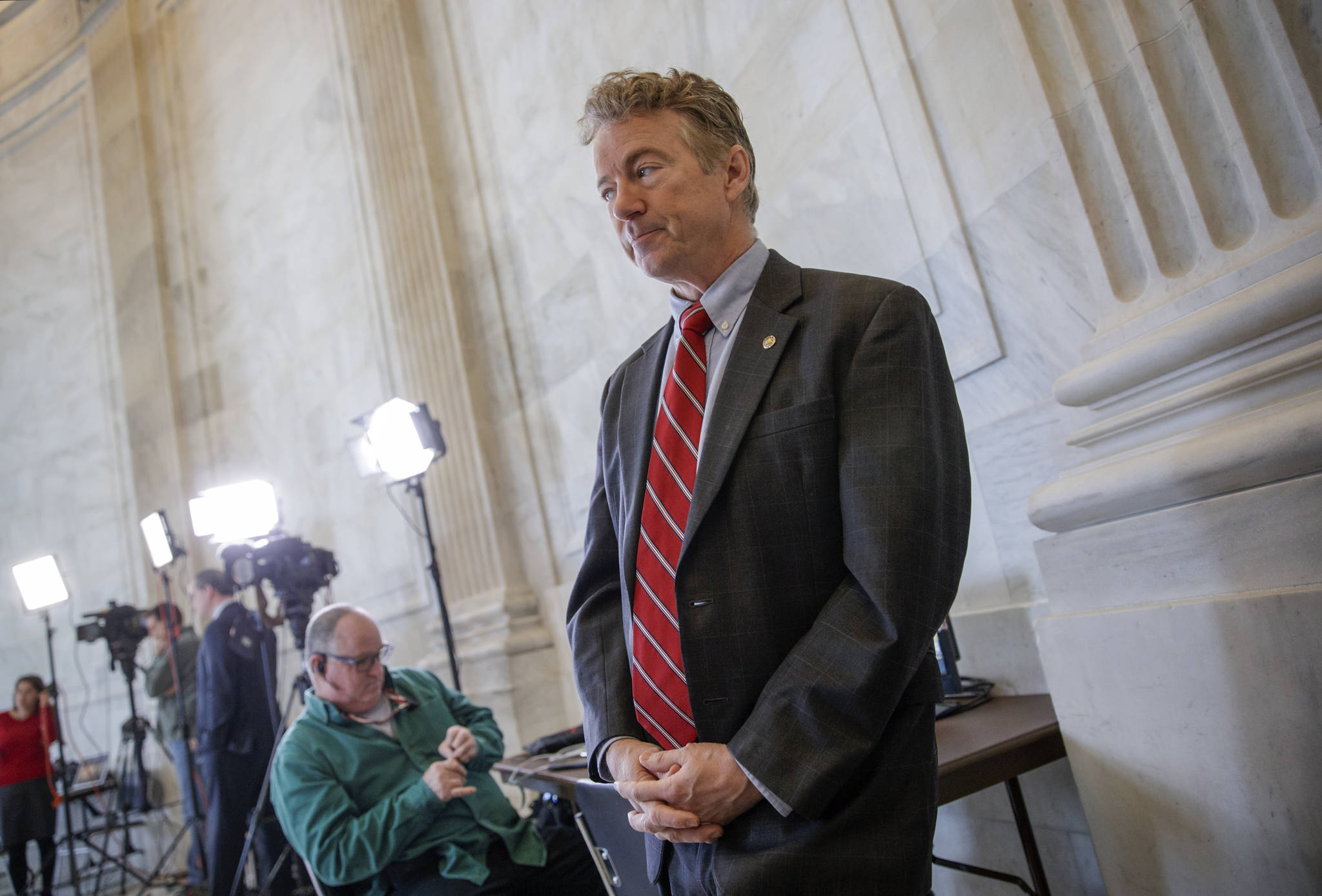
Sen. Rand Paul, R-Ky., a vociferous opponent of the House Republican healthcare reform plan, referring to it as “Obamacare light,” discusses the bill before a TV interview on Capitol Hill Wednesday in Washington. (J. Scott Applewhite | The Associated Press)
J. Scott Applewhite | The Associated Press Sen. Rand Paul, R-Ky., a vociferous opponent of the House Republican healthcare reform plan, referring to it as “Obamacare light,” discusses the bill before a TV interview on Capitol Hill Wednesday in Washington.
