
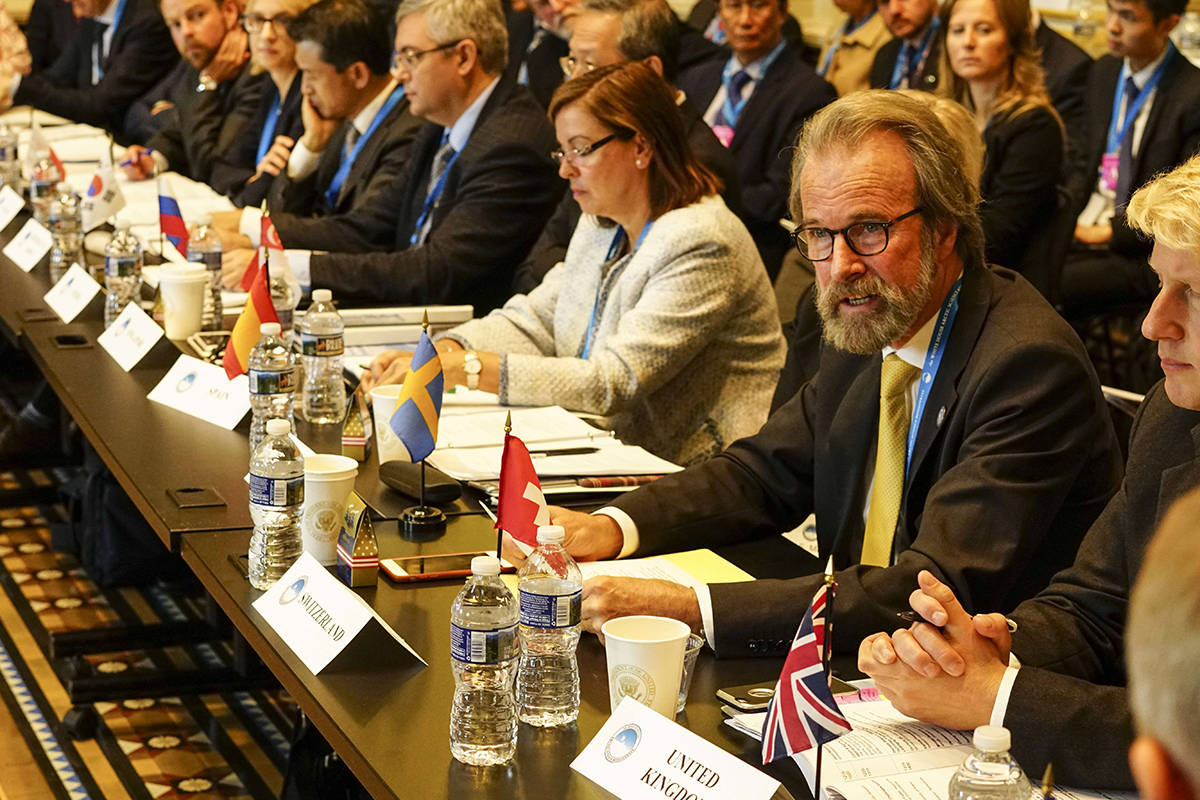
Konrad Steffen, wears glasses and a yellow tie, at the White House in 2016, where he represented Switzerland at the first Arctic Ministerial Conference. (Courtesy Photo / Swiss Federal Institute for Forest, Snow and Landscape)

Konrad Steffen, wears glasses and a yellow tie, at the White House in 2016, where he represented Switzerland at the first Arctic Ministerial Conference. (Courtesy Photo / Swiss Federal Institute for Forest, Snow and Landscape)

Glaciologist dies in Greenland crevasse

The glaciologist never worked in Alaska, but Steffen’s work influenced a scientist here.

By Ned Rozell

Konrad Steffen, 68, died Aug. 8, 2020, when he fell into a meltwater-filled crevasse on the Greenland ice sheet.

The glaciologist never worked in Alaska, but Steffen’s work influenced a scientist here, his countryman Martin Truffer. Truffer was born in Switzerland, as was Steffen.

Truffer, a professor who studies glaciers at the Geophysical Institute of the University of Alaska Fairbanks, noted the importance of Steffen’s Greenland “Swiss Camp,” where scientists measure the weather on the ice sheet.

In 1990, Steffen purchased the monitoring station for $1 from a colleague. He returned to Greenland to maintain it every year since.
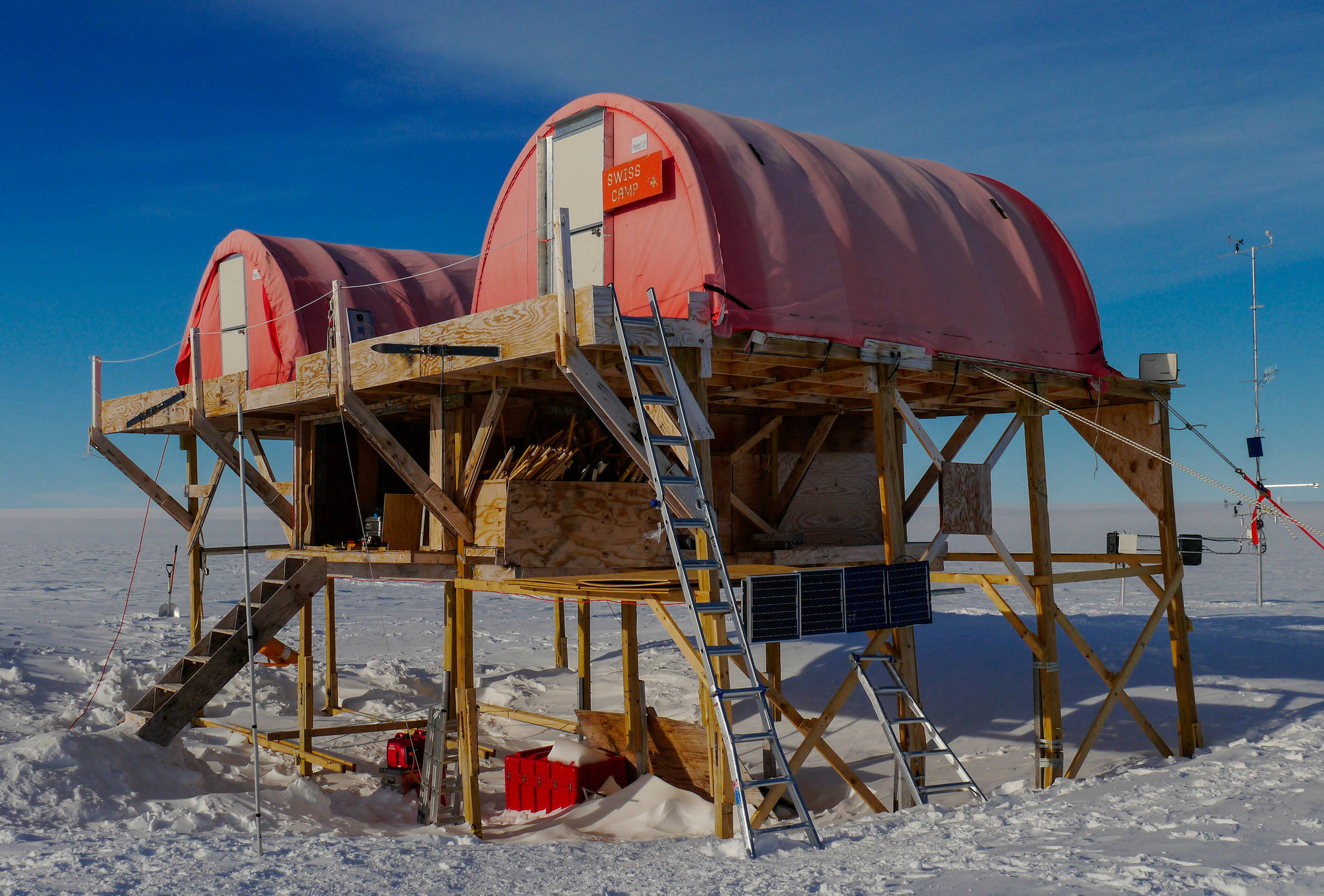
Swiss Camp on the Greenland ice sheet. (Courtesy Photo / Konrad Steffen)

Swiss Camp on the Greenland ice sheet. (Courtesy Photo / Konrad Steffen)

Thirty years ago, scientists were not even sure if the ice sheet was shrinking. There is no doubt today. Using data from Swiss Camp and many other sources, Steffen wrote in his final paper with colleagues — published last month — that Greenland’s ice loss will raise global sea level by as much as 5 inches by 2100.

“In the early ‘90s we were taught that ice sheets only change on centennial-to-millennial time scales,” said Truffer. “Boy, was that wrong!”

The transformation of Greenland ice into ocean water has been one of the most dramatic examples of recent warming on the planet.

Steffen, whom friends called Koni (pronounced Connie), was there from the beginning. He noticed changes so startling on Greenland that he at first didn’t trust his instruments. For example, due to melting ice and snow, the elevation of Swiss Camp dropped 12 feet in four years.

At 68, Steffen had worked past Switzerland’s mandatory retirement age of 65. When he accepted a position as director of the Swiss Federal Institute for Forests, Snow and Landscape in 2012, he made it a condition that he would go back to Greenland every year to keep his stations running.

I remember Steffen as a striking figure — sandy gray hair, piercing blue eyes, his face weathered by snow, wind and sun — at the podium during news conferences at the fall meeting of the American Geophysical Union in San Francisco. There, Steffen spoke to reporters about Greenland’s impressive ice melt. He was then head of the Cooperative Institute for Research in Environmental Sciences at the University of Colorado in Boulder.
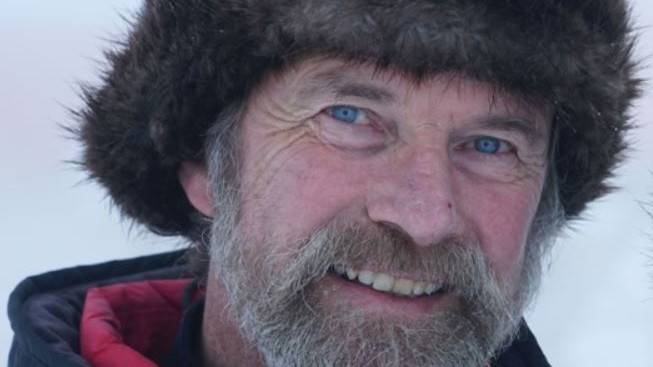
Konrad Steffen, who recently died in a crevasse fall on the Greenland ice sheet. (Courtesy Photo / Urs Obrist)

Konrad Steffen, who recently died in a crevasse fall on the Greenland ice sheet. (Courtesy Photo / Urs Obrist)

Truffer remembers his friend as being comfortable in front of journalists, eating lunch with world leaders, or in a tent pitched on ice.

“A thing that made Koni special is that he was equally comfortable in the field freezing his a— off as he was hobnobbing with the rich and powerful, educating them about the reality of climate change,” Truffer said.

That Steffen, a man with decades of walking and working and sleeping on glaciers, died in a crevasse shows Truffer that anything can happen.

“It is very sobering,” Truffer said. “He certainly knew what he was doing. He knew the area well. As little as a wrong step in low visibility conditions can turn a harmless adventure into a disaster.”

• Since the late 1970s, the University of Alaska Fairbanks’ Geophysical Institute has provided this column free in cooperation with the UAF research community. Ned Rozell is a science writer for the Geophysical Institute.

More in News

The northern lights are seen from the North Douglas launch ramp late Monday, Jan. 19. A magnetic storm caused unusually bright northern lights Monday evening and into Tuesday morning. (Chloe Anderson/Juneau Empire)
Rare geomagnetic storm causes powerful aurora display in Juneau

The northern lights were on full display Monday evening.

teaser
Juneau activists ask Murkowski to take action against ICE

A small group of protesters attended a rally and discussion on Wednesday.

Cars pass down Egan Drive near the Fred Meyer intersection Thursday morning. (Clarise Larson / Juneau Empire file photo)
Safety changes planned for Fred Meyer intersection

DOTPF meeting set for Feb. 18 changes to Egan Drive and Yandukin intersection.

Herbert River and Herbert Glacier are pictured on Nov. 16, 2025. (Mari Kanagy / Juneau Empire)
Forest Service drops Herbert Glacier cabin plans, proposes trail reroute and scenic overlook instead

The Tongass National Forest has proposed shelving long-discussed plans to build a… Continue reading

A tsunami is not expected after a 4.4-magnitude earthquake northwest of Anchorage Wednesday, Feb. 4, 2026. (U.S. Geological Survey)
No tsunami expected after 4.4-magnitude earthquake in Alaska

U.S. Geological Survey says 179 people reported feeling the earthquake.

ORCA Adaptive Snowsports Program staff member Izzy Barnwell shows a man how to use the bi-ski. (SAIL courtesy photo)
Adaptive snow sports demo slides to Eaglecrest

Southeast Alaska Independent Living will be hosting Learn to Adapt Day on Feb. 21.

Cars drive aboard the Alaska Marine Highway System ferry Hubbard on June 25, 2023, in Haines. (Photo by James Brooks)
Alaska’s ferry system could run out of funding this summer due to ‘federal chaos problem’

A shift in state funding could help, but a big gap likely remains unless a key federal grant is issued.

Photo by James Brooks/Alaska Beacon
U.S. Sen. Dan Sullivan stands with acting Coast Guard Commandant Adm. Kevin Lunday during the after the commissioning ceremony for the Coast Guard icebreaker Storis on Sunday, Aug. 10, 2025, in Juneau, Alaska.
Coast Guard’s new Juneau base may not be complete until 2029, commandant says

Top Coast Guard officer says he is considering whether to base four new icebreakers in Alaska.

Students from the Tlingit Culture Language and Literacy program at Harborview Elementary School dance in front of elders during a program meeting in 2023. (Clarise Larson / Juneau Empire file photo)
Sealaska adds more free Tlingit language courses

The new course is one of many Tlingit language courses offered for free throughout the community.

Most Read