
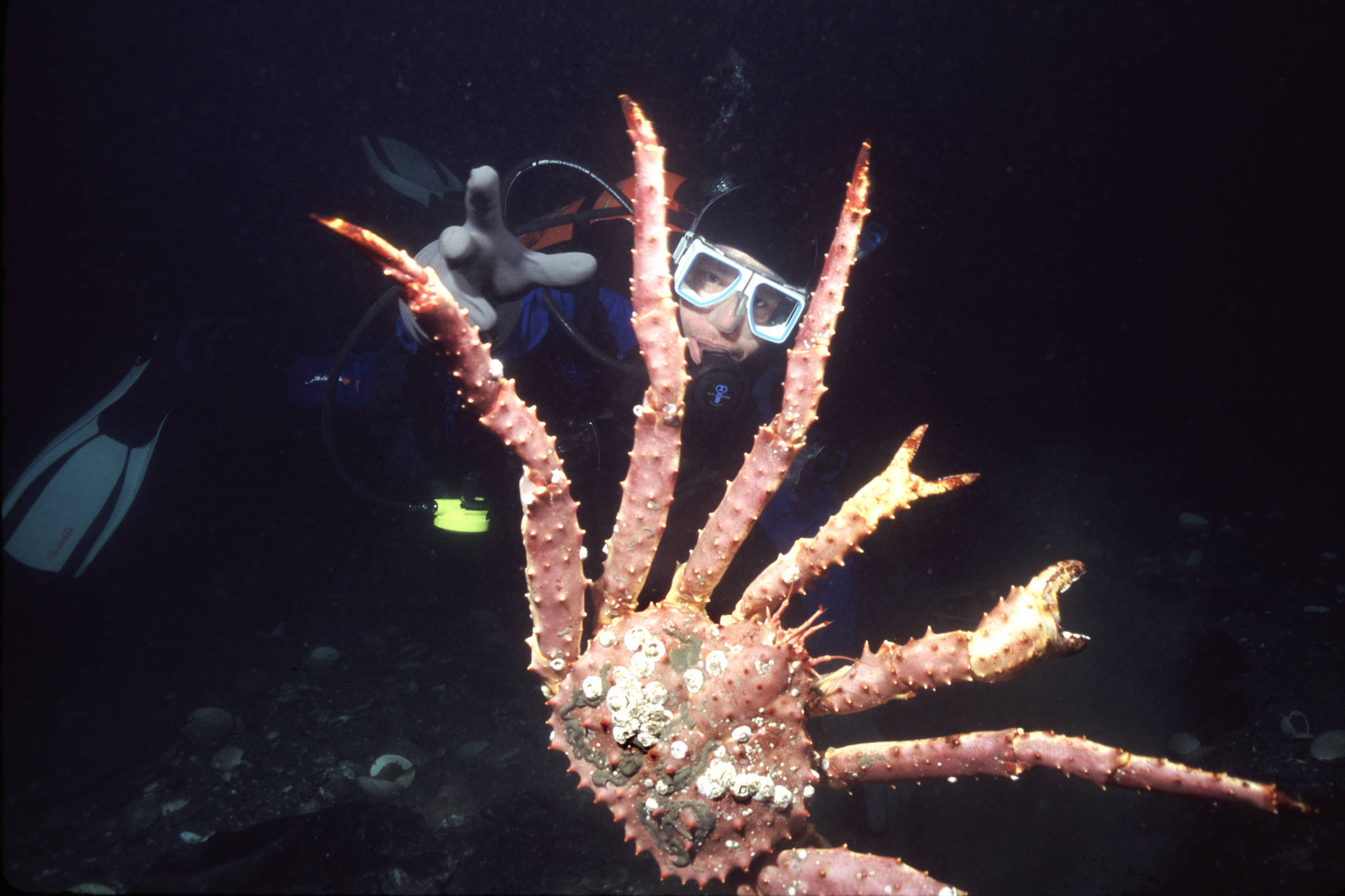
Many things have to line up for local dive photographer Art Sutch to capture life beneath the seas around Juneau. His diving equipment and his $8,000 camera housing setup (camera itself not included) have to cooperate. Every piece of his waterproof camera housing has to connect solidly with its counterpart inside. His subjects — sea lions, nudibranchs and octopi — can be uncooperative at best.
One anecdote illustrates this well. Sutch told it during his Wildlife Wednesdays talk at the Mendenhall Valley Public Library. During his latest dive to the wreckage of the Princess Sophia in Lynn Canal, Sutch had the chance to capture a rare prowfish. He says it’s one of the only places you can see the prehistoric-looking animal in Southeast.
“There a big fish, like 30-40 pounds. They have a very blunt head with very big eyes, kind of like an eel-like body and a round tail,” Sutch said. “The one time I did see one on the Sophia, I had one perfectly posing for me. … I had it all framed up, was ready to take the shot.”
Sutch moved to take his shot. He was working with his old Hasselblad brand camera housing at the time.
“Then, like you experience a lot in underwater photography, all it takes is one little thing,” Sutch said. His shutter button wouldn’t respond. He had forgotten to take a crucial piece of equipment out of his camera housing.
“Then I proceeded to curse underwater. I am sure my bubbles had some pretty good rhetoric when they hit the surface, cause it was just a beautiful shot and now it’s just in my memory,” he said.
Sutch has been a scuba diver and photographer in Southeast since he moved here in 1987. At his Wildlife Wednesday lecture, he presented some of his recent work and talked about the unique demands of diving and photographing Southeast’s marine life. The talks, put on by the Southeast Chapter of the Alaska Wildlife Alliance, are free and open to the public. Refreshments are served.
To a packed room at the library, Sutch referred to Southeast’s waterways as a “last frontier.” Dive anywhere and you’re likely to see something nobody has seen before.
Juneau also has two major shipwrecks within reach of the town’s divers: the Princess Kathleen and the Princess Sophia. Sutch has been to both many times. Divers who visit the wrecks periodically watch them decay over time, tide and time doing its work. “The Sophia is a little bit more broken up than the Kathleen,” he said.
They’re getting so old they can be especially dangerous. The Princess Sophia wrecked at Vanderbilt Reef in 1918. The Kathleen sailed its last voyage in 1952 after running aground at Point Lena, north of Auke Bay. Both are caked in sediment, which when floating in the water can completely obscure a diver’s vision, trapping them in the wreck being unable to navigate their way out.
“One of the things that’s really eerie about our wrecks are getting so old that if you do go into them a little, it could cave in on you. You could get lost because the sediment could get kicked up. You have to be real careful with that type of diving, especially on the Sophia because it’s deep,” Sutch said.
Seven years ago, the Kathleen had to have 110,000 gallons of bunker oil pumped out. The liquid had become the consistency of tar and needed to be mixed with hot water before it could be pumped out, Stuch said. Commercial divers from the Lower 48 were contracted to remove the oil. But Sutch got a souveneir from the endeavor: a large-scale blueprint of the Kathleen.
Project officials had come to him to print the schematics from his Seward Street shop. He sells camera equipment and photography calendars from the shop and does freelance work.
“I still have those so it’s real interesting. If I decide to dive on it again I’ll have a roadmap,” allowing him to stay safe when navigating the remains of the 6,000 ton vessel.
• Contact reporter Kevin Gullufsen at kevin.gullufsen@juneauempire.com, 523-2228 or follow him on Twitter at @KevinGullufsen.
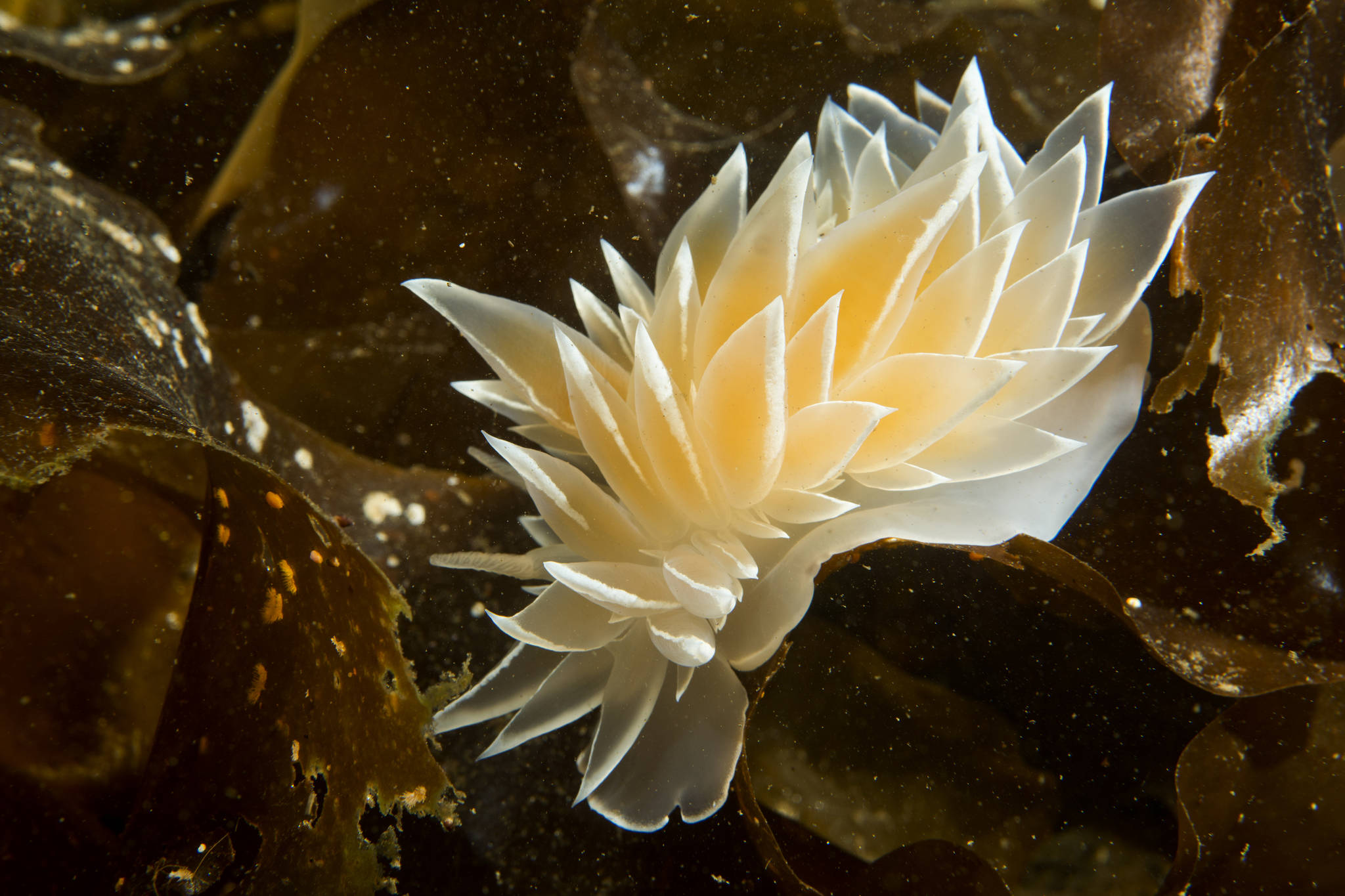
A nudibranch on some bull kelp. (Art Sutch | Courtesy Photo)
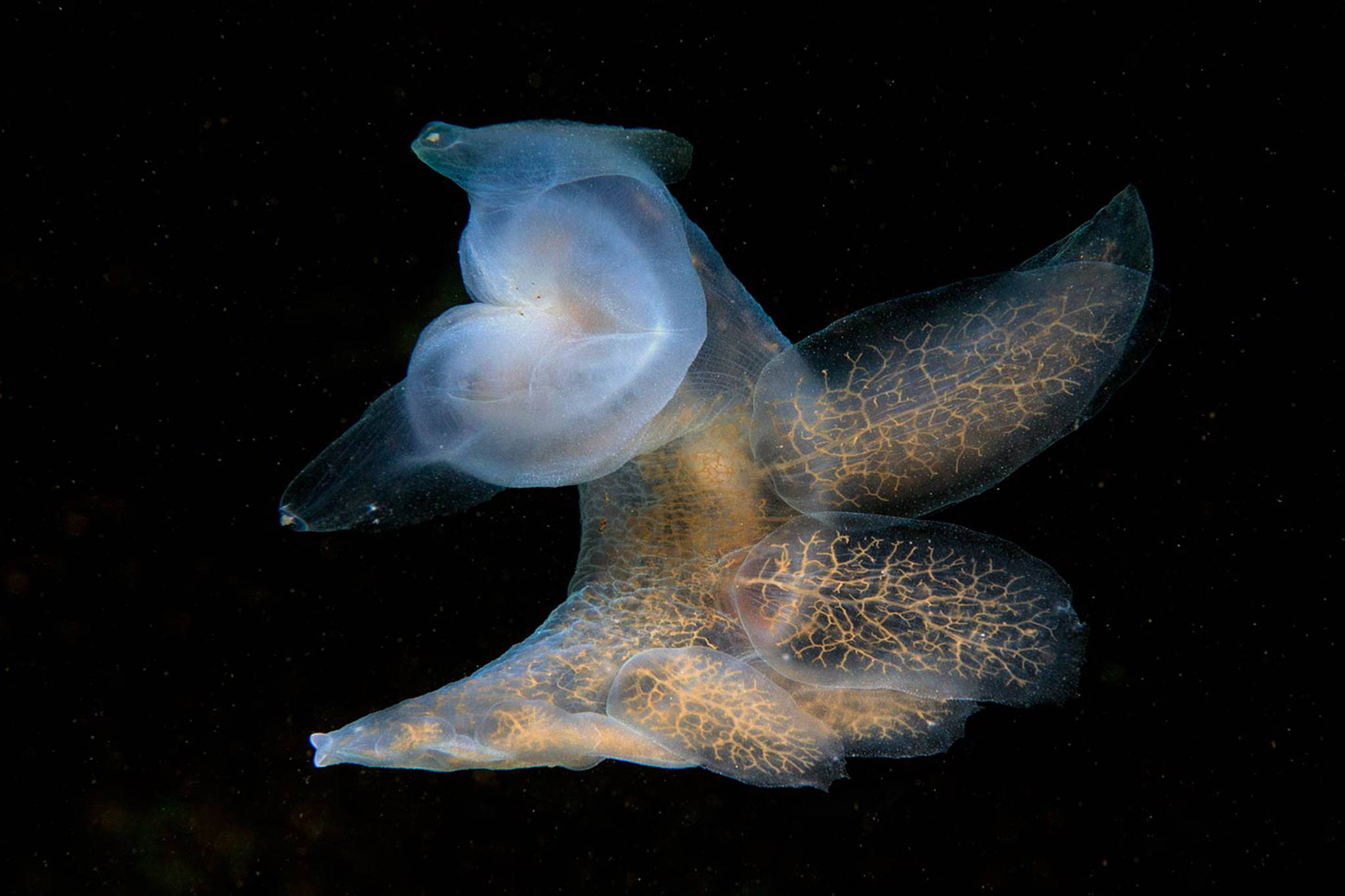
A nudibranch floats in the water column. (Art Sutch | Courtesy Photo)
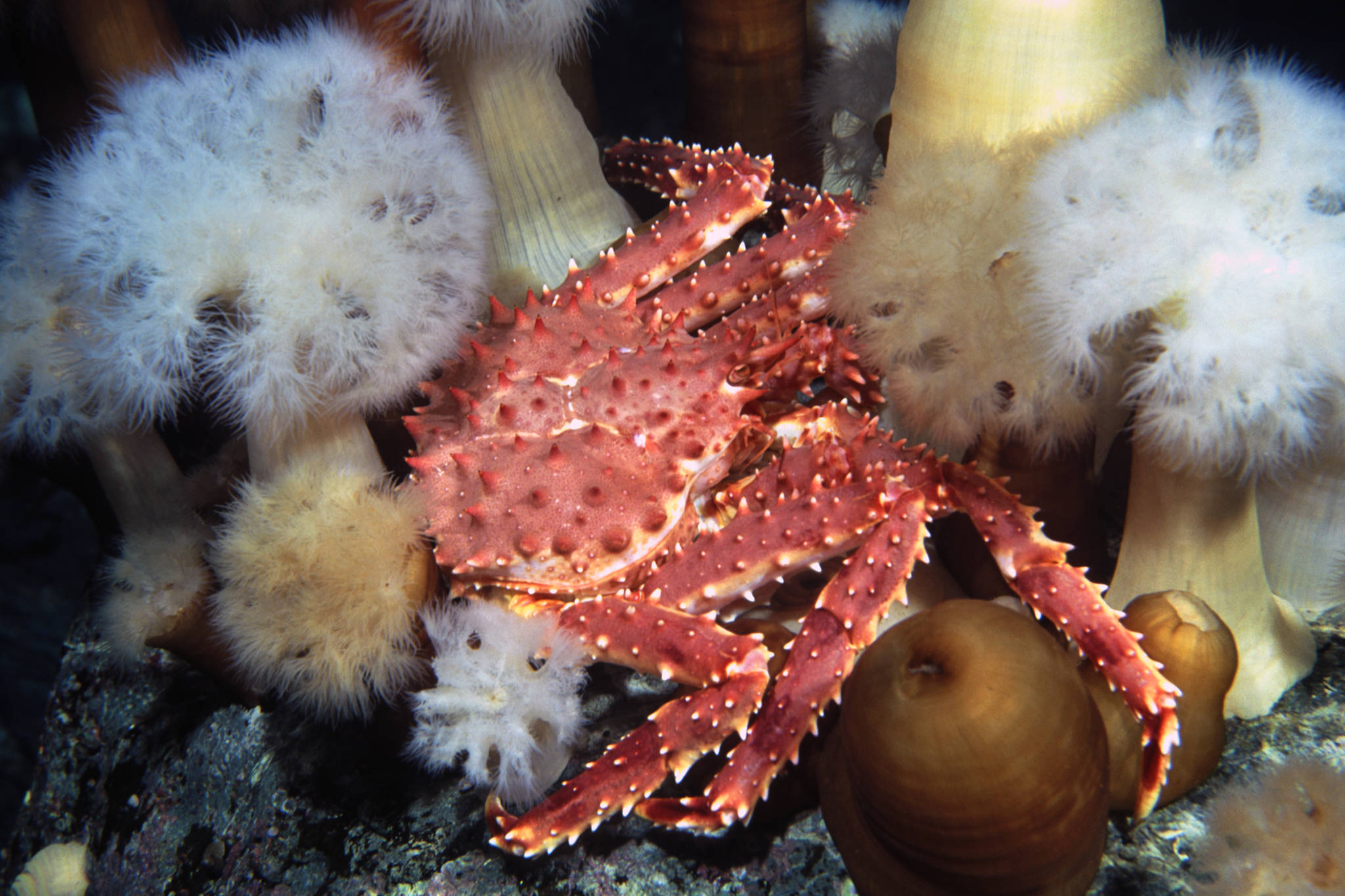
A juvenile crab hides from predators in a group of anemones. (Art Sutch | Courtesy Photo)
