
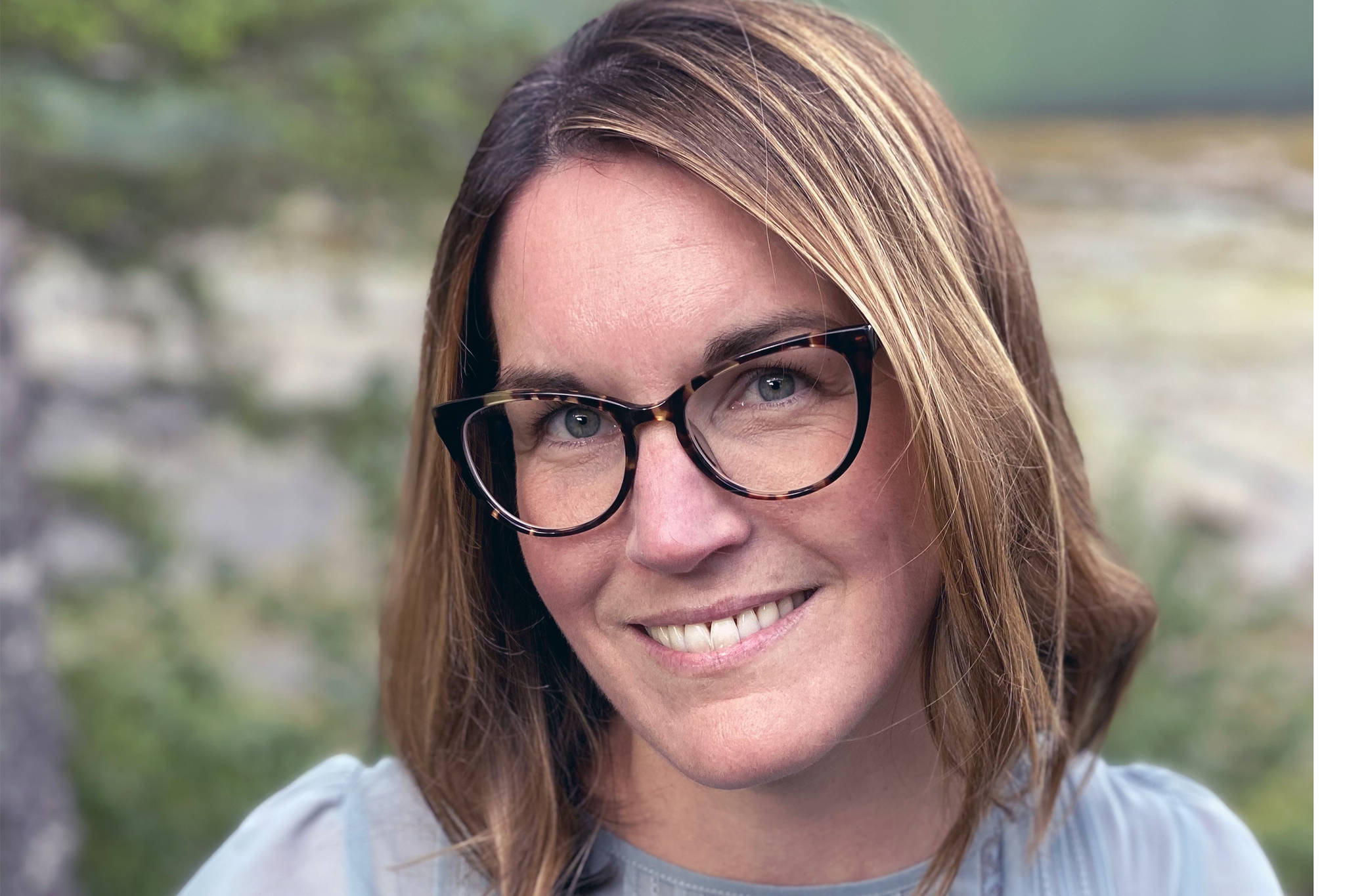
Ahead of the Oct. 5 municipal election, the Empire is also partnering with the League of Women Voters, a nonpartisan organization that does not endorse parties nor candidates. Candidate bios and answers to six questions that the league developed will appear online as well as in editions of the Empire. School board candidates Thomas Buzard and Wiljordon V. Sangster did not respond to multiple messages seeking responses to the league’s questionnaire. In cooperation with the Empire and KTOO, the League will hold a virtual candidate forum at 7 p.m. on Sept. 8. This biography and questionnaire is for Juneau School District Board of Education candidate Elizabeth Siddon.
• Name: Elizabeth (Ebett) Siddon
• Date and place of birth: March 24, 1978
• Length of residency in Alaska and Juneau: 19 years (all in Juneau)
• Education: Mt. Lebanon High School (Pittsburgh, PA; 1996); B.S. in Marine and Freshwater Biology from the University of New Hampshire (2000);M.S. in Fisheries from the University of Alaska Fairbanks (2005); PhD in Fisheries from the University of Alaska Fairbanks (2013)
• Occupation: Research Fisheries Biologist (NOAA-Alaska Fisheries Science Center)
• Family: Chris,husband; Luke, 7 -year-old son
• Community service:
I have served on Juneau’s Board of Education since 2018, and been board president since 2020. In 2017, I became the statewide parent representative to the Alaska Early Childhood Coordinating Council, and I have served on the Governor’s Council on Disabilities and Special Education’s Early Intervention Committee since 2015.
• Other experience:
I co-founded SouthEast Exchange, a group of teachers and community members that help create real-life connections and bring place-based science experiences to Juneau classrooms. I teach an undergraduate course on ecosystem research at the Shoals Marine Laboratory (operated by the University of New Hampshire and Cornell University) each summer.
[Siddon sets sights on second term]
School Board Candidates’ Questions
• What interventions do you support to help students who may have fallen behind during the pandemic?
I support both academic and social and emotional interventions for students. Recovering from the academic losses that students experienced as a result of distance learning will take time and the needs will look different at different grades and for each student. For example, elementary students may need access to additional reading or math supports while high school students may need credit recovery opportunities. I support continuing summer school next summer as well as interim options like Saturday School. Because we also know that students’ social and emotional learning is foundational to their academic successes, I also support interventions such as counseling supports and family engagement opportunities.
• What evidence-based instructional practices used by the district do you believe are most effective? If you would suggest changes, what would they be?
Project-based learning is an effective evidence-based instructional practice, where students learn by actively engaging in real-world and personally meaningful projects. Project-based learning facilitates collaboration and helps prepare students for real-world scenarios. Another example is arts integration and the inclusion of the arts (e.g., humanities, language arts, visual arts) into STEM (Science, Technology, Engineering, and Math) curriculum, which helps students connect with classroom lessons. One area of recognized need is in reading, and the District has hired new elementary Reading Specialists. I believe we need additional and innovative ideas and targeted interventions in order to move the needle and improve young students’ reading success.
• What role, if any, do you see for pre-K education to help improve student achievement?
The majority of parents in our community need to work to support their families, so I support high quality early care and learning programs as well as community-wide efforts to improve access, affordability, and quality of childcare in Juneau. Learning begins well before a child enters Kindergarten. Investments in pre-K education will improve kindergarten readiness and have positive impacts on the entire K-12 system. Through my experience on the Governor’s Council for Special Education and Disabilities’ Early Intervention Committee, I have had the unique opportunity to learn about adverse childhood experiences (ACES), impacts of high quality early care, and the importance of early interventions that lead to improved outcomes for children.
• What curriculum modifications do you support to integrate an accurate history of Alaskan Native and other minorities’ roles/contributions in/to Alaska in furthering the district’s strategic objectives for achieving equity?
In 2020, when I was serving as Vice President of the Board, the Juneau School Board proposed a resolution, which was ultimately adopted by the statewide Association of Alaska School Boards, supporting the production of a textbook on the history of Alaska, co-authored by western and Alaska Native scholars, for statewide use in public schools. I support teaching both an accurate history that presents the western and Alaska Native perspectives on an equal footing and place-based history, where all students share an understanding of the events that shaped Alaska’s diverse cultures. With this mutual understanding, we can progress towards the District’s equity goals.
• What are three strengths of which our District should be proud?
1. Teachers and staff. COVID and distance-learning turned K-12 education upside-down overnight. When all public schools closed on Friday, March 13, 2020, the Food Services program began providing meals to all children on Monday morning. Teachers and staff quickly pivoted to deliver education via Zoom and learn a new suite of skills.
2. Language revitalization efforts including the Tlingit Culture, Language, and Literacy Program. These place-based programs celebrate the Tlingit culture and language, while sharing the cultural values with all students in the school and District.
3. Community partnerships. Our schools benefit from broad community supports that strengthening the educational and career opportunities for students. Partnerships like SouthEast Exchange leverage community expertise to enhance classroom experiences.
• How do you feel your experiences in life have prepared you for this position? Give examples of qualities you possess and ways in which you would use them to serve as a School Board member.
I bring both professional and personal experiences to the School Board. Professionally, I have a PhD in Fisheries from the University of Alaska Fairbanks and am committed to supporting JSD students through outreach education. I co-founded SouthEast Exchange, a group of teachers and community members working to bring place-based science experiences into classrooms. I teach an undergraduate course in ecosystem research at the Shoals Marine Lab each summer.
Personally, I have a 2nd grader in the Juneau School District. I believe in public education and that with education comes opportunities for our students. I serve as a statewide parent representative to the Alaska Early Childhood Coordinating Council and to the Governor’s Council on Disabilities and Special Education’s Early Intervention Committee. I am accessible and interested in hearing from community members, parents, students, and staff. I have a lot of energy and cannot think of a better place to make effective change for our community than in our schools!
