
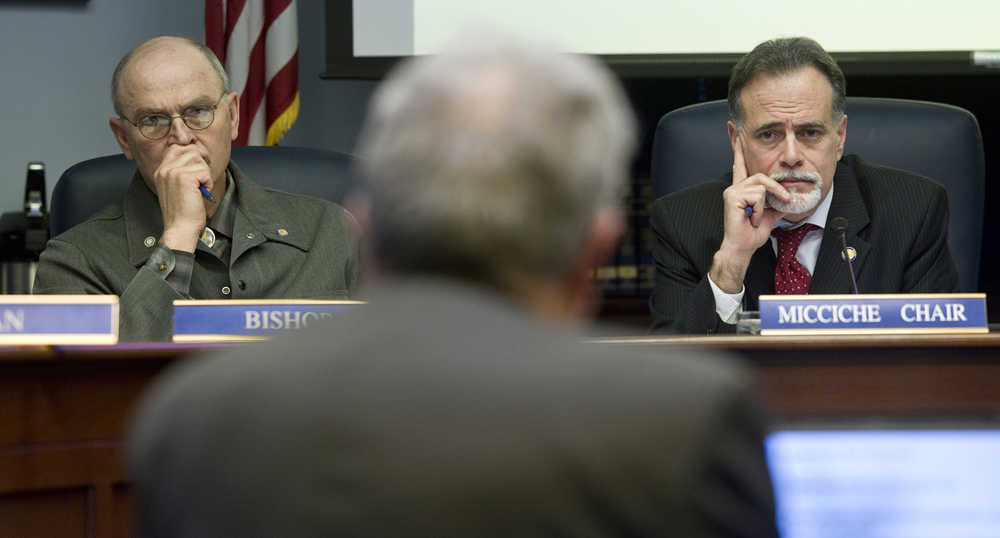
The first component of Gov. Bill Walker’s plan to balance the state budget, a doubling of the state’s gasoline tax, received a quiet hearing from a joint session of the Alaska Senate’s transportation committee and transportation finance subcommittee on Tuesday afternoon.
The bill, which would raise the state’s gasoline tax from 8 cents to 16 cents per gallon, and more than double the tax on jet fuel, was received with far more aplomb than a bill last session that raised the gas tax by less than one cent. That measure, intended to fund spill response and prevention, was the subject of contentious debate and discussion before passing into law by just one vote.
This year, things are different. Oil is less than half the price it was during the last Legislative session, and lawmakers appear more willing to discuss tax increases.
“No one likes the idea,” said Sen. Peter Micciche, R-Soldotna and chairman of the Senate Transportation Committee. “We spend our careers trying to keep the cost of being an Alaskan low … and we suddenly find ourselves facing some very challenging times.”
Even doubling the state’s gasoline taxes won’t make much of an impact. The tax increases called for in Senate Bill 132 will raise about $49 million per year. At current oil prices, the state’s deficit is between $3.5 billion and $4 billion per year.
Gov. Bill Walker, however, has promised to spread the impact of tax increases, and his proposal to do that includes tax increases on alcohol and tobacco as well as gasoline. There’s also a proposed state income tax, hundreds of millions in budget cuts, and a plan to use earnings from the Alaska Permanent Fund.
Speaking about the bill, deputy revenue commissioner Jerry Burnett said the tax increases within SB 132 will be proportionally highest on airlines and plane owners. Aviation fuel taxes will rise from 4.7 cents per gallon to 10 cents per gallon. Jet fuel taxes will rise from 3.2 cents per gallon to 10 cents per gallon.
Burnett said the state’s aviation advisory board requested a faster rise in fuel taxes to forestall increases in landing fees levied by the state at airports it owns. Landing fees typically are levied against large aircraft, not small, privately owned ones, and Burnett noted after the meeting that not every airport imposes landing fees.
Under the bill, the tax on marine fuel would rise from 5 cents per gallon to 10 cents per gallon, and the tax on gasoline at the pump would rise from 8 cents per gallon to 16 cents per gallon.
Burnett noted that the state’s gas tax is the lowest in the nation, and it hasn’t been raised since 1970. Even after the tax increase, the state would be below the national average (20.17 cents per gallon) for gas taxes.
The state also intends to increase the tax levied on “off-road” vehicles. Anyone who buys gasoline to power a four-wheeler, mining equipment, or a chain saw can apply to the state for a credit that drops the effective rate to 2 cents per gallon. Under SB 132, the effective rate would be 4 cents per gallon.
Burnett estimated that a person who buys 1,000 gallons of gasoline for their car per year should expect to pay about $80 more per year. Burnett said he buys gasoline for his car (which has a 15-gallon tank) about 80 times per year. He expects to spend about $96 more per year under the proposal.
He added that the tax will fall on tourists as well as state residents, and anyone driving an RV across the state during the summer will be helping solve the deficit.
“Anyone who is using the highways and is buying fuel in Alaska … is going to be contributing to the state’s budget and indirectly or directly helping to offset costs,” he said.
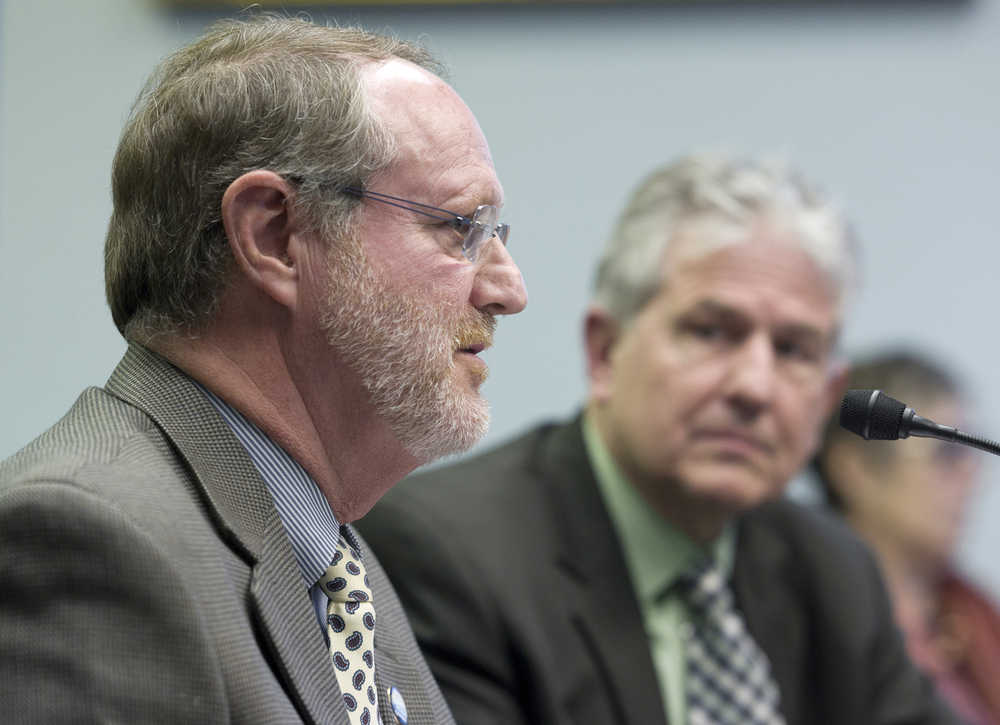
Steven Hatter, Deputy Commissioner for the Department of Transportation and Public Facilities, left, and Jerry Burnett, Deputy Commissioner of the Department of Revenue, speak to SB 132 in front of Senate Transportation Committee at the Capitol on Tuesday.
