
The state says it’s almost caught up with the backlog of food stamp applications, just as legal challenges from the courts and federal government are heating up again, but “food security advocates” said this week that’s just one element of addressing a problem continuing to see greater need and fewer resources.
In addition to the food stamp backlog that’s affected many tens of thousands of Alaskans during the past 18 months, donations from corporate and individual donors are declining, as is food provided by federal programs, said Ron Meehan, director of government affairs for the Food Bank of Alaska, during a presentation Monday at the Alaska State Capitol.
“Unfortunately the anti-hunger network has seen really unprecedented levels of need over these last three years,” he said. “And this has been compounded by a number of ongoing challenges.”
Nearly 50 officials from statewide food banks and other similar entities are visiting the Capitol this week to meet with lawmakers about legislation and funding providing assistance.
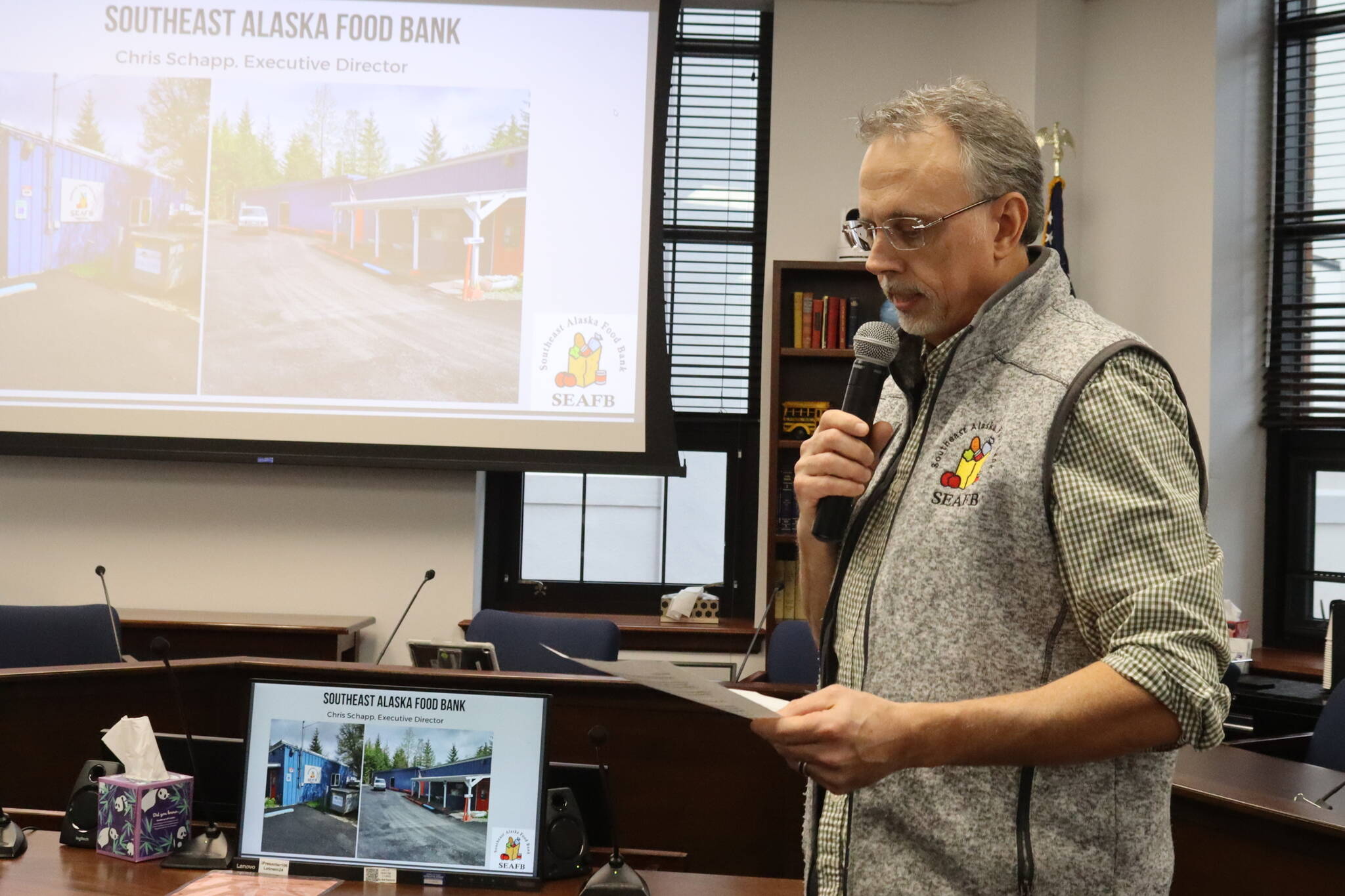
The need in Juneau is evident from demand at the Southeast Alaska Food Bank, which since it was founded during the 1990s has seen annual distribution increase steadily from 50,000 pounds during the early 2000s to about 300,000 pounds in 2016, said Chris Schapp, the food bank’s executive director.
“Last year we were just about 18,000 pounds shy of 600,000 pounds, which was obviously a record for our history,” he said.
The drop in food donations is particularly due to corporate grocers “as they’ve tightened up their systems and been able to better predict how much food they’re able to sell,” Meehan said.
“Obviously, it’s good that they’re not wasting as much,” he said. “But it does come as it ultimately means there’s less food in our network to distribute to people that need it.”
Schapp said the Juneau food bank is trying to adjust by altering its operation that used to simply place available food on tables during its weekly food pantry and asking people to “take what you need, but try to leave some for everybody else as well.”
“Since then we moved to a model of we’re actually doing a fulfillment system inside the food bank,” he said. “Now we are trying to be a little more focused on the nutrition and health, and make sure everybody’s getting a fair share. And we’re actually counting the numbers of people, as far as their family units. We’re counting adults, we’re counting children.”
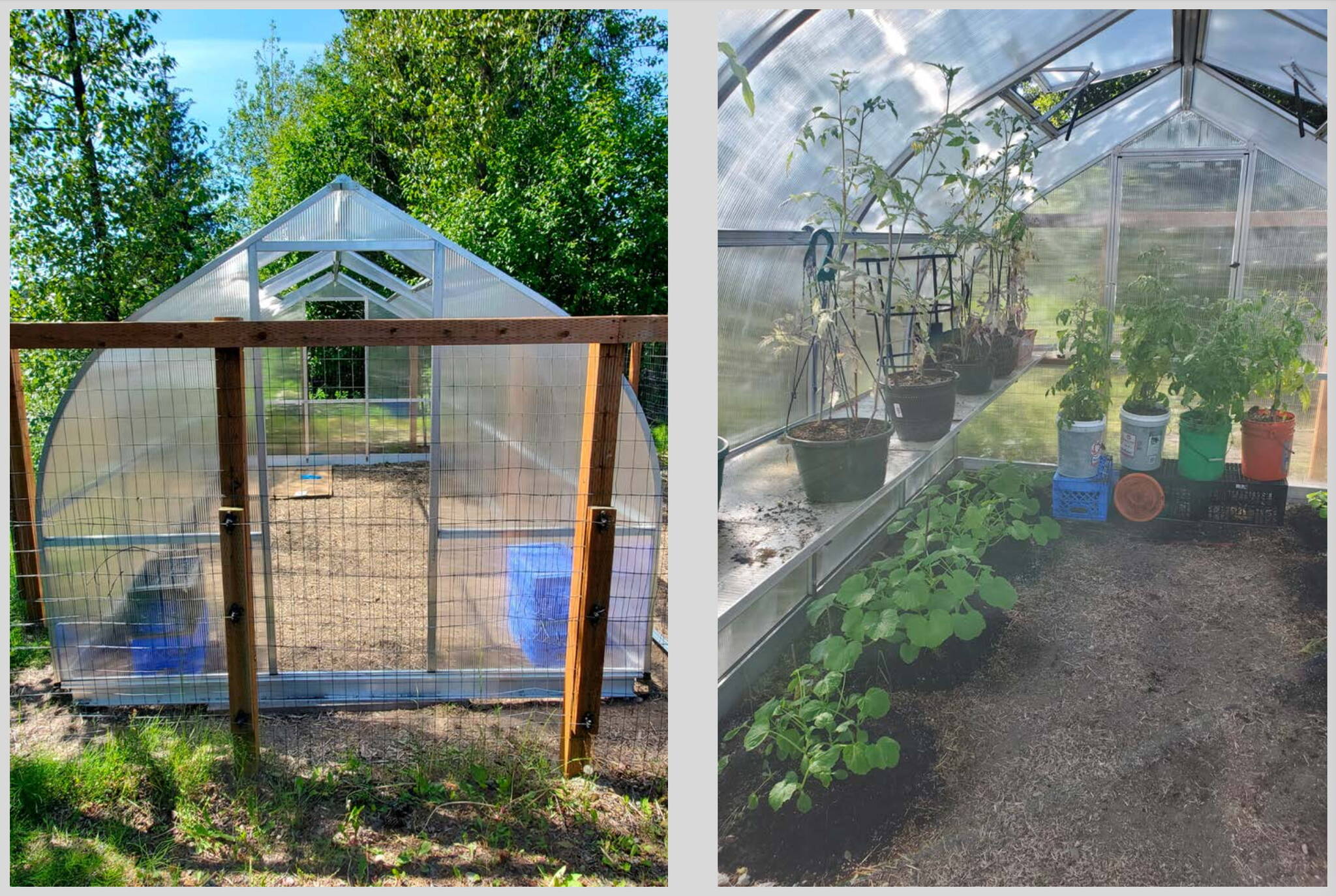
A greenhouse operated by the Southeast Alaska Food Bank was purchased with a state grant, with the organization hoping to buy two more greenhouses with funding from the Food Bank of Alaska. (Photos by the Southeast Alaska Food Bank)
Another local-level measure that is helping is a greenhouse built with a state Department of Natural Resources grant, plus a grant from the Food Bank of Alaska to build two more greenhouses, Schapp said.
“We have a dedicated group of volunteers who love to garden, and they’re going to come out and try to grow as much as we can,” he said. “So being a little more healthy, with local food that lasts longer. Obviously anyone in Juneau knows how things go bad so fast when they come up on the barge.”
The Capitol visit is part of an effort to pursue a number of policy actions to try to remedy the shortages and causes. One of the most obvious and quickest fixes cited by food policy advocates is money, as occurred last year with a $1.68 million state allocation to four regional food banks with the intention they would buy bulk food to distribute throughout their respective regions.
“It moved the needle and made a significant difference because we had partners throughout the state,” Meehan said.
The statewide network distributed more than 11 million pounds of food during 2021, when the COVID-19 pandemic was in full force, he said, That dropped to about 6.7 million pounds in 2022, then rose to more than 7.5 million pounds in 2023 with the extra state aid — without which some assistance programs would not have had food available, Meehan said.
Gov Mike Dunleavy, in December when releasing his budget proposal for the coming fiscal year that starts July 1, included $5 million to bolster supplies at the state’s food banks. He also is proposing $8.8 million for 30 additional full-time employees to process applications at the state Division of Public Assistance, which administers the Supplemental Nutrition Assistance Program (SNAP), commonly referred to as food stamps.
However, a more immediate crisis with SNAP benefits is looming due to a Jan. 30 letter from the U.S. Department of Agriculture declaring the state is at risk of losing its federal funding for the program due to “inefficient and ineffective administration.” At issue are interviews the state is required to conduct with applicants to ensure the correct benefits are being received, which the state has been waiving to speed up the process in trying to address the backlog.
The USDA stated that if compliance requirements are not met by this week further steps could occur including withholding of funds.
Another legal challenge facing the state is a lawsuit by 10 Alaska residents against the state Department of Health, the parent agency of the Division of Public Assistance, alleging a failure to provide food stamps within the time required by federal law. U.S. District Judge Sharon Gleason issued a ruling last week that further stays in the case, which the state sought in the hope of resolving the backlog issue, would be “inefficient” and the matter needs to move forward.
The backlog of applications that began in August of 2022 — attributed to a multitude of causes such as staffing shortages to outdated equipment — peaked at more than 14,000 before reportedly largely being resolved by early last fall. However, another set of problems caused the backlog to surge past 12,000 again by early December, which state officials say has been diminishing since due to measures such as a new online application system and reassigning some Department of Health staff to process applications.
“As projected back in December our current backlog is about 4,000 applications,” Tyson Gallagher, Dunleavy’s chief of staff said during a press conference last Wednesday. “And as we stated then we’re projected to be out of that backlog by the end of February.”
• Contact Mark Sabbatini at mark.sabbatini@juneauempire.com or (907) 957-2306.
