
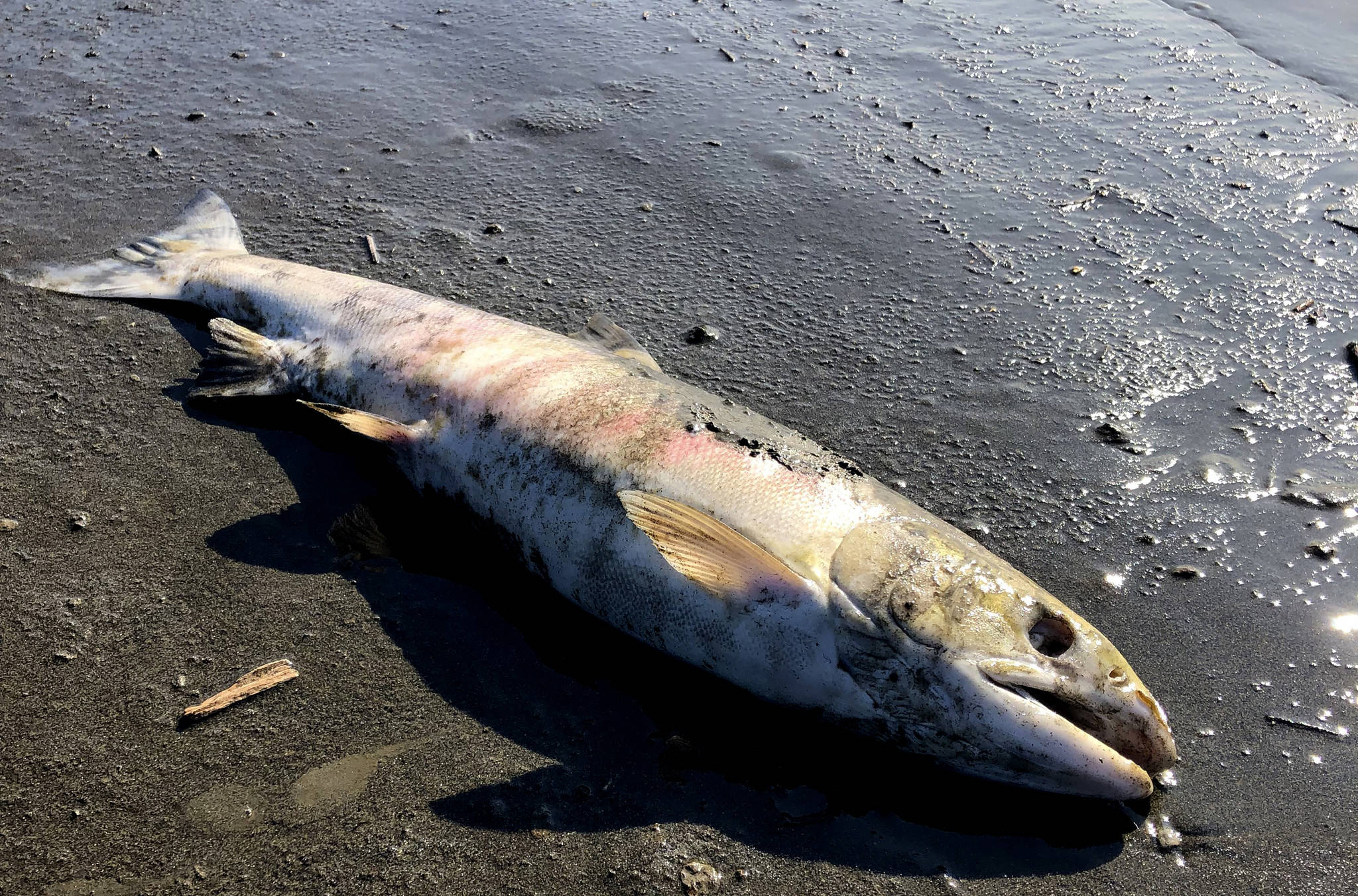
This July 2019 photo provided by Peter Westley shows the carcass of a chum salmon along the shore of the Koyukuk River near Huslia, Alaska, July 2019 was the hottest month ever recorded in the state. Global warming looks like it will be a far bigger problem for the world’s fish species than scientists first thought, since a study led by Dr. Flemming Dahlke released on Thursday, July 2, 2020 shows that when fish are spawning or are embryos they are far more vulnerable to hotter water. (Peter Westley | University of Alaska Fairbanks)

This July 2019 photo provided by Peter Westley shows the carcass of a chum salmon along the shore of the Koyukuk River near Huslia, Alaska, July 2019 was the hottest month ever recorded in the state. Global warming looks like it will be a far bigger problem for the world’s fish species than scientists first thought, since a study led by Dr. Flemming Dahlke released on Thursday, July 2, 2020 shows that when fish are spawning or are embryos they are far more vulnerable to hotter water. (Peter Westley | University of Alaska Fairbanks)

Fish more vulnerable to warming water than first thought

Study shows that when fish are spawning or are embryos they are more vulnerable to hotter water.

By SETH BORENSTEIN

AP Science Writer

Global warming looks like it will be a bigger problem for the world’s fish species than scientists first thought: A new study shows that when fish are spawning or are embryos they are more vulnerable to hotter water.

With medium-level human-caused climate change expected by the end of the century, the world’s oceans, rivers and lakes will be too hot for about 40% of the world’s fish species in the spawning or embryonic life stages, according to a study in Thursday’s journal Science. That means they could go extinct or be forced to change how and where they live and reproduce.

Until now, biologists had just studied adult fish. For adult fish, around 2% to 3% of the species would be in the too-hot zone in the year 2100 with similar projected warming. So using this new approach reveals a previously unknown problem for the future of fish, scientists said.

In a worst-case climate change scenario, which some scientists said is increasingly unlikely, the figure for species in trouble jumps to 60%.

[More wandering bears this year? Tough to say, but calls are up]

These vulnerable times in the life of a fish make this a “bottleneck” in the future health of species, said study co-author Hans-Otto Portner, a marine biologist at the Alfred Wegener Institute in Germany.

A marine heatwave last year, known as a blob, caused large numbers of migrating salmon to die throughout Alaska’s rivers. It also killed off cod eggs, showing what a warmer future might be like, said study lead author Flemming Dahlke, a marine biologist at the institute.

“With spawning fish and embryos most sensitive to warming waters, it means fish populations won’t be able to replace themselves,” said Rutgers University ecologist Malin Pinsky, who wasn’t part of the study but praised it. “Without reproduction and offspring, we have no fish, no fishing and no fish on our plates.”
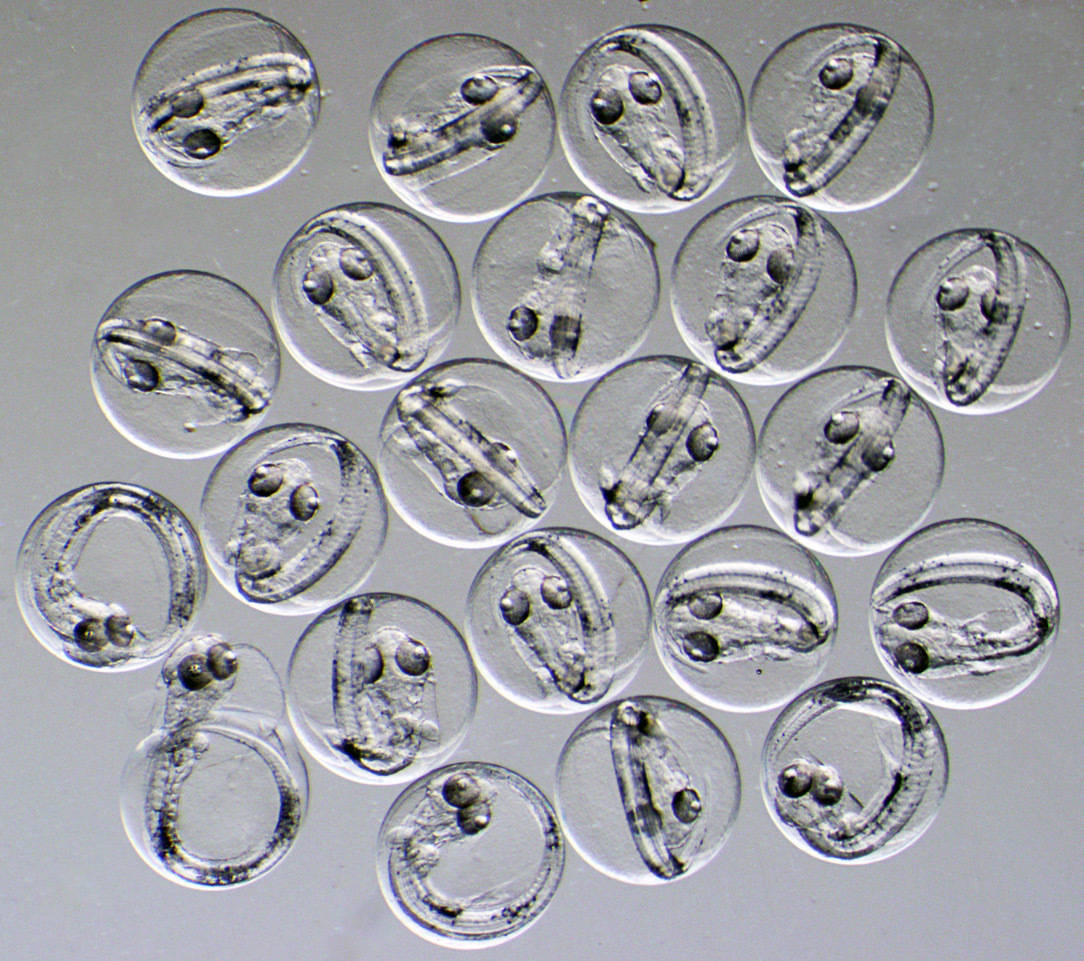
This 2014 microscope photo provided by Dr. F. Dahlke shows 1.5 mm diameter eggs of Atlantic cod (Gadus morhua). Global warming looks like it will be a far bigger problem for the world’s fish species than scientists first thought, since a study led by Dahlke released on Thursday, July 2, 2020 shows that when fish are spawning or are embryos they are far more vulnerable to hotter water. (Dr. F. Dahlke)

This 2014 microscope photo provided by Dr. F. Dahlke shows 1.5 mm diameter eggs of Atlantic cod (Gadus morhua). Global warming looks like it will be a far bigger problem for the world’s fish species than scientists first thought, since a study led by Dahlke released on Thursday, July 2, 2020 shows that when fish are spawning or are embryos they are far more vulnerable to hotter water. (Dr. F. Dahlke)

In studying 694 species, Dahlke and Portner found some of the fish likely to be hardest hit by this phenomenon include Alaska pollock — the biggest fishery in the United States and the source of fast food fillets — and well-known species such as sockeye salmon, brown trout, bonito, barracuda and swordfish.

“The more we allow temperature to change … the more we will lose the natural foundation of human life, including food from the sea,” Portner said.

When it gets too warm for spawning, the species could still possibly move to someplace cooler or spawn at another time, but that’s not easy, Dahlke said. “This could mean a lot of problems to many species.”

This is an Associated Press report.

More in News

The emergency cold-weather warming shelter is seen in Thane on Thursday, April 10, 2025. (Jasz Garrett / Juneau Empire file photo)
Man charged for alleged rape at warming shelter

Staff have increased the frequency of safety rounds, and are discussing potential policy changes.

Photo by James Brooks/Alaska Beacon 
Alaska Gov. Mike Dunleavy speaks during a news conference in Juneau on Thursday, April 27, 2023. To his side is a screen displaying significant budget deficits and exhausted savings accounts if oil prices perform as expected.
Disasters, dividends and deficit: Alaska governor unveils first-draft state budget

In his final year, Gov. Dunleavy again proposes to spend from savings in order to pay a larger Permanent Fund dividend

Eaglecrest Ski Area as seen in a photo posted to the hill’s Facebook page on Tuesday, Dec. 11, 2025. (Eaglecrest Ski Area photo)
Eaglecrest boots up for a limitted opening this weekend

15 degree highs usher in the hill’s 50th season.

Sen. Jesse Bjorkman, R-Nikiski, speaks Wednesday, April 23, 2025, on the floor of the Alaska Senate. (Photo by James Brooks/Alaska Beacon)
State senators express skepticism about proposed Juneau ferry terminal backed by Dunleavy

In a Friday hearing, members of the Alaska Senate spoke critically about… Continue reading

SouthEast Alaska Regional Health Consortium is one of the primary health care providers in Juneau, accepting most major public and private insurance plans. (Mari Kanagy / Juneau Empire)
Marketplace health premiums set to rise in 2026

Here’s what you need to know about how coverage is changing, and for whom.

Capital City Fire/Rescue completes last season’s ice break rescue training at the float pond near Juneau International Airport. (photo courtesy of Capital City Fire/Rescue)
On thin ice: Fire department responds to season’s first rescue at Mendenhall Lake

This week’s single digit temperatures have prompted dangerous ice ventures.

Brenda Schwartz-Yeager gestures to her artwork on display at Annie Kaill’s Gallery Gifts and Framing during the 2025 Gallery Walk on Friday, Dec. 5. (Mari Kanagy / Juneau Empire)
Alaska artist splashes nautical charts with sea life

Gallery Walk draws crowds to downtown studios and shops.

A totem pole, one of 13 on downtown’s Totem Pole Trail in Juneau, Alaska, Nov. 27, 2024. (Christopher S. Miller/The New York Times)

Most Read