
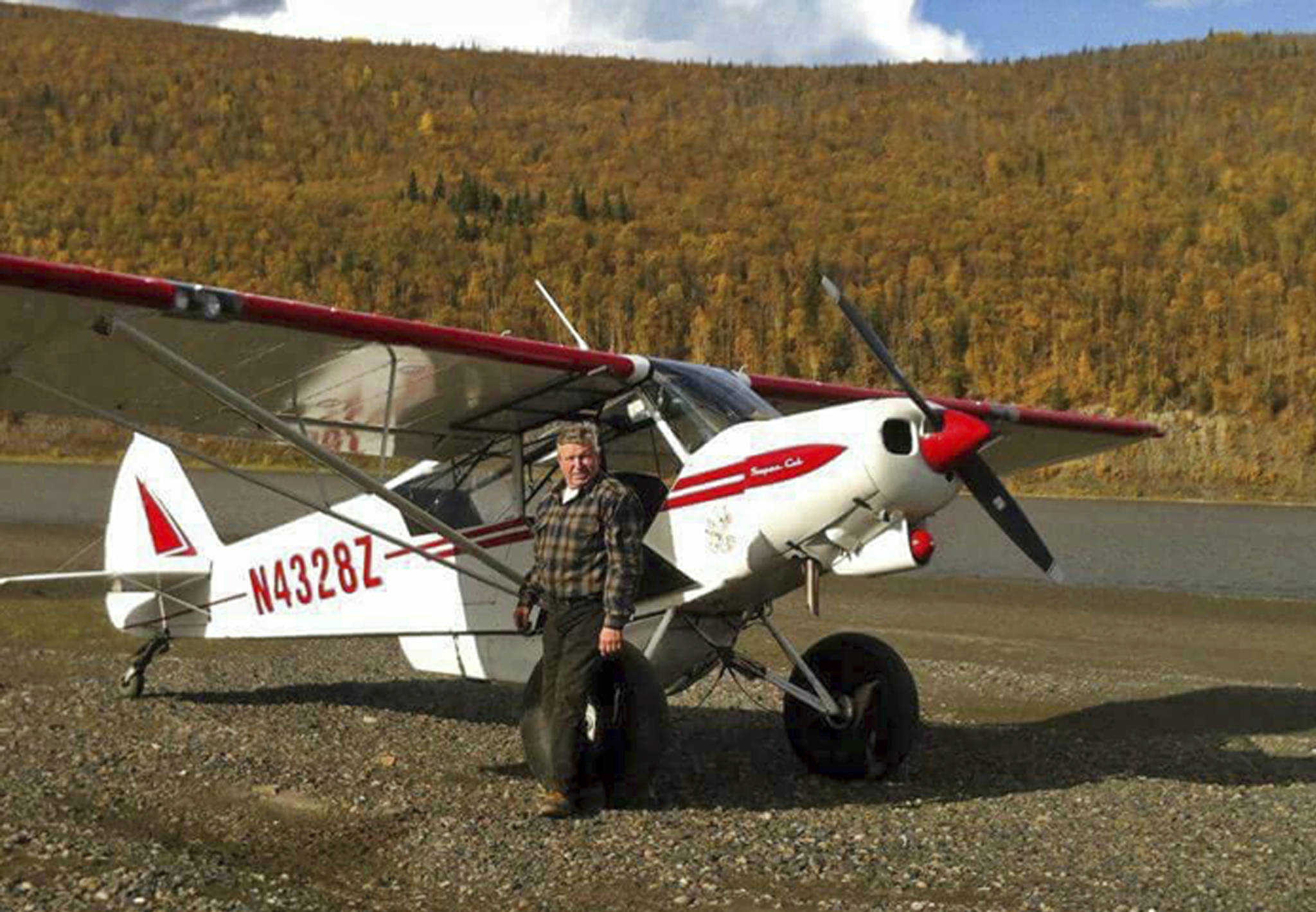
This 2015 photo provided by Rebecca Wilmarth shows her father, Dick Wilmarth, near Georgetown, Alaska. Dick Wilmarth, who was the first-ever winner of the 1,000-mile Iditarod Trail Sled Dog Race in 1973, died March 21, 2018, at the age of 75. (Rebecca Wilmarth)

This 2015 photo provided by Rebecca Wilmarth shows her father, Dick Wilmarth, near Georgetown, Alaska. Dick Wilmarth, who was the first-ever winner of the 1,000-mile Iditarod Trail Sled Dog Race in 1973, died March 21, 2018, at the age of 75. (Rebecca Wilmarth)

First winner of Iditarod race dies at 75

  • By MARK THIESSEN
  • Tuesday, March 27, 2018 10:42am
  • News

ANCHORAGE — Dick Wilmarth, who won the initial Iditarod Trail Sled Dog Race nearly a half century ago, has died. He was 75.

Wilmarth died Wednesday after a battle with cancer, according to his daughter Rebecca Wilmarth.

“He was our first champion, and he will be dearly missed,” Iditarod spokesman Chas St. George said.

After winning the first Iditarod in 1973, he never took part in the race again.

He was once asked why he never raced again. “His response was very quick, and with a big smile, he said, ‘Cause I won,’” St. George said.

“He moved on to doing new things and different things,” his daughter added. “He liked to stay busy, and I think he figured one time was enough for him.”

Wilmarth was a 17-year-old Idaho logger who came to Alaska with his older brother, Larry, to fish out of Kodiak Island, Rebecca Wilmarth said.

“Somebody recommended he head out west, there’s a lot of undiscovered territory out there,” she said.

He settled in Red Devil, Alaska, located about 250 miles (402 kilometers) west of Anchorage, where worked for a mine and learned how to fly planes. He also did some trapping as a younger man, and became interested in mushing dogs.

Wilmarth was 29 when he and his friend, Bob Vanderpool, first heard about plans for a 1,000-mile (1,609-kilometer) sled dog race from Anchorage to Nome.

“We thought that would be a pretty neat thing,” Wilmarth told The Associated Press in 2001 while he sat in a tent in the ghost town of Iditarod, Alaska, welcoming mushers in that year’s race.

He put a dog team together a few months before the race, swapping goods for dogs in Alaska Native villages along the Kuskokwim River. He traded a .22-caliber rifle for a snowmobile, and then swapped that for five of his 12 dogs on the team.

Conditions for the first Iditarod in 1973 were nothing like they are today. He said shortly after the race began, there was no trail at all so he and sprint dog musher George Attla at one point put on snowshoes and cleared a path for the dogs.

The 1973 race began with 34 teams, and more than a third of them never finished the race.

Along the trail, there was almost a mass exodus when the temperature dropped to minus 50 degrees (-45.56 Celsius). Some other mushers came to him in the middle of the night to talk about turning back. They wanted the decision to be unanimous, he said.

Wilmarth didn’t even let them finish: “I told them, ‘I’m going to go to Nome.’”

Today, mushers pack food for their dogs and themselves, and it’s flown to checkpoints along the trail.

That didn’t happen during the first Iditarod, and Wilmarth told the AP that he got pretty hungry on the way to Nome.

To fight off hunger, he snared beaver for food and tried to steal fish from a trap, but nearly fell into the Yukon River instead.

He also didn’t get any help from villagers on the river.

“Those guys on the Yukon wouldn’t give me any food. They were rooting for their own guys,” he said.

“I was in better shape when I got to Nome,” he said.

He pocketed $12,000 for being the first musher win the rugged race across Alaska. It took him 20 days and 49 minutes, more than twice as long as Iditarod mushers today make the trek across the Alaska wilderness.

“It was a little bit of a different deal back then,” Wilmarth said. “Things were a little rougher.”

More in News

High school culinary arts teacher and former Juneau Education Association President Chris Heidemann testifies before the Board of Education on Oct. 28. (Mari Kanagy/Juneau Empire).
Juneau School District initiates arbitration. The teacher’s union disagrees

This step comes after months of collective bargaining.

Mari Kanagy/Juneau Empire
Local artist Johanna Griggs looks at “The Ocean Mirror,” her favorite piece from her exhibit “Landscapes of Southeast Alaska,” on display at the Juneau Arts and Culture Center.
Juneau painter explores local color and reflection

The exhibit display at the Juneau Arts and Culture Center through November.

Juneau International Airport stands on Shell Simmons Drive. (Clarise Larson / Juneau Empire File)
Juneau flights not yet affected by FAA restrictions

Although local departures are unaffected, connecting flights from Sea-Tac are at risk.

Choosing to shop local isn’t just convenient – it keeps money in the community, sustains the arts and turns errands into encounters with neighbors and friends. (Photo credit: Christopher S. Miller/The New York Times)
Finding the magic of the holidays close to home in Juneau

Discover how handmade treasures, live arts and hometown traditions keep Juneau’s festive spirit alive

The entrance to the Anchorage Correctional Complex is seen on Aug. 29, 2022. (Photo by Yereth Rosen/Alaska Beacon)
Alaska parole rates are among the lowest in the nation. Advocates want to know why.

At its annual public meeting, the Alaska Board of Parole offered little explanation, but advocates want to know more about their criteria and say more transparency will help reduce recidivism

“I voted” stickers are seen on display in the headquarters offices of the Alaska Division of Elections in Juneau on Tuesday, Nov. 12, 2024. (Photo by James Brooks/Alaska Beacon)
Alaska Division of Elections begins reviewing petition to repeal election reform law

Based on state law and the number of people who voted in the 2024 statewide election, repeal supporters needed to collect signatures from at least 34,099 registered voters

Members of Juneau Education Association and supporters of the union dress in green at the Board of Education Meeting on Oct. 28, 2025. (Mari Kanagy/Juneau Empire)
Teacher’s union speaks on lapsed contract as board members shuffle

Juneau Educators Association’s contract expired at the end of July.

“Tide Pools” is part of the “Landscapes of Southeast Alaska” exhibit by Johanna Griggs, presented by Juneau Arts & Humanities Council. The exhibit will open at the Juneau Arts and Culture Center on Friday, Nov. 7 2025. (courtesy Juneau Arts and Humanities Council)
November’s First Friday: Here’s what to see

Juneau Arts & Humanities Council announces community events at attend Nov. 7.

Most Read