
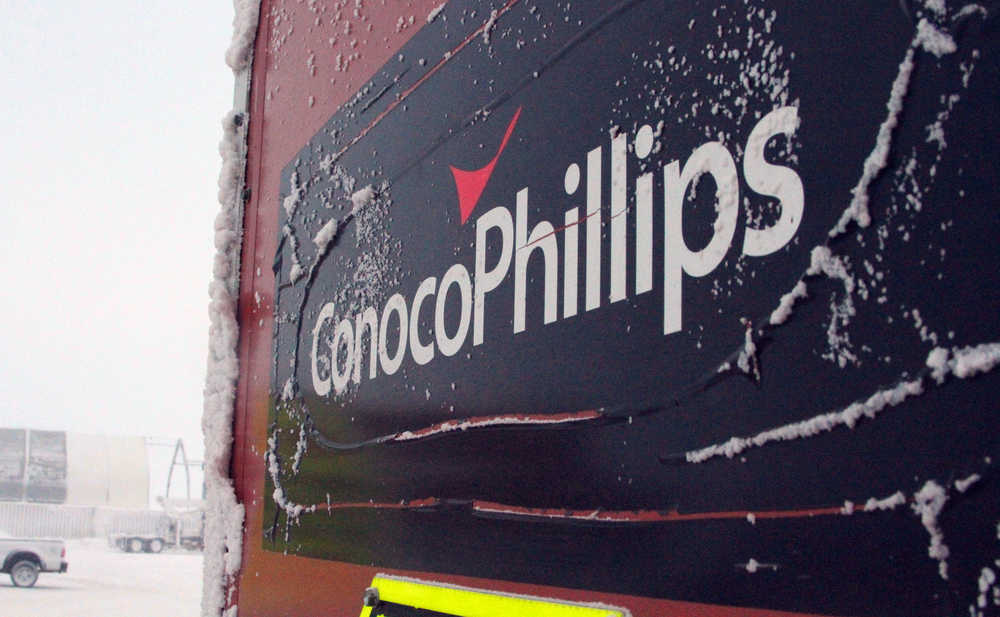
NUIQSUT — Rising from the edgeless, wind-scoured, snow-covered tundra on Alaska’s North Slope lies a million-pound drilling rig pulling the first commercial oil from a reserve set aside nearly a century ago.
ConocoPhillips is the first oil company to draw crude from the National Petroleum Reserve-Alaska, an area the size of Indiana which President Warren G. Harding dedicated as an emergency oil supply for the U.S. Navy in 1923.
Getting to this point took compromises with Alaska Natives while keeping environmental concerns in mind. The Bureau of Land Management, which controls the reserve, in 2013 identified 12 million acres that could be available for development while setting aside 11 million acres to protect wild animals and grazing lands.
The drilling rig first began pulling up oil in October, and at peak production will produce 16,000 barrels a day from the Colville-Delta 5 field, or as it’s more commonly known, CD5. It also will serve as a launch pad for another nearby fields in Alaska’s Arctic.
The Colville-Delta 5 field itself is an extension of the ConocoPhillips’ Alpine field, located about five miles to the east.
“We’ve spent more than a dozen years trying to achieve the permits to do the development, to complete the development,” Jim Brodie, the capital projects manager for ConocoPhillips in the reserve, said of the $1 billion project earlier this month after reporters toured the North Slope facility last month. “It’s a sizable investment.”
The project included a 6-mile gravel road, four bridges over channels of the Colville River, including one 1,400 foot-expanse, 32 miles of pipelines, and miles of communications and electrical infrastructure that tie the field back to the main Alpine facilities. Oil that is being brought up goes back to Alpine for processing, and then is sent 800 miles down the trans-Alaska pipeline for shipment out of Valdez.
The oil is being drilled on surface land which is owned by Kuukpik Corp., an Alaska Native village corporation for the nearby community of Nuiqsut, located about 25 miles south of the Arctic Ocean, or 625 miles north of Anchorage.
Village residents who live a subsistence lifestyle objected to the original plans for one of the bridges over the Colville River to the oilfield, worried that it might interfere with fishing access.
Brodie said ConocoPhillips pulled its permit package to come up with an alternate plan, working “with the community and the elders and established a new location for the Nigliq Channel Bridge, which caused a reroute of the road and it was at considerable expense to ConocoPhillips but at the same time we got the support from the community and it enabled the project to move forward.”
The Inupiat village agreed with the new plan and now welcome the financial opportunities that oil brings to the native community in terms of taxes and jobs.
“We worked with ConocoPhillips to make sure that CD5 is developed responsibly and make sure that it’s a win-win,” said Isaac Nukapigak, president of Kuukpik Corp.
Development in the petroleum reserve hasn’t drawn the usual protests from environmental groups.
Nicole Whittington-Evans, Alaska regional director for The Wilderness Society, said her group has been mostly concerned with how the development will proceed: Will it involve roads or not? How far westward will the sprawl continue?
“Those are the types of things that we’re concerned about right now, and we have focused on trying to ensure that the least environmentally damaging developments move forward,” she said.
ConocoPhillips continues preparations to drill in the more ingloriously named Greater Mooses Tooth 1 despite oil prices being in the tank. First oil from there could be as soon as December 2018, and could produce 30,000 barrels a day at peak production.
Steve Thatcher, ConocoPhillips’ Alpine operations manager, said oil prices are cyclical and will rebound.
“For these kinds of projects, if we can invest in them now, it makes a lot of sense for when the oil price is the other extreme,” he said.
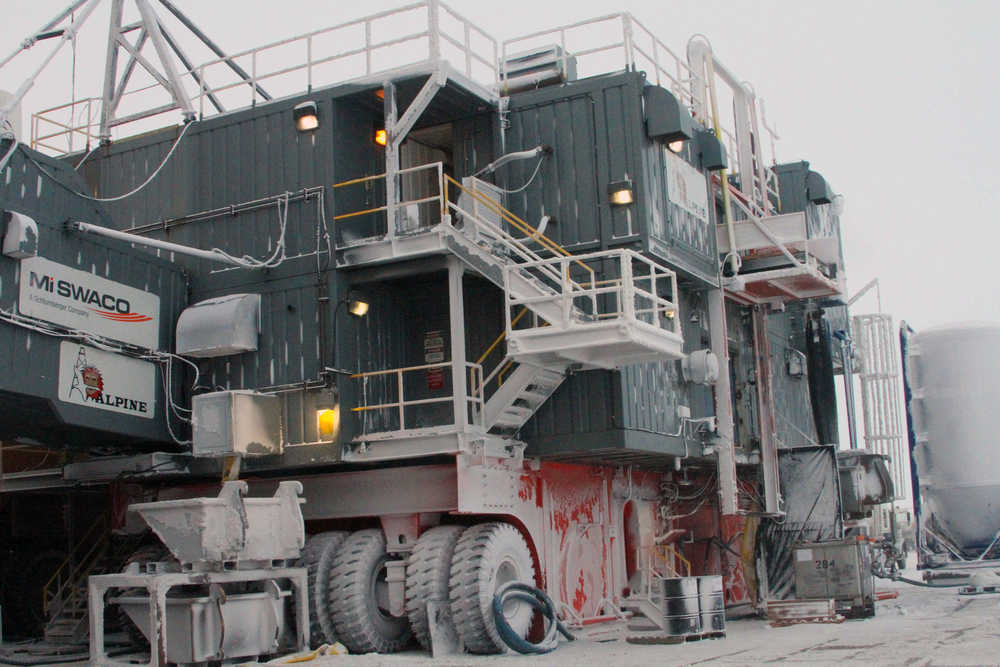
This Feb. 9 photo shows a million-pound drilling rig at the CD5 drilling site on Alaska’s North Slope.
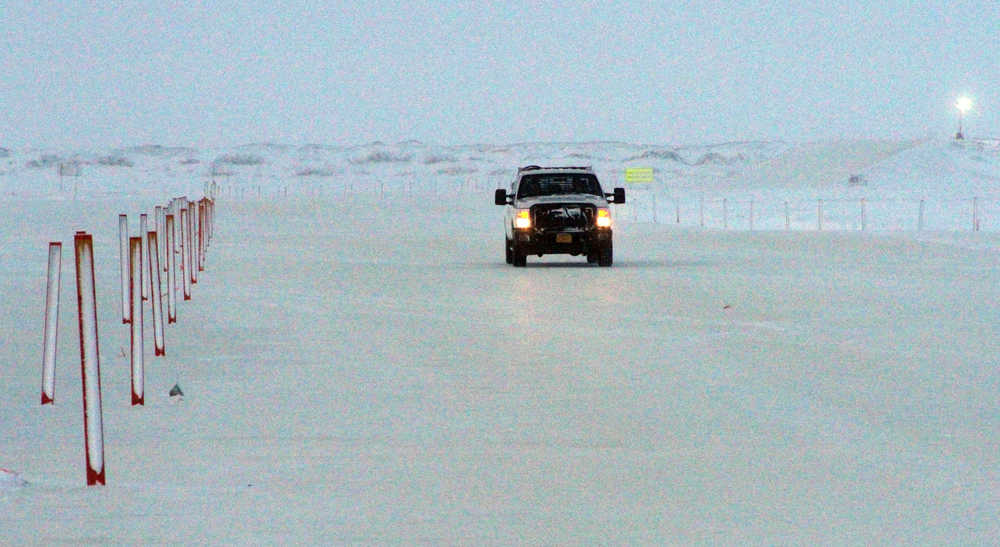
This Feb. 9 photo shows a truck driving on an ice bridge constructed near the Colville-Delta 5, or CD5, drilling site on Alaska’s North Slope.
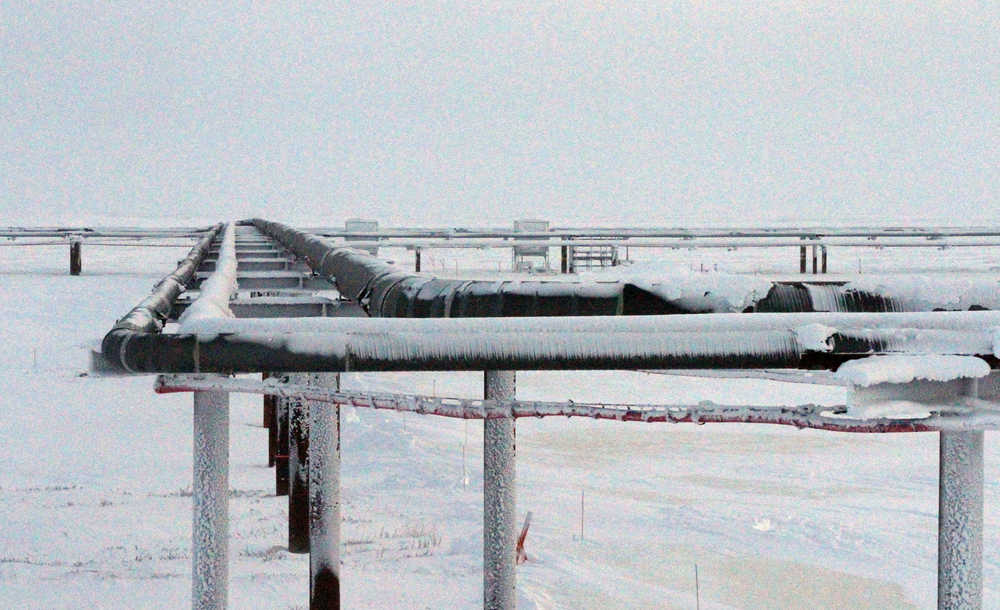
This Feb. 9 photo shows ice forming on pipelines built near the Colville-Delta 5, or CD5, drilling site on Alaska’s North Slope. ConocoPhillips in October 2015 became the first to drill for oil in the National Petroleum Reserve-Alaska, a region the size of Indiana set aside by President Warren G. Harding in 1923.
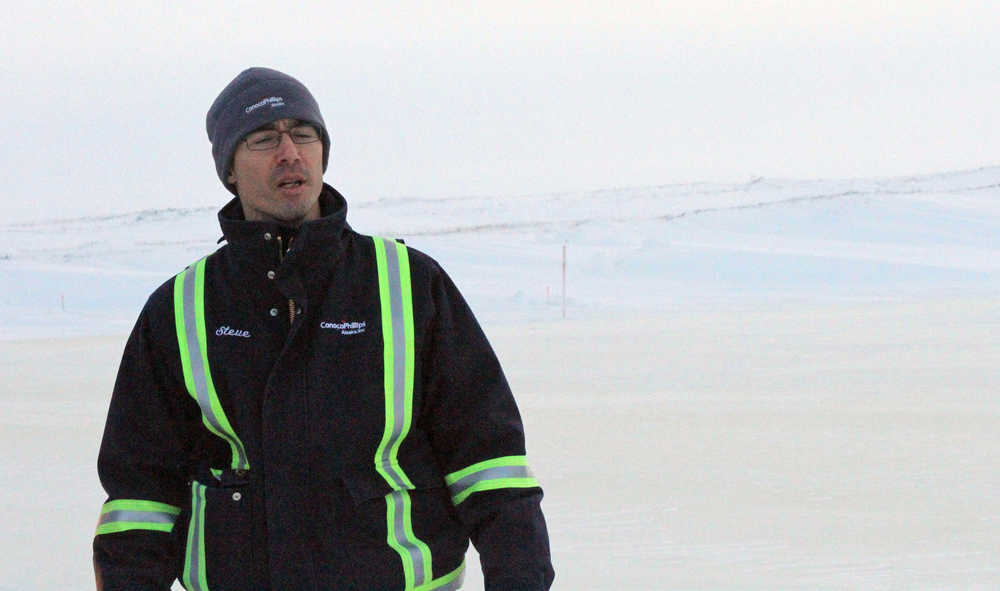
This Feb. 9 photo shows Steve Thatcher, the Alpine operations manager for ConocoPhillips, standing on an ice bridge near the CD5 drilling site on Alaska’s North Slope.
