
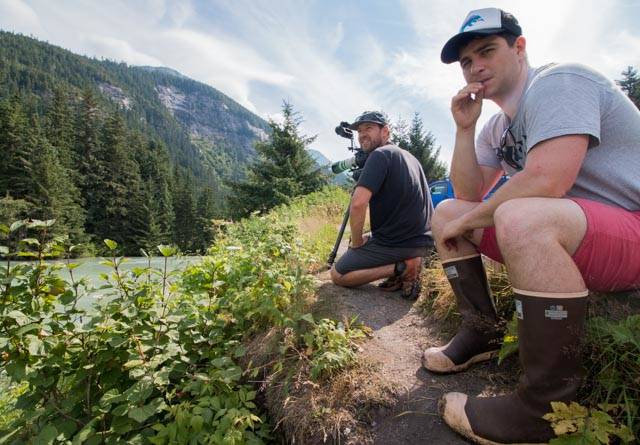
Chilkat Valley residents surprised Colin Arisman, when he set out to help make the movie “Rock, Paper, Fish.”
The 23-minute film captures community response to a exploration of a potential mining project in the Haines Borough near Klukwan known as the Palmer Project. The Palmer Project is a mining prospect in the advanced exploration stage, according to the Alaska Department of Natural Resources. The Project is operated by Constantine North Inc. Previously, the tribal government of Klukwan sued the Bureau of Land Management in connection to the project.
However, Arisman said the people he talked to were not as polarized as he expected.
“I think we assumed that the divide between pro- and anti-mining would be pretty black and white, but in small Alaskan communities people are very thoughtful in how they express themselves,” Arisman said in an email after a phone interview with the Capital City Weekly. “There’s a lot at stake — for the watershed, for economic security and for the well-being of the community — but yet neighbors are neighbors, and folks are respectful of each other’s perspectives. At the same time, we became more aware of how limited the opportunities are for the average person to engage with the development process for mines in Alaska, especially when they are on private land.”
The documentary premiered in Klukwan earlier this month and was shot off and on over the course of two years. It is now making its way around Southeast Alaska. It was shown in Juneau and Skagway last week and a screening is planned for April 7 in Sitka.
Arisman took time to talk to the Capital City Weekly this week about the Palmer Project, the movie he co-directed with Connor Gallagher and his takeaways from making “Rock, Paper, Fish,” which he said will be available to stream online at RockPaperFish.com this summer.
[Director talks making a movie in an endangered language]
For people who aren’t familiar with the project, can you describe it in a nutshell?
The Palmer Project is in advanced exploration. It’s about 35 miles upstream of the community of Haines. Klukwan is between Haines and the Palmer Project, and basically it’s an exploratory project evaluating the prospects of a large-scale hard rock mine. The actual site was discovered several decades ago, and over the last decade, Constantine, which is a Canadian-owned mining company in partnership with Dowa Metals, which is a Japanese-owned corporation that’s invested in the project, they’ve been stepping up their efforts to explore the deposit and bring on more investment as they work on developing a full-blow hard rock mine.
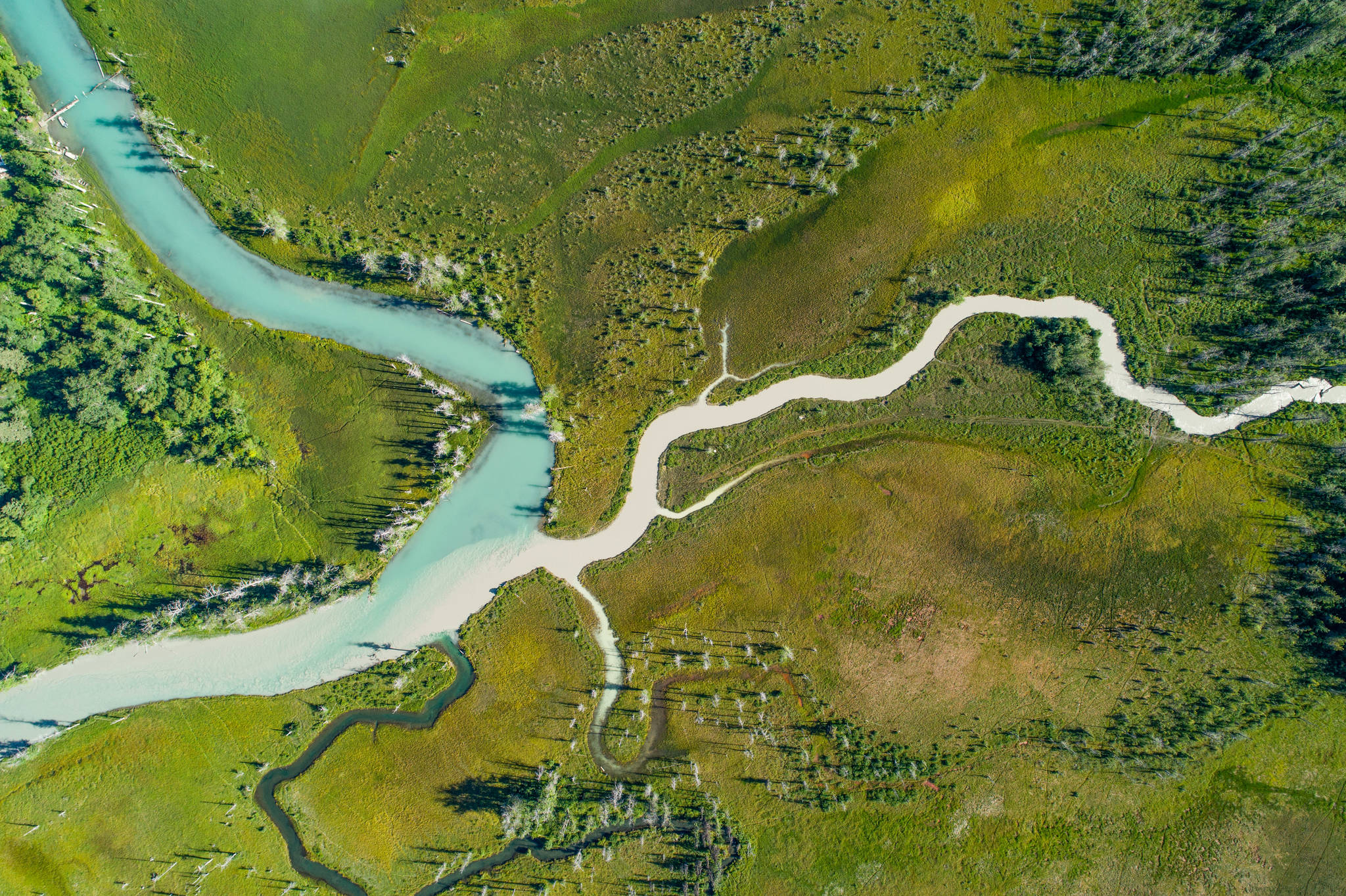
An aerial shot of the Chilkat Lake taken during the making of “Rock, Paper, Fish.” (Courtesy Photo | Connor Gallagher)
After making your film, what are your thoughts on the project?
We definitely bring a skeptical perspective to the project as folks with a background in ecology and natural resource planning. That being said, we’re really interested as filmmakers in why some folks in the community are supportive of the project. We definitely, in the film, explore multiple perspectives, and we’re not trying to say our perspective is right or it’s the only perspective. That being said, we talked to a lot of folks who were concerned about having foreign-owned mining corporations working in the Chilkat Valley with a loose regulatory environment.
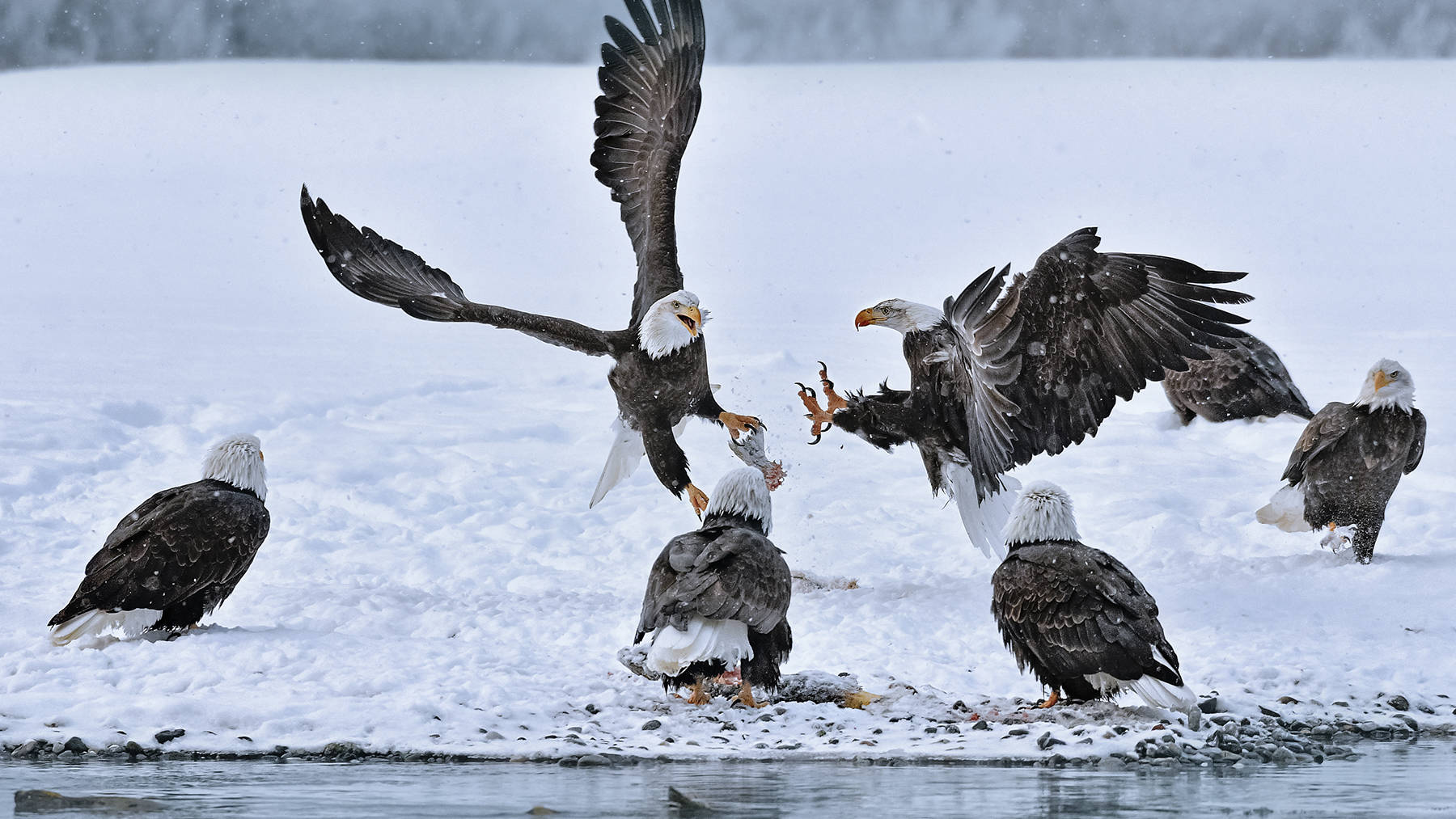
Eagles fight over fish in the Chilkat Valley. (Courtesy Photo | Brian Rivera Uncapher)
Is there anything you learned while making the movie that really stood out to you?
It’s a challenging creative prospect to tell a story from multiple perspectives. I think it’s less likely in today’s media environment to really dig into the complexity of different perspectives that might see the world in really different ways. Everyone in the film loves being in the Chilkat Valley and wants to continue living up here. Some folks feel that an economic influx of a mine is critical to them being able to survive and stay here, and other folks can’t imagine being able to survive and stay here if a big mine does go in. That’s a really complicated thing. People are here and want to be here for similar reasons, but people are really seeing the future in different ways.
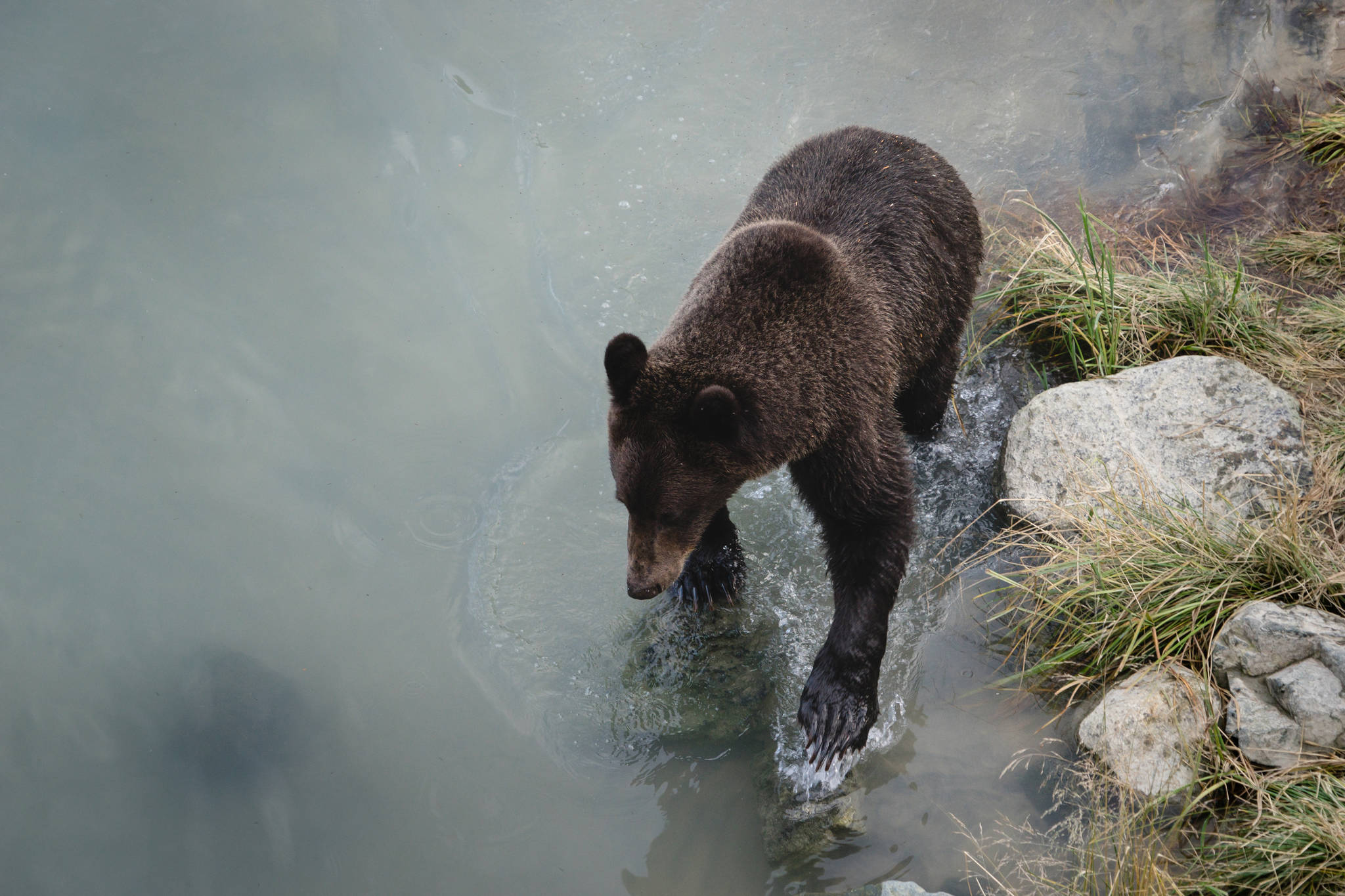
A brown bear wades through water the in Chilkat Valley. (Courtesy Photo | Adam Saraceno)
Anything else I didn’t ask about that you want to add?
One of the efforts we’re trying to support is the community of Klukwan in collecting their own baseline water-quality data on the river and also supporting them in government-to-government consultation. We hope folks if they’re inspired by the film will go to Chilkat.org and consider supporting Klukwan as they do this really important work to ensure the long-term health of the Chilkat Valley.
