FDA approves COVID shots with new restrictions
Published 10:30 pm Tuesday, August 26, 2025
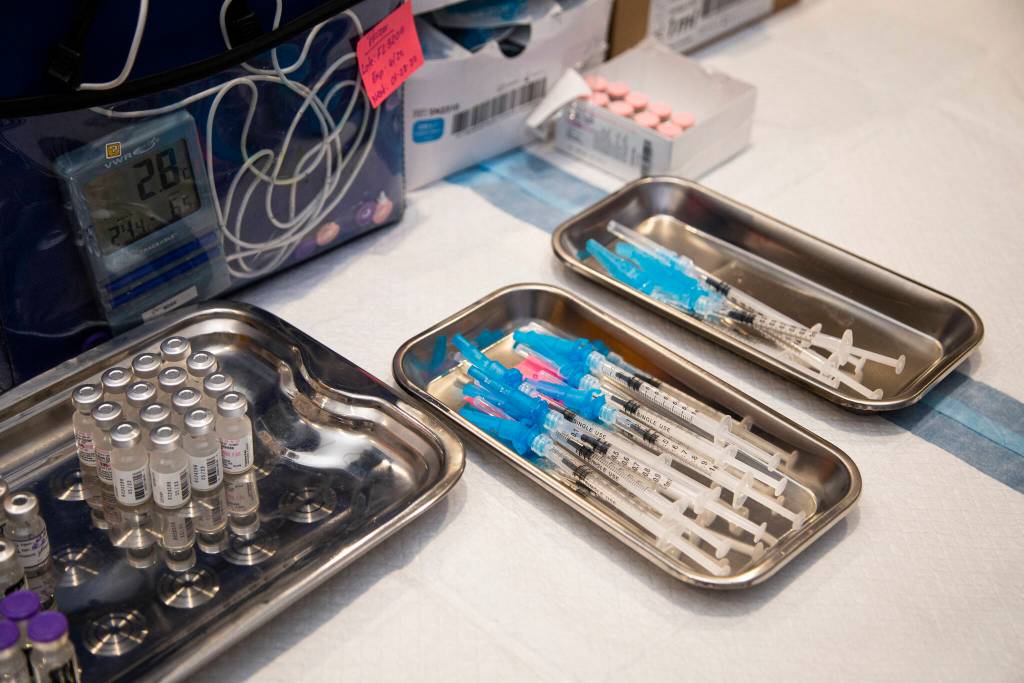
The Food and Drug Administration on Wednesday approved updated COVID vaccines for the fall season that limit who can get the shots, the federal government’s most restrictive policy since the vaccines became available.
The agency authorized the vaccines for people who are age 65 and older, who are known to be more vulnerable to severe illness from COVID. Younger people would only be eligible if they have at least one existing medical condition that put them at risk for severe disease. Healthy children younger than 18 could still receive the shots if a medical provider is consulted.
People seeking the shots will soon face another hurdle. An influential advisory committee to the Centers for Disease Control and Prevention must vote to recommend them. But that panel’s makeup shifted when Health Secretary Robert F. Kennedy Jr. unseated existing members, reduced the panel’s size and added some COVID vaccine opponents.
This would mark the first fall/winter season that COVID shots were not widely recommended to most people and children, pitting federal health officials in the Trump administration against several national medical groups that oppose the restrictions.
In a social media post, Kennedy said the approvals accomplished the goals of keeping vaccines available to people who want them and of demanding that companies conduct placebo-controlled trials. One new, required study would examine “post-COVID-19 vaccination syndrome” in patients, a condition that has been noted in at least one small preliminary medical report, but is still a matter of pitched debate.
“The American people demanded science, safety and common sense,” Kennedy’s post on X said. “This framework delivers all three.”
Many public health experts view the changes as part of Kennedy’s broader campaign against certain vaccines, especially his targeting of mRNA technology, which has been used in the vast majority of shots administered to Americans. They criticized his recent cancellation of $500 million in grants to study flu and COVID vaccines, as a move that would significantly set back the nation’s efforts to develop better therapies and leave the nation reliant on older, slower approaches.
The FDA’s new limited approval covers two vaccines designed with mRNA. The Moderna vaccine authorization covers those who are 6 months old and older and have medical conditions and all people older than 65. The Pfizer shot was approved for the same group ages 5 and older.
The FDA also revoked Emergency Use Authorizations for the vaccines in children, which would make the Pfizer shot unavailable for children younger than 5.
Proponents of limiting eligibility say that younger people are far less susceptible to severe illness. And the rates of vaccine use have dropped in recent years, to about 23% among all adults and to 13% of people younger than 18, according to the CDC.
A decision by the CDC’s panel is expected within a month, and it could greatly influence access to the shots at drugstore sites, which have become the most convenient places to get them. Laws in a number of states, including California, Pennsylvania, Florida and Massachusetts, require that pharmacy staff are only permitted to administer vaccines recommended by the CDC, said Richard Hughes IV, a lawyer who represents vaccine makers.
Along with the new eligibility limits, pharmacists are raising concerns over their role in an era of increasing vaccine restrictions.
“I’m hearing from pharmacists who are fearful they might be in legal jeopardy for providing vaccines,” said Michael Osterholm, a University of Minnesota public health researcher. “We’ve created this environment of fear for vaccine administration, and I’m hearing a lot of that.”
Health insurers have so far made few changes in coverage and have said they expect to continue to support vaccination as a preventive measure, but whether coverage will change because of the new restrictions remains unknown. Medicaid coverage, which includes the Vaccines for Children Program that provides access to low-income and working-class families, generally hews to the CDC recommendations.
Kennedy has upended decades of vaccine policy at the CDC in recent months, replacing infectious disease experts with some members who have vehemently opposed the mRNA COVID vaccines. Kennedy, who spent nearly 20 years working as an anti-vaccine activist before entering government, also has the final say over the panel’s recommendations.
Sara Roszak, senior vice president of health and wellness strategy and policy for the National Association of Chain Drug Stores, a trade group, said her organization was carefully watching the CDC’s next move, given that about 90% of COVID shots were administered in pharmacies in recent years.
A CVS Health spokesperson said it has continued to offer eligible patients COVID vaccines but would review the new federal guidelines. The company also owns the insurer Aetna and said self-funded employers could determine what to cover, depending on state and federal laws. For now, CVS said pregnant women and children would be able to get COVID shots. Walgreens did not respond to a request for comment.
The Blue Cross Blue Shield Association, whose plans cover 1 in 3 Americans, said in a statement that it would monitor the federal guidelines on immunization.
A number of professional groups have already begun to issue advice that diverges from recent changes under Kennedy’s watch. In May, the CDC dropped the recommendation that pregnant women receive the COVID shots, a move that could limit insurance coverage and availability at pharmacies.
The American College of Obstetricians and Gynecologists took a different stance, advising women to get the COVID vaccine to protect themselves and their infants, who cannot be immunized until they are 6 months old. Large studies have found that vaccination reduces the risk of maternal death or stillbirth during pregnancy.
“It’s really heartbreaking to see a person who is pregnant on a ventilator,” said Dr. Brenna Hughes, a member of ACOG’s immunization, infectious disease and public health preparedness expert work group, who cared for patients at Duke University Medical Center during the early waves of the pandemic.
“It was something like I’ve never seen in my life, the number of people that I saw in the ICU who were pregnant and on ventilators or even more severely ill,” she said. “And I hope to never see anything like that again.”
Although data collection has fallen off, reports of COVID deaths have fallen sharply. In July, a month when case counts tend to be low, the CDC reported roughly 170 deaths a week this year. Last year, there were about 550 to 850 deaths a week in July.
Still, lawmakers in several states, including Maryland, Pennsylvania, Massachusetts and Rhode Island, have taken legislative steps to safeguard their ability to provide vaccines regardless of federal policies.
And state health officials in the Northeast and beyond met recently to discuss paths forward in the case of altered federal vaccine policies. Dr. Robbie Goldstein, the Massachusetts health commissioner and an infectious diseases specialist, said his team was scouring state laws for references to the CDC committee to ensure that the state could make vaccine policy based on other recommendations, such as ACOG or the American Academy of Pediatrics.
“We are committed to using data and evidence, and we’ve seen that the federal government, in particular Secretary Kennedy, has not supported the use of data and has not been transparent with the data that he’s using to make decisions,” he said.
Cases of COVID have ticked up in recent weeks, particularly among children from newborns to age 11, CDC data shows. Children made up the group with the highest rates of COVID in emergency rooms, with 3.5% of those from birth to age 11 testing positive in recent weeks, 10 times the rate in May.
At the UCLA Emergency Medical Center, overall cases are up, but “the majority of folks are not very sick, except for those who are complicated by other medical issues affecting immunity and respiratory health,” said Dr. Mark Morocco, a clinical professor of emergency medicine.
Traditionally, the FDA has issued broad approvals to vaccines and passed the baton to the CDC, which convenes experts who issue recommendations on which groups should receive the doses. Those teams tend to carefully weigh the risk of the disease and any safety concerns that emerge about the vaccine.
FDA officials announced a new approach in May, narrowing access to COVID vaccines, which they described in an essay in the medical journal NEJM. Dr. Marty Makary, the agency’s commissioner, and Dr. Vinay Prasad, its vaccine chief, said the benefits of repeated doses of COVID vaccines for healthy people were uncertain and that the American people remained “unconvinced.”
To address the concern, they asked COVID vaccine makers to study the vaccine in 50- to 64-year-olds with a focus on comparing symptomatic disease, severe illness, hospitalization and death to those who were given a placebo.
In the meantime, the COVID vaccines are restricted among those younger than 65 to people with one of a long list of existing medical conditions, including depression, obesity, diabetes or physical inactivity. The FDA also included pregnancy as a condition that elevates the risk of severe disease.
Kennedy followed that news with his own announcement standing in for the CDC process, ultimately leaving pregnant women off the vaccine schedule and concluding that children could get it after a conversation with a health care provider.
The decision was widely panned by medical experts, including Dr. Paul Offit, a vaccine expert and pediatrician. He said that Kennedy’s justification for restricting vaccines from pregnant women — detailed in a letter to Congress — misrepresented medical studies and “would fail” a 10th-grade science class.
Soon after, six leading medical groups sued the Department of Health and Human Services, saying the decision would “result in preventable deaths, including the unborn and newborns under 6 months old.” The case is pending.
On Wednesday, the FDA authorized a newer version of the vaccine that is meant to protect against an omicron variant called LP.8.1, which accounted for nearly one-third of the cases detected in recent weeks, according to the CDC.
The shots will be welcomed in Galveston, Texas, where Dr. Janak Patel, an infectious disease and epidemiology specialist at the University of Texas Medical Branch, said positive COVID tests reached levels of about 25% to 30% about six weeks ago and remained high. Very old patients and those with immunocompromised systems, like cancer patients, have fared the worst, he said. Many still forgo vaccines.
“Hesitancy remains high, and people think they can deal with COVID now without it,” Patel said. “But as you can tell, we have big waves, and we still have admissions and deaths.”
This article originally appeared in The New York Times.