Envisioning a future of mariculture boom times
Published 9:30 pm Thursday, October 26, 2023

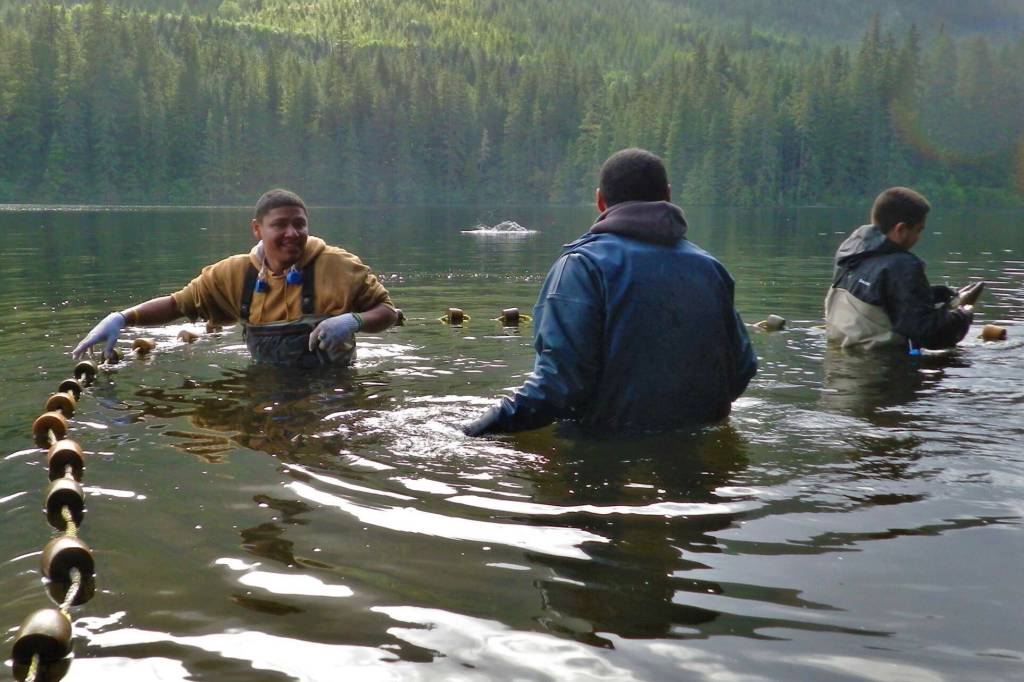
The first thing to know about the mariculture industry in Alaska is how much money and effort are going into making it a major economic driver for years to come.
The second thing is that, aside from oysters, it isn’t profitable — yet. That’s kind of the point.
A collective $110 million in public investment for mariculture in Alaska is flowing into the state, a federal Build Back Better wager based on the core assets of the region, predictions about future demand — particularly for kelp — and the general need for more sustainable food sources.
Mariculture consists of aquatic plants, shellfish and other related species. But just as important is what it does not include, which are fin-fish, and more specifically salmon. It’s an important distinction because Alaska has laws that limit the farming of fish.
“It has the potential to be a $200 million industry in 15 to 20 years,” said
Dan Lesh, deputy director of Southeast Conference, the state and federally designated economic development organization overseeing the majority of the funding.
The immediate success story for businesses is oyster farming, and it could easily grow tenfold, Lesh said. Oysters provide a healthy, nutrient-rich food source, “healthier for you than beef and other things, and you are taking carbon out of the ocean when you’re growing them.”
Kelp isn’t profitable now, but it has even greater potential than oysters long term, he said.
“Right now if you grow kelp there are limited buyers and the prices they pay are limited,” he said. “But all this investment is helping to advance the pieces needed to solve ‘chicken and egg’ issues,” like processing infrastructure.
Southeast Conference is advancing plans for a multi-user processing facility in Craig on Prince of Wales Island, with the support of USDA funds through the Southeast Alaska Sustainability Strategy (SASS) initiative.
While the demand for kelp isn’t as strong in the United States as it is elsewhere, particularly in Asia, that is changing. It is rich in nutrients and increasingly being used in health products.
Numerous products can be derived from seaweed, said Lesh. “It’s bioplastics, textiles, health and beauty products, agriculture feeds and fertilizers, all with lower carbon intensity.” That becomes more important with time.
But don’t rule it out as food. Sea Quester, a seaweed farming company based in Juneau, has had success growing kelp. Among other things it used the plant to make kelp burgers, which it sold at the Southeast Alaska State Fair.
The company is about to begin planting for the new season with new and improved techniques, said Jonny Antoni, who founded it. The company was approved for a $99,000 grant in August that is going toward equipment to improve processes, among other things.
The beauty of mariculture is it gives back to the ocean, Lesh said. “It’s a net positive compared to some other industries, like traditional agriculture.”
“Seaweed meets a desire for lower carbon-intensive products in our economy. It’s also a low impact, even regenerative way of producing goods for the economy.”
Present-day marine farming in Alaska can be traced back to 1988 and the passage of the Aquatic Farm Act, which was designed to create an industry. It granted the commissioner of the Alaska Department of Fish and Game (ADF&G) authority to issue permits for the construction and operation of aquatic farms and hatcheries that would supply aquatic plant or shellfish seed stocks to aquatic farms. That’s been happening ever since.
It took a big bump forward with the attention of the Southeast Conference.
“Our economic planning processes prioritized mariculture work as one of the top four priorities,” said Lesh. That was done as part of its Comprehensive Economic Development Strategy (CEDS) which covers 2021-2025.
Then came the Build Back Better Plan, passed in November 2021, which included a lot of infrastructure and economic development funding programs.
The biggest portion of the $110 million in state mariculture investment, about a third of which will come to Southeast, has come from the Build Back Better regional challenge ($65 million, which is the initial $49 million and a 20% match); the Exxon Valdez Oil Spill Trustee Council ($32 million); and $10 million from the Alaska Legislature ($5 million for mariculture matching grant program and $5 million to the University of Alaska).
Other money includes $2.5 million for seaweed research from the American Rescue Plan (ARPA), and $1.1 million from the USDA. That money includes $500,000 for the multi-user Prince of Wales processing facility, an ocean hatchery research project by OceansAlaska in Ketchikan, and $100,000 for the Alaska Oyster Cooperative’s Naukati project.
Thus far the BBB money funds three staff at Southeast Conference and parts of salaries for 20 other positions at sub-award recipients. That includes the University of Alaska, Spruce Root (a subsidiary of Sealaska Corp), Alaska Fisheries Development Foundation, Alaska Mariculture Alliance, Alaska departments of Environmental Conservation and Fish and Game, and other economic development districts in Alaska. It also goes to pay contractors, among other things.
Lesh stressed the program is still in the early stages. “We just finished the first year of the four-year grant period, so we are just getting started spending most of this money.”
• Contact Meredith Jordan at meredith.jordan@juneauempire.com or (907) 615-3190.